Da Vinci Surgery in China: 680+ Robots, World-Class Care for International Patients
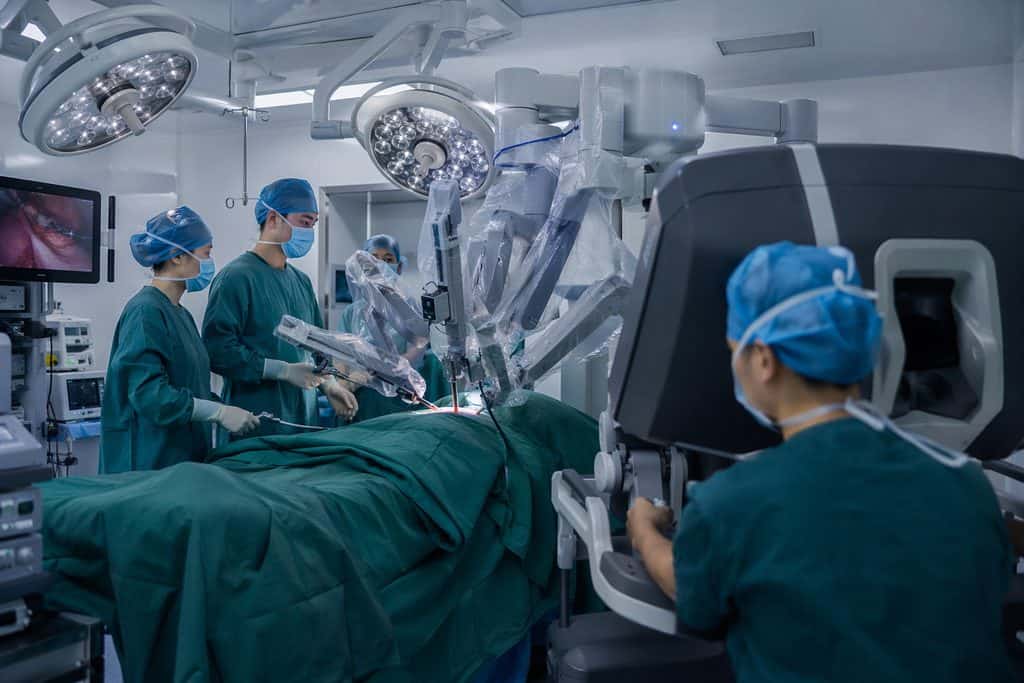
You have probably heard that cutting-edge surgery outside the West means rolling the dice on quality. The numbers tell a different story. China now operates over 680 da Vinci robotic surgical systems — the second-largest installed base on the planet, behind only the United States. More than 100,000 robotic procedures were performed here last year alone. For a patient facing a $45,000 prostatectomy quote in the US, or a 14-month wait for a hysterectomy in Canada’s public system, that statistic changes the calculus entirely.
The question is not whether the technology exists. It does, at an enormous scale. The question is whether an international patient can access it safely, affordably, and without the logistical nightmare of navigating a foreign healthcare system alone.
That is precisely the gap our team exists to fill.
Key Takeaways
- China has deployed more than 680 da Vinci systems performing over 100,000 robotic procedures annually, with outcomes data matching or exceeding Western benchmarks in high-volume centers.
- The da Vinci surgery cost China for international patients typically runs 60-80% below US pricing — a robotic prostatectomy that costs $35,000-$45,000 in America often ranges from $12,000-$18,000 at top-tier Chinese hospitals.
- Language barriers, visa requirements, and hospital gatekeeping make independent access nearly impossible — patients need a coordinator who understands the S2 medical visa process and hospital international department protocols.
- Not every hospital with a da Vinci robot has equal outcomes. Surgeon volume matters enormously, and we direct patients exclusively to centers where robotic case volumes exceed 200 procedures per surgeon annually.
The Problem: When Waiting Is Not an Option
Consider a 62-year-old man in Manchester diagnosed with localized prostate cancer. His NHS trust quotes a 16-week target for surgery, but the reality is often longer. In Canada, the median wait for a radical prostatectomy stretches to 84 days from decision to treatment — and that is for patients already inside the system. For those still awaiting a specialist referral, the clock ticks far longer.
Now consider the American version of the same problem. A robotic prostatectomy at a major US academic center costs between $35,000 and $45,000. Even with insurance, a high-deductible plan can leave the patient with $12,000 in out-of-pocket exposure. For the uninsured or underinsured, the math simply does not work.
These are not edge cases. Approximately 1.4 million men worldwide are diagnosed with prostate cancer each year. Hundreds of thousands of women require hysterectomies for fibroids, endometriosis, or malignancy. Colorectal cancer strikes nearly 2 million people annually. Many of them need surgery. Many of them face the same brutal equation: wait too long, or pay too much.
That equation is what drives patients to look beyond their borders.
Who We Are
We are not a hospital. We do not employ surgeons, issue prescriptions, or provide any clinical diagnosis or treatment. What we do is build the bridge between you and China’s 340+ top-ranked hospitals — institutions in the top 5% of the country’s 35,000+ medical facilities, as ranked by the authoritative Fudan University hospital rankings and Joint Commission International accreditation standards. Our team handles the logistical architecture: hospital matching based on your specific diagnosis, appointment coordination through official international departments, bilingual medical companionship throughout your stay, visa guidance for the S2 medical visa, and recovery logistics. We speak the language, we know the system, and we make sure you never walk into a 10,000-patient-per-day Chinese hospital alone.
Why da Vinci Surgery in China Delivers Results
Volume Creates Mastery
Here is a number that should reshape how you think about surgical expertise. A high-volume robotic surgeon at a top Chinese urology center performs 300 to 500 prostatectomies annually. The average US urologist performs approximately 25 robotic prostatectomies per year. Studies published in The Lancet Oncology and European Urology have repeatedly demonstrated that surgeon volume is the single strongest predictor of positive surgical margins, continence recovery, and oncologic control in robotic prostatectomy.
China’s top hospitals concentrate cases at a scale that is hard to replicate elsewhere. Fuwai Hospital in Beijing performs over 14,000 cardiac surgeries annually — the highest volume of any heart center globally. Peking Union Medical College Hospital (PUMCH) handles complex multi-system cases that most Western centers see a handful of times per year. When you place a da Vinci robot in the hands of a surgeon who has done your specific procedure thousands of times, the learning curve argument becomes academic.
Volume is not everything. But for robotic surgery, it is close.
Technology Deployed at Unmatched Scale
Over 680 da Vinci systems are installed across China. That number is not a projection. It is the current operational count, and it grows quarterly. These systems are concentrated in the top-tier hospitals that form our network — institutions like Zhongshan Hospital at Fudan University in Shanghai, Ruijin Hospital, and West China Hospital in Chengdu. These are not community hospitals dabbling in robotics. They are high-throughput surgical centers where robotic approaches have become the default for prostatectomy, partial nephrectomy, hysterectomy, and colorectal resection.
The da Vinci Xi and X systems — the latest generations — are standard at these centers. Surgeons have access to integrated table motion, fluorescence imaging for tissue perfusion assessment, and dual-console setups that enable real-time proctoring and training. The infrastructure investment is serious, and it shows in the procedural data.
What this means for an international patient is straightforward. You are not traveling to a hospital that does robotic surgery occasionally. You are traveling to a center where the robot runs all day, every day, with teams that have ironed out every workflow inefficiency through sheer repetition.
da Vinci Surgery Cost China: The Structural Advantage
Let us address the question that drives most patients to this page. The da Vinci surgery cost China for international patients is not low because corners are cut. It is low because the structural economics of Chinese healthcare are fundamentally different from those in the United States or Western Europe.
Hospital construction costs, administrative overhead, and physician compensation all run far below Western equivalents — not because quality is lower, but because the entire cost base operates on a different curve. A top Chinese surgeon earns a fraction of what a US surgeon earns, yet operates at comparable or higher volumes with equivalent technology. Hospital administrative staffing ratios are leaner. Malpractice insurance costs are dramatically lower.
| Procedure | US Average Cost (USD) | China Top Hospital Range (USD) |
|---|---|---|
| Robotic Prostatectomy | $35,000 – $45,000 | $12,000 – $18,000 |
| Robotic Hysterectomy | $25,000 – $35,000 | $8,000 – $14,000 |
| Robotic Partial Nephrectomy | $30,000 – $40,000 | $11,000 – $17,000 |
| Robotic Colorectal Resection | $40,000 – $55,000 | $15,000 – $22,000 |
These figures are ranges, not guarantees. Final pricing varies by hospital, surgeon seniority, case complexity, and length of stay. But the pattern holds: patients routinely save 60-80% relative to US cash-pay rates, and 40-60% relative to private rates in the UK or Australia. When you factor in travel and accommodation, the total cost of care still lands well below what most Western patients would pay at home — often by a margin of tens of thousands of dollars.
One more thing worth stating plainly. Lower cost does not signal lower safety. The best Chinese robotic surgery centers report complication rates and oncologic outcomes that are tracked, published, and benchmarked against international standards. We encourage every patient to review the published data from the hospitals we recommend. Transparency is the only foundation for trust.
Is Robotic Surgery in China Safe? What the Data Shows
This is the question that sits beneath every other question. Patients ask about cost first, but they are really asking about safety. The concern is understandable. Western media coverage of Chinese healthcare tends to oscillate between breathless futurism and alarmist anecdotes. Neither tells the full story.
The full story is this: China’s top-tier hospitals operate under quality control systems that are increasingly aligned with international standards. Over 100 Chinese hospitals now hold JCI accreditation — the same gold standard applied to Johns Hopkins, Mayo Clinic, and Singapore General Hospital. The Fudan University hospital ranking methodology, while imperfect, applies rigorous peer-review metrics across clinical reputation, research output, and specialty excellence.
For robotic surgery specifically, China’s high-volume centers track and publish outcome data. Complication rates for robotic prostatectomy at major urology centers in Shanghai and Beijing fall within the 5-8% range for Clavien-Dindo grade II or higher complications — consistent with published rates from US and European centers of excellence. Positive surgical margin rates for organ-confined prostate cancer run 10-15%, again in line with international benchmarks.
Does every hospital in China meet this standard? Absolutely not. The gap between a top-10 urology center and an average provincial hospital is enormous. That is precisely why independent navigation matters. We direct patients exclusively to centers where robotic case volumes, published outcomes, and international patient infrastructure all meet our threshold. We have no incentive to send you anywhere else.
What You Need to Know Before Going Alone
The technology is real. The cost advantage is real. But the barriers to accessing it independently are equally real. Here is what stands between you and a da Vinci procedure in China if you try to navigate this alone.
- Visa Requirements Are Specific and Non-Negotiable: Medical treatment in China requires an S2 visa with a treatment-purpose annotation. This is not a tourist visa. It is not an M business visa. Consular officers require a formal invitation letter from the treating hospital, proof of appointment, and documentation of the medical necessity. Hospitals do not issue these letters to patients who simply email the general inquiries address. You need a relationship with the international department — and that relationship starts with someone who speaks the language and understands the protocol.
- Hospital Gatekeeping Is Real: China’s top public hospitals see 10,000 to 20,000 outpatient visits per day. The general registration system is not designed for international patients. You cannot book a specialist consultation online from overseas using the standard patient app. You cannot secure a surgical slot before the surgeon has evaluated you in person. The international department or VIP pathway — which offers English-speaking staff, expedited scheduling, and senior surgeon access — operates on a different track entirely. Accessing it requires knowing who to contact and how to present your case.
- Payment Systems Do Not Work the Way You Expect: Public hospitals in China operate on a pre-payment model. You deposit funds before admission, and the hospital draws down against that deposit as services are rendered. International credit cards are not universally accepted at hospital cashier desks. Wire transfers require precise instructions in Chinese. Insurance direct billing is available at private international hospitals like United Family and Jiahui, but at public hospital international departments, you typically pay upfront and seek reimbursement from your insurer afterward. None of this is insurmountable. All of it is disorienting if you are managing it alone while preparing for surgery.
How We Help You Navigate This
These barriers exist for structural reasons, not because anyone intends to exclude international patients. The Chinese healthcare system was built to serve a domestic population of 1.4 billion people. The international patient pathway is a specialized layer on top of that system — and accessing it requires a guide who understands both sides.
Our process starts with your medical records. You send us your diagnosis, imaging, pathology reports, and treatment history. We translate and format these documents for review by the international department of the hospital best matched to your condition. That matching is not generic. A patient needing a robotic prostatectomy goes to a urology center ranked among China’s top 10 for the specialty — not simply to the nearest hospital with a da Vinci robot. We look at surgeon volume, published outcomes, and international patient experience before making any recommendation.
Once a hospital accepts your case, we coordinate the appointment, secure the invitation letter required for your S2 visa, and arrange your schedule. When you arrive, a bilingual medical companion meets you at the airport, accompanies you to every consultation, translates in real time during surgeon discussions, handles registration and payment logistics, and stays with you through admission, surgery, and discharge. This is not a translation app. This is a trained professional who knows the hospital layout, understands medical terminology in both languages, and can spot and resolve problems before they become crises.
After discharge, we coordinate follow-up consultations, medication refills, and recovery logistics. If your home physician needs operative reports or imaging, we ensure those documents are translated and transmitted. Our commitment runs from the moment you contact us until you are safely home and your follow-up plan is in place.
For patients who want to explore their options before committing to travel, we also facilitate remote video consultations and written second opinions from top specialists. Any consultation fee paid is fully credited toward on-the-ground coordination if you proceed with treatment within 90 days — a one-time credit applied to the coordination fee, never to hospital treatment charges.
Frequently Asked Questions
A robotic hysterectomy at a top-tier Beijing hospital typically ranges from $8,000 to $14,000 for international patients, depending on the complexity of the case, whether lymph node dissection is required, and the length of hospital stay. This compares to $25,000-$35,000 in the United States. The price includes surgeon fees, anesthesia, operating room charges, hospital bed costs, and standard post-operative care. It does not include travel, accommodation, or our coordination services. Final pricing is confirmed only after the treating hospital reviews your specific medical records and imaging.
There is no single “best” hospital — the right center depends entirely on your specific procedure. For urologic robotic surgery, including prostatectomy and partial nephrectomy, Peking Union Medical College Hospital in Beijing and Zhongshan Hospital in Shanghai are among the strongest options, with surgeon volumes exceeding 300 robotic cases annually. For gynecologic robotic surgery, Renji Hospital in Shanghai and Peking University Third Hospital have deep experience. For colorectal procedures, Fudan University Shanghai Cancer Center is a high-volume reference center. We match you to the hospital whose specific robotic program aligns with your diagnosis, not to a generic brand name. Our specialty-specific hospital rankings provide detailed breakdowns by procedure type.
At the high-volume centers we work with, yes — and the published data supports this. Complication rates, positive margin rates, and length-of-stay metrics at China’s top robotic surgery centers fall within the same ranges reported by major US and European institutions. The key variable is not the country. It is the specific hospital and surgeon. A surgeon performing 400 robotic prostatectomies annually at a JCI-accredited Chinese hospital is operating at a level of experience that exceeds the vast majority of Western surgeons. The risk comes from choosing a low-volume center with limited robotic experience — which is why hospital selection matters enormously. We have published guidance on how top-ranked Chinese hospitals are evaluated that explains our selection methodology in detail.
Some are. Many are not. The term “medical tourism package” is used loosely in the market, and we have seen patients arrive in China expecting all-inclusive care only to discover that their “package” covered little more than a hospital introduction and a hotel booking. A legitimate coordination service should provide: hospital matching based on your specific diagnosis, appointment scheduling through the official international department, visa invitation letter support, bilingual medical companionship throughout your stay, and transparent pricing that separates coordination fees from hospital charges. If a package price seems too low to include actual surgical care, it probably does not include surgical care. We encourage patients to ask hard questions about exactly what is and is not covered before committing to any arrangement. Our patient coordination services are structured with full transparency — you always know what you are paying for and what goes directly to the hospital.
It depends on your policy. Most US and European domestic health insurance plans do not cover elective surgery performed outside their network countries. However, some international health insurance plans — particularly those from providers like Cigna Global, Bupa International, and Allianz Worldwide Care — do offer coverage for treatment in China, often at private international hospitals with direct billing arrangements. Public hospital international departments typically operate on a fee-for-service basis where you pay upfront and seek reimbursement. We recommend contacting your insurer before making any commitments and asking specifically about coverage for planned surgery in China, pre-authorization requirements, and reimbursement procedures. We can provide the documentation your insurer needs, but the coverage determination is between you and your insurer.
Your Next Step
You came here searching for information about da Vinci surgery in China — the cost, the safety, the logistics. What you have found is that the technology and expertise exist at a scale that rivals any healthcare system in the world, at a cost structure that makes treatment accessible to patients who would otherwise face impossible choices between waiting, debt, or going without care.
The gap between knowing this option exists and actually accessing it is what we close. If you are considering robotic surgery and want to understand whether a top Chinese hospital is the right path for your specific case, reach out. Send us your medical records. We will review them, match you to the right center, and give you an honest assessment — no pressure, no hard sell, just the information you need to make an informed decision.
Start with a free consultation. We will take it from there.
For more medical information and treatment options in China, visit chinamedservices.com (China Medical Services).
