Chongqing Medical University Hospital: A Foreigner’s Guide to Southwest China’s Top Tertiary Center
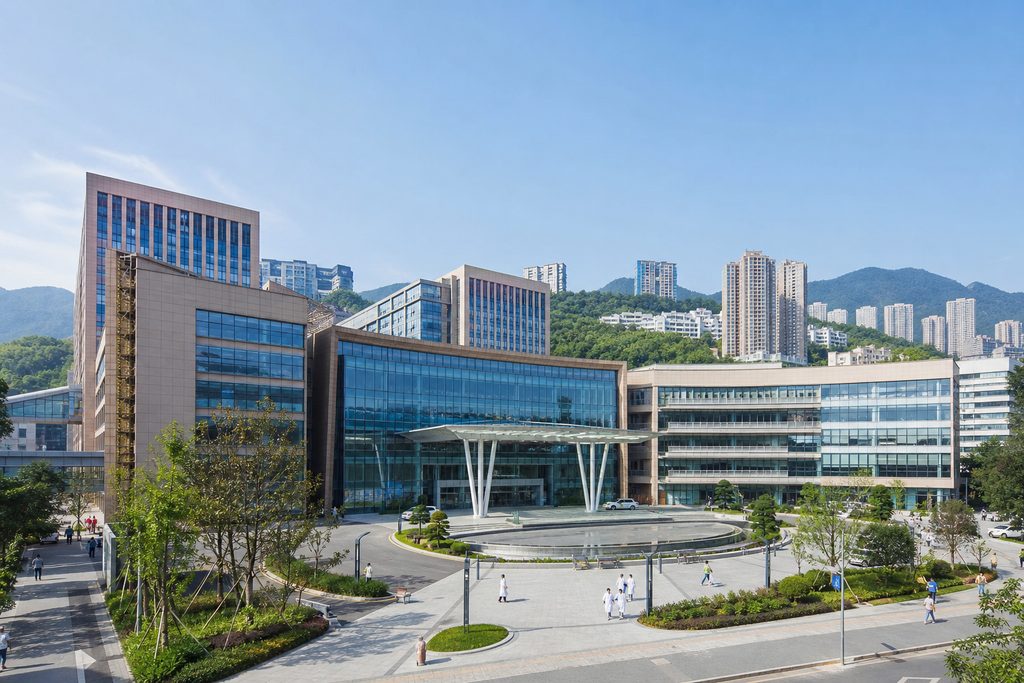
While a cardiac bypass in the United States averages over $120,000, the same procedure at a top-tier Chinese university hospital runs between $12,000 and $20,000. The gap is not in quality. It is in system economics. For patients facing life-altering diagnoses with daunting price tags at home, the best hospital in Chongqing for foreigners is not a theoretical question. It is a practical, urgent one. Our team at China Medical Services has spent years building the bridge between international patients and institutions like the First Affiliated Hospital of Chongqing Medical University — a behemoth of clinical volume and subspecialty depth that remains largely unknown outside of Asia.
Key Takeaways
- Chongqing Medical University’s First Affiliated Hospital handles over 3.6 million outpatient visits annually, ranking it among the highest-volume academic medical centers on the planet.
- Foreigners cannot simply walk in and book a surgery. Access runs exclusively through the hospital’s International Patient Department or VIP channel, where English-speaking coordination exists but must be arranged in advance.
- Procedure costs here run roughly 70–90% below US private-pay rates, but the hospital operates on a prepayment model — international insurance is reimbursed after the fact, not directly billed.
- Navigating this system alone, without Mandarin fluency, is the single greatest barrier to care. Language is not a minor inconvenience here. It is the lock on the door.
The Problem: When Your Local System Says No — or Says Wait
In Canada, the median wait time from specialist consultation to treatment is 27.7 weeks, according to the Fraser Institute’s 2023 survey. In the United Kingdom, the NHS target of 18 weeks from referral to treatment has been missed for over 40% of patients in some trusts. These are not minor delays. For oncology patients, a 12-week gap can mean the difference between resectable and unresectable disease. For cardiac patients, it can mean progressive ventricular damage while sitting on a list.
Cost is the other blade. Even insured Americans face deductibles that can exceed $10,000 annually, and the uninsured or underinsured face bills that lead directly to bankruptcy — medical debt is a factor in roughly two-thirds of US personal bankruptcies. Patients in Southeast Asia, the Middle East, and Africa often face a different problem: the local infrastructure simply does not offer the subspecialty surgical volume required for complex procedures.
This is where China’s top-tier hospitals enter the conversation. Not as a discount option. As a structural solution to a structural problem.
Who We Are
We are not a hospital. We do not employ doctors, make clinical diagnoses, or offer medical advice. We are a medical concierge and case management organization, based in China, built specifically for international patients. Our team handles the entire logistical arc — hospital matching based on your actual diagnosis, appointment coordination through official international department channels, visa guidance, bilingual medical companion services, and post-discharge recovery planning. We work with 340+ top-ranked hospitals across 37 cities. We know which institutions have genuine depth in which subspecialties. And we know, from hard experience, which ones are navigable for someone who does not speak a word of Mandarin.
Why the First Affiliated Hospital of Chongqing Medical University Matters
This is not a boutique international clinic. It is a 3,200-bed academic medical city. The numbers tell the story: over 3.6 million outpatient visits, more than 160,000 inpatient discharges, and approximately 100,000 surgical procedures each year. For context, the Mayo Clinic in Rochester — widely considered a gold standard in the US — reports roughly 1.3 million outpatient visits annually. Volume is not everything. But in complex surgery, volume correlates with outcomes in ways that no amount of individual brilliance can replicate.
Clinical Volume Drives Outcomes You Can Measure
Surgeons who perform a procedure hundreds of times per year simply encounter and manage complications that lower-volume surgeons see only in textbooks. A 2023 analysis published in The Lancet found that for esophagectomy — one of the most technically demanding oncologic surgeries — hospitals performing over 100 cases annually had a 30-day mortality rate of 1.7%, compared to 4.2% at low-volume centers. The First Affiliated Hospital’s thoracic surgery department operates at this high-volume threshold. Its cardiology and cardiac surgery programs are similarly scaled. For a patient researching how much does heart surgery cost in China, the volume-cost-quality equation here is unusually favorable.
The hospital’s organ transplantation program is another case in point. It is one of the few centers in western China approved for liver, kidney, and heart transplantation, and its multi-organ transplant volume places it among the national leaders. For international patients from countries where transplant infrastructure is limited or waitlists are measured in years, this represents a genuine alternative pathway — provided the patient can navigate the entry requirements.
Technology Infrastructure Built for Scale
The hospital operates the Da Vinci robotic surgical system, multiple hybrid operating suites that combine interventional radiology with open surgical capability, and a radiotherapy center equipped with linear accelerators capable of intensity-modulated radiation therapy (IMRT) and volumetric modulated arc therapy (VMAT). These are standard technologies at top Western centers. The difference here is throughput. A single linear accelerator at a high-volume Chinese public hospital may treat 80–100 patients per day, compared to 25–35 at a typical US center. The machine is the same. The scheduling philosophy is not.
For patients researching a top JCI hospital Southwest China, a note of clarity is necessary. The First Affiliated Hospital of Chongqing Medical University is not JCI-accredited in the way that some private international hospitals like United Family are. JCI accreditation is more common among China’s private international hospitals. Public academic giants like this one are evaluated through China’s domestic tertiary hospital accreditation system, which is rigorous but follows different metrics. Clinical outcomes are comparable. The administrative experience is not — which is precisely why coordination support matters.
The Cost Structure: Why the Numbers Work
Lower prices in Chinese public hospitals are not a function of lower quality. They are a function of three structural factors: lower physician labor costs, higher patient throughput per unit of infrastructure, and a public hospital funding model that subsidizes capital equipment. A cardiac bypass graft that costs $120,000–$180,000 in the US costs $12,000–$20,000 here. A total hip replacement: $8,000–$15,000 versus $40,000–$60,000. A radical prostatectomy for prostate cancer: $6,000–$12,000 versus $35,000–$50,000.
These are not promotional estimates. They are the prices our team sees on actual hospital invoices for international patients using the VIP or International Patient Department channel, which carries a premium of roughly 1.5–2× over the standard public rate. The standard public rate is lower still, but that channel is effectively inaccessible without Mandarin fluency and local residency.
For patients asking is Chongqing Medical University hospital good for cancer treatment, the answer turns on subspecialty. The hospital’s oncology department is comprehensive, covering medical oncology, surgical oncology, and radiation oncology under one roof. Its strengths are particularly pronounced in liver cancer (hepatocellular carcinoma), given the high regional prevalence and resulting clinical volume, as well as lung cancer and gynecologic malignancies. The hospital participates in numerous international clinical trials, and its tumor board — a multidisciplinary team that reviews complex cases — meets weekly. This is the standard of care you would expect at an NCI-designated cancer center in the US, delivered at a fraction of the cost.
What You Need to Know Before Going Alone
We have seen patients arrive at the hospital gates with nothing but a printed referral letter and hope. It does not work. The barriers are real, and they are structural.
- Visa Requirements: Medical treatment in China requires an S2 visa with a specific annotation for medical purposes. This is not a tourist visa. It is not an M business visa. The S2 requires an invitation letter from the treating hospital, a detailed treatment plan, and proof of sufficient funds. Our team handles this documentation end-to-end, but patients attempting it independently often hit dead ends at the Chinese consulate. The S1 visa covers stays exceeding 180 days — relevant for oncology protocols or rehabilitation.
- Payment Systems: Chinese public hospitals operate on a prepayment model. You deposit funds at admission, and the hospital draws down against that deposit as services are rendered. International credit cards are not universally accepted. WeChat Pay and Alipay dominate the domestic payment ecosystem, and linking a foreign card to these platforms is not always straightforward. International wire transfers to the hospital can take days to clear. None of this is insurmountable. All of it requires advance planning.
- Medical Records and Imaging: The hospital requires translated, notarized medical records. A pathology report in English or Arabic will not be accepted at face value. Certified Chinese translation is mandatory. Imaging must be provided in DICOM format on a CD or USB drive — cloud links and email attachments are routinely rejected. Our case management team handles this translation and formatting step before the patient ever boards a flight.
How We Help You Navigate This
These barriers exist for reasons. The hospital treats thousands of patients daily. Its systems are optimized for domestic throughput, not international hospitality. That is not a flaw. It is simply the reality of a public academic medical center serving a catchment area of over 30 million people. Our job is to interface between that reality and your needs.
Before you travel, we collect and translate your medical records, identify the appropriate department and specialist based on your actual diagnosis, and coordinate with the hospital’s International Patient Department to secure an appointment. We do not promise a specific surgeon. We promise the right department, the right level of seniority, and an appointment that actually exists when you arrive. We also handle the S2 visa invitation documentation and advise on travel logistics, including nearby accommodation — the hospital is located in Chongqing’s Yuzhong district, and recovery-friendly serviced apartments within walking distance exist but are not obvious to outsiders.
During your treatment, a bilingual medical companion from our team accompanies you through every step: registration, queue management, consultation translation, payment processing, and navigation between departments. The hospital campus is vast. Finding building 5, floor 12, consultation room 8 without Chinese literacy is not a minor challenge. It is a genuine barrier to care. Our companions remove it.
After discharge, we coordinate follow-up appointments, medication procurement, and if needed, rehabilitation arrangements. For patients requiring ongoing monitoring after returning home, we facilitate remote video consultations with the treating department. Any consultation fees paid to us are credited in full toward future on-the-ground coordination services within 90 days — a policy that reflects our long-term view of patient relationships.
Frequently Asked Questions
No. The hospital’s public-facing channels do not process international surgical bookings. The standard outpatient system requires in-person registration with a Chinese ID or local residency permit. The International Patient Department handles foreign patients, but it operates on a referral and coordination basis — not a direct-booking model. You need an intermediary who can present your case, translated records, and treatment requirements in the format the department expects. This is exactly what our hospital appointment coordination service provides, starting from $300.
This is the question every patient should ask. The First Affiliated Hospital carries hospital-wide liability insurance, and its clinical governance structures — including department-level mortality and morbidity reviews — are comparable to Western academic centers. Medical disputes in China follow a formal process involving hospital mediation committees and, if necessary, civil litigation. In practice, the hospital’s senior consultants are deeply invested in their reputations and institutional standing. Our team remains with you throughout your stay. We do not provide legal representation, but we ensure that communication breakdowns — the most common source of medical errors — do not occur on our watch.
The First Affiliated Hospital of Chongqing Medical University is a public, state-designated Grade A, Class 3 (三级甲等) hospital — the highest tier in China’s hospital accreditation system. It is ranked in the top tier (A++++) of the Fudan University national hospital rankings, placing it among the top 5% of China’s 35,000+ hospitals. It is a major teaching hospital affiliated with a nationally recognized medical university. Its doctors publish in international peer-reviewed journals. This is not a private clinic marketing itself to foreigners. It is a public academic medical center that happens to accept international patients through a specific channel. The distinction matters.
Surgery costs are paid directly to the hospital and vary by procedure. Our coordination services are separate. A bilingual medical companion starts from $200 per day. Hospital appointment coordination starts from $300. For patients seeking comprehensive support, our VIP end-to-end coordination ranges from $5,000–$8,000 and covers everything from pre-arrival documentation through post-discharge follow-up. Travel, accommodation, and visa fees are additional. We provide detailed cost estimates during the initial consultation, before any commitment. There are no hidden fees, and there is no pressure. You receive the numbers, you make the decision.
Your Next Step
The best hospital in Chongqing for foreigners is not a secret. It is a public institution with genuine clinical depth, staggering patient volume, and a cost structure that makes complex care accessible to patients who would otherwise face financial ruin or indefinite waiting. The barrier is not quality. It is access — language, systems, documentation, visas. These are solvable problems.
If you are considering treatment at Chongqing Medical University’s First Affiliated Hospital — or anywhere in China’s top-tier hospital system — start with a conversation. Our team will review your diagnosis, explain your realistic options, and outline the path forward in plain terms. No promises we cannot keep. No pressure to commit. Just clarity, from people who have walked this path hundreds of times before. Get a free consultation with our team and let us help you understand what is possible.
Medical Disclaimer: This article is for informational purposes only and does not constitute medical advice, diagnosis, or treatment recommendation. Always consult a qualified healthcare provider about your specific medical condition. China Medical Services is a logistical coordination service, not a healthcare provider. We do not employ physicians, make clinical decisions, or guarantee specific medical outcomes.
For more medical information and treatment options in China, visit chinamedservices.com (China Medical Services).
