Shanghai Ruijin Hospital Burn Surgery: China’s Top Severe Burn ICU and Skin Graft Center
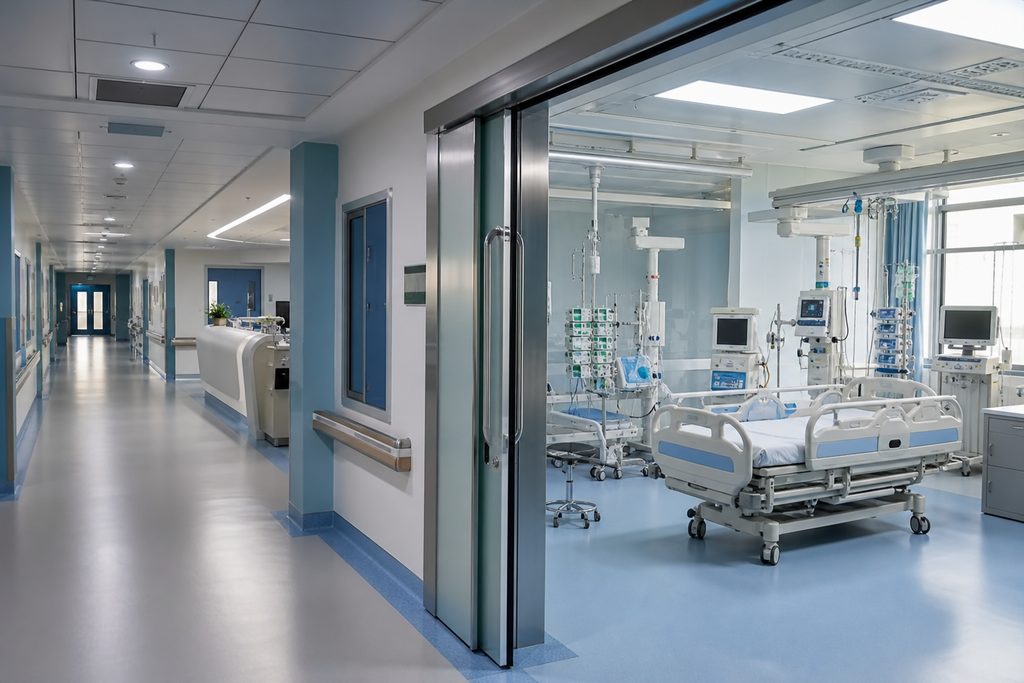
Key Takeaways
- Ruijin Hospital’s Burn Center treats over 1,200 severe burn inpatients annually, making it one of the highest-volume centers globally.
- The center pioneered the “Ruijin Protocol” for fluid resuscitation, a technique adopted worldwide that has significantly reduced mortality in massive burn cases.
- Navigating a Chinese public hospital without local language skills is the single biggest barrier for international patients—registration kiosks, consent forms, and pharmacy instructions are entirely in Mandarin.
- Costs for skin graft surgery here typically range from $8,000 to $25,000 USD, a fraction of what equivalent care costs in the United States or Europe.
The Problem: A Burn Injury That Exceeds Local Capabilities
A deep second-degree burn covering 30% of the body. Or worse, a third-degree burn after an industrial accident. These injuries do not just damage skin. They trigger a systemic cascade: fluid loss, hypothermia, infection risk, and multi-organ stress. Survival depends on the first 48 hours of fluid management and the surgical precision of debridement and grafting that follows. Not every hospital is equipped for this.
In many Western countries, the number of dedicated burn intensive care beds is shrinking. The American Burn Association reports fewer than 2,000 verified burn beds across the entire United States. Wait times for a specialized burn surgeon can stretch days. And the cost? A single day in a US burn ICU often exceeds $10,000 before a single surgical instrument touches the patient. For families facing a catastrophic burn, the system can feel like it is designed to exhaust you—financially and emotionally—before healing even begins.
Who We Are
We are not a hospital. We do not provide medical treatment, surgical procedures, or clinical diagnoses. Our team functions as your logistical architects—we bridge the gap between you and China’s top-tier medical expertise. We handle hospital matching, appointment coordination, visa guidance, and bilingual medical companionship so that when you arrive at a center like Ruijin Hospital’s Burn Department, you arrive prepared, not panicked. Our network covers 340+ top-ranked hospitals across 37 cities, representing the top 5% of China’s 35,000+ hospitals as ranked by the Fudan University Hospital Ranking and JCI accreditation standards.
Why Shanghai Ruijin Hospital Delivers Results for Severe Burns
Ruijin Hospital, affiliated with Shanghai Jiao Tong University School of Medicine, houses a Burn Department that is not just nationally famous. It is the reference standard. When Chinese burn surgeons discuss protocol, they are often discussing methods developed inside these walls.
Clinical Volume That Drives Surgical Mastery
The numbers tell the story. Ruijin’s Burn Center manages over 120,000 outpatient visits and admits more than 1,200 severely burned inpatients each year. A surgeon here will encounter more complex full-thickness burns in a single month than many Western burn surgeons see in a year. This volume translates directly into refined skin graft techniques—split-thickness grafts, mesh grafts, and microskin autografts—performed at a pace and precision that is difficult to replicate in lower-volume settings. For a procedure like escharotomy or tangential excision, repetition breeds mastery.
The “Ruijin Protocol” and Fluid Resuscitation
One reason this center is ranked among the best severe burn ICU China has to offer is its foundational contribution to burn care: the Ruijin Protocol for fluid resuscitation. Developed decades ago through meticulous observation of burn shock pathophysiology, this formula for calculating crystalloid and colloid infusion during the first 24 hours post-burn dramatically lowered the incidence of acute renal failure. It works. The World Health Organization has recognized the center’s contributions. When you are admitted to their ICU, you are not receiving a generic burn protocol. You are receiving the protocol that much of the world has adopted as the gold standard.
Cost Structure Without Quality Compromise
Let’s address the question every international patient asks: how much does skin graft surgery cost in China? At Ruijin, the numbers are structurally lower than Western equivalents—not because of corners cut, but because of systemic economics. Labor costs for surgical teams, ICU nursing ratios, and pharmaceutical supply chains operate on a different base. A complex skin graft procedure with a two-week ICU stay at Ruijin typically ranges from $8,000 to $25,000 USD. That same episode in the US can exceed $150,000. The savings are real. But they come with a trade-off: the logistics are harder to navigate alone.
What Is Skin Grafting? Demystifying the Procedure
Skin grafting sounds invasive—and it is. But the concept is straightforward. A surgeon removes a thin layer of healthy skin from an uninjured donor site on the patient’s body. That harvested skin is then applied to the cleaned, debrided burn wound. Over days, new blood vessels grow into the graft. It takes. The body heals itself with its own tissue.
Ruijin surgeons are particularly skilled in a technique called microskin grafting, where tiny pieces of skin are expanded to cover large surface areas. This matters when donor sites are limited—a patient with 70% burns simply does not have much healthy skin left to harvest. The technique stretches what is available.
Ruijin Hospital Burn Center International Patient Reviews and Realities
Patients traveling from abroad often ask us about Ruijin Hospital burn center international patient reviews. The clinical outcomes are well-documented in medical literature. The patient experience, however, requires context. Ruijin’s public wing is a high-throughput environment. Rounds happen early. Corridors are busy. Nursing communication is primarily in Mandarin. The international patient feedback we have observed follows a pattern: deep respect for surgical results, coupled with significant frustration around language barriers and administrative processes.
This is not a reflection on the quality of care. It is a reflection of a system built for domestic patients. That is precisely where a bilingual medical companion changes the experience—handling registration, translating surgical consent discussions, and clarifying post-operative wound care instructions so nothing is lost between languages.
Is Skin Grafting Safe in China?
A fair question. And one that deserves a direct answer.
Yes. At a top-tier center like Ruijin, the safety profile of skin grafting is comparable to any major Western burn center. The operating theaters are equipped with laminar airflow systems. Infection control protocols are rigorous. The burn ICU maintains strict isolation for patients with open wounds. The clinical question is not whether skin grafting is safe in China. The clinical question is which center you choose. A top-5% hospital produces top-5% outcomes. A lower-tier facility does not. The gap matters.
What You Need to Know Before Going Alone
Traveling to Shanghai for burn surgery is not like booking a hotel. The barriers are real. We lay them out plainly because pretending they do not exist helps no one.
- Visa Requirements: Foreign nationals seeking medical treatment in China must apply for an S2 visa with a medical purpose notation. This requires an official invitation letter from the hospital, medical records translated into Chinese, and proof of sufficient funds. Processing times vary by consulate. A companion or family member also needs an S2 visa—not a tourist L visa. Applying without the correct documentation leads to rejection.
- Payment Systems: Public hospitals in China operate on a prepayment model. You deposit funds at admission, and the hospital draws down against that balance. WeChat Pay and Alipay dominate local transactions, but international credit cards often fail at hospital payment counters. You need a plan for moving large sums efficiently.
- Language in the ICU: Burn ICU nurses monitor vitals, titrate fluids, and document wound status—all in Mandarin. A dressing change order communicated verbally in Chinese must be understood. Relying on a translation app in a sterile environment is not realistic.
How We Help You Navigate This
These barriers exist for structural reasons, not because anyone is trying to make things difficult. Our job is to clear them.
Before you travel, we request your medical records, have them professionally translated, and submit them through Ruijin’s International Medical Center for pre-review. We coordinate with the hospital to secure an official invitation letter for your S2 visa application. When you land in Shanghai, a bilingual medical companion meets you. They accompany you to registration, translate during the surgeon’s consultation, and remain present through the admission process. During your hospital stay, they serve as your voice—clarifying medication instructions, relaying concerns to the nursing team, and ensuring you understand each step of post-graft wound care. After discharge, we arrange follow-up appointments and coordinate with your home-country physician for continuity of care.
How Much Does Burn Surgery Cost at Shanghai Ruijin Hospital?
We get this question daily. The burn surgery cost Shanghai Ruijin Hospital varies by case complexity, graft type, and ICU length of stay. Here is a realistic breakdown based on cases we have coordinated:
| Procedure and Stay | Estimated Cost at Ruijin (USD) | Estimated US Cost (USD) |
|---|---|---|
| Small-area split-thickness graft (no ICU) | $3,000 – $6,000 | $25,000 – $50,000 |
| Moderate burn (15–30% TBSA) with 7-day ICU | $8,000 – $15,000 | $80,000 – $150,000 |
| Severe burn (>40% TBSA) with 14+ day ICU and multiple grafts | $18,000 – $25,000 | $200,000 – $500,000+ |
These figures are estimates. Final costs depend on the actual surgical plan, the number of grafting sessions, and the patient’s clinical course. We always recommend budgeting for a 20% buffer above the initial quote.
How to Book Burn Treatment at Shanghai Ruijin Hospital
You cannot simply call the hospital’s public registration line and book burn treatment Shanghai Ruijin Hospital as an overseas patient. The public outpatient system requires in-person queueing for a registration ticket—often at dawn—and does not support international pre-booking. The path that works is through the hospital’s International Medical Center or VIP Special Needs Clinic. This channel allows for scheduled appointments with senior specialists, English-speaking coordination staff, and priority admission. The consultation coordination fee for this channel starts from $300 USD. If we cannot secure the appointment as promised, the fee is refunded in full.
Any consultation fees you pay—whether for a video consultation or an in-person specialist coordination—are credited in full toward on-the-ground coordination services if you proceed with treatment within 90 days. This is a one-time credit applied to our service coordination fee, never to hospital treatment charges.
Frequently Asked Questions
No. Surgeons typically require a minimum of 10 to 14 days of observation after grafting to confirm graft take and monitor for infection. Flying with a fresh graft also increases the risk of deep vein thrombosis. You should plan for at least two to three weeks in Shanghai after surgery before a long-haul flight. Your surgeon will make the final clearance decision based on wound healing.
Graft failure is a known complication in burn surgery, with published rates ranging from 5% to 15% depending on wound bed quality and post-operative care. Before you leave Shanghai, your Ruijin surgeon will provide a detailed discharge summary and wound care protocol in English. We coordinate with your home physician to transfer records and imaging. If a serious complication arises, we can arrange a follow-up video consultation with the same surgical team. The continuity is planned before you ever leave the hospital.
Hospital quotes cover the surgical procedure, ICU bed charges, standard medications, and routine dressings. Items that often fall outside the initial quote include specialized wound dressings, imported antibiotics if required, and extended ICU stays beyond the estimated duration. We advise all patients to clarify with the hospital’s billing office which line items are included and which are billed separately. Our companion team assists with this conversation so nothing is misunderstood.
The right center depends on your burn depth, total body surface area affected, and any inhalation injury. Ruijin excels in severe thermal burns, chemical burns, and cases requiring extensive microskin grafting. For electrical burns with deep tissue involvement, other centers may have specific subspecialty strengths. We review your medical records before making any hospital recommendation. If Ruijin is not the best match, we tell you. Our credibility depends on honest triage.
Your Next Step
Burn recovery is a long road. The surgical decisions made in the first two weeks determine the shape of the next two years—scar contractures, range of motion, the need for revision surgeries. Getting those early decisions right matters more than almost anything else. Ruijin Hospital’s Burn Center has the volume, the protocol, and the surgical experience to give you a strong start.
If you are considering treatment here, the first step is a conversation—no commitment, no pressure. We review your case, answer your questions about costs and logistics, and help you decide whether this path makes sense for you. Learn more about how we support international patients through our free consultation service.
For more medical information and treatment options in China, visit chinamedservices.com (China Medical Services).
