Afghan Patient Medical Service in China: Priority Access Without the Wait
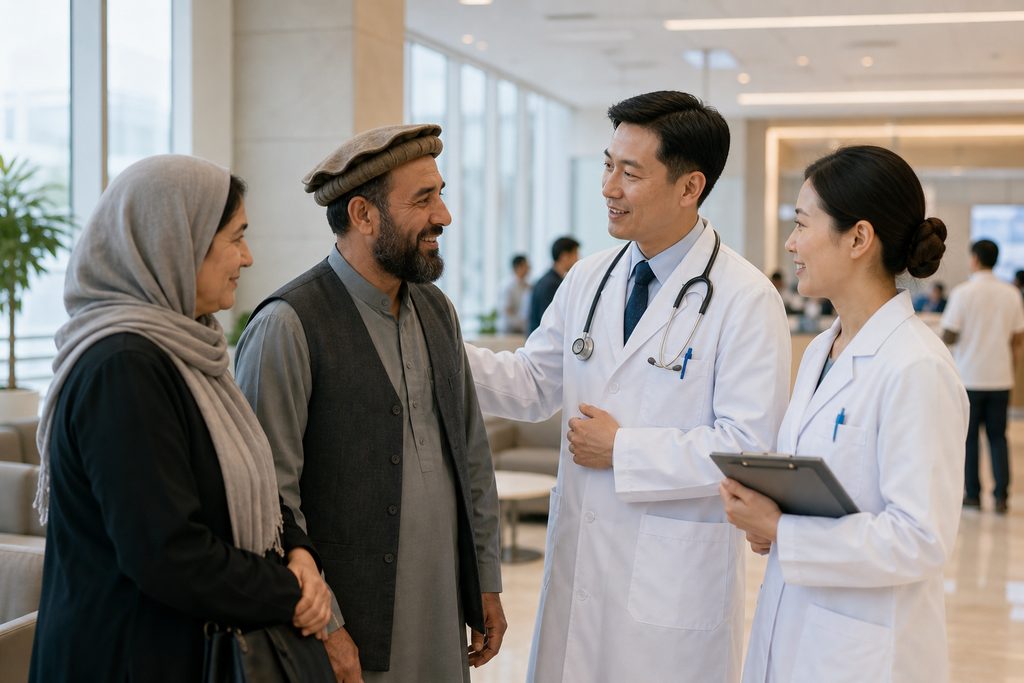
Afghan Patient Medical Service in China: Priority Treatment Access and Support
Getting a serious diagnosis is hard enough. Getting one when the treatment you need is not available locally — that is a different kind of fear entirely. For many Afghan families, the search for advanced cardiac surgery, complex oncology care, or specialized orthopedics leads to one pressing question: where can we go, and how do we even begin? The medical treatment cost China for Afghan patients is often a fraction of what Western or regional private hospitals charge. But cost is only part of the equation. Access, speed, and safety matter just as much.
China’s top-tier hospitals now perform procedures at volumes that are hard to match anywhere else on earth. Fuwai Hospital in Beijing alone completes over 14,000 cardiac surgeries annually — more than any other center globally. For an Afghan patient facing a six-month wait for a heart valve replacement in another country, that statistic is not abstract. It means there is a system built to handle your case without the bottleneck. Our team exists to connect you to that system. We handle the logistics — the hospital matching, the visa paperwork, the bilingual escort who stays with you from airport pickup to post-operative discharge. We are not doctors. We are the bridge between you and the expertise you are looking for.
Key Takeaways
- China’s top 5% of hospitals — ranked by the Fudan University hospital rankings and JCI accreditation — deliver outcomes comparable to or exceeding Western benchmarks at approximately one-fifth to one-tenth the cost.
- Priority access through hospital international VIP channels means Afghan patients can often secure a surgery date within weeks, not months, after the initial consultation.
- Navigating China’s hospital system independently is extremely difficult without Mandarin fluency and local knowledge — the visa category is specific (S2), and public outpatient departments cannot be pre-booked from overseas.
- Any patient considering this path should understand that priority coordination is a logistical service, not a clinical guarantee — and that transparency about what is and is not possible is the foundation of a safe medical journey.
The Problem: When the Care You Need Is Out of Reach
A 2023 report by the World Health Organization on Afghanistan’s health system noted that specialized tertiary care — the kind required for complex cancer treatment, pediatric cardiac surgery, or advanced neurosurgery — remains severely limited domestically. Patients who can afford to travel often look to India, Turkey, or Pakistan. But those destinations have their own bottlenecks. Wait times for a coronary artery bypass graft at a reputable Indian private hospital can stretch to two or three months for international patients. And the all-in cost, including travel, accommodation, and hospital fees, still runs between $15,000 and $25,000.
That is a heavy burden. And for a family in Kabul or Herat, the clock is always ticking. A cardiac condition does not wait for a visa appointment. An oncology protocol delayed by eight weeks can change the staging of the disease. The question is not just “where can we go.” It is “where can we go fast enough, and safely enough, without bankrupting the family?” This is the gap that China’s hospital system — when accessed through the right channels — is uniquely positioned to fill.
Who We Are
We are a medical concierge organization based in China, built specifically to serve international patients who need clarity, speed, and reliable coordination. We do not provide medical treatment. We do not offer clinical diagnoses or prescribe therapies. What we do is map your medical needs to the right hospital, from a database of 340+ top-ranked hospitals across 37 cities, and then handle every logistical layer between you and the operating room. That includes document translation, visa invitation letters, hospital appointment coordination through official international departments, bilingual medical companions who stay with you throughout your stay, and post-discharge follow-up arrangements. We are your logistical architects. Nothing more, nothing less.
Why China Delivers Results for Afghan Patients
Clinical Volume That Reshapes Surgical Expertise
There is a straightforward relationship between how often a surgical team performs a procedure and how good their outcomes are. This is well-documented in the medical literature — a 2016 study in The Lancet examining over 500,000 surgical cases found that for complex procedures like esophagectomy and pancreatic resection, hospitals in the highest volume quartile had mortality rates 30% to 40% lower than those in the lowest. China’s top hospitals operate at volumes that are almost unimaginable in most Western or regional centers. A senior orthopedic surgeon at a major Chinese public hospital may perform 300 to 500 joint replacements annually. The average US orthopedic surgeon performs approximately 65. For an Afghan patient needing a complex revision surgery, that difference in repetition translates directly into intraoperative judgment — the kind you cannot get from a textbook.
Technology Infrastructure Built for Throughput
Walk into the international department of a hospital like Zhongshan Hospital in Shanghai or Peking Union Medical College Hospital in Beijing, and you will see something that surprises most first-time visitors: the sheer operational speed. Registration, blood draws, imaging, and specialist consultation often happen within a single morning — not because corners are cut, but because these hospitals are designed to process thousands of patients per day. Digital health records, centralized scheduling, and in-house laboratory networks compress timelines that would span weeks elsewhere into days. For an Afghan patient traveling on a fixed medical visa window, that compression is everything. It means you can complete the full diagnostic workup, receive a surgical plan, and undergo the procedure within a single trip.
The Cost Equation: Structural, Not Sacrificial
Let us address the obvious question directly: why is the medical treatment cost China for Afghan patients so much lower than in the US or Europe? A cardiac bypass surgery at a top Chinese public hospital typically ranges from $12,000 to $20,000. The same procedure in the United States averages over $120,000. The gap is not explained by lower quality. It is explained by structural economics — lower physician labor costs, higher patient throughput, standardized clinical pathways that reduce waste, and a hospital financing model that does not carry the same administrative overhead burden as the US insurance-driven system. Clinical outcomes at Fudan-ranked hospitals are tracked and published. The data does not show a quality gap that corresponds to the price gap. What it shows is a different economic model delivering comparable or superior results at a fraction of the cost.
| Procedure | Estimated Cost in China (USD) | Estimated Cost in US (USD) |
|---|---|---|
| Coronary Artery Bypass Graft | $12,000 – $20,000 | $120,000+ |
| Total Hip Replacement | $8,000 – $15,000 | $40,000 – $60,000 |
| Laparoscopic Gastric Sleeve | $6,000 – $10,000 | $20,000 – $30,000 |
| Thyroidectomy (Complex) | $3,000 – $6,000 | $15,000 – $25,000 |
Note: All cost ranges are estimates and vary by hospital, case complexity, and length of stay. These figures reflect treatment at public hospital international departments or VIP wings. Private international hospitals will be higher.
What You Need to Know Before Going Alone
We tell every Afghan family we speak with the same thing: China’s medical system is extraordinary, but it is not built for independent international patients. The barriers are real. They are not insurmountable, but underestimating them leads to wasted time, wasted money, and sometimes worse. Here is what you are up against.
- Visa Requirements Are Specific: Medical treatment in China requires an S2 visa with a notation specifying the purpose of medical treatment. Accompanying family members also need S2 visas. This is not an M visa — M is for commercial trade, and using it for medical purposes will get you turned away at the hospital international department or, worse, at the border. The hospital must issue an official invitation letter confirming your treatment arrangement before the visa can be processed. Getting that letter without a local coordinator who has direct relationships with hospital international offices is extremely difficult.
- Public Outpatient Departments Cannot Be Pre-Booked from Overseas: This is the single biggest misconception we encounter. China’s public hospital outpatient system operates on a same-day registration model. You cannot email a top cardiologist’s office from Kabul and book an appointment for next month. The only way to secure a confirmed consultation and surgery slot before you board a plane is through the hospital’s official international department or VIP channel — a separate system with dedicated coordinators, English-speaking staff, and advance scheduling capability. Accessing that channel requires someone on the ground who knows the process.
- Language Barriers Are Absolute: Even in Beijing and Shanghai, English fluency among hospital administrative staff is rare outside designated international departments. Registration kiosks, billing systems, pharmacy instructions, and discharge paperwork are in Mandarin. A single missed instruction about fasting before a blood test or the wrong queue at the imaging center can cost an entire day. For a patient who is already unwell, that kind of friction is not just frustrating — it is medically risky.
How We Help You Navigate This
These barriers exist for structural reasons, not because anyone is trying to make things difficult. China’s hospital system was built to serve a domestic population of 1.4 billion people. The international patient pathway is a specialized overlay, and it requires specialized navigation. That is what we do.
When an Afghan patient contacts us, the first step is always a detailed review of the medical case — current diagnosis, imaging reports, pathology slides if relevant, and treatment history. We translate these documents into clinical Chinese and submit them to the international departments of two or three hospitals best matched to the condition. We do not guess at which hospital is best. We reference the Fudan University specialty rankings across 45 clinical departments — the most authoritative hospital evaluation system in China — and match your needs to the institutions that rank in the top 10 nationally for your specific condition. Once a hospital confirms they can accept the case and provides a treatment plan and cost estimate, we handle the invitation letter for your S2 visa application. A bilingual medical companion meets you at the airport. That companion stays with you through every step: registration, consultation, pre-operative testing, admission, surgery day, and discharge. They translate in real time, handle payments, coordinate with the nursing station, and make sure nothing gets lost in the gap between two languages and two cultures.
After discharge, we remain in contact. Follow-up appointments, medication adjustments, and liaison with your doctor back in Afghanistan — all of this is part of the coordination. The goal is not just to get you through surgery. It is to make sure you recover well and have a clear line of communication back to the team that treated you.
Is Healthcare in China Safe for Afghan Patients?
This question comes up in almost every initial conversation we have. It is a fair question. The short answer: at the hospitals we work with, yes — and the data supports that.
China’s top-tier hospitals are subject to multiple layers of quality oversight. The Fudan ranking system evaluates clinical reputation, research output, and specialty excellence. JCI (Joint Commission International) accreditation — the same standard applied to hospitals in the US, Europe, and the Middle East — has been earned by a growing number of Chinese institutions, particularly the private international hospitals and the international wings of major public centers. Infection control protocols, surgical safety checklists, and adverse event reporting systems are in place and audited. The hospitals we connect patients to are drawn from the top 5% of China’s 35,000+ hospitals. These are not experimental facilities. They are established centers with track records measured in decades and patient volumes measured in the tens of thousands annually.
Safety also depends on coordination. A safe medical journey is one where nothing falls through the cracks — where the visa is correct, the appointment is confirmed, the translator is present, and the discharge plan is clear. That is the layer we provide.
Frequently Asked Questions
Priority access works through hospital international departments and VIP channels — not through the standard public outpatient system. These channels allow advance scheduling of consultations and surgery dates before you travel. Once we submit your translated medical records and the hospital confirms acceptance, a treatment timeline is established. For many procedures, surgery can be scheduled within two to four weeks of arrival, depending on the pre-operative workup required. This is not queue-jumping in an unethical sense — it is a separate, officially designated pathway for international patients that exists in parallel to the domestic system.
Medical treatment in China requires an S2 visa with a notation specifying the purpose of treatment. The process starts with the hospital issuing an official invitation letter — a document that confirms your treatment arrangement and is required by the Chinese embassy or consulate processing your application. We coordinate directly with the hospital’s international department to secure this letter. We also guide you through the full application package: passport validity requirements, photo specifications, proof of relationship for accompanying family members, and financial documentation. The visa itself is issued by Chinese diplomatic missions — we do not control that process, but we make sure your application is complete and correct the first time.
We do not sell pre-packaged “treatment bundles” because every case is different. What we provide is a coordinated service that covers the logistical layers: hospital matching based on your specific diagnosis, appointment coordination through official international channels, bilingual medical companion services (from $200 per day), airport transfers, visa invitation support, and ongoing case management. The hospital’s treatment costs — surgery, anesthesia, medications, inpatient stay — are paid directly to the hospital and vary by case complexity. Our coordination fees are transparent and quoted upfront. Any consultation or coordination fee paid to us is fully credited toward on-the-ground coordination if you proceed with treatment within 90 days.
This is the hardest question, and it deserves a straight answer. The hospitals we work with have established protocols for managing complications — they are major academic medical centers with intensive care units, emergency response teams, and the full range of specialty backup. Your bilingual companion remains with you and acts as your communication bridge with the clinical team. If a prolonged hospital stay is required, we assist with visa extensions and family accommodation. We do not abandon patients after a procedure. That said, no medical procedure anywhere in the world is risk-free. We encourage every patient to discuss complication rates and contingency plans directly with the treating surgeon during the pre-operative consultation.
Your Next Step
Choosing to travel abroad for medical treatment is one of the most consequential decisions a family can make. The hospital matters. The surgeon matters. But what often determines whether the experience is safe and successful — or exhausting and frightening — is the coordination layer in between. That is the layer we have spent years building, specifically for patients who cannot afford confusion or delay.
If you are considering treatment in China, start with a conversation. Tell us about the diagnosis, share what records you have, and let us give you an honest assessment of what is possible — which hospitals are appropriate, what the timeline looks like, and what the real costs will be. There is no charge for that initial discussion. It is how we make sure that if you do decide to move forward, you are doing so with your eyes wide open. Reach out for a free consultation today — we will take it from there.
Disclaimer: This article is for informational purposes only and does not constitute medical advice. All treatment decisions should be made in consultation with qualified medical professionals. Cost estimates are provided as general guidance and vary by hospital, case complexity, and individual patient factors.
For more medical information and treatment options in China, visit chinamedservices.com (China Medical Services).
