TOMO Therapy China: Treating Multiple Metastases with Helical IMRT
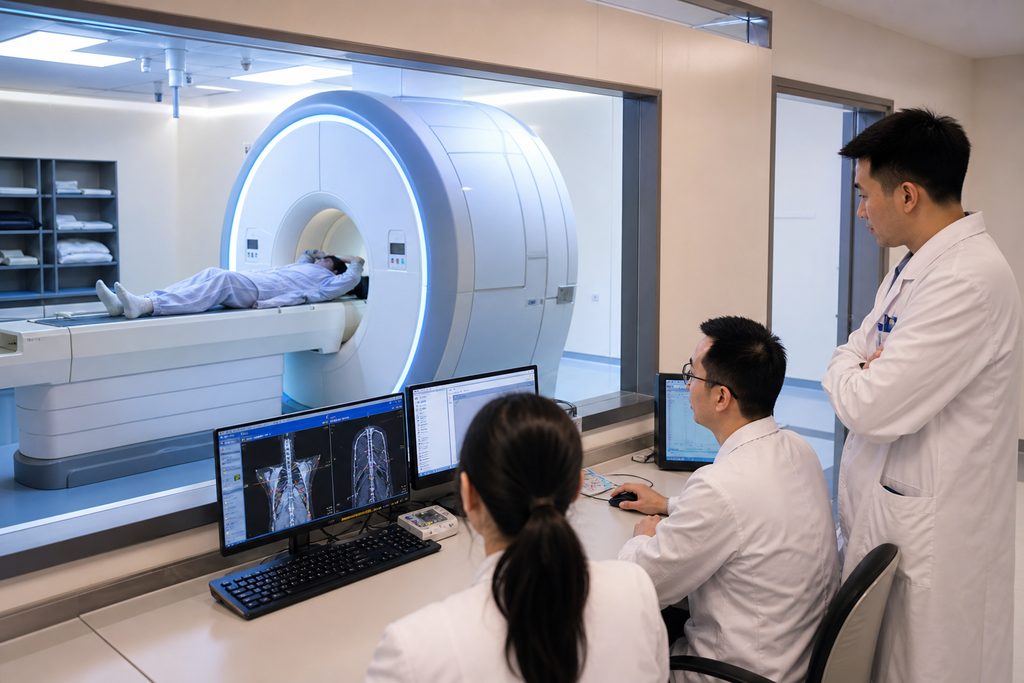
When 42-year-old Michael first heard the diagnosis, he had no idea where to start looking for treatment. Metastatic disease. Multiple sites. His local oncologist laid out the options, but the word that stuck with him was “palliative.” Manage symptoms. Control spread. The underlying message was clear: curative intent was off the table with conventional radiation. You simply cannot target five lesions scattered across the lungs and liver without causing unacceptable collateral damage. Or can you?
That question is what brings a growing number of patients to explore a specific technology available in China. It is called helical intensity modulated radiation therapy, delivered by a system named TomoTherapy. And for cases like Michael’s—where metastases are too numerous or awkwardly placed for traditional stereotactic radiosurgery—it represents a genuine shift in what is technically possible.
We are not a hospital. We do not provide medical treatment or clinical diagnoses. Our team functions as your logistical architects, bridging the gap between you and China’s top-tier medical expertise. We handle the complexity so you can focus on the treatment.
What Is Helical IMRT and How Does It Work for Cancer?
Think of a CT scanner and a linear accelerator fused into one machine. That is the core concept. The patient moves continuously through a rotating gantry while 64 binary multileaf collimators sculpt the radiation beam. The result is a 360-degree, spiral delivery pattern. This is fundamentally different from standard IMRT, which typically uses 5 to 9 fixed beam angles.
Why does this matter for multiple metastases?
Fixed-beam IMRT treats one or two targets well. But when you have five, six, or ten lesions, the treatment plans become impossibly complex. You end up with overlapping dose clouds and hot spots in healthy tissue. TomoTherapy treats the entire axial plane as one continuous target zone. The planning system optimizes dose across the entire volume, not lesion by lesion. That means a single session can ablate tumors in the lung, spine, and liver simultaneously while keeping critical organs—the spinal cord, esophagus, heart—below tolerance thresholds.
A 2019 study published in *Radiation Oncology* examined helical IMRT in 38 patients with 104 oligometastatic lesions. Local control at one year was 88.5%. Grade 3 or higher acute toxicity occurred in just 2.6% of patients. Those numbers matter. They tell you the technology works not just in theory, but in real clinical practice.
Can TOMO Therapy Treat Multiple Metastases?
Yes. This is precisely the clinical scenario where helical delivery outperforms every other radiation modality.
Conventional radiosurgery platforms—Gamma Knife, CyberKnife, standard linac-based SBRT—excel at treating one to three lesions. Beyond that, treatment time balloons. Plan complexity multiplies. And dosimetric quality degrades. TomoTherapy flips this equation. Because the treatment is delivered in a continuous spiral, treating ten lung nodules takes roughly the same time as treating two. The planning system handles the complexity, not the physicist.
We have seen cases where patients with 8 or more metastatic lesions—patients told they had no radiation options—received comprehensive helical IMRT plans at Chinese centers with curative intent. Lung metastases. Liver metastases. Adrenal metastases. Bone metastases. All treated in a single integrated plan.
TOMO Therapy Cost China: A Detailed Breakdown
Let us address the question that sits at the center of every international patient’s decision. What does TOMO therapy cost in China?
The price range for a full course of helical IMRT—typically 5 to 15 fractions depending on lesion number, size, and location—falls between $8,000 and $18,000 USD. This includes treatment planning, physics QA, image guidance for each fraction, and the radiation delivery itself. It does not include consultation fees, diagnostic imaging, or inpatient care if required.
Compare this to the United States. A similar TomoTherapy course at a major academic center can run from $50,000 to $90,000, sometimes higher when multiple lesions are involved. The structural reasons for this gap are straightforward. Lower labor costs for physicists and therapists. Higher patient throughput. And a hospital reimbursement system that does not inflate charges to the same degree as the US insurance-driven model.
| Cost Component | China (USD) | United States (USD) |
|---|---|---|
| Treatment planning & physics | $1,500 – $3,000 | $8,000 – $15,000 |
| Per-fraction delivery (5–15 fx) | $800 – $1,200 each | $4,000 – $6,000 each |
| Full course (10 fractions, typical) | $9,500 – $15,000 | $48,000 – $75,000 |
| Image guidance (per fraction) | Included | $500 – $1,000 |
Prices vary by hospital and case complexity. A public hospital international department will charge differently than a private cancer center. The number of lesions, total treatment volume, and need for adaptive replanning all shift the final figure. We always recommend obtaining a formal quotation after the clinical team reviews your imaging and history.
Best TOMO Therapy Hospital Shanghai: Where Expertise Concentrates
Shanghai houses several centers with extensive helical IMRT experience. The volume matters. A center that treats 200+ TomoTherapy cases annually has refined its workflows, its physics protocols, and its clinical decision-making in ways a low-volume center simply cannot match.
Shanghai Proton and Heavy Ion Center operates TomoTherapy alongside its particle therapy systems. The physics team there handles some of the most complex multi-lesion plans in the country. Fudan University Shanghai Cancer Center—ranked among China’s top oncology hospitals—maintains a dedicated helical IMRT program with published outcomes in nasopharyngeal, lung, and oligometastatic disease. Ruijin Hospital, affiliated with Shanghai Jiao Tong University School of Medicine, integrates TomoTherapy into its radiation oncology department with a strong emphasis on thoracic and abdominal metastases.
These are not the only options. Shanghai concentrates more medical resources than most countries’ entire healthcare systems. But choosing between them requires understanding which center’s clinical strengths align with your specific disease pattern. That is where our team comes in.
How Does Helical IMRT Work for Cancer? The Technical Edge
Let us go deeper into the mechanism, because understanding this helps you evaluate treatment recommendations intelligently.
A standard linear accelerator delivers radiation from a gantry that rotates to fixed positions. The multileaf collimator shapes the beam. The couch moves in discrete steps between fields. This works beautifully for localized tumors.
But metastases present a different challenge. They are distributed. They move with breathing. They sit next to sensitive structures. Helical IMRT solves these problems through continuous delivery. The couch slides through the bore at a constant speed while the gantry rotates continuously. The leaves modulate the beam 100 times per second. Every rotation treats a thin axial slice of the body.
The result? A dose distribution that conforms to multiple targets simultaneously with gradients so steep that a spinal metastasis can receive an ablative dose while the cord 3 millimeters away stays within safe limits. No fixed-beam technique can match this for distributed targets.
Image guidance is built in. Before each fraction, a megavoltage CT scan is acquired with the patient in the treatment position. The system registers this scan to the planning CT and adjusts the patient position automatically. If a tumor has shrunk or shifted, the team can replan adaptively. This daily CT verification is not optional—it is the standard workflow. It means you treat what is actually there, not what was there two weeks ago during simulation.
Booking TOMO Radiation Treatment in China: The Real Pathway
Here is where we must be direct. You cannot simply email a Chinese public hospital and book a TomoTherapy slot. The system does not work that way.
Public hospitals require an in-person consultation before any treatment can be scheduled. The radiation oncologist must evaluate you physically, review your imaging, and determine medical necessity. There is no online booking portal for international patients seeking advanced radiotherapy. The international departments that do exist often have limited English capacity and long response times.
This is not bureaucratic obstruction. It is a clinical safeguard. Helical IMRT for multiple metastases is high-stakes treatment. A responsible physician will not commit to a plan without seeing the patient, reviewing the full history, and confirming that the technology matches the clinical need.
So how do you navigate this?
You need someone who speaks the language, understands the hospital hierarchies, and knows which department actually performs the treatment. You need pre-arrival coordination: imaging review, department matching, appointment scheduling, and a clear timeline. Once you arrive, you need a bilingual companion who can translate clinical conversations accurately—not just words, but nuance. “The dose to the cord is within tolerance” means something very specific. You want that translated precisely.
What You Need to Know Before Going Alone
The barriers are real. Acknowledging them builds trust. Let us name them plainly.
Language and navigation: China’s top hospitals are enormous. Daily outpatient volumes exceed 10,000 patients at major centers. Signage is predominantly in Chinese. Registration counters, payment windows, pharmacy queues, and imaging departments are often in separate buildings connected by crowded corridors. Without Chinese language ability, a simple task like paying for a CT scan becomes a multi-hour ordeal.
Payment systems: Public hospitals operate on a prepaid balance model. You deposit funds at admission or before treatment begins. The hospital deducts charges daily. When the balance runs low, treatment pauses until you top up. International credit cards are not reliably accepted at hospital cashiers. UnionPay dominates. Wire transfers can take days to clear. You need a local payment strategy before you arrive.
Medical records and imaging: Chinese hospitals require specific documentation formats. Your home country pathology slides may need re-reading by the treating hospital’s pathologist. Imaging must be provided in DICOM format on CD or via secure electronic transfer—not printed films, not JPEGs on a USB drive. Missing one document can delay your consultation by a week.
These barriers exist for structural reasons. They are not designed to exclude international patients. But they do, effectively, unless you have local expertise bridging the gap.
How We Help You Navigate This
Our team functions as your operational backbone. We do not provide medical advice. We provide the conditions under which you can receive medical advice from the right experts, without friction.
Before you travel, we handle hospital matching. You send us your imaging, pathology reports, and clinical summary. We identify the centers with the right TomoTherapy volume and subspecialty expertise for your specific disease pattern. We coordinate with the international department to schedule your initial consultation and confirm that the radiation oncology team has reviewed your case preliminarily. We provide a clear cost estimate so you arrive with realistic financial expectations.
During your stay, a bilingual medical companion accompanies you. This person handles registration, payment, queue management, and navigation. They translate clinical conversations in real time. They ensure your questions get answered and your concerns get communicated. They are not a tour guide. They are a professional who understands medical terminology and hospital workflows. Learn more about how our companion service works.
After treatment, we coordinate follow-up imaging schedules and remote consultation arrangements. If you need a written second opinion from a top-ranked Chinese hospital, we facilitate that through the proper channels.
The goal is simple. You focus entirely on your treatment and recovery. We absorb the logistical complexity.
Frequently Asked Questions
Is helical IMRT the same as standard IMRT?
No. Standard IMRT uses fixed gantry angles, typically 5 to 9. Helical IMRT uses continuous 360-degree rotation with simultaneous couch movement. This spiral delivery produces more conformal dose distributions for complex, multi-target cases. For a single small tumor, the clinical difference may be negligible. For multiple metastases, helical delivery is often dosimetrically superior.
How long does a full TomoTherapy course take in China?
Most oligometastatic cases are treated in 5 to 10 fractions delivered daily, Monday through Friday. That means one to two weeks of treatment. Each session lasts 15 to 30 minutes on the treatment table, though setup and imaging verification add time. Plan on 45 to 60 minutes per session from arrival to departure. The total stay in China, including initial consultation, simulation, treatment, and a brief post-treatment observation period, typically runs three to four weeks.
What if the treatment does not work or complications arise?
Helical IMRT, like all radiation therapy, carries risks. Acute side effects—fatigue, skin irritation, inflammation of treated organs—are usually manageable and temporary. Late effects depend on dose and location. The Chinese centers we work with maintain standard follow-up protocols and will manage any treatment-related complications during your stay. We strongly recommend establishing a follow-up plan with your home-country oncologist before you travel. No treatment guarantees results. The published local control rates are encouraging, but every patient’s biology is different.
Can I combine TomoTherapy with systemic therapy during my stay?
This is a clinical decision made by your treating oncologist. Many patients receive concurrent or sequential systemic therapy—chemotherapy, targeted therapy, immunotherapy—alongside helical IMRT. The sequencing matters. Some drugs act as radiosensitizers and must be timed carefully. Your Chinese radiation oncologist will coordinate with your referring medical oncologist to design an integrated plan. We facilitate that communication but do not dictate the medical strategy.
Your Next Step
Michael’s story ended better than his initial prognosis suggested. After 10 fractions of helical IMRT at a Shanghai center, his five metastatic lesions showed complete metabolic response on follow-up PET-CT. He returned home and resumed systemic therapy. Two years later, he remains progression-free. Not every case follows this trajectory. But the technology that made his outcome possible is available, and it is accessible at a fraction of Western costs.
If you are facing a diagnosis of multiple metastases and have been told radiation is not an option, it may be worth a second look. Helical IMRT in China will not be right for everyone. But for the right patient, it represents a genuine treatment window where one did not exist before.
*This article is for informational purposes only and does not constitute medical advice. Treatment decisions should be made in consultation with a qualified radiation oncologist after thorough clinical evaluation. Outcomes vary by individual case.*
For more medical information and treatment options in China, visit chinamedservices.com (China Medical Services).
