Hip Replacement China: How Irish Patients Skip 5-Year Public Delays
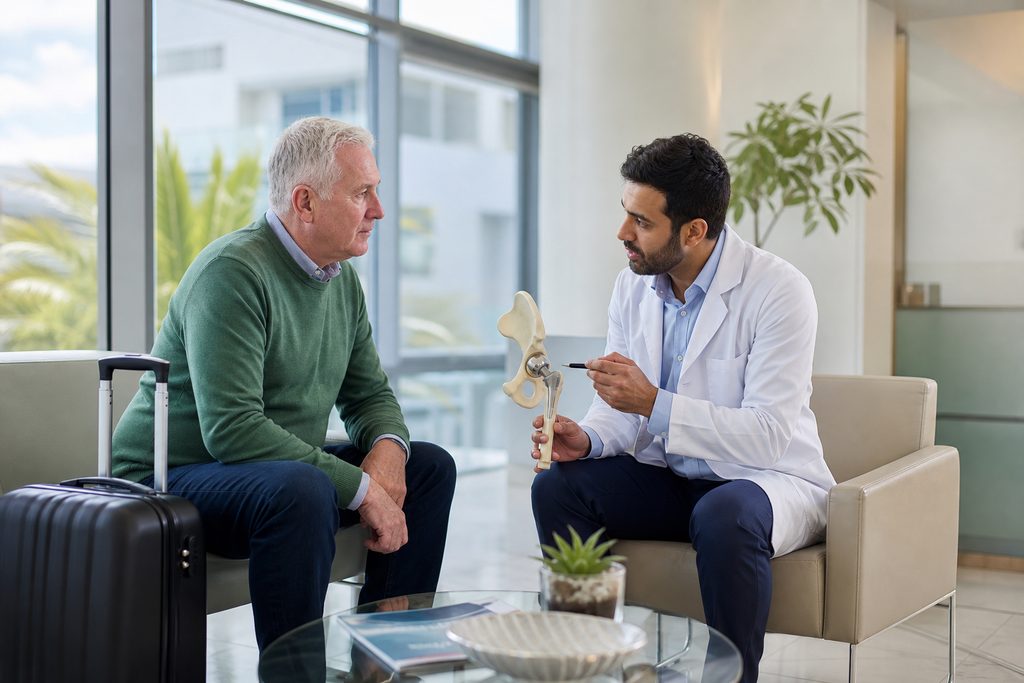
When 67-year-old Liam from Galway finally got his orthopedic consultation letter, the date on it made his heart sink. Thirty-four months. Nearly three years before he’d even meet the surgeon who might operate on his hip. He’d already been limping for two. The pain had stolen his golf game, his sleep, and the long walks with his wife along Salthill Promenade. His GP had been blunt: “Liam, the public list is a disaster. If you had the money for private here, you’d be looking at €18,000 to €25,000 and still waiting six to nine months.”
Liam started searching. That’s how he found himself looking at orthopedic centers 5,000 miles east of Dublin.
The question that brought him — and perhaps you — here is straightforward: can an Irish patient actually get a hip replacement in China, safely, for less money, without the soul-crushing wait? The answer is yes. But the path requires understanding exactly how the system works, what it costs, and where the real risks lie. Our team has coordinated care for patients from Dublin, Cork, and Belfast who made this same calculation. Here’s what the journey actually looks like.
## How This Actually Works, Step by Step
The process starts long before you book a flight. Most Irish patients send us their existing medical records first — the X-rays, the MRI reports, the GP referral letters. You’ve already done the hard diagnostic work at home. We translate the relevant documents into clinical Chinese and route them to the orthopedic department at one of the hospitals in our network. This network covers over 340 top-ranked hospitals across 37 cities, all drawn from the top 5% of China’s 35,000-plus medical institutions as ranked by the Fudan University hospital rankings and JCI accreditation standards.
The orthopedic team reviews your films and history. Within five to seven business days, you receive a written second opinion. This document tells you whether you’re a surgical candidate, what approach they recommend, and a preliminary treatment plan. A written second opinion from a top-tier specialist typically costs $300 to $500. It’s not a prescription — it’s expert analysis you can take to your own consultant if you choose.
If you decide to proceed, the next step is usually a video consultation. You speak directly with the surgeon who would perform your procedure. Cost runs $500 to $800 for a top-specialist video consultation. You ask your questions. You gauge their experience. You hear their voice. This step matters enormously — it’s where trust either forms or doesn’t.
Only after the video consult, with a clear surgical plan agreed upon, do we coordinate the practical logistics: hospital admission scheduling, S2 visa documentation, accommodation near the hospital, and an arrival date. The S2 visa is the short-stay category used for private medical treatment in China. Processing typically takes one to three weeks once you have the hospital’s invitation letter and supporting documents.
You fly. You land. Our bilingual medical companion meets you at the airport. You’re not navigating this alone.
## What Does Hip Replacement Cost China 2025 Actually Look Like for Irish Patients?
Let’s talk numbers. The hip replacement cost China 2025 varies by hospital tier, implant type, and whether you go through a public hospital’s international department or a private international hospital. Here’s what Irish patients should budget:
| Cost Component | Range (USD) | Notes |
|---|---|---|
| Total hip replacement surgery (top public hospital, international dept) | $13,000 – $18,000 | Includes implant, surgeon fee, hospital stay (5-7 days typically), anesthesia |
| Total hip replacement (private international hospital) | $18,000 – $22,000 | English-speaking staff, direct insurance billing possible at some facilities |
| Written second opinion | $300 – $500 | Credited toward coordination fee if you proceed within 90 days |
| Top-specialist video consultation | $500 – $800 | Same credit applies |
| Bilingual medical companion | from $200/day | Half-day or full-day options |
| Airport transfer (round-trip) | $200 | |
| VIP end-to-end coordination | $5,000 – $8,000 | Full-service package for patients wanting comprehensive support |
Compare that to Ireland. Private hip replacement in Dublin or Cork runs €18,000 to €25,000 — roughly $19,500 to $27,000 at current exchange rates. And you’re still waiting months. The public system? “Free” in euros, but the cost in years of pain, lost mobility, and deteriorating quality of life is brutal. The HSE’s own data shows that in some regions, over 5,800 people were waiting more than 18 months for an orthopedic procedure as of late 2024. Some wait five years or longer.
So the question “can I get a hip replacement in China faster than Ireland” answers itself. The Irish public system cannot offer speed. China’s top orthopedic centers can schedule surgery within two to four weeks of your video consultation approval — sometimes faster if your case is straightforward and a slot opens.
That said, these are reference ranges. Final pricing always depends on your specific clinical needs, implant selection, and the hospital’s current fee schedule. Anyone who quotes you a firm price without reviewing your films first is guessing.
## How Long Is the Wait for Hip Surgery in China, Realistically?
“How long is the wait for hip surgery in China” is the question every Irish patient asks. The honest answer has two parts.
Part one: the clinical queue. At a major orthopedic center like Peking University Third Hospital or Shanghai Sixth People’s Hospital — both consistently ranked among the best orthopedic hospitals China for foreigners through their international departments — the wait from confirmed surgical plan to operating table is typically two to four weeks. Not months. Not years. Weeks.
Part two: the preparation queue. This is where people get the timeline wrong. Here’s a realistic breakdown:
| Stage | Typical Duration |
|---|---|
| Document collection and translation | 3–5 business days |
| Written second opinion turnaround | 5–7 business days |
| Scheduling and conducting video consultation | 1–2 weeks (depends on specialist availability) |
| Hospital issues invitation letter for S2 visa | 3–5 business days after surgical plan confirmed |
| S2 visa processing (Chinese embassy/consulate) | 1–3 weeks (varies by country and season) |
| Travel and pre-op assessments at the hospital | 2–4 days before surgery |
| Surgery and inpatient recovery | 5–7 days in hospital |
| Local recovery before flying home | 1–2 weeks (surgeon-dependent clearance) |
From first contact to surgery, plan on six to ten weeks. Not six months. Not six years. Six to ten weeks. That’s the realistic window when everything moves normally.
The part patients forget? You need to stay in China for a period after discharge. Most surgeons want to see you for at least one follow-up before clearing you to fly. A long-haul flight immediately after joint replacement raises DVT risk. You’ll need to remain in the city for ten to fourteen days post-discharge. Budget for accommodation accordingly.
## What Can Go Wrong — and What Happens Then
Every surgical journey carries risk. Acknowledging that openly is how you make good decisions.
Infection. Deep joint infection after hip replacement occurs in roughly 1–2% of cases globally. China’s top orthopedic centers report rates consistent with international benchmarks. If it happens, you need revision surgery and extended antibiotics. This is not a complication you want to manage from Dublin without the original surgical team involved. Ask during your video consultation: “What is your department’s 90-day infection rate, and what follow-up protocol do you offer international patients who return home?”
Implant issues. Different manufacturers dominate different markets. The implant your Chinese surgeon recommends may not be the brand your Irish physiotherapist knows best. This isn’t necessarily a problem — the major global manufacturers all have presence in China — but you need the implant’s full documentation for your home records. Our team ensures you leave with complete surgical notes and implant identification cards in English.
DVT on the flight home. Your surgeon will prescribe anticoagulation. Follow it. The long flight back to Dublin or Shannon is the highest-risk window after you leave the hospital.
Follow-up gap. Once you’re back in Ireland, your local GP or orthopedic team inherits your care. Some Irish consultants are skeptical of surgery performed abroad. Not all. But some. Before you travel, discuss your plan with your GP. Ask if they’ll handle routine post-op checks and physiotherapy coordination. If they refuse, know that before you book the flight.
## What Makes Someone a Good Candidate for This Path
Not every Irish hip patient should fly to China. The people this works best for share a few characteristics.
They’re mobile enough to travel. If you can’t manage a long-haul flight with assistance, you’re not a candidate for surgical tourism anywhere. You need baseline mobility to get on the plane.
They’ve done the diagnostic work at home. You already have imaging and a confirmed osteoarthritis diagnosis. You’re not coming to China to figure out what’s wrong — you’re coming because you know what’s wrong and you’ve decided the Irish wait is unacceptable.
They’re paying out of pocket. The Irish HSE’s Cross-Border Healthcare Directive theoretically allows reimbursement for treatment in EU/EEA countries, but China is not covered. The Treatment Abroad Scheme doesn’t apply here either. You’re self-funding. Some Irish patients use medical loans, family support, or early pension drawdowns. Know your funding source before you start.
They’re psychologically ready for the cultural distance. A Shanghai orthopedic ward is not a Dublin private clinic. The food is different. The language barrier is real — which is why a bilingual companion matters. The nursing style differs. Most patients adapt quickly. Some don’t. Be honest with yourself about which group you’re in.
Hip replacement packages China all inclusive do exist through some private international hospitals — these bundle surgery, accommodation, rehabilitation, and translation services into one price. They’re convenient. They’re also more expensive than coordinating components yourself. For patients who want simplicity and a single point of contact, an all-inclusive package at a JCI-accredited private hospital like United Family or Jiahui can make sense. Expect to pay at the higher end of the range — $20,000 and above — for that convenience.
Medical tourism China hip surgery reviews from Western patients are mixed, as they are for any destination. The satisfied patients typically share one trait: they did thorough pre-travel due diligence, spoke directly with their surgeon before committing, and had realistic expectations about the non-clinical aspects of the experience. The unhappy ones often skipped the video consultation or chose a facility based on price alone.
## Practical Considerations: Records, Visas, and What Comes After
Your medical records need to be in English and complete. X-ray reports, MRI findings, consultant notes, medication lists, allergy information. If something is only in Irish or handwritten and illegible, get it typed and translated before sending. Our team handles clinical Chinese translation, but we need clean source documents.
The S2 visa is the correct category for private medical treatment. It requires an invitation letter from the admitting hospital. We coordinate that letter once your surgical plan is confirmed. The S2 visa is typically issued for 30 to 90 days. If your recovery requires a longer stay, extensions are sometimes possible through the local Exit-Entry Administration bureau — but don’t count on it. Plan your trip to fit within the initial visa validity.
Payment is upfront. Chinese hospitals, including international departments, require deposit payment before admission. Major credit cards are accepted at international facilities. Wire transfers may be needed for larger amounts. Your Irish health insurance likely won’t cover elective surgery in China, but check your policy. Some international plans do. Most don’t. Get that answer in writing from your insurer.
Physiotherapy starts in China before you leave and continues in Ireland after you return. Your Chinese surgical team will provide a rehabilitation protocol. Bring it home. Give it to your Irish physiotherapist. The exercises are universal — hip precautions, gait training, gradual range-of-motion work — but the specific timeline belongs to your surgeon.
Is the quality of hip implants in China the same as what I’d get in Ireland?
Top-tier Chinese hospitals use implants from the same global manufacturers — Zimmer Biomet, DePuy Synthes, Stryker, Smith & Nephew — that supply Irish and European operating theaters. During your video consultation, ask which implant system the surgeon plans to use and request the product documentation. You have the right to know exactly what’s going into your body.
What happens if something goes wrong after I return to Ireland?
Your Irish GP and local orthopedic services remain your primary recourse. The Chinese surgical team can provide remote consultation and records, but they cannot treat you across continents. This is the single biggest structural risk of any cross-border surgical journey. Some patients mitigate it by purchasing medical complication insurance before travel. Others accept the risk in exchange for avoiding a five-year wait. Neither choice is wrong — but it must be an informed choice.
Will an Irish orthopedic consultant follow up with me after surgery in China?
Some will. Some won’t. The Irish medical community has no uniform policy on this. Your best approach is to discuss your plan with your GP before you travel and ask for a referral to a physiotherapist who will accept post-surgical patients regardless of where the surgery occurred. Private physiotherapy practices in Ireland are generally more flexible than HSE-linked services on this point.
How do I know which hospital to choose?
Start with the Fudan University hospital rankings — China’s most authoritative hospital evaluation system. For orthopedics, hospitals like Peking University Third Hospital and Shanghai Sixth People’s Hospital consistently appear in the top tier. Our specialty rankings database lets you compare orthopedic departments across multiple cities. During your video consultation, ask the surgeon directly: “How many hip replacements do you personally perform each year?” A high-volume surgeon doing 200-plus hips annually is what you want. Volume correlates with outcomes in joint replacement surgery — the data on this is robust and international.
Can I bring a family member, and what visa do they need?
Yes, and they also apply for an S2 visa as your accompanying family member. Their visa application references the same hospital invitation letter. Having someone with you during recovery is strongly recommended — you’ll need help with logistics, meals, and mobility in the first week after discharge. Our bilingual companion handles the hospital-side communication; your family member handles the personal support. The two roles complement each other.
## Your Next Step
Liam from Galway had his hip replaced in Shanghai eleven weeks after he first contacted us. He was walking with a cane by day three post-op. He was home in time for his granddaughter’s confirmation. His total cost, including surgery, coordination, flights, and accommodation, came to just under €19,000 — less than the private quote he’d received in Dublin, and roughly four years sooner than the public system could have offered.
Our team doesn’t perform surgery. We don’t make medical decisions for you. What we do is eliminate the information gap and the logistical friction that keeps Irish patients stuck on waiting lists they can’t afford to endure. We connect you with accredited orthopedic specialists, facilitate honest clinical conversations before you commit, and ensure you’re not alone in a foreign hospital corridor trying to explain your pain level through a translation app.
If you’re ready to find out whether this path makes sense for your specific situation, the conversation starts with your medical records and a free initial consultation. No pressure. No deposit. Just an honest assessment of what’s possible.
Start with a free consultation — we’ll review your case and help you understand your options, timelines, and costs before you commit to anything.
Frequently Asked Questions
Yes. The hospitals used for international patients are JCI-accredited and follow the same international safety standards as top hospitals in the US and Europe. Surgical teams perform high volumes of procedures — often more than their Western counterparts — which studies show leads to better outcomes.
Costs vary by procedure and hospital, but international patients typically save 40-80% compared to US prices — even when factoring in travel and accommodation. A consultation with our team will give you an exact, all-inclusive quote with no hidden fees.
Send us your existing medical reports to get started. We handle everything from hospital selection and appointment scheduling to visa assistance and post-operative recovery planning. Your medical records are reviewed by the specialist before you even book a flight.
For more medical information and treatment options in China, visit chinamedservices.com (China Medical Services).
