Shoulder Reconstruction China Australia: Surgery Without Private Health Insurance
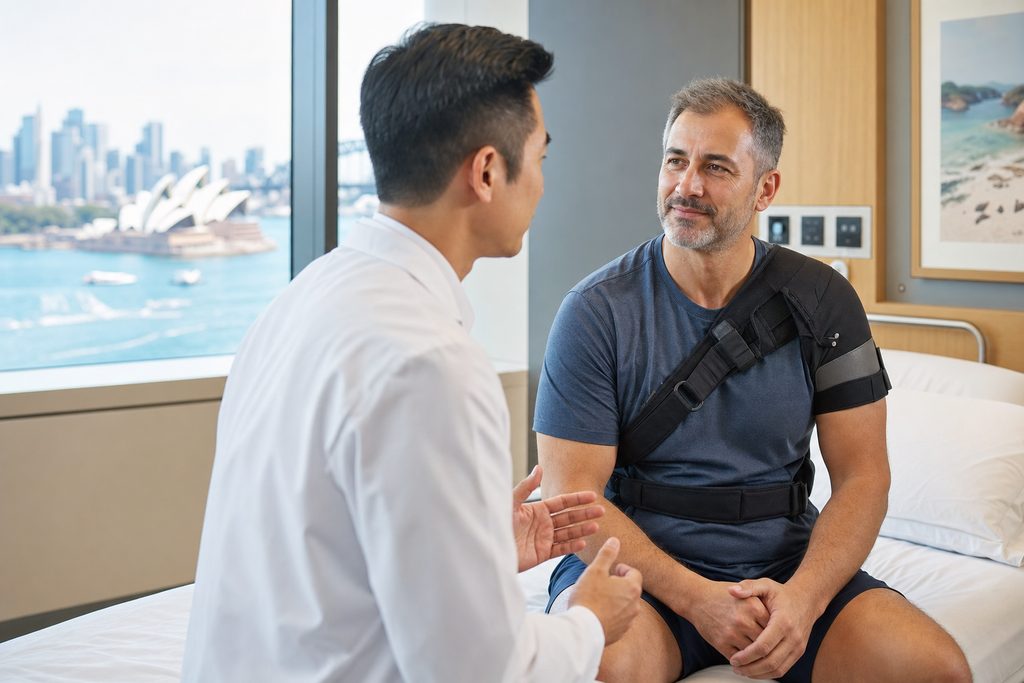
Have you been told you need shoulder reconstruction but the quote from your surgeon’s office left you staring at a number that doesn’t feel real? For Australians without top-tier private health insurance, the out-of-pocket gap for a complex procedure can land somewhere between $15,000 and $30,000 AUD. That’s after Medicare contributes its share. The alternative—joining a public hospital waiting list—can mean a year or more of living with instability, pain, and a shoulder that dislocates doing things as ordinary as reaching for a seatbelt.
That financial shock is what pushes people to search for options they’d never considered before. One of those options is traveling abroad for the procedure. And among the destinations that come up, China occupies a strange space: it’s simultaneously the source of advanced orthopedic implants exported worldwide and a place most Western patients have never seriously evaluated for their own surgery.
We’re going to walk through what that evaluation actually looks like. Not the marketing version. The real one—with numbers, hospital names, and the logistical hurdles nobody mentions in the brochure.
Key Takeaways
- Out-of-pocket shoulder reconstruction costs at top Chinese orthopedic centers typically range from $8,000 to $15,000 USD, roughly one-third to one-half of typical Australian private gap payments for uninsured patients.
- China’s highest-volume joint surgery centers perform several thousand shoulder procedures annually, a caseload that exceeds most Australian tertiary hospitals by a factor of five or more.
- Language, visa requirements, and the need for a local coordinator are real barriers—this is not a trip you book like a holiday, and post-operative follow-up back in Australia must be arranged before you leave.
- Written second opinions and video consultations let you evaluate a specific hospital and surgeon before committing to travel, reducing the risk of arriving with unrealistic expectations.
The Problem: When Private Health Insurance Doesn’t Cover What You Actually Need
Australia’s public health system does many things well. Elective orthopedic surgery with a fast turnaround is not one of them. The Australian Institute of Health and Welfare reported that in 2022–23, 50% of patients admitted for shoulder reconstruction from public hospital waiting lists waited at least 123 days. For patients classified as non-urgent, the median wait stretched past 300 days. During that time, rotator cuff tears can retract further. Labral damage can worsen. Muscles atrophy. What might have been an arthroscopic repair becomes a more invasive open procedure—or a reverse total shoulder replacement down the line.
Private health insurance was supposed to solve this. But Australian hospital cover rarely eliminates the gap. The surgeon’s fee above the Medicare Benefits Schedule rate, the anesthetist’s gap, the prosthesis cost if your policy caps implant reimbursement—these add up fast. A 2023 analysis by the Consumers Health Forum of Australia found that the average out-of-pocket cost for a privately insured shoulder reconstruction patient was approximately $4,800 AUD for the hospital and medical gaps alone, with implant-related costs sometimes doubling that figure depending on the device used.
For the roughly 45% of Australians who hold some form of private hospital cover, the surprise isn’t that they have to pay something. It’s how much. For the majority who don’t have private cover at all, the choice is stark: pay the full private fee—which can exceed $25,000 AUD—or wait.
Neither option feels acceptable when your shoulder wakes you up every time you roll over at night.
Why China Has Become a Serious Option for Orthopedic Surgery
The conversation about medical travel usually starts with cost. That’s understandable. But cost without context is dangerous. The real question is whether the clinical quality and safety infrastructure justify considering a hospital 8,000 kilometers from home. For shoulder reconstruction, the answer is more nuanced—and more favorable—than most patients expect.
Clinical Volume That Reshapes Surgical Skill
Surgeons get better at procedures they perform frequently. This isn’t controversial. A 2020 systematic review in the Journal of Shoulder and Elbow Surgery found a statistically significant association between higher surgeon and hospital volume and lower complication rates for shoulder arthroplasty and arthroscopic rotator cuff repair. The effect was strongest for revision procedures and complex primary reconstructions.
Now consider the arithmetic. A busy Australian orthopedic surgeon in private practice might perform 50 to 80 shoulder reconstructions in a year. At a top-tier Chinese orthopedic hospital—Peking University Third Hospital, for example, which runs one of the highest-volume sports medicine and shoulder surgery departments in the country—the annual caseload for shoulder procedures alone can exceed 2,000. The surgeons there see more variations of anatomy, more failure patterns, and more unusual presentations in a single quarter than most surgeons encounter in a career.
That volume doesn’t guarantee a better result for any individual patient. But it shifts the odds. And for patients with complex instability, revision cases, or large retracted rotator cuff tears, those odds matter.
Implant Technology Without the Markup
A significant portion of the orthopedic implants used in Australian hospitals—plates, screws, suture anchors, and even the prosthetic components for shoulder arthroplasty—are manufactured in China or in facilities owned by companies with major Chinese production bases. The supply chain is shorter. The device that costs $4,000 AUD in a Melbourne private hospital because of distributor margins, regulatory overhead, and multi-tiered procurement may cost the Chinese hospital $800 to $1,200 USD at its own institutional purchasing price.
This isn’t about off-brand knockoffs. The top orthopedic centers we work with use implants from the same multinational manufacturers—Johnson & Johnson’s DePuy Synthes, Stryker, Arthrex, Smith & Nephew—that Australian surgeons use. The regulatory pathway is China’s NMPA (National Medical Products Administration), which has harmonized significant portions of its device approval process with international standards over the past decade. The hardware is the same. The price is not.
The Cost Structure Doesn’t Hide Surprises
Let’s put numbers on a table. These are approximate ranges for a primary arthroscopic shoulder stabilization or rotator cuff repair—the kind of reconstruction a patient with recurrent dislocations or a full-thickness tear would need.
| Cost Component | Australia (Private, Uninsured) | China (Top Public Hospital, International VIP) |
|---|---|---|
| Surgeon’s fee | $4,000 – $8,000 AUD | $2,500 – $4,500 USD (included in package) |
| Anesthetist | $1,500 – $2,500 AUD | Included |
| Hospital & theatre fees | $6,000 – $12,000 AUD | Included |
| Implants & consumables | $3,000 – $8,000 AUD | $1,500 – $3,500 USD |
| Post-op physio (initial 6 weeks) | $600 – $1,200 AUD | $300 – $600 USD (in-hospital + initial guidance) |
| Estimated total | $15,100 – $31,700 AUD | $8,000 – $15,000 USD |
At current exchange rates, $8,000 to $15,000 USD converts to roughly $12,000 to $23,000 AUD. That’s not pocket change. But it’s a 30% to 50% reduction from the uninsured Australian private rate—and it includes things the Australian quote often itemizes separately. The price quoted by a Chinese hospital’s international department is typically a bundled surgical package, not an estimate that expands with every ancillary bill.
And here’s the structural reason: Chinese public hospitals operate on thin margins for domestic patients, and their international/VIP departments price for foreign patients at rates that are high by local standards but still far below Western private-sector prices. Labor costs—nursing, surgical assisting, ward care—are a fraction of Australian equivalents. The hospital isn’t running a 30% overhead to cover medico-legal insurance premiums that rival the surgeon’s own income. The economics are different, and the price reflects that.
What Shoulder Reconstruction Abroad Without Insurance Actually Looks Like Step by Step
Searching “how much is shoulder reconstruction abroad without insurance” brings up a lot of glossy websites with stock photos of smiling patients and vague promises. The reality is more procedural. Here’s the sequence that actually works—and the parts where things go wrong if you skip steps.
Step 1: Get your imaging and records in order before contacting anyone. You need a recent (within 3 months) MRI with a detailed radiology report, your surgeon’s clinical notes if you’ve already had a consultation, and ideally a CT scan if there’s bone loss involved—which is common in recurrent shoulder instability. Without these, any opinion you receive is guesswork.
Step 2: Request a written second opinion from a specific hospital department. This is not a casual email exchange. You send your records; the specialist reviews them and produces a written assessment of your condition, surgical options, recommended approach, and expected outcomes. At major Chinese orthopedic centers, this typically costs $300 to $500 USD. It takes 5 to 10 business days. The document you receive should be detailed enough that you can take it to your Australian GP or physio and have a meaningful conversation about it.
Step 3: If the written opinion makes sense, schedule a video consultation. This is where you ask the hard questions: How many of these specific procedures have you done? What’s your personal complication rate for this exact surgery? What graft options do you use, and why? What’s your revision policy if something goes wrong? The consultation costs $500 to $800 USD for a top specialist. It’s the best money you’ll spend in this process—because if the surgeon can’t answer these questions clearly in English (or through a skilled medical interpreter), you walk away before booking a flight.
Step 4: Lock in a surgical date and logistical plan. If you proceed, the hospital’s international department will provide a treatment plan with dates, a fixed-price quote, and a payment schedule. You’ll need to arrange your S2 visa (short-stay private affairs visa, annotated for medical treatment), flights, and accommodation for yourself and a companion. You should plan to be in China for a minimum of 10 to 14 days post-surgery before flying home—longer if the procedure is open rather than arthroscopic.
Step 5: Return to Australia and transition care to your local team. This is the step people underestimate. You need a physiotherapist and an orthopedic surgeon in Australia who agree in advance to take over your post-operative management. You’ll leave China with a detailed rehabilitation protocol, operative notes, and implant documentation. Your local team uses that to guide your recovery. If they’re hostile to the idea of overseas surgery, you’ll have a miserable time. Find a physio who’s open to it before you go.
How to Choose the Best Hospital for Shoulder Reconstruction in China
China has over 35,000 hospitals. The top 5%—roughly 340 institutions—are ranked by the Fudan University Hospital Ranking system, which evaluates clinical reputation and research output across 45 specialties. For shoulder reconstruction, you’re looking at hospitals with strong orthopedics and sports medicine departments.
Peking University Third Hospital in Beijing runs one of the country’s most respected sports medicine institutes. Its shoulder surgery division handles high volumes of arthroscopic Bankart repairs, Latarjet procedures, and rotator cuff reconstructions. Shanghai’s Huashan Hospital, affiliated with Fudan University, has a hand and upper extremity department that draws patients from across Asia for complex shoulder and elbow work. In the south, the First Affiliated Hospital of Sun Yat-sen University in Guangzhou offers another high-volume orthopedic center with an established international patient pathway.
These are public tertiary hospitals—not private boutique clinics. The international department handles foreign patients, provides English-speaking coordination, and offers private or semi-private ward rooms that are a step above the general wards. The surgeons are the same ones operating on local patients. That’s the point: you’re accessing the same clinical expertise, just through a channel designed for people who don’t speak Mandarin and can’t navigate the standard registration system.
Private international hospitals like United Family Healthcare or Jiahui International Hospital offer a different experience—English-speaking staff throughout, direct insurance billing, and a more Western-style care environment. The trade-off: these hospitals may not have the same shoulder-specific surgical volume as the top public orthopedic centers. For a straightforward primary reconstruction in a healthy patient, the difference may be negligible. For a complex revision or a patient with significant bone loss, surgical volume matters more than the thread count of the bedsheets. You can explore both options through our specialty department rankings to understand which hospitals lead in orthopedics.
Recovery Timeline: What the First Six Months Actually Demand
Patients searching “what is recovery time for shoulder reconstruction surgery” usually want a number they can take to their employer. The honest answer is that recovery splits into phases, and the phase most people underestimate isn’t the surgical pain—it’s the months of disciplined rehabilitation.
Weeks 1–2: You’ll be in a sling, likely with an abduction pillow holding the arm in a protected position. Pain is managed with medication. Passive range-of-motion exercises—where a physio moves the arm for you—begin within the first week. You’ll still be in China during this period, attending daily physiotherapy sessions at the hospital before being cleared to fly home. Flying with a freshly reconstructed shoulder is uncomfortable but manageable; you’ll need pain medication, a window seat on the non-operated side, and a plan for managing the sling through security.
Weeks 3–6: You’re back in Australia, in the sling, seeing your local physio two to three times per week. Active-assisted exercises begin—you initiate the movement, the physio or your other arm helps complete it. No lifting. No driving if it’s your right shoulder. Sleeping is still difficult; most patients sleep propped up in a recliner or with a wedge pillow system.
Weeks 6–12: The sling comes off. Active range-of-motion exercises begin. This is when the real work starts. Strengthening is introduced gradually—isometric exercises first, then light resistance bands. If you skip physio during this phase, you’ll end up with a stiff shoulder and a functional deficit that’s harder to fix later.
Months 3–6: Progressive strengthening. Return to most daily activities. Light overhead work may still be restricted depending on the specific procedure. Return to contact sports or heavy overhead lifting is typically not before 6 months, and often closer to 9–12 months for athletes.
The recovery timeline doesn’t change because you had surgery in China instead of Australia. The protocol is the same. What changes is who supervises the early phase and how the handoff to your local team is managed. That handoff is the single most important logistical detail in the entire process. Get it wrong, and you’ll spend months trying to find someone willing to take responsibility for a surgery they didn’t perform.
Practical Considerations: Visas, Payment, and the Paperwork Nobody Warns You About
You cannot simply book a flight and show up at a Chinese hospital expecting surgery. The logistics are specific, and getting them wrong can strand you in a hotel room with a shoulder that isn’t getting fixed.
Visas: Medical treatment in China falls under the S2 visa category—a short-stay private affairs visa. The hospital’s international department will provide an invitation letter and treatment confirmation that you submit with your application. Your companion applies for the same S2 category. Do not apply for an M visa; that’s for commercial and trade activities and has no relevance to medical travel. Processing times vary by consulate, but you should allow at least 3 to 4 weeks. China does not offer a dedicated “medical visa” category, and any service claiming otherwise is either misinformed or misleading you.
Payment: Chinese public hospitals require upfront payment. The international department will quote a package price and expect settlement before admission or in stages aligned with treatment milestones. International credit cards are accepted at major hospitals, but transaction limits can be a problem—a single $12,000 USD charge may trigger fraud alerts or exceed your daily limit. Wire transfers are more reliable for the surgical deposit. Your Australian private health insurance will almost certainly not cover elective surgery performed overseas; you are paying out of pocket. Some international medical travel insurance policies exist, but they typically cover complications and evacuation, not the planned procedure cost.
Language: The international department staff speak English. The ward nurses may speak some English. The surgeon may or may not be comfortable discussing nuanced clinical details in English without an interpreter. For the video consultation and any complex pre- or post-operative discussions, a professional medical interpreter is not optional—it’s the difference between informed consent and hoping you understood correctly. This is
Frequently Asked Questions
Yes. The hospitals used for international patients are JCI-accredited and follow the same international safety standards as top hospitals in the US and Europe. Surgical teams perform high volumes of procedures — often more than their Western counterparts — which studies show leads to better outcomes.
Costs vary by procedure and hospital, but international patients typically save 40-80% compared to US prices — even when factoring in travel and accommodation. A consultation with our team will give you an exact, all-inclusive quote with no hidden fees.
Send us your existing medical reports to get started. We handle everything from hospital selection and appointment scheduling to visa assistance and post-operative recovery planning. Your medical records are reviewed by the specialist before you even book a flight.
For more medical information and treatment options in China, visit chinamedservices.com (China Medical Services).
