Chinese vs Western Hospital Wards: A Room-by-Room Reality Check
The Short Answer
A private room in a top-tier Chinese public hospital’s international wing typically costs between $150 and $400 per night. That’s roughly 80% less than a comparable private room in a major American hospital, where the daily rate often exceeds $1,500 before any treatment charges. But the raw number hides a much messier reality. The gap isn’t just about price. It’s about what “private” actually means once you step inside.
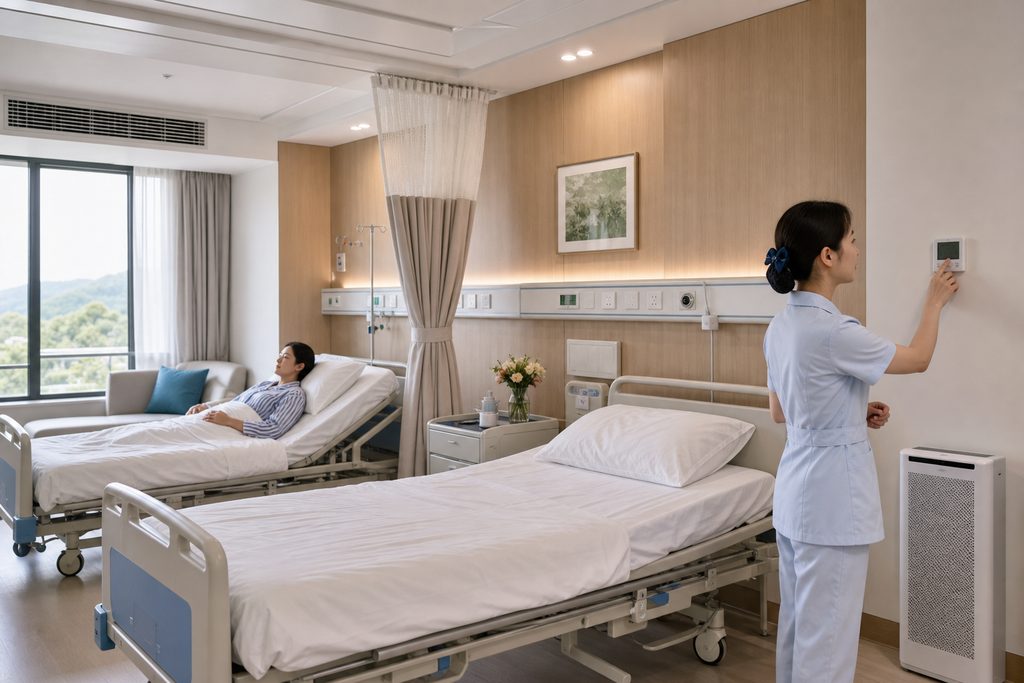
Walk into a standard Chinese public hospital ward and you’ll find three to six beds separated by curtain rails. Family members crowd the gaps. They bring meals, they negotiate with nurses, they sleep on rented cots. This isn’t neglect — it’s how the system works. Nursing staff handle clinical tasks. Families handle everything else. For a Western patient used to a quiet single room with a call button and a dedicated patient-care assistant, the shock can be visceral. The upgrade path exists. It just requires knowing which doors to open.
Who This Is Right For — and Who It Isn’t
China’s hospital room options make sense for specific travelers. They’re wrong for others. Here’s the honest breakdown.
Good candidates:
- Patients seeking elective procedures with published, high-volume outcomes — cardiac surgery, orthopedics, certain oncology treatments — where the surgeon’s experience outweighs the room’s thread count.
- Cost-sensitive patients who can pay cash. China’s top hospitals deliver results at 1/5 to 1/10 of US prices. A private VIP suite keeps the experience tolerable without blowing the savings.
- People who travel with a companion. Chinese hospital culture assumes a family member handles non-clinical care. Bringing someone isn’t optional. It’s the operating model.
Who should stay home:
- Anyone requiring prolonged ICU-level isolation where family presence is restricted and language barriers become dangerous. Recovery is hard enough without a translator.
- Patients with unstable conditions that might require emergency air evacuation. A cheaper room means nothing if a complication forces a medically equipped charter flight back to London or LA.
- People who equate healthcare quality with hotel-like amenities. China’s clinical excellence is real. The lobby art and room service, less so. If marble bathrooms signal safety to you, this won’t work.
The Options, Compared
Chinese hospitals don’t offer one “private room” tier. They offer a ladder. Each rung brings you closer to Western expectations — at a price. Here’s what you’ll actually encounter, with real daily rates from Beijing and Shanghai public hospitals.
| Room Type | Typical Setup | Daily Rate (USD) | Western Equivalent |
|---|---|---|---|
| General Ward (多人间) | 3-6 beds, shared bathroom down the hall, no privacy curtain in older buildings | $15–$40 | NHS Nightingale-style open bay (rare in modern Western hospitals) |
| Semi-Private (双人间) | 2 beds, en-suite bathroom, basic TV, curtain divider | $60–$120 | Standard US semi-private room, but with less soundproofing |
| VIP Suite — International Dept | 1 bed, private bathroom, sofa for companion, mini-fridge, sometimes a second room | $150–$400 | Private room in a community hospital; not luxury, but functional privacy |
| Deluxe VIP Suite | Living room + bedroom, dedicated nursing station, priority imaging scheduling | $500–$1,200 | High-end US private suite; closer to a hotel room |
A typical American private room runs $1,500–$3,000 per night before negotiations. The Chinese VIP Suite at $300 lands at 80% less. The Deluxe VIP at $800 still beats most US sticker prices. But notice what’s missing: the general ward at $25 per night has no Western parallel. That’s not a “room.” It’s a bed in a shared space where your neighbor’s family of four is eating lunch at 11 a.m. The semi-private option at $90 is the floor for most international patients. Below that, the cultural gap becomes too wide. Our team has seen patients try to tough it out in general wards to save money. Almost none last beyond the first night.
How Do Chinese Hospital Rooms Compare to Western Standards: The Things No Brochure Shows You
Forget square footage for a moment. The real differences are procedural. They hit you in the first hour.
Climate control. Most Chinese hospital rooms — including some VIP suites — don’t give patients individual thermostats. The building sets the temperature. In summer, that means aggressive air conditioning. In winter, aggressive heating. Pack layers. Western hospitals treat room temperature as a patient right. Here, it’s an engineering decision made for 600 rooms at once.
The companion factor. Every room type except the most basic general ward includes a companion sleeping arrangement. A fold-out sofa. A cot. Sometimes a separate small room. This isn’t hospitality. It’s structural. Chinese nurses administer medications and monitor vitals. They don’t help you to the bathroom at 3 a.m. That’s your companion’s job. If you arrive alone, the hospital will recommend hiring a private caregiver, known as a hu gong (护工), at roughly $30–$50 per day. She’ll sleep in your room. Western patients find this jarring. A stranger napping on a cot two feet from your bed is not a standard amenity at Cedars-Sinai.
Bathrooms. Even in VIP suites, expect a wet-room style bathroom. The shower head hangs on the wall. The whole floor gets wet. There’s no curtain. Grab bars might be absent. Slippers are essential. Western hospitals design bathrooms around fall prevention. Chinese VIP bathrooms are improving, but the baseline is lower. Check the floor before you step in.
Food. No hospital kitchen will win awards. But Chinese hospital food is a different genre. It’s designed around traditional Chinese medicine principles — warm, soft, easy to digest. Congee. Steamed buns. Light soups. A Western palate might find it bland or repetitive. Most VIP floors allow food delivery. Your companion can also use a shared floor kitchenette to prepare meals. In a Western hospital, dietary services manage your tray. Here, your family manages your food. That’s the pattern.
What It Costs
Room charges are just the start. The VIP ward price China vs USA comparison only works if you understand what’s bundled and what’s not.
A $300 VIP suite at a Shanghai hospital’s international department typically includes the room, basic nursing care, and standard meals. It does not include: specialist consultation fees ($100–$300 per visit), imaging ($50–$200 per scan), laboratory work, surgical fees, anesthesia, or medications. Those bill separately. A 5-day stay with surgery might look like this:
- Room: 5 nights × $300 = $1,500
- Surgeon’s fee: $2,000–$4,000
- Anesthesia: $500–$1,000
- Imaging and labs: $800–$1,500
- Medications: $200–$600
- Total: $5,000–$8,600
Compare that to a US facility where the room alone would hit $7,500 for five nights and the all-in surgical bill could reach $50,000–$120,000. The savings are real. But they come from procedure pricing and doctor fees, not from the room. The room is where you feel the difference most acutely.
Can foreigners get private rooms in Beijing hospitals? Yes. The best international patient ward Shanghai hospital options are well-documented. Peking Union Medical College Hospital‘s international department and Huashan Hospital‘s worldwide medical center both offer bookable private rooms. The catch: you can’t just call and reserve one like a hotel. A room is tied to a treatment plan. You need a confirmed consultation or admission first. Our team handles this sequencing — first the medical evaluation, then the room booking. Jumping straight to “I want a VIP suite” without a doctor’s admission order gets you nowhere.
The medical tourism China private room upgrade cost is another layer. If you’re admitted through a standard outpatient channel and find yourself in a shared room, upgrading to a VIP suite mid-stay is sometimes possible. The upgrade fee varies wildly — from $100 to $500 per night above the standard rate, depending on availability. In Beijing’s top hospitals during peak season (October–November, after Chinese National Day), VIP rooms fill up. No amount of money opens a door that doesn’t exist.
Practical Considerations: Documentation, Payment, and the Companion Question
Arriving prepared makes the room experience manageable. Arriving blind makes it miserable.
Payment. Public hospital international departments generally require a deposit upfront — $3,000–$10,000 depending on the planned procedure. They draw down from this deposit daily. If the balance runs low, treatment pauses until you top it up. Credit cards work at international wings. UnionPay dominates elsewhere. Carry at least two card types. Some hospitals accept international wire transfers for large deposits, but the clearance time can delay admission.
Insurance. Most Chinese public hospitals don’t direct-bill foreign insurers. You pay, you get a detailed receipt, you file a claim. Private international hospitals like United Family and Jiahui do direct-bill. Their rooms cost more — $500–$800 per night — but the administrative friction drops to near zero. If your policy covers overseas treatment, confirm the reimbursement process before you fly. A surprise $8,000 deposit demand at the admission desk is not the time to start reading your policy document.
Your companion’s visa. The patient enters on an S2 visa for medical treatment. The accompanying family member also applies for an S2, citing private affairs — specifically, accompanying a family member undergoing medical treatment. The hospital provides an invitation letter that covers both. Don’t let your companion arrive on a tourist L visa and expect to stay for a 3-week hospital stay. Consulates notice mismatches.
Medical records. Bring everything translated into Chinese. Radiology images on a CD. Pathology slides if relevant. A written summary of your history. The hospital’s international department will have English-speaking coordinators, but the ward nurses might not. A bilingual medical companion — ours start from $200 per day — bridges the gap during admission, daily rounds, and discharge. Our coordination team handles these logistics so you’re not negotiating room upgrades through a translation app at midnight.
Frequently Asked Questions
Almost certainly. A standard admission to a Chinese public hospital places you in a 3- to 6-bed room. Privacy is minimal. Conversations happen around you. Family members of other patients will be present throughout the day. If you need a guaranteed single room, you must specify the international department or VIP wing at the time of admission coordination. There is no “standard private room” in the general wards.
ICU rooms in Chinese hospitals are typically open-plan, with multiple beds separated by curtains. Family access is restricted to short daily windows — often 30 minutes. You will not have a companion sleeping in the room. Communication with ICU nurses may require translation support. The clinical monitoring is excellent. The environment is not designed for comfort. If your condition deteriorates and you’re moved from a VIP suite to the ICU, your VIP room rate stops. You pay the ICU rate instead, which is higher due to the monitoring equipment and staffing ratios.
Sometimes. International departments at major hospitals like Shanghai’s Zhongshan Hospital or Beijing’s Peking Union Medical College will allow a brief tour if arranged in advance. Smaller hospitals or general wards rarely accommodate this. A video call during our coordination phase can give you a real-time look at the available room types. Photos on hospital websites are often outdated or show only the best suite, not the one you’ll actually get.
In top-tier international departments, yes. Floors are mopped daily. Linens are changed. Bathrooms are disinfected. But “clean” means clinically clean, not aesthetically spotless. You might see scuffed baseboards or dated furniture. The water might have a slight chlorine smell. This isn’t neglect. It’s a different baseline for cosmetic upkeep. If you need hotel-level presentation, choose a private international hospital like United Family. Their rooms are purpose-built for Western expectations and priced accordingly.
Your Next Step
A hospital room in China isn’t a hotel room. It’s a functional space inside a system that delivers world-class clinical outcomes at a fraction of Western prices — if you know how to navigate it. The VIP suite at $300 per night is the sweet spot for most international patients: private, companion-friendly, and connected to the specialist you actually came to see. The general ward at $25 is a cultural experience you probably don’t want.
We don’t run a hospital. We don’t offer medical advice or diagnoses. What we do is make sure you walk into the right room, in the right hospital, with the right paperwork, and someone at your side who speaks the language. If you’re weighing a procedure in China and the room question is holding you back, reach out. We’ll walk you through what’s available for your specific situation — no pressure, no vague promises, just the facts on the ground. Start with a free consultation and we’ll take it from there.
For more medical information and treatment options in China, visit chinamedservices.com (China Medical Services).
