Communicate with Nurses in Chinese Hospitals: A Foreign Patient’s Practical Guide
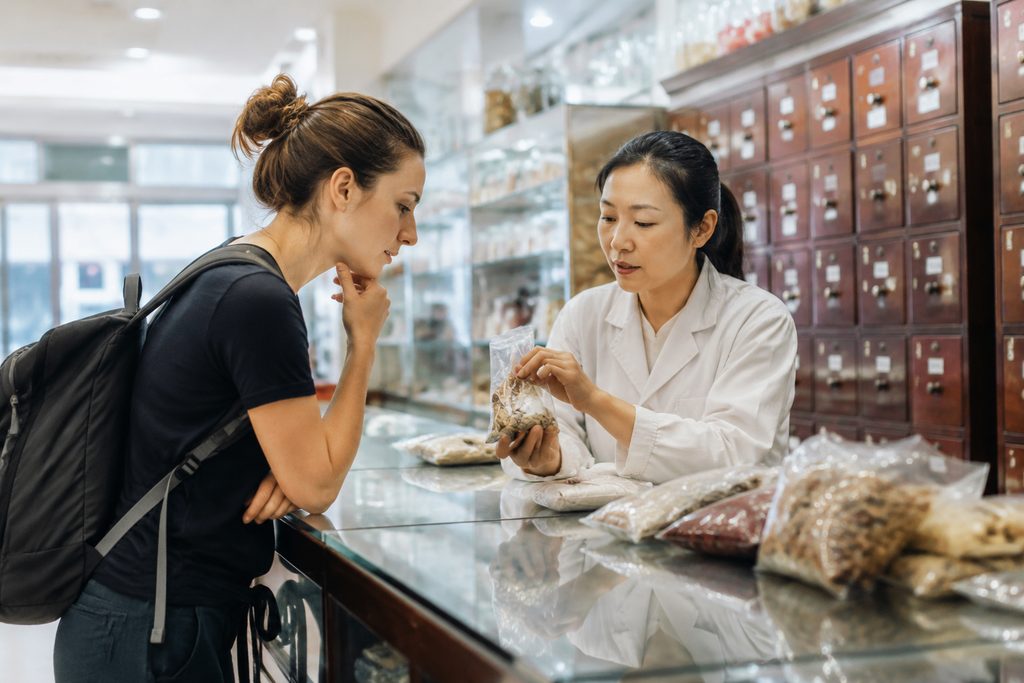
Communicating with Nurses in China: The Short Answer
You will need a communication bridge. The overwhelming majority of nurses in Chinese public hospitals do not speak clinical English. A 2022 study in the Journal of Multidisciplinary Healthcare found that fewer than 15% of nurses in top-tier Chinese hospitals rated their spoken English as adequate for patient care. That number drops sharply outside of Beijing and Shanghai. You cannot assume a nurse will understand “I feel nauseous” or “the IV site hurts.”
But this is a solvable logistics problem, not a reason to avoid care. Three practical paths exist: hire a medical interpreter for foreigners in Chinese hospital settings, use a dedicated translation app, or choose a hospital with built-in English-speaking nursing teams. Each has trade-offs in cost, accuracy, and immediacy. The right choice depends on your budget, your medical complexity, and how much you value autonomy versus support.
Who This Communication Challenge Affects Most — and Who It Doesn’t
A patient arriving for a complex cardiac workup at Fuwai Hospital faces a different language barrier than someone getting a routine health screening at a JCI-accredited private facility. Understanding where you fall on that spectrum determines how much you need to prepare.
You will feel the language gap most acutely if:
- You are admitted to a public hospital ward, where nurse-to-patient ratios can exceed 1:8 and staff have no time to fumble with phone translation
- Your treatment involves pain management, where describing intensity and quality matters
- You have medication allergies or a complicated drug regimen that must be communicated precisely during every shift change
- You are traveling alone without a bilingual companion
You will feel it least if:
- You choose a private international hospital like United Family or Jiahui, where English-speaking nurses are part of the standard staffing model
- Your visit is outpatient only, with short, predictable interactions
- You have a family member who speaks Mandarin and medical terminology
Be honest about where you sit. The patients who struggle most are the ones who assumed it would work itself out.
The Options, Compared
Three communication strategies cover nearly every scenario. None is perfect. The table below lays out the real differences — not the marketing claims, but what patients actually experience.
| Approach | Accuracy for Clinical Terms | Immediate Availability | Cost (USD) | Best For |
|---|---|---|---|---|
| Professional Medical Interpreter | High — trained in terminology and protocol | Requires booking; typically 24-48 hours advance | $200-500/day or $50-80/hour | Inpatient stays, surgical admissions, complex consultations |
| Translation App (e.g., Google Translate, Baidu Translate, MediBabble) | Moderate — struggles with dialect, context, and fast speech | Instant, always in your pocket | Free to $10/month for premium | Basic needs: asking for water, bathroom, blanket; confirming medication names |
| English-Speaking Hospital Staff | Variable — some nurses speak functional English, most do not | Depends on the hospital and shift | Included in international department pricing (typically 1.5-2x standard rates) | Hospitals with dedicated international wards or JCI accreditation |
Most patients end up combining approaches. They rely on the interpreter for rounds and shift-change handoffs, use an app for middle-of-the-night needs, and choose a hospital where at least the head nurse speaks some English. Layering these together covers the gaps that any single method leaves open.
How to Communicate with Nurses in China as a Foreign Patient: The Bedside Reality
Nurses in Chinese public hospitals manage staggering patient volumes. A single ward nurse may be responsible for 8 to 12 patients during a day shift. They are skilled, efficient, and operating under time pressure that leaves zero margin for communication friction. If you cannot make yourself understood in 15 seconds, the interaction will be deferred or handled through gestures.
This is not rudeness. It is triage by bandwidth. Understanding that dynamic changes how you prepare.
Here is what works on the ground:
Write down your top five needs in Chinese before admission. Pain level descriptions. Medication allergies. Food restrictions. The phrase “I need to use the toilet.” Your interpreter or a bilingual contact can prepare a laminated card. Hand it to the nurse when you press the call button. This single step eliminates the most common source of panic for foreign patients.
Learn exactly three Mandarin phrases. “Wǒ bù shūfu” (I don’t feel well). “Zhèlǐ téng” (It hurts here — point). “Qǐng màn yīdiǎn shuō” (Please speak slowly). You do not need to be conversational. You need to trigger the nurse’s awareness that something requires attention, at which point you can deploy your app or call your interpreter.
Use the nurse call button strategically. In a Chinese ward, the call button summons whichever nurse is available, not necessarily the one who knows your case. If you have a question about your treatment plan, save it for rounds. If you need immediate physical help — bathroom, pain, IV alarm — press the button and hand over your prepared phrase card.
A common mistake: trying to have a full conversation through a translation app while the nurse is standing at your bedside with three other patients waiting. It does not work. It frustrates both of you. Use the app for single-sentence exchanges. “The IV drip speed — is this correct?” “When is the next pain medication due?” Anything more complex needs an interpreter.
What It Costs to Bridge the Language Gap
The cost of a medical interpreter for foreigners in Chinese hospital stays varies by city, hospital type, and whether you book through an agency or independently. Expect these ranges:
- Freelance medical interpreter (self-booked): $40-70 per hour, minimum 4 hours. Quality varies widely. Verify medical interpreting certification — general bilingual speakers often lack clinical vocabulary.
- Agency-provided interpreter with case management: $200-500 per day. This typically includes pre-admission document translation, on-site accompaniment during admission, and scheduled check-ins during the stay. The interpreter coordinates with nursing staff and relays updates to you and your family.
- Bilingual medical companion service: From $200 per day for an 8-hour shift. This person handles hospital navigation — registration, queueing, payment — plus bedside interpreting. They do not provide medical advice but ensure you understand what the nursing team is telling you.
- International hospital premium: If you choose a facility with English speaking nurse service China hospital cost built in, expect to pay 1.5 to 2 times the standard public hospital rate. That premium covers English-speaking nursing staff, international patient coordinators, and often direct insurance billing. For a surgery that costs $15,000 in a public hospital’s international wing, the all-inclusive private hospital version may run $25,000-30,000.
Translation Apps for Hospital Stays: What Actually Works
A translation app for hospital stay in China is not a replacement for a human interpreter, but it is an essential backup tool. The right app, used the right way, handles 70% of bedside communication needs.
Google Translate works in China only if you have a VPN. Without one, it will not function. This catches many foreign patients off guard. Baidu Translate is the domestic equivalent, works reliably without a VPN, and includes a medical phrase library. Download it before you leave home.
MediBabble, developed by medical professionals, is purpose-built for clinical encounters. It organizes phrases by symptom and system — cardiovascular, respiratory, neurological — and plays pre-recorded translations spoken by native speakers. It does not rely on machine translation for the core vocabulary, which means fewer errors when asking “Does the pain radiate to your left arm?” versus “Do you have chest discomfort?”
Practical rules for app use at the bedside:
- Type, do not speak. Background noise in a Chinese ward — monitors, other patients, hallway traffic — wrecks voice recognition accuracy.
- Show the nurse your screen. Do not read the translation aloud. Let them read it themselves. This avoids pronunciation errors and lets them see the original English for context.
- Translate one concept at a time. “I have pain in my lower right abdomen and also I feel dizzy and I think my medication is making me nauseous” will produce garbled output. Break it into three separate translations.
- Confirm understanding with a thumbs-up or nod. Never assume the translation was accurate just because the nurse looked at your phone.
Practical Considerations: Records, Visas, and Follow-Up
Communication does not start at the bedside. It starts with your medical records. Chinese hospitals require translated summaries of your diagnosis, medication list, allergies, and prior surgeries before they will admit you. If these arrive in English only, expect delays while the hospital arranges internal translation — and expect those translations to be approximate.
Have your key records professionally translated into Simplified Chinese before you travel. A medical interpreter for foreigners in Chinese hospital settings can often handle this as part of pre-arrival preparation. At minimum, translate your medication list with generic drug names and dosages, your allergy list, and a one-page summary of your current condition and treatment goal.
Visa logistics: You will enter on an S2 visa annotated for medical treatment. Your family members accompanying you also need S2 visas. The hospital provides an invitation letter that supports the visa application. Do not apply for an M visa — that is for commercial and trade activities, and using it for medical travel risks rejection at the border.
Payment: Public hospitals require prepayment — you deposit funds at admission, and the hospital draws down against that balance. International departments may accept credit cards, but standard wards often require cash or Chinese bank card deposits. Your interpreter or companion can handle this transaction if you have provided the funds.
After discharge: You need discharge instructions in English. Do not leave the hospital without them. Your interpreter should review the Chinese original and produce an accurate translation covering medication schedules, activity restrictions, warning signs that require immediate attention, and follow-up appointment dates. This document is what your home-country doctor will rely on for continuity of care.
Frequently Asked Questions
Yes. Chinese public hospitals do not restrict patients from bringing personal translators or companions. Your translator will need to register at the nursing station, and some hospitals require them to wear a visitor badge. During certain procedures or in sterile areas, the translator may be asked to wait outside. This is standard infection-control protocol, not a restriction on your right to communication support. If you bring a friend or family member who speaks both languages, confirm they are comfortable with medical terminology — bedside interpreting is emotionally and linguistically demanding in ways that conversational fluency does not prepare you for.
The best Chinese hospitals with English speaking staff for international patients fall into two categories. First, public hospital international medical centers — Peking Union Medical College Hospital‘s International Medical Service, Huashan Hospital’s Worldwide Medical Center, and similar units at West China Hospital and Ruijin Hospital. These wings employ nurses with dedicated English training and handle a steady stream of foreign patients. Second, JCI-accredited private hospitals — United Family Healthcare, Jiahui International Hospital, ParkwayHealth, and Raffles Medical. These facilities hire English-speaking nursing staff as a baseline requirement. Outside these two categories, assume you will need your own interpreter. For help identifying the right facility, our team maintains a database of 340+ top-ranked hospitals with verified international patient capabilities.
Emergency departments in major Chinese cities are required to treat anyone who presents, regardless of language. That does not mean they will understand you. If you are conscious, show your pre-prepared phrase card. If you have a medical alert bracelet or phone lock screen with translated critical information — allergies, blood type, emergency contact — that buys you time. Call your interpreter or companion service immediately and put them on speakerphone. Most professional medical interpretation services in China offer an emergency hotline for existing clients. If you are traveling without this support, your embassy can sometimes provide a list of local interpreters, but response time varies widely.
When patients search for English speaking nurse service China hospital cost, they are usually asking about two different things. If you mean a hospital that staffs English-speaking nurses as part of its standard care team, the cost is bundled into the higher room and service charges of international departments — typically 1.5 to 2 times standard ward rates. If you mean hiring a private English-speaking nurse to stay with you in a standard public ward, that is a different service. Private duty nurses with English skills charge $150-300 per 12-hour shift. They are not hospital employees; they are independently contracted through agencies. They handle personal care, medication reminders, and basic translation, but they do not perform clinical nursing tasks like IV management or wound care. That remains the responsibility of the hospital nursing staff.
Your Next Step
The communication barrier in Chinese hospitals is real, and it is manageable with the right preparation. The patients who navigate it smoothly are the ones who plan their communication strategy before they pack their bags — choosing the right hospital tier, arranging interpreter support, and having backup tools in place for the moments when no one bilingual is in the room.
We help international patients connect with China’s top-tier hospitals and coordinate the practical logistics — interpreter services, hospital selection, visa guidance, and on-the-ground support. We are not a hospital. We do not provide medical advice or diagnoses. What we do is make sure you understand what your medical team is telling you, and that they understand you in return. If you want to talk through your situation and figure out what makes sense for your case, you can reach our team through the consultation page. There is no cost for the initial conversation, and no pressure to commit to anything. Just an honest discussion about what is possible.
For more medical information and treatment options in China, visit chinamedservices.com (China Medical Services).
