Pay Each Step Hospital Visit China: How Staged Payment Works for International Patients
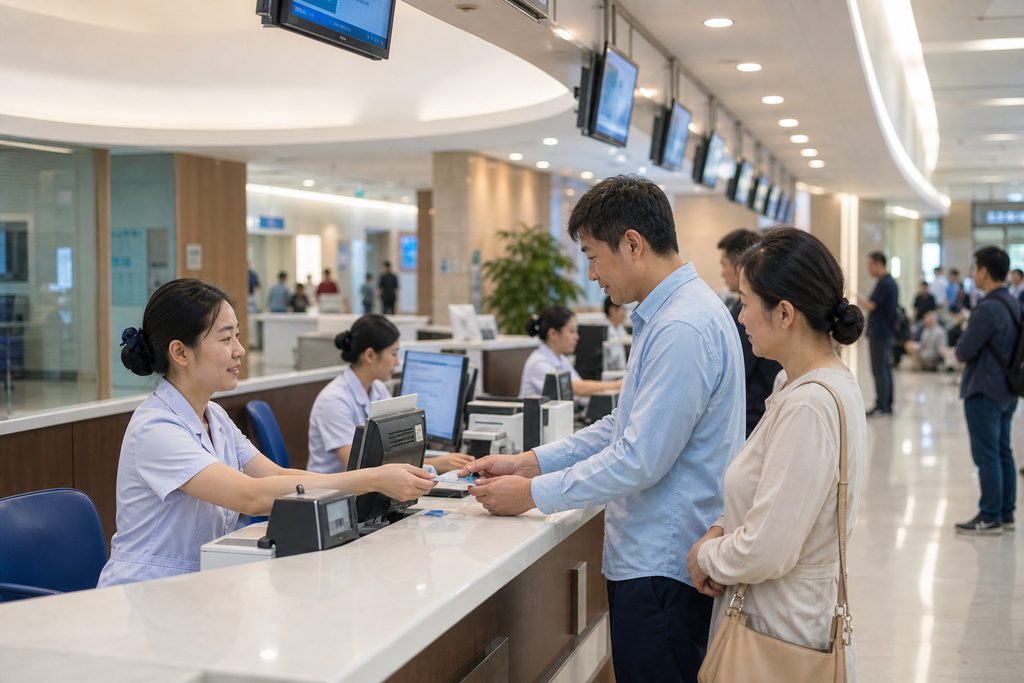
According to a 2024 report by the China National Health Commission, over 300,000 international patients sought medical treatment in mainland China last year. The primary draw is clear: surgical procedures here cost 70% to 90% less than in the United States. But a significant barrier remains. The fear of wiring a six-figure sum to a hospital on the other side of the planet before ever stepping on a plane is very real. You want to know if you can pay each step hospital visit China cost incrementally, rather than in one daunting upfront lump sum. The short answer is yes—but the structure is different from installment plans you might know at home.
Staged Payment in Chinese Hospitals: The Short Answer
You cannot typically “finance” a surgery in monthly installments like a car loan. What you can do is pay a deposit upon admission, settle incremental bills during treatment, and pay the final balance at discharge. This is standard practice. The hospital does not bill you for the entire procedure the moment you walk in. Charges accrue as services are rendered. You pay a deposit first. Diagnostic tests are billed separately from the operating room. Medication costs post-surgery are tallied daily. You are essentially paying as you go. The system is a deposit-based, staged settlement. It is not a credit plan. It is a cash-flow reality that makes large procedures more digestible.
Who This Is Right For — and Who It Isn’t
This billing structure works well for patients who have saved for treatment but want to maintain control over the release of funds. It also suits those using international health insurance that reimburses after treatment, since the itemized bills make claims easier. It is less suitable for patients who genuinely need a loan or long-term financing. Chinese hospitals are not banks. They will not underwrite your surgery. If you cannot cover the deposit, you will not be admitted. Also, this model is not ideal for emergency procedures where a patient arrives unconscious. In those cases, a family member or medical concierge must guarantee payment immediately.
The Options, Compared
How does pay as you go hospital billing work in China compared to other popular medical travel destinations? The table below breaks down the real differences in payment flow, not just price.
| Payment Structure | China (Public VIP/International Dept.) | Thailand (Private Hospital) | India (Private Corporate Hospital) | USA (Standard Hospital) |
|---|---|---|---|---|
| Initial Commitment | Deposit: 30-50% of estimate | Package price, paid upfront | Deposit: 25-50% of estimate | Pre-authorization or full deposit |
| Billing During Stay | Daily itemized charges; top-ups requested if deposit depletes | Rarely; mostly all-inclusive packages | Weekly billing against deposit | Post-discharge billing is standard |
| Final Settlement | At discharge: refund or balance due | At discharge: small adjustments only | At discharge: refund or balance due | Weeks after discharge: complex billing |
| Foreigner Access to This Model | Yes, through international departments | Yes, standard for all patients | Yes, through medical tourism facilitators | Extremely rare without US insurance |
The Chinese model is the most transparent for a patient who wants to see exactly what they are paying for, line by line, as it happens. It does, however, require you to have liquidity. You must be ready to transfer additional funds if complications extend your stay. A Thai package deal is simpler. But you pay for that simplicity with a higher total cost and less visibility into where the money went.
How the Deposit and Top-Up Cycle Actually Works
Here is the reality of can I pay for surgery in steps at Chinese hospitals. When you arrive at a top-tier public hospital’s international department—say, Peking Union Medical College Hospital or Huashan Hospital—the admissions desk will calculate a deposit based on your surgical estimate. This is usually 30% to 50% of the projected total. You pay that via wire transfer, UnionPay, or major credit card. Your treatment begins. Every morning, your bedside terminal or a nurse’s station printout shows the previous day’s charges. Bed charges, nursing care, medications, consumables. If your remaining deposit balance drops below a threshold, typically 20% of the original deposit, the hospital will ask you to top it up. This is non-negotiable. Treatment does not stop immediately, but you will receive a notice. If you ignore it, discharge planning gets complicated. The system is firm but fair. You never pay for services not yet rendered. But you must keep the deposit cushion intact.
Staged Payment Surgery China: What Each Phase Costs
Understanding the cost breakdown helps you plan your cash flow. A staged payment surgery China experience for a major procedure like a cardiac bypass or a joint replacement typically looks like this.
Phase 1: Pre-Admission Diagnostics (Outpatient). Before you are even admitted, you need scans, blood work, and specialist consultations. This is paid for on the day of service at the cashier. Expect $500 to $2,000 depending on the complexity. This confirms your diagnosis and surgical plan.
Phase 2: Admission Deposit. This is the big one. For a surgery estimated at $25,000, expect to pay $7,500 to $12,500 on the day you check into your room. This covers the bed, initial nursing, and the operating room booking.
Phase 3: Intra-Operative and Recovery Billing. The surgery itself consumes a large chunk. The implant (a hip prosthesis, a cardiac stent) is often billed as a separate line item. The surgeon’s fee, anesthesiologist’s fee, and operating room time are billed. In the ICU, daily charges can run $800 to $1,500. You will see these charges accrue daily. A mid-stay top-up of $5,000 to $10,000 is common for complex cases.
Phase 4: Discharge Settlement. The morning you leave, the billing department generates a final statement. You pay any outstanding balance or receive a refund. This is also when you pay for discharge medications and a final consultation.
This phased approach means you never have $50,000 sitting in the hospital’s account for weeks. You retain control. The risk is on you to have the next phase’s funds ready when asked.
Practical Considerations: Documentation, Visas, and Payment Methods
Book staged payment medical treatment China only after you have your paperwork in perfect order. Hospitals require a valid passport, your S2 visa (the correct category for private medical treatment), and a detailed referral letter from your home physician. They need to see your full medical history translated into English or Chinese. Without this, they cannot generate an accurate surgical estimate, and the deposit calculation will be a guess. A guess that usually skews high.
Payment methods matter. While international departments in Beijing and Shanghai accept Visa and Mastercard, the daily top-up counters may not. Always confirm this. Many patients open a local bank account or ensure their home bank allows high-limit daily transfers. Wire transfers take 2-3 business days. If your deposit runs low on a Friday, you might not get a top-up cleared until Tuesday. That creates stress. Smart patients keep a buffer in a card that works at the hospital’s POS terminal.
Insurance is another layer. Most Chinese public hospitals do not direct-bill foreign insurers. You pay out of pocket, stage by stage, and then submit itemized receipts to your insurer for reimbursement. The daily itemization actually helps here. Your insurer sees exactly what was done and when. Private international hospitals in China, like United Family Healthcare or Jiahui, do offer direct billing. But their package prices are higher and often require a larger upfront credit card hold. The staged, itemized model is primarily a feature of the public hospital VIP and international wings. For help navigating which hospital fits your budget, our team can provide a list of options from our database of 340+ top-ranked hospitals across 37 cities.
Frequently Asked Questions
This is the most common fear. Surgical estimates are just that—estimates. If complications arise, the bill grows. The hospital will present itemized charges daily. You will see the overage building. You have the right to request a meeting with the billing department at any time. You can ask for a revised estimate. But you cannot negotiate the line-item prices. Those are fixed by the hospital’s fee schedule. If you cannot pay the final balance, the hospital can legally prevent you from taking your medical records and may involve the entry-exit bureau, which could affect your visa status. This is rare but real. Always budget a 30% contingency above the estimate.
No. China hospitals with installment payment plans for foreigners do not exist in the way you might think. There is no “pay over 12 months” option with a Chinese public hospital. The settlement is completed before you leave the building on discharge day. Some private hospitals have partnerships with international medical loan companies, but this is a separate financial product, not a hospital policy. You are borrowing from a lender, not the hospital. Interest rates apply and approval is not guaranteed. If you need financing, secure it in your home country before you travel.
If you are admitted and then change your mind before the surgery, you will be billed for the bed days, nursing care, and any diagnostics already performed. The remainder of your deposit is refundable. If you cancel on the morning of surgery after the operating room and team have been prepped, expect a significant cancellation charge. This can be 20% to 30% of the surgical fee. The hospital has already allocated resources. The deposit is not a risk-free reservation. It is a commitment.
Your Next Step
Paying for a hospital visit in China step by step is not a financing plan. It is a deposit-and-settlement rhythm that has existed in Chinese hospitals for decades. It protects both the hospital and the patient. For international patients, it offers a level of financial control that a single upfront package price does not. You see the costs as they happen. You pay in phases. You settle at the end. Our team at China Medical Services helps patients understand these billing rhythms before they arrive. We are not a hospital and we do not provide medical advice or diagnoses. We do help you get a clear, written estimate from the right department, so your staged payments are planned, not panicked. If you want to explore what a realistic cost breakdown looks like for your specific procedure, you can request a free consultation here. We will walk you through the numbers, phase by phase.
For more medical information and treatment options in China, visit chinamedservices.com (China Medical Services).
