C-Section Newborn Care China: A Complete International Mother Guide
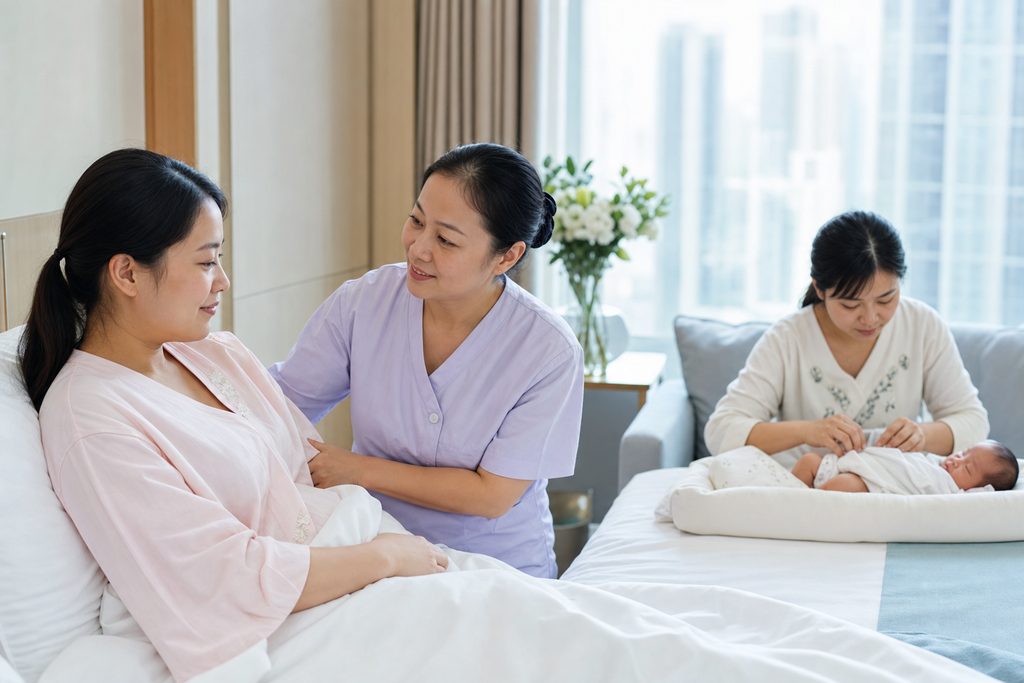
When Sarah, a 34-year-old Australian expat living in Shanghai, was told her baby was breech at 37 weeks, her first thought was not about the surgery itself. It was about everything after. Who would help her navigate the hospital corridors when her husband was stuck overseas on a delayed business trip? What would the recovery ward actually look like? And how would she manage the mountain of newborn paperwork — in Mandarin — while recovering from major abdominal surgery?
She is not alone. Every year, thousands of international mothers give birth in China. Some are expatriates living in Beijing or Guangzhou. Others travel specifically for planned procedures at top-tier hospitals. And nearly all of them share the same concern: the logistics of recovery and newborn care in an unfamiliar system.
Our team has coordinated maternal care for international families across China’s top-ranked hospitals. We have seen what works, what catches families off guard, and what makes the difference between a stressful experience and a smooth one. This guide lays out everything you need to know about C-section recovery and newborn care in China — from the moment you leave the operating room to the day you take your baby home.
Key Takeaways
- A planned C-section with a 4-5 day hospital stay at a top-tier Chinese international hospital typically costs $6,000 to $15,000 — a fraction of the $25,000 to $50,000 common in the United States.
- Recovery support in China is structured differently: postpartum care centers, or “confinement hotels,” offer 24/7 nursing for mother and baby, something rarely available in Western countries.
- You cannot simply arrive in China and schedule a cesarean for the following week — hospitals require prenatal records, a confirmed delivery plan, and adequate visa processing time, which together can take 4 to 8 weeks.
- Newborn documentation — birth certificate, passport, and visa — must be initiated immediately after birth, and the timeline is tight. Expect the process to take 2 to 4 weeks minimum.
The Problem: Recovering from Major Surgery Far from Your Support Network
A cesarean section is not a minor procedure. It involves an incision through seven layers of tissue — skin, fat, fascia, muscle, peritoneum, and the uterine wall. Recovery takes weeks, not days. And yet, in many Western healthcare systems, new mothers are discharged within 48 to 72 hours after a C-section. They go home to manage wound care, pain, breastfeeding, and a newborn — often alone.
In the United States, the average hospital stay after an uncomplicated cesarean is 2 to 3 days, according to the American College of Obstetricians and Gynecologists. In the United Kingdom, NHS guidelines similarly aim for discharge within 24 to 72 hours. For an international mother in China — someone who may not speak the language, may not have family nearby, and may be navigating an unfamiliar healthcare system — the prospect of going home so quickly can feel overwhelming.
That is where the structural differences in Chinese maternal care become relevant. The standard post-cesarean hospital stay in China is 4 to 5 days for an uncomplicated delivery. And for families who want more support, a parallel industry exists that has no real equivalent in the West: postpartum recovery centers.
Why China’s Maternal Care Model Works Differently
The Chinese approach to postpartum recovery is shaped by cultural tradition, hospital infrastructure, and market demand. The result is a system that, for international mothers who plan ahead, can offer more structured support than what is typically available back home.
Longer In-Hospital Recovery as the Norm
In China’s public and private maternity hospitals, the standard post-cesarean stay is not 48 hours. It is 4 to 5 days. During this time, nurses monitor wound healing, manage pain, check for signs of infection, and assist with early breastfeeding. The longer stay is not a luxury add-on — it is the baseline standard of care. For an international mother, those extra two or three days can be the difference between leaving the hospital still in significant pain and leaving with enough mobility to manage the next steps.
At hospitals like Shanghai First Maternity and Infant Hospital — one of the busiest maternity centers in the world, delivering over 30,000 babies annually — the post-cesarean protocol includes daily wound checks, routine ultrasound to confirm uterine involution, and lactation consulting as a standard part of the ward round. This is not VIP treatment. It is how the system works.
The Postpartum Care Center Ecosystem
Here is something most Western mothers have never heard of: in China, you can check into a hotel-like facility after leaving the hospital — and stay there for 28 days. These are called postpartum care centers, or yuezi zhongxin. They provide 24/7 nursing care for the mother, dedicated newborn care for the baby, nutritionist-designed meals, and lactation support. The mother rests. The professionals handle the rest.
This is not a hospital. It is a recovery facility. And it fills the gap that exists in Western postpartum care — the weeks between hospital discharge and actually feeling functional again. For an international mother without family nearby, a care center can be the single most valuable investment in her recovery.
Cost Structures That Make Extended Care Feasible
Let us address the obvious question: what does all of this cost? A C-section recovery package China cost varies significantly by hospital tier and city. At a public hospital’s international department in Shanghai, a planned cesarean with a 4-day private room stay typically ranges from $6,000 to $10,000. At a premium private international hospital like United Family Healthcare, the same package — including prenatal consultations, the surgery, a 4-5 day stay, and basic newborn care — runs from $10,000 to $15,000.
Compare that to the United States, where a C-section with a 3-day stay averages $25,000 to $50,000 before insurance, according to FAIR Health data. Even with insurance, many American families face out-of-pocket costs in the $3,000 to $7,000 range. The structural cost advantage in China is real — driven by lower labor costs, higher patient volumes, and a healthcare system that does not carry the same administrative overhead as the American one.
Postpartum care centers add to the total, of course. A 28-day stay at a mid-range center in Shanghai costs approximately $8,000 to $15,000. Luxury centers can run higher. But the combined cost — hospital delivery plus a month of professional recovery support — can still fall below the cost of the hospital stay alone in the US.
How to Plan a Cesarean Delivery in China as an International Mother
Planning a birth across borders is not like booking a flight and a hotel. Hospitals require documentation. Visas take time. And the window for international travel during pregnancy is narrow. Here is what the timeline actually looks like.
Step 1: Prenatal Record Transfer and Hospital Selection
Before any hospital in China will schedule a cesarean delivery, they need your complete prenatal records. That means every ultrasound report, every blood test, your gestational diabetes screening results, your Group B strep status — everything. These records must be translated into Chinese if you are working with a public hospital’s international department. Private international hospitals with English-speaking staff may accept English-language records directly.
Hospital selection matters enormously. If you are asking yourself “can I travel to China for planned C-section,” the answer is yes — but only if you choose the right hospital and start the process early. The best hospital for foreigner cesarean birth Beijing will differ from the best option in Shanghai, and both differ from what a family might choose in Guangzhou. Beijing’s top options include the international department of Peking Union Medical College Hospital and Beijing United Family Hospital. In Shanghai, the international maternity hospital Shanghai cesarean options include Shanghai First Maternity and Infant Hospital’s international department and Jiahui International Hospital.
We maintain detailed profiles of maternity hospitals across China’s major cities. You can review options in our hospital database to compare facilities, services, and international patient experience.
Step 2: The Visa and Travel Timing Reality
Pregnant travelers face a hard constraint: most airlines will not allow international travel after 36 weeks of gestation. Some cut off at 32 weeks for international flights. That means you need to be in China before that deadline. And you need a visa.
For medical treatment in China, the applicable short-stay visa category is the S2 visa, with the purpose annotated for private affairs including medical treatment. The S2 visa application requires an invitation letter from the Chinese hospital confirming your treatment plan and dates. Processing time varies by country and embassy workload, but you should budget 2 to 4 weeks for visa issuance. Add time for document preparation, hospital coordination, and appointment scheduling, and the total lead time from decision to arrival is realistically 6 to 8 weeks.
Do not book flights until your visa is in hand. Do not assume a hospital will issue an invitation letter without a full review of your records. And do not underestimate how tired you will be at 34 weeks pregnant on a long-haul flight.
Step 3: The Delivery and Immediate Recovery
On the day of the surgery, the process is similar to what you would experience anywhere: preoperative preparation, spinal or epidural anesthesia, the cesarean procedure itself, and then recovery. What differs is the post-operative protocol. In Chinese hospitals, early mobilization is encouraged but not rushed. Pain management is typically multimodal — a combination of oral and intravenous medications rather than relying solely on opioids. Wound care is performed by nursing staff daily, and the incision is checked for signs of infection at every shift.
Your baby will receive standard newborn care: vitamin K injection, hepatitis B vaccine, hearing screening, and metabolic screening for congenital conditions. If you have chosen a hospital with a well-baby nursery, the nursing staff can care for your baby overnight while you rest — a practice that has become less common in Western “rooming-in” hospitals but remains standard in many Chinese facilities.
| Service Component | Public Hospital International Dept | Private International Hospital | Typical US Hospital (for reference) |
|---|---|---|---|
| Planned C-section + 4-day stay | $6,000 – $10,000 | $10,000 – $15,000 | $25,000 – $50,000 |
| Prenatal consultations (package) | $1,500 – $3,000 | $3,000 – $5,000 | $3,000 – $7,000 |
| 28-day postpartum care center | $8,000 – $15,000 | $12,000 – $25,000 | Not typically available |
| Newborn documentation assistance | Limited | Often included | N/A |
| English-speaking staff | Partial | Full | Full |
All costs are estimates in USD and vary by hospital, city, and case complexity. Postpartum care center pricing depends on room category, length of stay, and included services.
Newborn Documentation: The Clock Starts Immediately
The baby is born. You are recovering. And now the paperwork begins. This is the part that catches international families off guard, and the timeline is unforgiving.
Within 30 days of birth, you must register the birth and obtain the official Chinese birth certificate — the document that records your child’s name, birth date, and parent information. This certificate is issued by the hospital or the local public security bureau. Without it, nothing else can proceed.
Next comes the passport. You will need to apply at your home country’s embassy or consulate in China. Processing times vary: the US Consulate in Shanghai typically takes 2 to 3 weeks for a Consular Report of Birth Abroad and first passport. The UK, Australian, and Canadian embassies have similar timelines. Some require an in-person appointment with both parents and the baby.
Once the passport is issued, you need an exit visa or residence permit for the baby to legally remain in or leave China. This is processed through the local Exit-Entry Administration bureau. Add another 1 to 2 weeks.
The total timeline from birth to having all documents in hand: 3 to 5 weeks, assuming no delays. This is the single most important reason to plan your postpartum stay carefully. If you are wondering “how long to stay in China after cesarean delivery,” the answer is not just about physical recovery. It is about documentation. You should plan to remain in China for at least 4 to 6 weeks after a cesarean birth — longer if complications arise or if consular processing is slow.
C-Section Newborn Care Packages: What Is Included and What Costs Extra
When hospitals quote a C-section newborn care packages China price, the scope of what is included varies dramatically. Some packages bundle everything — the surgery, the hospital stay, newborn screenings, vaccinations, and even postpartum follow-up. Others quote a base price that covers only the delivery and basic room charges, with everything else billed separately.
Here is what you should expect to see in a comprehensive package at a reputable international hospital:
- The cesarean procedure itself, including anesthesia and operating room fees
- A private recovery room for 4 to 5 days
- Daily obstetrician rounds and wound checks
- Daily pediatrician rounds for the newborn
- Standard newborn screenings: hearing, metabolic, congenital heart disease
- First-dose vaccinations: hepatitis B and BCG (if applicable)
- Lactation consulting during the hospital stay
- Basic postpartum supplies: abdominal binder, maternity pads, newborn diapers
What is typically NOT included and billed separately:
- Prenatal consultations before admission
- Epidural or spinal anesthesia (sometimes bundled, sometimes separate)
- Additional nights beyond the standard stay
- NICU care if the baby requires special monitoring
- Newborn passport photos and documentation assistance
- Postpartum care center transfer and stay
Ask for an itemized package breakdown before committing. A reputable hospital will provide one. If they will not, that is a red flag. Our team routinely helps international families compare package details across multiple hospitals — the differences can amount to thousands of dollars for the same clinical outcome.
Practical Considerations: Visas, Payments, and Follow-Up Care
The medical decisions are one thing. The logistics are another. Here is what you need to handle on the practical side.
Visa timing: As noted above, the S2 visa is the applicable category for medical treatment. The accompanying spouse or family member also applies for an S2 visa. Processing takes 2 to 4 weeks. The hospital must provide an invitation letter with your treatment plan, dates, and confirmation of appointment. Do not enter China on a tourist visa and then seek medical care — this can create legal complications for both you and the hospital.
Payment methods: Chinese hospitals, including international departments, typically require payment in advance or at the time of service. Credit cards are accepted at private international hospitals but may not be at public hospital international departments. Wire transfers are common for larger package payments. If you have international health insurance, confirm whether the hospital offers direct billing — United Family, Jiahui, and Parkway hospitals generally do, but public hospital international departments often require you to pay upfront and seek reimbursement yourself.
Language support: Private international hospitals have English-speaking obstetricians, midwives, and administrative staff. Public hospital international departments have some English-speaking staff, but coverage may be inconsistent — particularly on night shifts or weekends. If you are delivering at a public hospital, having a bilingual companion or coordinator available is not a luxury. It is how you communicate your pain level to the night nurse at 2 a.m.
Follow-up after returning home: Before you leave China, obtain a complete copy of your medical records — operative report, anesthesia record, newborn discharge summary, vaccination record, and all lab results. Have key documents translated into English if they are not already. Your home-country obstetrician and pediatrician will need these records for continuity of care. Schedule your first postpartum visit and newborn check-up before you travel, so there is no gap in care after you land.
Frequently Asked Questions
Can I choose my cesarean date in a Chinese hospital?
In most cases, yes — within medical constraints. A planned cesarean is typically scheduled between 39 and 40 weeks of gestation, and hospitals will work with you to select a date within that window. However, the exact date depends on operating room availability and your obstetrician’s schedule. Emergency cesareans, of course, happen on the baby’s schedule, not yours. If you are traveling to China specifically for a planned cesarean,
For more medical information and treatment options in China, visit chinamedservices.com (China Medical Services).
