Why China Surgery Scheduling Is More Flexible Than West: The Structural Advantage
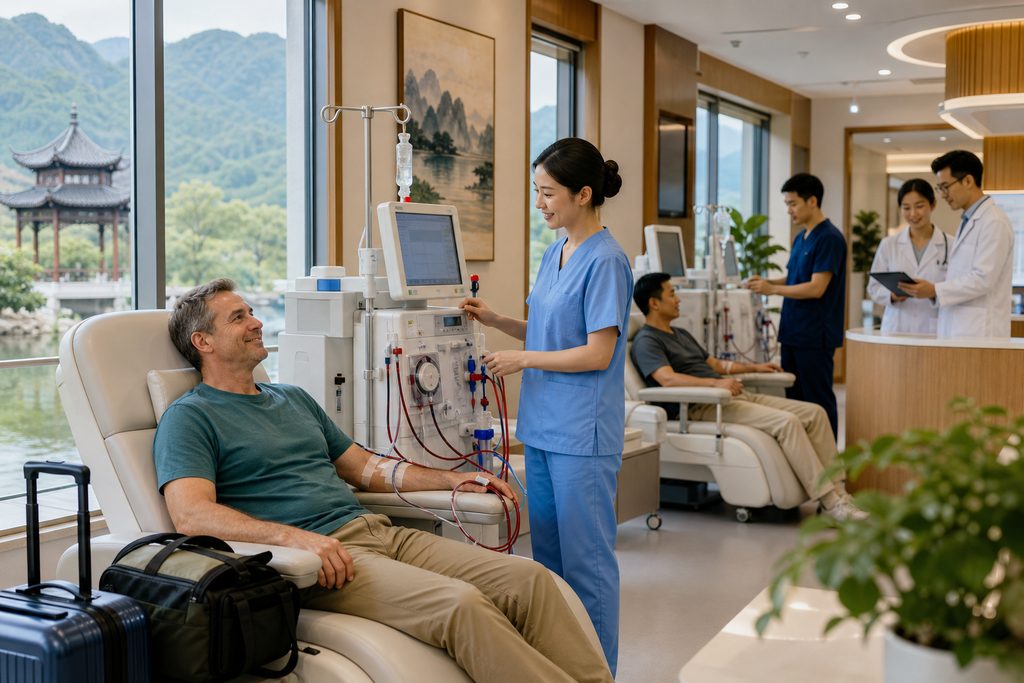
When 42-year-old Michael finally got his MRI results in Manchester, the orthopedic surgeon didn’t mince words. “You need a knee replacement. The wait is 14 to 18 months.” Michael wasn’t in agony every day, but the stiffness was stealing his golf game and making the stairs a negotiation. Eighteen months of watching his mobility fade felt like a sentence, not a care plan.
He started searching. That’s how he discovered that the structural logic of Chinese hospital systems creates a fundamentally different timeline for surgery. Not because of shortcuts. Because of scale, dedicated international patient pathways, and an economic model that doesn’t ration surgical capacity the same way single-payer systems must.
This isn’t about one system being better. It’s about understanding why is surgery scheduling faster in China, what that means for international patients, and where the real friction points lie. If you’re facing a long wait at home, the answers might change how you think about your options.
Key Takeaways
- China’s top-tier hospitals perform surgical volumes that dwarf Western counterparts—Fuwai Hospital alone completes over 14,000 cardiac surgeries annually, creating operational throughput that reduces scheduling bottlenecks.
- Dedicated international patient centers operate on separate scheduling tracks from the public queue, with appointment-to-surgery windows often measured in days or weeks rather than months.
- Language barriers and unfamiliar hospital workflows are real obstacles—without bilingual support, navigating a Chinese hospital’s scale can overwhelm even the most determined patient.
- Surgical flexibility exists because of structural factors (volume, separate international channels, pre-payment models), not because of lower clinical standards—but patients must verify hospital credentials and surgeon experience independently.
The Problem: When Waiting Isn’t Clinically Neutral
Waiting for surgery isn’t just inconvenient. It has clinical consequences. A 2020 study published in The Lancet Rheumatology found that patients waiting longer than 180 days for knee replacement experienced measurable deterioration in preoperative function and postoperative outcomes. The UK’s National Health Service reported in 2023 that over 7.6 million people were on waiting lists for elective care, with orthopedic procedures among the most backlogged. Canada’s median wait time for orthopedic surgery reached 27.4 weeks in 2023, according to the Fraser Institute.
These aren’t abstract numbers. They represent people living with pain, reduced mobility, and the slow erosion of daily life. A 55-year-old with hip osteoarthritis waiting 12 months for surgery isn’t just marking time. She’s losing muscle mass. She’s sleeping worse. Her cardiovascular fitness is declining because walking hurts.
The bottleneck in many Western public health systems isn’t a lack of surgical skill. It’s a combination of finite operating room allocations, centralized resource rationing, and post-pandemic backlogs that compound year over year. When a hospital has three orthopedic ORs and must serve a catchment area of 500,000 people, the math creates a queue regardless of how efficiently those rooms run.
Why China Surgery Scheduling Differs Structurally
The question patients like Michael ask isn’t abstract. China surgery wait times vs UK figures reveal a gap that can span 12 months or more for the same elective procedure. That gap exists because of three structural factors, none of which involve cutting clinical corners.
Volume Creates Throughput Capacity
A senior orthopedic surgeon at a top-tier Chinese public hospital performs between 200 and 500 joint replacements annually. The average US orthopedic surgeon performs approximately 65, according to data from the American Academy of Orthopaedic Surgeons. This isn’t a quality judgment—it’s a function of how hospitals are organized.
Chinese tertiary hospitals are enormous by Western standards. A single institution might run 50 operating rooms simultaneously, with surgical teams working in overlapping shifts. West China Hospital in Chengdu handles over 25,000 inpatient surgeries annually. This scale means that adding one more knee replacement to the schedule doesn’t require bumping another procedure or waiting for a monthly OR allocation committee to approve the slot.
When a hospital does 500 joint replacements a year, the scheduling infrastructure is built for throughput. Pre-op protocols, implant inventory, and rehabilitation bed availability are all calibrated to high volume. That’s the opposite of a system where each joint replacement competes for scarce OR time with every other surgical service.
International Patient Channels Operate Separately
This is the piece most foreign patients don’t understand at first. Chinese public hospitals serve two patient populations through two distinct pathways. The general public accesses care through the standard outpatient system—which means queuing for registration, seeing a specialist, and joining the surgical waitlist that serves the domestic population.
International patients access care through dedicated international medical centers or VIP departments. These units have their own outpatient clinics, their own surgical scheduling coordinators, and often their own designated operating rooms or priority OR slots. When a patient from abroad contacts a hospital’s international department, they’re not joining the same queue as a local resident. They’re entering a parallel system designed for shorter turnaround.
This isn’t queue-jumping in the pejorative sense. It’s a separate service tier with separate pricing—typically 1.5 to 2 times the cost of the standard pathway. The premium pays for English-speaking coordination, expedited scheduling, and the overhead of maintaining capacity that isn’t fully utilized by the domestic public system. For the hospital, international patients represent revenue that subsidizes other services. For the patient, it means asking how to get surgery in China without long wait and getting an answer measured in days, not seasons.
Pre-Payment Models Eliminate Insurance-Driven Delays
In the US system, surgical scheduling often bogs down in pre-authorization. The surgeon’s office submits the procedure to the insurer. The insurer reviews it. Questions go back and forth. Approval comes—or doesn’t—weeks later. Only then does a date get set.
Chinese hospitals serving international patients typically operate on a pre-payment model. The hospital quotes a package price. The patient pays a deposit. The surgery gets scheduled. Insurance reimbursement, if applicable, happens afterward between the patient and their insurer. This removes the single biggest source of administrative delay from the scheduling equation.
The financial reality is stark. A total knee replacement at a top Chinese public hospital’s international department runs from $12,000 to $18,000. The same procedure in the US averages $35,000 to $50,000, with some bills exceeding $70,000. When patients ask about fast-track knee replacement China cost, they’re often comparing a $15,000 procedure available in two weeks against a $45,000 procedure available in six months. That math concentrates the mind.
What “Flexible Scheduling” Actually Means: A Real Timeline
No. The speed comes from system design—dedicated international patient coordinators, high OR availability, and elimination of insurance pre-authorization delays—not from skipping steps. Pre-operative workup at top Chinese hospitals is thorough: labs, imaging, anesthesia consultation, and specialist clearance all happen, just compressed into one to two days rather than spread across weeks. The hospitals that accept international patients are the same institutions ranked in China’s top tier by the Fudan University hospital rankings, serving domestic patients at enormous scale.
Top-tier Chinese hospitals have complication management protocols and ICU capacity comparable to major Western centers. The question to ask is what happens after you return home. Your Chinese surgeon cannot manage complications from across the ocean. You must have a local physician identified in advance who agrees to handle post-operative issues. This is non-negotiable. Some complications—infections, implant issues—may require revision surgery. Know whether your home-country insurance or national health system covers revision of surgery performed abroad. If it doesn’t, you face paying out of pocket at home or returning to China.
Verify through independent sources. The Fudan University hospital rankings identify China’s top 100 hospitals overall and top 10 in each of 45 specialties. JCI accreditation provides an international quality benchmark that some Chinese hospitals hold. Contact the hospital’s international department directly—not through an intermediary—and confirm they have an established program for foreign patients. Legitimate programs have English-speaking coordinators, transparent pricing, and a track record you can verify through patient forums and medical tourism communities.
Your Next Step
The structural reasons why surgery scheduling moves faster in China are real: hospital scale that creates throughput capacity, dedicated international patient pathways that operate outside the public queue, and pre-payment models that eliminate insurance-driven delays. Understanding these factors lets you make an informed decision rather than a desperate one. If you’re facing a long wait at home and have a clear diagnosis, exploring whether a Chinese hospital can evaluate your case is a logical next step—not a leap of faith, but a process of due diligence that starts with sending your records for review.
Our team at China Medical Services helps international patients navigate this process. We are not a hospital and we do not provide medical advice or diagnoses. What we do is connect you with appropriate specialists at top-tier Chinese hospitals, coordinate record reviews and video consultations, and provide the on-the-ground bilingual support that makes the difference between a smooth experience and a bewildering one. If you want to understand whether your case is a fit, start with a free consultation. No commitment. Just an honest conversation about your situation and your options.
Frequently Asked Questions
Yes. The hospitals used for international patients are JCI-accredited and follow the same international safety standards as top hospitals in the US and Europe. Surgical teams perform high volumes of procedures — often more than their Western counterparts — which studies show leads to better outcomes.
Costs vary by procedure and hospital, but international patients typically save 40-80% compared to US prices — even when factoring in travel and accommodation. A consultation with our team will give you an exact, all-inclusive quote with no hidden fees.
Send us your existing medical reports to get started. We handle everything from hospital selection and appointment scheduling to visa assistance and post-operative recovery planning. Your medical records are reviewed by the specialist before you even book a flight.
For more medical information and treatment options in China, visit chinamedservices.com (China Medical Services).
