Stroke Treatment and Rehabilitation in China: Recovery with Your Medical Companion
Key Takeaways
- Stroke rehabilitation in China costs approximately 60-80% less than comparable programs in the United States, with intensive inpatient rehab packages starting around $8,000-$15,000 per month.
- China’s top rehabilitation centers handle patient volumes that dwarf Western hospitals, creating deep clinical expertise in managing complex post-stroke recovery cases.
- Navigating a foreign healthcare system after a stroke is genuinely difficult. Language barriers, visa requirements, and hospital registration systems create friction that can delay treatment.
- Your outcome depends heavily on hospital selection. Not all facilities offer the same standard of care. Matching your specific case to the right center matters enormously.
What Stroke Rehabilitation Actually Means
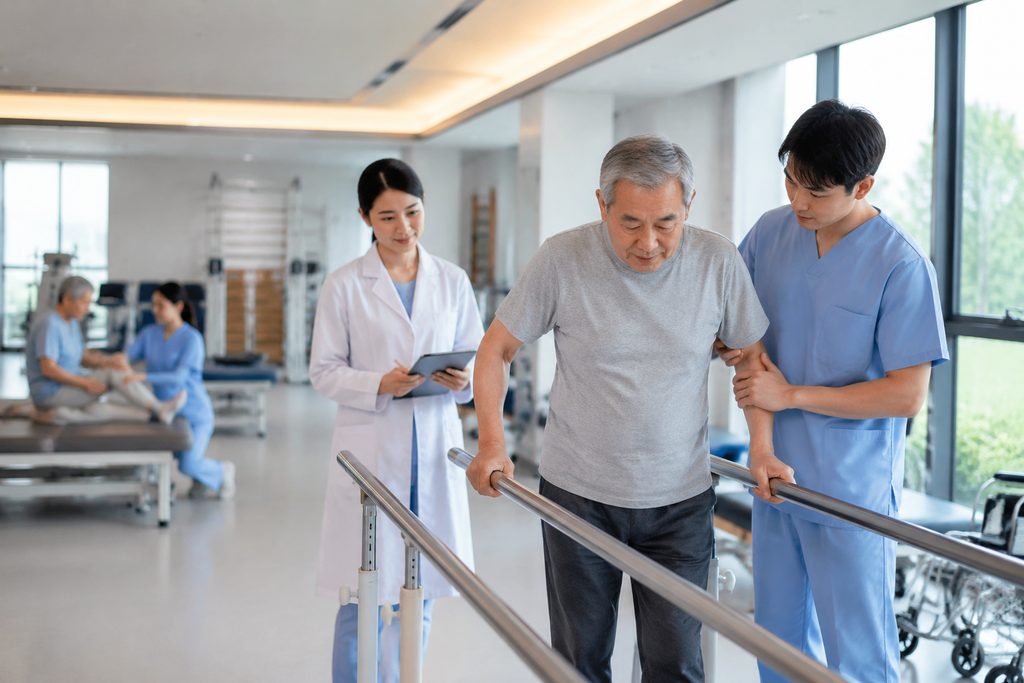
A stroke damages brain tissue. That part is straightforward. What comes next is less obvious. Rehabilitation is not a single therapy — it is a coordinated, multi-disciplinary effort to rebuild function that was lost. Speech therapy for aphasia. Physical therapy for motor deficits. Occupational therapy to relearn daily tasks. Psychological support for the cognitive and emotional aftermath. The goal is not always a full return to baseline. Sometimes it is. Often it is about maximizing independence within a new reality. In China, rehabilitation typically begins within 24-48 hours of stabilization — earlier than many Western protocols — and continues through inpatient, outpatient, and community-based phases. The intensity is what surprises most international patients. Sessions run longer. Frequency is higher. The system is built around volume and repetition.
The Problem: Stroke Recovery at Home Is Often Incomplete and Expensive
Approximately 1 in 4 stroke survivors will experience a second stroke within five years. That statistic from the American Stroke Association is sobering. But the immediate problem for many families is not prevention. It is the aftermath. In the United States, a single month of inpatient stroke rehabilitation averages $30,000 to $50,000. Outpatient therapy adds thousands more. Insurance covers some of it. Gaps remain. Deductibles, co-pays, and lifetime caps eat into savings. Wait times for specialized therapists stretch into weeks. The patient sits at home, losing precious neuroplasticity window, while the system processes paperwork.
The UK faces a different version of the same problem. NHS stroke rehab is free at the point of care. But access is rationed by queue. Six weeks for a speech pathology appointment is not unusual. Intensive daily therapy? Rare outside private pay. Canada and Australia report similar bottlenecks. The common thread is this: stroke recovery is time-sensitive, and most Western systems are structured for cost containment, not speed. Families watch the clock and wonder if enough is being done.
Who We Are
We are not a hospital. We do not provide medical treatment, clinical diagnoses, or rehabilitation therapy. What we do is remove every logistical obstacle between you and China’s best stroke rehabilitation centers. Our team connects international patients with 340+ top-ranked hospitals across 37 cities. We handle hospital matching, appointment coordination, bilingual medical companion services, visa guidance, and local accommodation planning. Think of us as your operational backbone. You focus on recovery. We handle everything else. Our organization is built on a simple premise: accessing world-class medical care in a foreign country should not require you to become an expert in Chinese healthcare bureaucracy.
Why Stroke Rehabilitation in China Delivers Results
Clinical Volume Creates Pattern Recognition
China records approximately 2.4 million new strokes annually. That is more than any other country. The sheer scale reshapes clinical practice. A rehabilitation physician at a major Chinese center might manage 40-60 post-stroke patients at any given time. Their Western counterpart might see a fraction of that. This volume is not just a number. It means the clinical team has seen your complication before. They have managed your specific deficit pattern dozens of times. Pattern recognition matters in rehabilitation. So does confidence in pushing patients harder during therapy sessions. Chinese rehab protocols tend toward higher intensity — more repetitions, longer sessions, earlier mobilization. The evidence supports this approach. A 2017 study in The Lancet found that early, high-intensity rehabilitation significantly improved functional outcomes after stroke. That is the model many top Chinese centers follow by default.
Integrated Traditional and Modern Approaches
Western stroke rehab focuses almost exclusively on physical and occupational therapy. Chinese rehabilitation adds another layer. Acupuncture is routinely integrated into post-stroke recovery protocols. The evidence is mixed but promising — a 2016 meta-analysis in Scientific Reports involving over 3,000 patients found acupuncture combined with conventional rehab improved motor function and reduced spasticity more than conventional rehab alone. Electro-acupuncture, where mild electrical current passes through the needles, is commonly used for hemiplegia. Tuina massage addresses muscle stiffness. Herbal medicine formulations target circulation and inflammation. None of this replaces conventional therapy. It runs alongside it. For international patients, this is often an unexpected benefit — access to modalities that are difficult to find or expensive back home. The TCM hospitals in our network offer these services within structured rehabilitation programs. You can explore our traditional Chinese medicine resources to understand how these approaches fit into a recovery plan.
Cost Structure: Why Stroke Rehabilitation Cost China Is Lower
The stroke rehabilitation cost China question comes up in nearly every initial consultation. Patients want hard numbers. Here they are. Inpatient stroke rehabilitation at a top-tier Chinese public hospital runs approximately $8,000 to $15,000 per month. Private international hospitals like United Family or Jiahui charge more — $20,000 to $35,000 monthly — but offer English-speaking staff, Western-style facilities, and direct insurance billing. Compare this to the United States, where equivalent inpatient rehab averages $30,000 to $50,000 per month. The gap is structural, not qualitative. Chinese labor costs for therapists are lower. Hospital overhead is different. The system operates on high volume with thinner margins. Clinical outcomes at top centers are comparable to Western benchmarks. Lower cost does not mean lower quality. It means different economics.
Outpatient therapy follows the same pattern. A physical therapy session in Beijing might cost $40-$80. In New York or London, expect $150-$300. Speech therapy, occupational therapy — the ratios hold. For families facing months of rehabilitation, these differences compound quickly. A three-month intensive rehab stay in China, including travel and accommodation, often costs less than a single month of equivalent care in the US. That math changes decisions.
| Rehab Type | China (Public Hospital) | China (Private International) | United States | United Kingdom (Private) |
|---|---|---|---|---|
| Inpatient Rehab (per month) | $8,000 – $15,000 | $20,000 – $35,000 | $30,000 – $50,000 | £15,000 – £25,000 |
| Outpatient PT Session | $40 – $80 | $100 – $180 | $150 – $300 | £80 – £150 |
| Speech Therapy Session | $35 – $70 | $90 – $150 | $120 – $250 | £70 – £130 |
| Acupuncture (per session) | $15 – $40 | $60 – $120 | $75 – $150 | £50 – £100 |
All costs are approximate ranges and vary by hospital, city, and case complexity. These figures reflect 2024 data and should be used for comparison purposes only.
Best Stroke Treatment Hospitals China: Where to Look
The phrase best stroke treatment hospitals China implies a single answer. There is no single answer. Stroke care splits into two phases: acute treatment and rehabilitation. Some hospitals excel at both. Others are stronger in one phase. For acute stroke intervention — thrombectomy, thrombolysis, neurosurgical management — the top-tier general hospitals lead. Peking Union Medical College Hospital in Beijing and West China Hospital in Chengdu are consistently ranked among China’s best for neurology and neurosurgery. Both appear in the Fudan University hospital rankings, which evaluate clinical reputation and research output across 45 specialties. Fuwai Hospital, while primarily cardiac, handles complex vascular cases that overlap with stroke etiology. For dedicated rehabilitation, the China Rehabilitation Research Center in Beijing is the country’s largest and most specialized facility. It handles thousands of post-stroke patients annually and offers comprehensive inpatient and outpatient programs.
Shanghai’s Huashan Hospital, affiliated with Fudan University, runs a renowned neurology department with a strong rehabilitation component. Our department-specific hospital rankings can help you narrow the search based on your specific needs — whether that is motor recovery, aphasia therapy, or cognitive rehabilitation. Private international hospitals offer another pathway. United Family Healthcare and Jiahui International Hospital provide stroke rehab in English-speaking environments with JCI accreditation. These are more expensive but eliminate the language barrier entirely. The right choice depends on your clinical needs, budget, and comfort with navigating a Chinese-language environment.
How Long Does Stroke Recovery Take in China?
How long does stroke recovery take in China is a question we hear constantly. The honest answer: it depends on the stroke. A mild ischemic stroke with minimal deficits might require 4-6 weeks of intensive outpatient therapy. A severe hemorrhagic stroke with significant hemiplegia could mean 3-6 months of inpatient rehabilitation followed by ongoing outpatient care. Chinese rehab protocols tend toward longer inpatient stays than Western norms. Where a US hospital might discharge a patient after 2-3 weeks of inpatient rehab, a Chinese center might keep them for 6-8 weeks. This is not inefficiency. It reflects a different philosophy — more therapy before discharge, less reliance on outpatient follow-up that patients may or may not attend. The neuroplasticity window — the period when the brain is most capable of rewiring around damage — is roughly 3-6 months post-stroke. Chinese programs are designed to maximize therapy intensity during this window. Gains continue beyond six months. They slow down. But the steepest recovery curve happens early, and the system is built to capture it.
Is Stroke Rehab in China Effective?
The question is stroke rehab in China effective deserves a direct answer. Yes. With caveats. Effectiveness depends on hospital selection. A top-tier rehabilitation center with experienced therapists, modern equipment, and integrated TCM modalities produces outcomes comparable to the best Western facilities. A lower-tier hospital without specialized stroke rehab capabilities does not. This is true everywhere. The difference in China is the variance. The gap between the best and the average is wider than in more regulated systems. Our role is to ensure patients land in the former category. Clinical research supports Chinese rehabilitation approaches. A 2020 study in the Journal of Stroke and Cerebrovascular Diseases compared outcomes of stroke patients treated with integrated Chinese-Western rehabilitation versus conventional Western therapy alone. The integrated group showed significantly better scores on the Fugl-Meyer Assessment for motor recovery and the Barthel Index for daily living activities. Sample sizes were modest. The direction of effect is consistent across multiple studies. For patients considering affordable stroke therapy abroad China, the data suggests that well-selected programs deliver real results.
What You Need to Know Before Going Alone
Arranging stroke rehabilitation in China independently is possible. It is also exhausting and risky. These are the barriers you will face:
- Visa Requirements: Medical treatment in China requires an S2 visa with a specific annotation for medical purposes. This is not a tourist visa. It is not an M business visa. The application requires an invitation letter from the treating hospital, medical records, and proof of financial means. Hospitals do not issue invitation letters to patients they have not evaluated. This creates a chicken-and-egg problem that can take weeks to resolve without the right contacts.
- Hospital Registration Systems: Chinese public hospitals do not allow international patients to pre-book outpatient appointments online. You show up. You queue. You hope the specialist you need is available that day. Surgery and inpatient admission require an in-person consultation first. The system is designed for domestic patients who can navigate it in Mandarin. Without language skills and local knowledge, you will burn days just getting in the door.
- Payment and Insurance: Public hospitals require pre-payment. Cash or Chinese bank card. Your international insurance likely works on a reimbursement model — you pay upfront and claim later. Private international hospitals accept direct billing from major insurers, but they are fewer and more expensive. Understanding which hospitals accept which payment methods before you travel is critical. Getting it wrong means denied treatment or frozen accounts.
How We Help You Navigate This
These barriers exist. They are real. They are also solvable with the right support. Our team begins with a detailed consultation to understand your clinical situation — stroke type, current deficits, rehabilitation goals, budget, and timeline. We match your case to appropriate hospitals from our network of 340+ facilities. We coordinate with the hospital to secure the invitation letter needed for your S2 visa application. We guide you through the visa process step by step. Before you travel, you know which hospital you are going to, which doctor will evaluate you, and what the estimated costs will be. Nothing is left to chance.
On the ground, a bilingual medical companion meets you at the hospital. They handle registration, queue management, payment processing, and translation during every consultation and therapy session. They are not interpreters on a screen. They are physically present, walking you through each step of the process. This matters enormously for stroke patients who may have communication deficits or mobility limitations. Your companion also assists with practical needs — pharmacy runs, follow-up appointment scheduling, accommodation coordination. Our goal is to make the logistics invisible so you can direct your energy toward recovery. The medical companion service is the core of what we do.
After discharge, we remain involved. We coordinate outpatient therapy schedules. We arrange telemedicine follow-ups with your Chinese physicians if needed. We help transition your medical records and therapy protocols back to your home healthcare team. Continuity of care does not end when you leave China. Recovery is a long process. Our involvement can extend as long as you need it.
Stroke Rehab Packages China for Foreigners: What Is Included
The term stroke rehab packages China for foreigners suggests a standardized product. Most top hospitals do not sell pre-packaged rehab bundles. They evaluate the patient, then build a program. What you can expect at a comprehensive inpatient stroke rehab program in China typically includes daily physical therapy, occupational therapy 3-5 times weekly, speech therapy as needed, nursing care, medication management, and often adjunctive therapies like acupuncture or massage. Room and board are included in the inpatient rate. The total monthly cost ranges from $8,000 to $35,000 depending on the hospital tier and room type. Some private international hospitals offer more structured packages with fixed durations and bundled pricing. These are easier to budget for but less flexible. Our team helps you understand exactly what each hospital’s program includes before you commit. No surprises. No hidden charges.
Frequently Asked Questions
Yes. Family members accompanying a patient for medical treatment apply for the same S2 visa category. The visa application requires documentation showing the relationship and the patient’s medical situation. Most rehabilitation hospitals allow one family member to stay in the patient’s room or in nearby accommodation arranged through the hospital. Our team assists with the caregiver’s visa application as part of the overall coordination process.
This is a concern every family has. The rehabilitation hospitals in our network are either part of or closely affiliated with full-service general hospitals. If a medical emergency occurs — a second stroke, an infection, a cardiac event — the patient is transferred immediately to the acute care department within the same institution. There is no need for ambulance transport to a different facility. The rehabilitation team and the acute care team share medical records and communicate directly. This integrated structure is one reason we prioritize top-tier general hospitals with dedicated rehab units over standalone rehab facilities.
Yes. We arrange for all medical records, therapy notes, imaging results, and discharge summaries to be translated into English and transmitted to your home physician. This happens at discharge and at intervals during treatment if your home doctor requests interim updates. Continuity of care requires information flow in both directions. We facilitate that.
Hospital selection should be based on your specific deficits and rehabilitation goals. A patient with primarily speech and language deficits needs a program with strong speech pathology. A patient with significant motor impairment needs a center with advanced physical therapy equipment and experienced neuro-physiotherapists. Our initial consultation includes a review of your medical records to understand your clinical picture. We then match you to hospitals with demonstrated expertise in your particular rehabilitation needs. We do not recommend a hospital unless we are confident it is a good clinical fit.
Your Next Step
Stroke recovery is a long road. The decisions you make about rehabilitation — where it happens, how intensive it is, who guides the process — have lasting consequences. China offers world-class rehabilitation at costs that make extended treatment financially feasible for families who would otherwise be forced to cut therapy short. The trade-off is complexity. A foreign healthcare system with a different language, different payment structures, and different clinical traditions takes effort to navigate. That is where we come in
For more medical information and treatment options in China, visit chinamedservices.com (China Medical Services).
