Medical Travel to China: How to Handle Media Questions About Your Journey
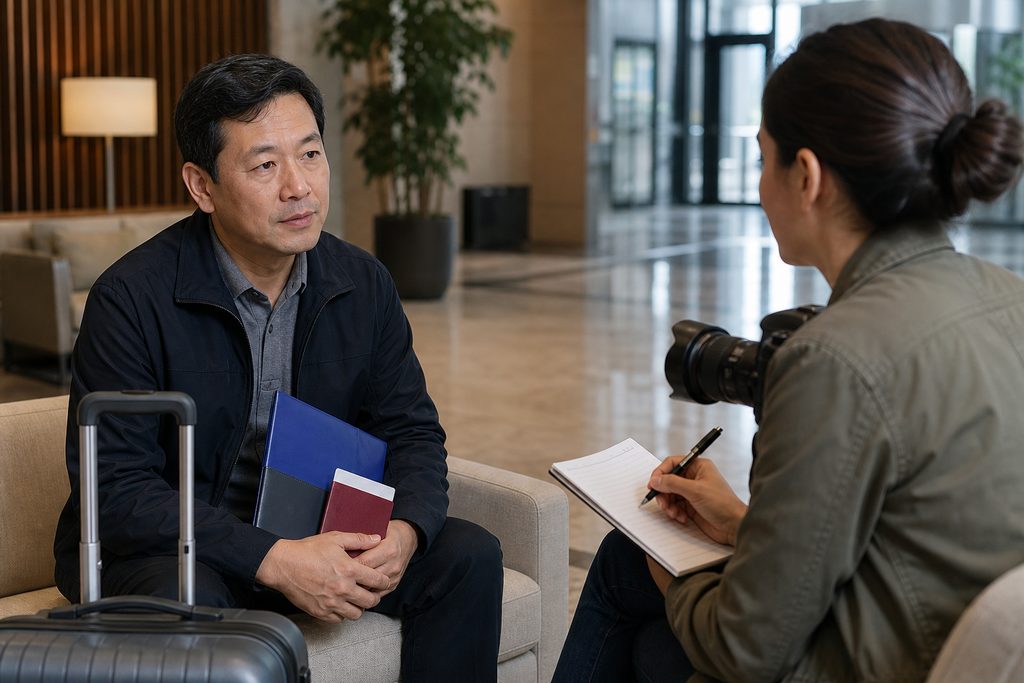
Most people assume journalists will never care about their medical choices. That’s a reasonable assumption—until it isn’t. A local newspaper picks up on a trend. A health reporter notices more patients traveling abroad for procedures. Suddenly your inbox has a message from someone with a press badge asking about your experience. Now you’re wondering how to answer media questions about medical travel to China without stumbling into a minefield of privacy concerns, cultural misunderstandings, or unintended controversy.
This isn’t a hypothetical scenario. Medical tourism from Western countries to China has grown steadily over the past decade, driven by cost differentials that are hard to ignore and clinical volumes that produce genuine expertise. A cardiac bypass that costs $120,000 in the United States might run $12,000 to $20,000 at a top Chinese center like Fuwai Hospital, which performs over 14,000 cardiac surgeries annually—the highest volume of any cardiac center globally. Reporters have noticed. And when they call, you deserve to be prepared.
Our team at China Medical Services has guided hundreds of international patients through their treatment journeys. We’ve also seen what happens when media attention arrives uninvited. This guide walks through everything you need to know—from assessing whether to speak at all, to crafting your message, to handling the questions that can blindside even the most articulate patients.
How This Actually Works, Step by Step
Let’s walk through the real sequence. Not the idealized version where everything goes smoothly. The actual process, with its awkward pauses and judgment calls.
You’ve returned home after surgery. Maybe it was an orthopedic procedure at Peking Union Medical College Hospital. Maybe oncology treatment at Fudan University Shanghai Cancer Center. Recovery is going well. Then the email arrives. A reporter from your regional newspaper found your story through a travel forum, a social media post, or a mutual acquaintance. They want to interview you.
Your first instinct might be to say yes. You’re grateful. You want to share. Or your first instinct might be panic—worried about judgment, about saying the wrong thing, about your employer finding out you traveled abroad for care instead of using the local system. Both reactions are normal.
Here’s what happens next, in order:
Step one: Buy yourself time. Never agree on the spot. A simple response works: “Thanks for reaching out. Let me think about whether I’m the right person to speak with and I’ll get back to you by Thursday.” This gives you space to assess motives, prepare, and consult anyone you need to consult.
Step two: Research the journalist. Read their previous work. Are they a health reporter who understands medical nuance? Or a general assignment reporter looking for a quick sensational angle? Their track record tells you everything about how your words might be framed.
Step three: Clarify your own goals. Are you speaking to help other patients discover options they didn’t know existed? To advocate for transparency in medical pricing? To share gratitude for the care you received? Or are you seeking validation for a decision your family questioned? Be honest with yourself. The goal shapes everything that follows.
Step four: Set boundaries before the interview starts. Tell the reporter what’s off-limits. Your employer’s name. Your children’s identities. Specific medication details. Whatever matters to you. Professional journalists respect clear boundaries stated upfront. If they push back, that’s a red flag.
Step five: Prepare your three key messages. Not twenty messages. Three. What do you want the reader to remember? Write them down. Practice saying them aloud. Every answer should circle back to one of these points.
Step six: Do the interview. Then let go. You can’t control the final edit. You can only control your preparation.
Why “Medical Tourism” Is a Loaded Term and What to Say Instead
Here’s something reporters often get wrong. They reach for the phrase “medical tourism” because it’s familiar shorthand. But that term frames your decision as a vacation with a side of surgery. It trivializes what was likely months of research, financial planning, and emotional weight.
When a journalist asks about your “medical tourism to China,” you have an opening. Gently reframe the language. Say something like: “I’d describe it as accessing specialized care abroad rather than tourism. This was a medical decision first. The travel was secondary.”
This isn’t semantic nitpicking. Language shapes perception. A 2023 study in the Journal of Medical Ethics examined media coverage of cross-border healthcare and found that “tourism” framing consistently downplayed clinical seriousness and patient vulnerability. You’re not a tourist who happened to get a hip replacement. You’re a patient who made a calculated healthcare decision.
Also worth knowing: the term carries different weight in China than in Western countries. Chinese hospitals and government health bodies increasingly prefer “cross-border medical services” or “international medical care.” When you mirror that language, you signal that you understand the ecosystem you stepped into—not just as a consumer but as a participant.
This reframing also helps with the inevitable follow-up question about quality. “But isn’t Chinese healthcare lower quality?” You can respond: “I was treated at a hospital ranked in the top 5% of China’s 35,000-plus hospitals by the Fudan University ranking system, which evaluates clinical outcomes and research output. My surgeon performs this procedure several times a week. That volume creates expertise.” Facts land harder than defensiveness.
A Realistic Timeline: From Inquiry to Published Story
Media timelines are unpredictable. A story might publish in 48 hours or sit on an editor’s desk for six weeks. Here’s what you can generally expect once a reporter contacts you about your experience receiving treatment in China.
| Stage | Typical Duration | What Happens |
|---|---|---|
| Initial contact | Day 1 | Reporter reaches out via email, phone, or social media. You respond within 24-48 hours to acknowledge receipt, even if just to say you need time. |
| Pre-interview discussion | Days 2-5 | Off-the-record conversation about scope, angle, and ground rules. This is when you set boundaries and ask about the story’s broader context. |
| Interview | Days 5-14 | Usually 20-45 minutes by phone or video call. In-person interviews are rarer for medical stories unless you’re local to the outlet. |
| Fact-checking | Days 14-21 | Reporter may circle back to verify hospital names, procedure dates, or cost figures. This is a good sign—it means they care about accuracy. |
| Editorial review | Days 21-35 | The story passes through editors. You typically won’t hear anything during this phase. Silence is normal, not rejection. |
| Publication | Days 28-45 | Story goes live. You may get a heads-up, or you may discover it yourself. Either way, expect a wave of attention that fades within 3-7 days. |
One thing that surprises people: the lag between interview and publication. Reporters juggle multiple stories. Editors spike pieces at the last minute. Advertisers pull out. A story that was “definitely running next week” might never run. Don’t rearrange your life around the publication date. Prepare, do the interview, and move on.
If you’re still in active recovery or managing follow-up care when the inquiry arrives, consider asking the reporter to wait. Say: “I’m happy to speak with you, but I’m still in the middle of my recovery protocol. Can we schedule this for three weeks from now?” Most will accommodate. Those who won’t are telling you something about their priorities.
What Can Go Wrong—and What Happens Then
Let’s be direct about the risks. Most media experiences are neutral to positive. Some go sideways. Knowing the failure modes helps you avoid them.
Misquotation. It happens more often than reporters admit. A rushed phone interview, a garbled recording, a paraphrase that shifts meaning. You said “the hospital’s international department assigned an English-speaking coordinator.” The article says “the hospital provided a translator.” Small difference, but it erases the professional infrastructure that made your experience possible.
What to do: If the error is minor, let it go. If it’s substantive—misrepresenting your medical outcome, attributing a quote you never said—email the reporter calmly. “I wanted to flag one inaccuracy in the piece. I actually said X, but the article quotes me as saying Y. Is a correction possible?” Most outlets have formal correction processes. Use them.
Framing you didn’t agree to. You thought the story was about patient empowerment and cost transparency. The published piece is headlined “Desperate Patients Flee Broken System.” This is the most painful failure mode because it’s not factually wrong—it’s tonally hostile.
What to do: You have limited recourse here. You can request a letter to the editor. You can write your own response piece on a platform like Medium or LinkedIn. You can contact the editor directly. But understand that framing disputes rarely result in retractions. This is why the pre-interview discussion about angle matters so much. Ask: “What’s the working headline? What’s the broader story you’re trying to tell?” Their answer is revealing.
Colleague or employer backlash. Someone at work reads the article. Maybe they think you abandoned the local healthcare system. Maybe they question your judgment. Maybe it’s fine, but the awkwardness lingers.
What to do: You don’t owe anyone your medical decision-making. A simple response works: “I made the best decision for my health with the information I had at the time. I’m happy to discuss it further if you have genuine questions.” Most people back off. Those who don’t are revealing something about themselves, not about you.
Viral attention you didn’t seek. A local story gets picked up by a national aggregator. Suddenly your inbox is flooded. Strangers have opinions about your surgery. This is rare but real.
What to do: Go private on social media for a week. Don’t read the comments. The news cycle moves fast. By day four, something else will have captured the internet’s attention.
What to Tell Reporters About Your Medical Tourism to China: A Messaging Framework
Most patients we’ve worked with at China Medical Services want to share their experience but freeze when the microphone turns on. The solution isn’t memorizing talking points. It’s having a simple framework that keeps you grounded when questions come fast.
Here’s the structure we recommend:
Lead with the problem, not the destination. Don’t start with “I went to China.” Start with what you were facing. “I was diagnosed with a condition that required specialized surgery. My local options had a nine-month wait. I needed to move faster.” This frames your decision as a response to a medical need, not a lifestyle choice.
Describe the research process. Reporters and readers both underestimate how methodical most international patients are. You didn’t book a flight on a whim. You compared hospitals. You reviewed clinical outcome data. You consulted with your home-country physician. You may have used a service to coordinate a written second opinion before committing. Walk through this. It establishes credibility and counters the “desperate patient” narrative.
Name the institution, not just the country. “I was treated in China” is vague and invites stereotypes. “I was treated at West China Hospital in Chengdu, which is one of the largest teaching hospitals in the world and consistently ranked among China’s top five comprehensive hospitals” is specific and impressive. The institution carries the credibility. The country is just geography.
Acknowledge the tradeoffs honestly. No medical decision is pure upside. Maybe the language barrier was real, even with an interpreter. Maybe the food wasn’t what you’re used to. Maybe follow-up coordination with your home doctor required extra effort. Acknowledging these things makes you more credible, not less. The patient who says “everything was perfect” sounds like an advertisement. The patient who says “the surgery was excellent, the recovery ward was modern, and figuring out meal preferences took some creativity” sounds like a human being.
End with your outcome. Not a sales pitch. Just the truth. “I’m six months post-surgery. My follow-up scans are clean. I’m back to work full-time. I’d make the same decision again.” Or: “It’s too early to know the long-term outcome, but my recovery is on track and my local doctor is pleased with the results.” Whatever is true.
One more thing about dealing with press inquiries after surgery abroad in China: expect the quality question. It always comes. Sometimes directly—”Were you worried about quality?” Sometimes disguised—”How does the care compare to what you’d receive here?” Your answer shouldn’t be defensive. It should be factual. “The hospital I chose performs over 10,000 procedures of this type annually. My surgeon does this specific operation multiple times per week. Volume correlates with outcomes in surgery—that’s well-established in the medical literature. I made my decision based on that data.”
If the reporter presses on safety standards or regulation, you can point to international accreditation. Several Chinese hospitals hold Joint Commission International (JCI) accreditation, the same gold standard applied to hospitals in the United States, Europe, and the Middle East. You can find these facilities listed on our private and international hospitals page. The point isn’t to argue. It’s to demonstrate that your decision was informed.
Practical Considerations: Privacy, Legal, and Follow-Up Care
Beyond messaging, there are concrete issues to think through before you say yes to an interview.
Medical privacy isn’t just about HIPAA. If you’re American, HIPAA protects your information in U.S. healthcare settings. It does not bind journalists. Once you voluntarily disclose your medical history in an interview, that information is public. Forever. Think carefully about what you’re comfortable having searchable under your name for years. A good rule: only share what you’d be fine with a future employer, neighbor, or relative reading.
Your home-country doctor may have opinions. Some physicians are supportive of patients seeking care abroad. Others are skeptical, sometimes for good clinical reasons, sometimes out of institutional bias. Before you go public, consider giving your local doctor a heads-up. Not asking permission—you don’t need it—but a courtesy. “I’m speaking with a reporter about my experience. I wanted you to hear it from me first.” This preserves the relationship, and you need that relationship for follow-up care.
Insurance and legal exposure. If your treatment in China was paid for by an insurer, check whether speaking publicly violates any agreement. Unlikely, but worth verifying. If you’re in active treatment or have an ongoing claim, consult your attorney before speaking. This is especially relevant for anyone considering media interview tips for international patients treated in China while still navigating insurance reimbursement.
Visa category confusion. Reporters sometimes ask what visa you used. This seems innocent but can get tangled. Medical travelers to China typically enter on an S2 visa, which covers short-term private affairs including medical treatment. It is not a “medical visa”—that category doesn’t exist in the Chinese visa system. If a reporter asks, you can say: “I traveled on the appropriate short-stay visa for private medical treatment, which my hospital’s international department helped me document.” Don’t speculate about visa policy. Don’t use the term “M visa,” which is strictly for commercial and trade activities. If you’re uncertain about the details, say: “The hospital’s international patient office handled the documentation. I’d refer you to them for specifics on the visa category.”
Follow-up care logistics. This is the practical question that matters most to other patients considering a similar path. How did you coordinate with your local doctor after returning? Did the Chinese hospital provide English-language discharge summaries and imaging files? Was there any gap in continuity? Be honest here. These details help people make better decisions. If the transition was seamless, say so. If it required extra phone calls and persistence, say that too.
And a quiet truth about handling media coverage after medical travel to China: you can say no. You don’t owe anyone your story. If speaking publicly feels premature, or emotionally draining, or simply not aligned with where you are in recovery—decline. A polite “I’m not in a position to participate right now, but thank you for asking” is complete. You don’t need to explain further.
Frequently Asked Questions
Can I talk to journalists about my surgery in China without violating patient confidentiality?
Yes. Patient confidentiality binds healthcare providers, not patients. You are free to discuss your own medical experience
For more medical information and treatment options in China, visit chinamedservices.com (China Medical Services).
