Transition from Chinese Hospital to Home Country Doctor: A Complete Care Continuity Plan
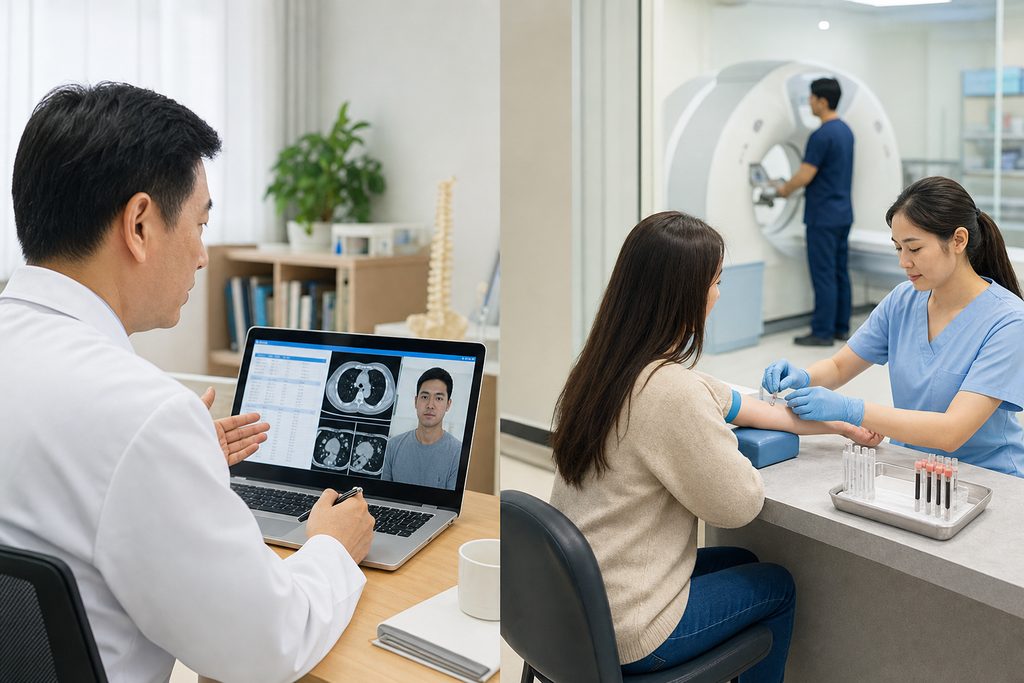
When 54-year-old David from Manchester booked his hip resurfacing in Shanghai, he had one question that kept him up at night. Not about the surgery itself. He trusted the surgeon. His fear was quieter: what happens when I get home? Who manages the wound check at week six? What if my local GP has never seen a Chinese surgical report?
David’s question is the one every international patient eventually asks. And the answer is simpler than most people think — but it requires a plan that starts before you ever board the plane.
The Short Answer
Yes, your local doctor can manage your recovery after surgery in China. But only if the handoff is built correctly. That means translated discharge summaries, imaging files in standard formats, clear medication schedules, and a named point of contact for your home physician. Without these pieces, you are asking a doctor to fly blind. With them, continuity of care is entirely achievable.
The catch? Chinese public hospitals do not produce these packages by default. Their discharge paperwork is designed for domestic patients who return to the same hospital system for follow-up. You are not that patient. So the coordination falls on you — or on a team that does this work routinely.
Who This Is Right For — and Who It Isn’t
A structured medical handoff back to your home country makes sense for most planned procedures. But it is not universal. Here is who benefits most, and who should think twice.
Good candidates typically share these characteristics:
- You are traveling for a single, defined procedure with a predictable recovery timeline — joint replacement, spinal surgery, cardiac ablation, or a major gynecological surgery.
- You have an established relationship with a primary care physician or specialist at home who is willing to receive you back.
- Your procedure carries a moderate risk of late complications that a local doctor would need to assess — wound infection, DVT, implant loosening.
- You are willing to pay for professional translation of key documents. Google Translate is not adequate for a discharge summary.
Situations where this model is riskier:
- Procedures with a steep, unpredictable postoperative course — major organ resection, multi-stage reconstructions, or experimental therapies where the Chinese team expects to manage complications themselves.
- You have no regular doctor at home and no plan to establish one before travel.
- Your home healthcare system is fragmented or under-resourced, and you cannot identify a single clinician who will take ownership of your follow-up.
- The Chinese hospital uses a proprietary implant or device with no equivalent in your home market. Your local orthopedist cannot manage hardware they have never seen.
Being honest about the last group is what keeps patients safe. Some surgeries should be followed by the team that performed them. If you cannot stay in China for the full surveillance period your surgeon recommends, reconsider the travel.
The Options, Compared
Patients managing post surgery care coordination China to my country face three distinct models. They are not equal in cost, safety, or workload.
| Approach | What You Get | Home Doctor’s Burden | Typical Cost (USD) | Best For |
|---|---|---|---|---|
| Self-managed handoff | Raw discharge papers; you arrange translation and imaging transfer yourself | High — must interpret foreign documents alone | $0–$300 (translation fees) | Fluent Mandarin speakers; medically literate patients |
| Hospital international department package | Translated summary, CD/DVD of imaging, medication list in English; no coordination with your home doctor | Moderate — receives a clean package but no clinical conversation | $200–$800 (varies by hospital) | Patients whose home doctor is flexible and experienced with international cases |
| Third-party care coordination service | Full translated records, direct clinician-to-clinician handoff call, aftercare plan, home-doctor briefing document, post-return check-ins | Low — receives a structured handoff with a named contact for questions | $1,500–$3,000 | Complex surgeries; patients without a medical background; anyone who wants one throat to choke if things go sideways |
The third column is the one that matters most. Your home doctor is not being difficult when they hesitate to manage a case from abroad. They are being responsible. A surgeon in Chicago who receives a stack of untranslated Chinese documents and a patient saying “they told me I’m fine” is practicing defensive medicine — and rightly so. The question is how much of that burden you want to lift off their shoulders before you walk into their office.
Building the Handoff Package: What Your Home Doctor Actually Needs
This is the section that answers the specific question behind David’s question. He was not really asking “can my local doctor manage this.” He was asking “what do I need to hand them so they say yes.”
Here is the minimum viable package. Not the ideal. The floor.
Operative report — fully translated. Not summarized. Every structure identified, every instrument used, every unexpected finding. Your home surgeon needs to know whether the Chinese team encountered excessive bleeding, unusual anatomy, or a deviation from the planned procedure. These details change the risk profile of your recovery.
Implant sticker or card. If hardware was placed — a hip stem, a spinal cage, a cardiac device — you need the manufacturer, model, lot number, and size. Tape the original sticker into a document your home doctor can scan. Do not rely on a handwritten note.
Discharge summary with explicit red flags. A good discharge summary does not just say “follow up in two weeks.” It says: “If the patient develops calf swelling, shortness of breath, or wound drainage beyond postoperative day five, evaluate for DVT and wound infection immediately.” Your home doctor needs thresholds, not vague reassurance.
Medication schedule with generic names. Chinese brand names mean nothing abroad. Every drug must be listed by its international nonproprietary name, with dose, frequency, duration, and taper plan. Anticoagulation after joint replacement is a classic danger point — stopping too early or too late can be catastrophic.
Imaging on a standard platform. Chinese hospitals often give patients a CD with proprietary viewing software that will not run on a Western hospital’s IT system. You need DICOM files on a USB drive, or a cloud link that your home radiologist can actually open. Test this before you leave China. Walk into any internet cafe, plug in the drive, and confirm the files open on a generic viewer.
Direct contact pathway. Your home doctor needs an email address or phone number for the Chinese surgical team — or their international department liaison — to ask clinical questions. Not a WeChat ID. A real email address that gets answered within 48 hours.
What It Costs and Who Pays
The direct cost of a medical tourism aftercare plan cost China packages varies sharply by complexity. But the real question is what you are paying for.
Translation of a full operative report and discharge summary by a certified medical translator runs $150–$400 depending on document length. Rush jobs cost more. DICOM file conversion and cloud hosting might add another $50–$100. If you use a coordination service, the $1,500–$3,000 figure quoted above typically includes all translation, the clinician handoff call, a written aftercare plan, and 30 to 90 days of post-return follow-up by phone or email.
What is not included: any clinical care provided by your home doctor. That is billed through your normal insurance or paid out of pocket. The handoff package enables care; it does not deliver it.
Insurance almost never covers the coordination fee itself. Some international health plans will reimburse translation costs if they are coded as part of the surgical episode, but this is rare. Most patients pay out of pocket. Compared to the cost of a mismanaged complication — an undetected infection that becomes sepsis, a DVT that becomes a pulmonary embolism — the handoff fee is cheap insurance.
Practical Considerations: Records, Visas, and the Return Timeline
The logistics of how to transfer medical records from Chinese hospital to home doctor sit at the center of this entire process. Get this wrong and everything else unravels.
Start the records request before your surgery, not after. Tell the international department or your coordinator on admission day: “I need a complete discharge package for my doctor at home, in English, with imaging files.” This gives them time to assign a translator and prepare the package while you are recovering. Waiting until discharge day to ask means you will either leave without the package or accept a rushed, incomplete version.
On the visa side, international patient discharge planning service China providers typically recommend staying in-country for at least the initial postoperative surveillance period. For a joint replacement, that might be 10–14 days. For cardiac surgery, longer. Your S2 visa should cover this window. If complications extend your stay, your coordinator can help with visa extensions — but do not assume a 30-day visa will stretch. Plan for the stay you need, not the stay you hope for.
Once home, book your first follow-up appointment before you leave China. Call your home doctor’s office from Shanghai and schedule the visit for the week you return. Hand them the package at that appointment. Do not mail it ahead and hope they read it. They will not. Hand-deliver it, sit in the waiting room, and make sure the doctor has it in their hands before you leave.
Frequently Asked Questions
Can my local doctor manage complications after surgery in China?
Yes — for most complications. Wound infections, DVT, medication reactions, and routine hardware issues fall within the scope of any competent surgeon or primary care physician in your home country. The limiting factor is not capability. It is information. If your home doctor has a translated operative report, implant details, and a red-flag list from the Chinese team, they can manage 90% of what arises. The 10% they cannot manage are complications specific to a technique or device used only in China — and for those, you need the Chinese surgeon on a video call, not an email.
What if my home doctor refuses to take over my care?
This happens. Some physicians are uncomfortable with cross-border cases for liability reasons, or because they have no experience with Chinese surgical practices. You have two options. Find a different doctor — one with international patient experience, often at a large academic medical center — or return to China for follow-up. The second option is expensive and disruptive, which is why you should confirm your home doctor’s willingness before you book your surgery. A five-minute phone call before you travel prevents a crisis after.
How long should I stay in China after surgery before flying home?
No universal answer exists, but here are the guardrails. For minimally invasive procedures with low complication rates — laparoscopic gallbladder removal, arthroscopic knee surgery — 5 to 7 days is often sufficient. For major joint replacement, 10 to 14 days. For cardiac or thoracic surgery, 14 to 21 days minimum. The Chinese surgical team will give you a recommendation. Take it seriously. The most dangerous place to develop a postoperative complication is at 35,000 feet over the Pacific Ocean.
Does a medical tourism package with follow-up care China service actually include real clinical follow-up, or just paperwork?
Read the contract carefully. Most packages sold as “follow-up care” are actually documentation and coordination services — translated records, a handoff call, maybe a post-return check-in by phone. They are not clinical care. No one in Shanghai is going to change your wound dressing in Manchester. What a good service does is make sure your Manchester doctor knows exactly what to look for and has someone to call if they find it. That is valuable. It is also limited. Know which you are buying.
Your Next Step
The gap between a Chinese operating room and your home doctor’s office is real, but it is bridgeable. The bridge is built on translated records, explicit aftercare instructions, and a direct line between the clinicians on both sides. None of this happens automatically. All of it can be arranged.
Our team at China Medical Services handles this coordination for international patients every week. We are not a hospital and we do not provide medical advice or diagnoses. What we do is make sure the clinical information moves cleanly from the Chinese surgical team to the doctor who will care for you at home — translated, formatted, and delivered with a named contact for questions. If you are planning surgery in China and want to know exactly how the handoff back to your local doctor will work, reach out for a free consultation. We will walk you through the process, the timeline, and the cost before you commit to anything.
One well-built handoff package changes the entire arc of a recovery. David’s hip is doing fine. His surgeon in Manchester knew exactly what the Shanghai team had done, because the package told him. That is the goal. That is what we do.
For more medical information and treatment options in China, visit chinamedservices.com (China Medical Services).
