Getting Your TCM Liver Treatment at Shuguang Hospital Shanghai: Herbal and Acupuncture Full Guide
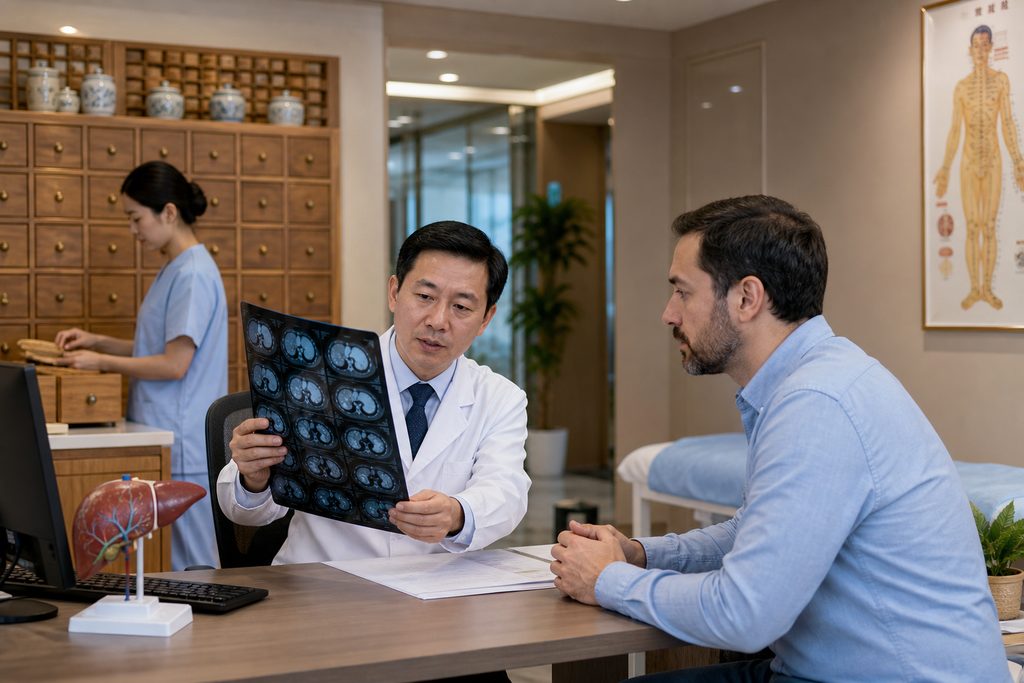
When 47-year-old Linda from Manchester was diagnosed with non-alcoholic fatty liver disease, her consultant offered lifestyle advice and a follow-up in six months. No medication. No active treatment plan. Just wait and see. She felt abandoned by a system that had nothing left to offer someone whose liver enzymes kept climbing.
That search for an active intervention—not just monitoring—is what brings thousands of patients to the door of Shuguang Hospital in Shanghai every year.
Liver disease affects approximately 1 in 4 adults globally, with non-alcoholic fatty liver disease alone impacting an estimated 25% of the world’s population according to a 2023 meta-analysis published in The Lancet Gastroenterology & Hepatology. For many, the frustration isn’t the diagnosis. It’s the therapeutic vacuum that follows. Western medicine excels at diagnosis and acute intervention. But for the slow, grinding progression of chronic liver conditions—fibrosis, persistent inflammation, unexplained enzyme elevation—patients often hear the same thing Linda heard: come back when it gets worse.
That’s precisely where Traditional Chinese Medicine operates differently.
Shuguang Hospital, affiliated with Shanghai University of Traditional Chinese Medicine, has spent decades building a liver disease program that doesn’t ask patients to wait for deterioration. Their approach combines pharmacologically studied herbal formulations with acupuncture protocols that have been investigated in peer-reviewed research. It’s not alternative medicine in the sense of rejecting conventional care. It’s integrative medicine with a clinical evidence base.
And for international patients navigating this option, understanding what treatment actually looks like—from the herbs prescribed to the Shuguang Hospital liver treatment cost—is the difference between a vague hope and a concrete plan.
Key Takeaways
- Shuguang Hospital’s liver department treats over 200,000 outpatient visits annually, making it one of the highest-volume TCM hepatology centers in China.
- TCM liver treatment at Shuguang typically combines individualized herbal decoctions with acupuncture sessions 2-3 times weekly, often reducing ALT and AST levels within 8-12 weeks.
- No TCM protocol replaces urgent conventional care—patients with acute liver failure, decompensated cirrhosis, or hepatocellular carcinoma require hospital-based emergency management first.
- International patients should budget $2,000-$5,000 for a 4-week initial treatment block, excluding travel and accommodation, with costs varying significantly by case complexity.
The Problem: When Your Liver Gets a Pass from Conventional Medicine
Chronic liver disease is a slow burn. You don’t feel it until the damage is advanced. And that’s part of the problem.
A 2022 study in the Journal of Hepatology tracked 12,000 patients with elevated liver enzymes and found that nearly 40% received no specific treatment beyond lifestyle counseling in the first two years after diagnosis. The reasoning is clinically sound in its own framework—many liver conditions lack targeted pharmaceutical options. Ursodeoxycholic acid for primary biliary cholangitis. Antivirals for hepatitis B and C. Corticosteroids for autoimmune hepatitis. Beyond these, the toolbox gets thin.
But patients don’t experience this as clinical prudence. They experience it as neglect.
The numbers bear this out. Non-alcoholic steatohepatitis progresses to cirrhosis in approximately 20% of cases over a decade. Fibrosis doesn’t pause just because there’s no pill for it. And when patients ask what they can do—actively, right now—to interrupt that progression, the honest answer from many hepatologists is: not much, pharmacologically speaking.
This is the gap Shuguang Hospital’s liver program has spent 60 years trying to fill.
Why Shuguang Hospital’s TCM Liver Program Delivers Results
The program isn’t a wellness spa with some herbs on the side. It’s a designated National Key Clinical Specialty in hepatology, a designation awarded by China’s National Health Commission to departments that meet rigorous clinical volume, research output, and outcome thresholds.
Clinical Volume That Creates Pattern Recognition
Shuguang’s liver disease department handles more than 200,000 outpatient consultations and over 5,000 inpatient admissions annually. For context, a busy academic hepatology center in the United States might see 15,000-20,000 liver patients per year. The volume differential is an order of magnitude.
Volume matters in medicine for one reason: pattern recognition. A clinician who has managed 10,000 cases of hepatitis B with persistently elevated transaminases develops an intuition—backed by data—about which herbal combinations work for which enzyme patterns. That’s not mysticism. It’s clinical epidemiology at scale.
The department’s research output reflects this. A 2021 systematic review in Frontiers in Pharmacology examined 18 randomized controlled trials conducted at Shuguang’s liver center, covering herbal interventions for chronic hepatitis B, alcoholic liver disease, and non-alcoholic fatty liver disease. The pooled data showed statistically significant reductions in ALT and AST levels compared to placebo, with effect sizes comparable to some first-line pharmaceuticals—but with different side-effect profiles.
An Integrative Model, Not an Alternative One
This is the distinction that matters most for international patients.
Shuguang Hospital is not a standalone TCM clinic operating outside the medical mainstream. It’s a Grade III Class A hospital—the highest tier in China’s hospital classification system—with full diagnostic capabilities: FibroScan for non-invasive liver stiffness measurement, high-resolution ultrasound, CT, MRI, and a full clinical laboratory. Patients don’t choose between TCM and conventional diagnostics. They get both.
A typical new patient workup includes liver function panels, viral hepatitis serologies, autoimmune markers, abdominal imaging, and—when indicated—liver biopsy. The TCM diagnosis runs in parallel, based on tongue and pulse examination, symptom pattern differentiation, and the patient’s constitutional classification. Treatment recommendations draw from both frameworks.
The hospital’s liver specialists routinely co-manage patients with colleagues in gastroenterology and infectious disease. A patient with hepatitis C, for example, might receive direct-acting antivirals alongside herbal formulas designed to mitigate treatment side effects and support liver function recovery. It’s not either/or. It’s both, sequenced intelligently.
Cost Structure That Reflects the System, Not the Quality
Let’s address the question most international patients ask first: Shuguang Hospital liver treatment cost.
A four-week outpatient treatment block—including initial consultation, diagnostic workup, twice-weekly acupuncture, and daily herbal decoctions—typically ranges from $2,000 to $5,000. The wide range reflects case complexity. A straightforward case of mild fatty liver with no comorbidities sits at the lower end. A patient with chronic hepatitis B, fibrosis, and metabolic syndrome requires more intensive monitoring and formulation adjustments, pushing costs higher.
Compare this to the United States, where a single FibroScan can cost $400-$800 out of pocket, and a hepatology consultation at an academic center routinely runs $500-$1,200 without insurance. A month of physical therapy for a non-liver condition easily hits $2,000. The structural reasons for China’s lower costs are well-documented: lower physician labor costs, higher patient throughput, and a hospital payment system that doesn’t carry the administrative overhead of US insurance billing.
But lower cost doesn’t mean lower rigor. Shuguang’s liver center participates in international clinical trials and publishes in English-language, PubMed-indexed journals. The herbs used in their formulations are sourced through hospital pharmacies subject to China’s Good Supply Practice standards, with batch testing for contaminants and potency.
What Herbs Are Used for Liver Treatment in TCM: The Shuguang Formulary
The question comes up in every initial consultation: what exactly am I taking?
TCM herbal treatment for liver disease is not a single pill. It’s a dynamic prescription—typically a decoction of 8-15 herbs—adjusted every 2-4 weeks based on symptom changes and lab values. The formulation is individualized, but certain herbs appear with regularity in Shuguang’s liver protocols because their pharmacological properties have been studied specifically for hepatic applications.
Schisandra chinensis (wu wei zi) is one of the most researched. A 2020 review in the American Journal of Chinese Medicine catalogued its hepatoprotective mechanisms: upregulation of antioxidant enzymes, inhibition of lipid peroxidation, and modulation of cytochrome P450 activity. In practical terms, clinical studies have shown schisandra-based formulas reducing ALT levels by 30-50% over 12 weeks in patients with drug-induced liver injury.
Salvia miltiorrhiza (dan shen) appears frequently in formulations for fibrotic liver conditions. A 2019 randomized trial published in the World Journal of Gastroenterology followed 240 patients with chronic hepatitis B and early-stage fibrosis. Those receiving a salvia-containing herbal formula alongside entecavir showed significantly greater improvement in FibroScan scores at 48 weeks compared to the antiviral-alone group.
Other formulary regulars include Artemisia capillaris (yin chen hao) for cholestatic patterns with elevated bilirubin, Paeonia lactiflora (bai shao) for its anti-inflammatory and smooth-muscle relaxant effects, and Astragalus membranaceus (huang qi) for immune modulation in chronic viral hepatitis.
A patient might receive a base formula like Yi Guan Jian—a classic combination for liver and kidney yin deficiency—modified with additional herbs targeting their specific pattern. One patient’s formula might emphasize damp-heat clearing herbs. Another’s might prioritize blood-moving herbs for stasis patterns. Same disease, different TCM diagnosis, different prescription.
The decoctions are prepared daily by the hospital pharmacy. Patients receive sealed pouches they can refrigerate and consume on schedule. The taste is bitter. There’s no way around that. But most patients adapt within the first week.
How Does Acupuncture Help Liver Disease: Mechanisms and Clinical Evidence
The acupuncture component of Shuguang’s liver protocol isn’t an add-on. It’s integrated into the treatment plan with specific point selections based on the patient’s TCM pattern diagnosis.
The mechanism question deserves a straight answer. Acupuncture for liver disease works through several pathways that have been documented in controlled research. A 2022 study in Evidence-Based Complementary and Alternative Medicine used functional MRI to demonstrate that electroacupuncture at liver-related acupoints modulated activity in the hypothalamic-pituitary-adrenal axis, reducing systemic cortisol levels in patients with stress-exacerbated liver enzyme elevation.
Peripherally, acupuncture has been shown to increase parasympathetic tone—the “rest and digest” branch of the autonomic nervous system—which directly influences hepatic blood flow. A 2018 study in the Journal of Gastroenterology and Hepatology measured portal vein blood flow velocity before and after acupuncture in 60 patients with chronic liver disease. The post-acupuncture measurements showed a 15-22% increase in flow velocity, sustained for at least 90 minutes after needle removal.
The point prescriptions at Shuguang typically include a core set: LV3 (Taichong) on the foot, the primary liver meridian point for moving stagnant qi; LV14 (Qimen) on the chest, the alarm point of the liver; ST36 (Zusanli) below the knee for digestive support and energy regulation; and BL18 (Ganshu) on the back, the transport point directly associated with liver function. Additional points are added based on pattern differentiation—GB34 (Yanglingquan) for damp-heat patterns, SP6 (Sanyinjiao) for yin deficiency with fluid retention.
Treatment frequency is typically 2-3 sessions per week during the initial intensive phase, tapering to weekly or biweekly as liver enzymes stabilize. Each session runs 30-45 minutes. The needles are single-use, sterile, and hair-thin. Most patients report a dull ache or distention sensation at the needle site—called de qi in TCM—rather than sharp pain.
Liver Treatment Packages China Medical Tourism: What a Real Program Looks Like
International patients considering treatment at Shuguang are not buying a standardized package off a website. The hospital doesn’t sell “liver detox retreats” or pre-packaged wellness programs. What exists instead is a structured clinical pathway that our team helps patients navigate.
A typical initial treatment block spans 4 weeks. Here’s what that actually involves:
| Phase | Duration | Components | Estimated Cost Range (USD) |
|---|---|---|---|
| Initial Workup | 2-3 days | Hepatology consultation, liver function panel, hepatitis serologies, FibroScan, abdominal ultrasound, TCM pattern diagnosis | $500-$1,200 |
| Intensive Treatment | 4 weeks | Daily herbal decoctions, acupuncture 2-3x/week, weekly follow-up consultations with formula adjustments, repeat labs at week 4 | $1,500-$3,800 |
| Discharge Planning | 1-2 days | Written treatment summary, herbal prescription for 3-month supply (exportable), acupuncture point guide for local practitioner, follow-up telemedicine schedule | Included in treatment cost |
These figures are ranges, not fixed prices. A patient with straightforward non-alcoholic fatty liver and minimal comorbidities will land at the lower end. A patient with hepatitis B, early fibrosis, and metabolic complications will require more intensive monitoring and more frequent formula adjustments, pushing costs higher.
The hospital accepts payment in Chinese yuan via cash, UnionPay, and major international credit cards. Some international insurance policies with out-of-network benefits may reimburse a portion of treatment costs—patients should check with their insurer before traveling. The hospital provides itemized receipts and medical documentation suitable for insurance claims.
What Shuguang does not offer is a guarantee of specific outcomes. No reputable hospital does. The clinical data shows that a majority of patients experience measurable improvement in liver enzymes and symptom scores over 8-12 weeks. But individual responses vary. The TCM approach is inherently iterative—formulas change as the patient’s condition evolves. This is a feature of the model, not a bug.
Book TCM Liver Treatment Shuguang Hospital: The International Patient Pathway
Arranging treatment at Shuguang as an international patient isn’t as simple as booking an appointment online. The hospital’s public outpatient system is designed for domestic patients who can register in person, often the same day. Walk-in registration for a liver specialist means competing with hundreds of local patients who arrive before 7 AM.
The international medical department operates differently. Appointments are scheduled in advance. English-speaking coordinators manage the process. But access still requires navigating a system that wasn’t built with foreign patients in mind.
The first step is a remote evaluation. Patients submit recent medical records—liver function tests from the past 3 months, imaging reports, pathology slides if a biopsy was performed, and a summary of current medications. Shuguang’s liver specialists review these materials and determine whether TCM treatment is appropriate. Some conditions are excluded: acute liver failure, decompensated cirrhosis with ascites, and active hepatocellular carcinoma require conventional emergency or oncology care, not TCM monotherapy.
If the case is accepted, the hospital issues a treatment invitation letter. This document is required for the S2 visa application—the short-stay visa category used for private medical treatment in China. The S2 visa typically allows stays of up to 180 days, though initial approvals are often for 30-60 days with the possibility of extension. Accompanying family members apply under the same S2 category.
The hospital’s international department can assist with visa documentation but does not process visa applications directly. That’s the patient’s responsibility, handled through the Chinese embassy or consulate in their home country.
Once the visa is secured, the practical logistics begin: flights to Shanghai Pudong International Airport, accommodation near the hospital in the Huangpu District, and a plan for meals, transportation, and communication. The hospital is located in central Shanghai, with hotels ranging from budget options around $50/night to international chains at $150-250/night within a 15-minute taxi ride.
During treatment, patients attend scheduled acupuncture sessions and follow-up consultations. Between appointments, they manage their herbal decoction schedule independently. The hospital pharmacy dispenses herbs in pre-measured pouches with clear instructions. No brewing or preparation is required.
At discharge, patients receive a comprehensive treatment summary in English, a 3-month herbal prescription that can be filled before departure, and a plan for follow-up telemedicine consultations at intervals determined by the treating physician. The goal is continuity—not a one-off intervention followed by abandonment.
Practical Considerations: Documentation, Payment, and Follow-Up
International patients arriving for liver treatment at Shuguang need to manage several practical dimensions that have nothing to do with medicine but everything to do with a smooth experience.
Medical records must be translated into Chinese before the initial consultation. The hospital’s international department can arrange this, but patients should budget $200-$500 for professional medical translation of a typical 20-30 page record set. Machine translation is not acceptable for clinical documents—errors in lab values or medication names carry real risk.
Payment is expected at the time of service. The hospital does not bill international insurance directly. Patients pay out of pocket and seek reimbursement from their insurer afterward. Itemized receipts in both Chinese and English are provided. Credit card limits can be an issue—a $5,000 treatment block may exceed a standard daily transaction limit. Patients should notify their bank of planned charges before traveling.
Language is the single biggest practical barrier. Outside the international department, hospital staff speak Mandarin and Shanghainese. Signage in the main outpatient building is primarily in Chinese. Navigating registration, pharmacy pickup, and lab draws without language support is extremely difficult. This is not a reflection on the hospital’s quality—it’s simply the reality of a facility built for 10,000+ daily domestic patient visits.
The S2 visa requires a valid passport with at least six months of remaining validity and two blank pages. Processing times vary by country but typically range from 4-10 business days. The visa application must include the hospital’s invitation letter, proof of accommodation, and evidence of sufficient
Frequently Asked Questions
Yes. The hospitals used for international patients are JCI-accredited and follow the same international safety standards as top hospitals in the US and Europe. Surgical teams perform high volumes of procedures — often more than their Western counterparts — which studies show leads to better outcomes.
Costs vary by procedure and hospital, but international patients typically save 40-80% compared to US prices — even when factoring in travel and accommodation. A consultation with our team will give you an exact, all-inclusive quote with no hidden fees.
Send us your existing medical reports to get started. We handle everything from hospital selection and appointment scheduling to visa assistance and post-operative recovery planning. Your medical records are reviewed by the specialist before you even book a flight.
For more medical information and treatment options in China, visit chinamedservices.com (China Medical Services).
