Eating Well Away from Home: Food and Diet During Your Hospital Stay in China
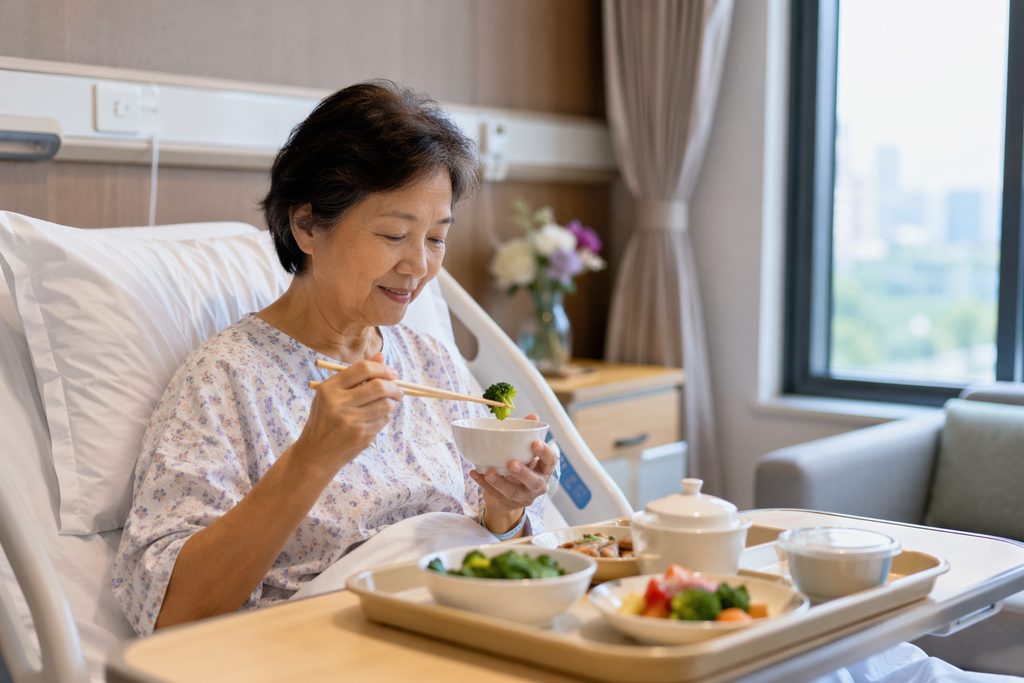
When 58-year-old Fatima from Dubai scheduled her knee replacement in Shanghai, she had a list of questions a mile long. Top of the list? Not the surgery itself. She wanted to know what she would eat. Her dietary requirements were specific—halal, low-sodium, and nothing that would upset a stomach already nervous about being 6,500 kilometers from home. She had heard stories. Bland congee. Mysterious soups. The fear was real: would she starve while recovering from major surgery?
She didn’t. And you won’t either. The reality of food options for international patients in Chinese hospitals has shifted dramatically in the last decade, especially in the tier-one cities and international medical departments that cater to medical travelers. The system isn’t perfect. But with the right preparation, you can eat safely, comfortably, and even well.
Key Takeaways
- China’s top-tier international hospital wards routinely accommodate specific dietary needs, including halal, kosher, vegetarian, and low-sodium therapeutic diets—but the default public ward menu is traditional Chinese and rarely adapts.
- Your greatest control comes from choosing the right hospital tier upfront. International departments and private hospitals have dedicated Western-trained nutrition teams; standard public wards do not.
- You can bring your own food, but refrigeration and reheating access varies wildly. Never assume you’ll have a microwave.
- Post-surgical nutrition in China is grounded in Traditional Chinese Medicine principles—warming foods, bone broths, and herbal soups—which can feel unfamiliar but are designed to support recovery.
The Problem: Hospital Food That Doesn’t Heal
Hospital food has a universal reputation for being terrible. But for an international patient, the problem isn’t just taste. It’s safety, familiarity, and compliance. A 2023 study published in the Journal of Hospital Management and Health Policy found that nearly 40% of hospitalized patients consume less than half their served meals, with unfamiliar food being a top-three reason for inadequate nutritional intake. That matters. Poor post-operative nutrition is directly linked to longer recovery times, higher infection rates, and extended hospital stays.
Now layer on jet lag, language barriers, and a food culture that can seem impenetrable. You’re not just trying to eat. You’re trying to heal. And the standard public hospital tray—steamed rice, stir-fried greens with oyster sauce, a whole fish staring up at you—can feel like a puzzle you didn’t sign up to solve.
Who We Are
We are not a hospital. We do not provide medical treatment, clinical diagnoses, or dietary advice. We are China Medical Services—a team of bilingual patient coordinators who bridge the gap between international patients and China’s top-tier medical institutions. We handle logistics: hospital matching, appointment scheduling, visa guidance, and bilingual medical companionship. We have spent years inside these hospitals with patients from over 60 countries. We know what the food actually looks like, what you can request, and what you should absolutely avoid. This is the guide we wish every patient had before they packed their bags.
What Food Options for International Patients in Chinese Hospitals Actually Look Like
Let’s cut through the brochure language. There are three tiers of hospital food experience in China, and which one you get depends almost entirely on where you’re admitted.
Tier One: International Hospital Wards and Private Hospitals
This is where the hospital food menu China medical tourism patients dream of actually exists. Hospitals like Shanghai‘s Jiahui International Hospital, Beijing United Family Hospital, and the international departments of large public hospitals like Peking Union Medical College Hospital offer dedicated Western menus. You’ll find grilled chicken breast, steamed vegetables, omelets, oatmeal, fresh fruit plates, and clear English labeling. These kitchens are staffed by teams that understand dietary restrictions as medical requirements, not preferences.
Halal-certified kitchens are available at select facilities. Halal food in Chinese hospitals for medical tourists is most reliably found in cities with significant Muslim populations—Xi’an, Guangzhou, and parts of Beijing. But here’s the catch: “halal” in a standard public hospital might mean simply no pork. True halal certification, with verified slaughter practices and separate preparation areas, is almost exclusively found in international departments and private facilities. If halal is non-negotiable for you, this must be part of your hospital selection conversation before you book anything.
Vegetarian and vegan diets are easier. China has a long Buddhist vegetarian tradition, and most hospital kitchens understand the concept of plant-based eating. But watch for hidden animal products—oyster sauce, chicken powder, and lard are common in Chinese cooking and may not be flagged unless you specifically ask.
Tier Two: Standard Public Hospital Wards
This is the reality for most domestic Chinese patients and budget-conscious international travelers. The daily meal service is included in your room fee—typically three meals delivered on a tray. The food is traditional Chinese: rice porridge (congee) for breakfast, a protein-and-vegetable dish over rice for lunch and dinner. It’s nutritious by local standards. But it’s not customizable.
If you’re in a standard ward, what do patients eat after surgery in China depends heavily on the hospital’s region. In Guangzhou, you might get Cantonese-style steamed fish and bitter melon soup. In Chengdu, expect Sichuan peppercorns and chili oil—even on post-operative trays, though usually dialed back. In Beijing, hearty northern fare: dumplings, noodles, lamb. None of it will be labeled in English. None of it will automatically accommodate your restrictions. You eat what’s served, or you find alternatives.
Tier Three: You Bring Your Own—Or Your Family Does
This is the unspoken reality of Chinese hospital stays. Family members are expected to be deeply involved in patient care, and that includes food. It’s common to see relatives arriving with thermoses of homemade soup, containers of steamed buns, fresh fruit, and herbal concoctions. The hospital provides the baseline. Family provides the comfort.
Which raises the obvious question: can I bring my own food to hospital in China? Yes. Within limits. Most hospitals allow outside food, but they won’t provide refrigeration or reheating. Your family or companion will need to bring food fresh for each meal. Some international wards have a shared patient pantry with a microwave and refrigerator. Public wards almost never do. If you’re traveling without family, this is where a bilingual medical companion becomes essential—someone who can source safe food, communicate with the nursing station about what’s allowed, and make sure you’re actually eating.
Post-Surgical Diets: What Chinese Hospitals Believe About Healing Food
This is where cultural medicine meets clinical nutrition, and it’s worth understanding before you refuse a bowl of suspicious-looking soup.
Traditional Chinese Medicine (TCM) classifies foods by their thermal nature—cooling, neutral, warming, hot—and their effect on the body. After surgery, the body is considered in a “cold” and “deficient” state. The therapeutic response is warming, nourishing foods that rebuild qi and blood. You will be offered things like:
Black chicken soup with goji berries. Pork bone broth simmered for hours. Steamed fish with ginger and scallions. Red date tea. These aren’t random. They’re functional foods within the TCM framework, and many Chinese doctors—even those trained in Western medicine—see no conflict between surgical recovery protocols and traditional dietary therapy.
You don’t have to believe in qi to benefit. Bone broths are rich in collagen and easily digestible protein. Ginger is a proven anti-nausea agent. Goji berries are nutrient-dense. The Chinese hospital diet for foreigners can feel alien, but it’s rarely harmful and often genuinely supportive of recovery. The challenge is communication—you need to know what’s in the bowl and why, and you need someone who can negotiate modifications if something is truly off-limits for you.
Practical Strategies for Eating Well During Your Stay
You have more agency than you think. But you have to exercise it before you arrive.
Pack emergency food. This isn’t dramatic. It’s practical. Protein bars, instant oatmeal packets, nut butter sachets, electrolyte tablets, and any comfort food that travels well. These are your backup when the meal tray arrives and you genuinely cannot eat what’s on it. Do not assume you can DoorDash something familiar. Food delivery apps in China are excellent—Meituan and Ele.me cover most cities—but they’re entirely in Chinese, and hospitals often restrict delivery drivers from entering patient floors.
Communicate restrictions in writing. Not verbally. In Chinese. Before you arrive. A simple translated card listing your allergies and dietary requirements, shown to the nursing station upon admission, prevents the telephone game where “no dairy” becomes “no sugar” by the time it reaches the kitchen. Our team prepares these cards for every patient we coordinate. It’s a small thing that prevents big problems.
Lean into what works. Chinese hospital kitchens do certain things extremely well. Congee is a blank canvas—bland, easy to digest, and customizable with whatever protein and vegetables are available. Steamed eggs are a near-universal hospital food, soft and protein-rich. Fresh fruit is abundant and cheap. If you can accept rice porridge as your base and build from there, you’ll eat better than if you hold out for toast and eggs every morning.
What You Need to Know Before Going Alone
The food situation in Chinese hospitals is manageable—if you’ve done the groundwork. If you haven’t, it can be genuinely distressing. Here’s what catches most international patients off guard:
- No cold water. Seriously. Chinese hospitals, and Chinese culture broadly, believe cold beverages are harmful during illness and recovery. You will be offered hot water or room-temperature water. Ice water is considered medically inadvisable. If cold drinks matter to your comfort, bring an insulated bottle and a strategy for sourcing ice.
- Meal times are rigid. Breakfast at 7:00 AM. Lunch at 11:30 AM. Dinner at 5:30 PM. Outside those windows, the kitchen is closed. There’s no 24-hour room service. No late tray. If you miss a meal, you wait until the next one or rely on whatever snacks you’ve stockpiled.
- Dietary restrictions require constant reinforcement. Even in good international hospitals, the message sometimes gets lost between shifts. A vegetarian meal ordered for lunch might be followed by a chicken dinner unless someone reminds the nursing station. This is exhausting when you’re sick. It’s one reason having a local advocate—whether a family member or a bilingual companion—matters enormously.
How We Help You Navigate This
Food seems small until you’re in a hospital bed, post-surgery, staring at a tray of something you can’t identify and don’t want to eat. Then it’s not small at all. It’s the difference between feeling cared for and feeling stranded.
Our bilingual medical companions handle this daily. Before you arrive, we confirm dietary requirements with the hospital’s international patient office and get written confirmation of what they can and cannot accommodate. We translate your restrictions into Chinese and ensure they’re on file with both the nursing station and the kitchen. During your stay, your companion checks every meal tray, communicates adjustments in real time, and sources outside food when the hospital menu falls short. If you need halal meals from a certified restaurant near the hospital, we arrange that. If you need a specific brand of protein shake from an import store, we find it.
This isn’t luxury service. It’s basic dignity. You’re here to heal, not to navigate a foreign food system while recovering from anesthesia. For more on how our coordination works, see our patient support services.
Frequently Asked Questions
Probably not. The standard public ward menu is Chinese food, full stop. Some larger hospitals in major cities might offer a “Western” option—usually a sad plate of overboiled pasta or a dry chicken sandwich—but it’s not standard. If Western food is important to your recovery comfort, you need to be admitted to an international department or a private international hospital. These facilities have dedicated Western menus and English-speaking nutrition staff. The cost difference is significant, but for many patients, the ability to eat familiar food while recovering is worth it.
Reliably? Only in specific contexts. Hospitals in Xi’an, home to a large Muslim Hui population, often have halal kitchen sections. Some international hospitals in Beijing and Shanghai offer halal-certified meals. But outside these pockets, “halal” may simply mean a pork-free meal, not one prepared according to Islamic dietary law. If halal compliance is a religious requirement for you, this must be a primary filter in your hospital selection. We can connect you with facilities that have verifiable halal certification. Do not assume it will be available everywhere.
Food delivery in China is ubiquitous and fast—Meituan and Ele.me dominate the market. But the apps are Chinese-only, payment is typically via WeChat Pay or Alipay (which require a Chinese bank account), and many hospitals restrict delivery drivers from entering inpatient areas. You might be able to order, but getting the food from the hospital gate to your bedside is another matter. If you have a local companion, they can handle this. If you’re alone, it’s not a reliable strategy.
This requires aggressive communication. Chinese food culture doesn’t have the same allergy awareness framework as Western countries. “No peanuts” might be understood as “no whole peanuts” but not “no peanut oil”—and peanut oil is a staple cooking fat in many regions. Soy, wheat, and shellfish are ubiquitous. You need a translated allergy card, a direct conversation with the kitchen supervisor (not just the nursing station), and ideally a local advocate who can verify every meal. Anaphylaxis protocols exist in Chinese hospitals, but prevention is entirely on you.
The classic post-surgical diet in China centers on easily digestible, warming foods. Congee is the foundation—rice porridge cooked until silky, sometimes with minced meat or fish. Bone broths, particularly pork and chicken, are considered essential for wound healing. Steamed eggs, soft tofu, and well-cooked vegetables round out the tray. You’ll also encounter herbal soups with ingredients like dang shen (codonopsis root) and huang qi (astragalus), which TCM practitioners believe rebuild energy and blood. Cold, raw, and greasy foods are actively avoided. Whether you embrace this or tolerate it, it’s helpful to understand the logic behind it.
Your Next Step
Food during a hospital stay in China is not a trivial detail. It’s a core part of your recovery experience and your emotional well-being far from home. The system can accommodate you—but only if you choose the right hospital, communicate your needs clearly, and have someone on the ground who can advocate when things go sideways. You don’t need to figure this out alone. If you’re considering treatment in China, let’s talk about what you need to eat well and heal well. Start with a free consultation—no pressure, no commitment, just a clear conversation about what’s possible.
For more medical information and treatment options in China, visit chinamedservices.com (China Medical Services).
