Best Hospitals in Tianjin for International Patients: A Complete Northern Port City Healthcare Guide
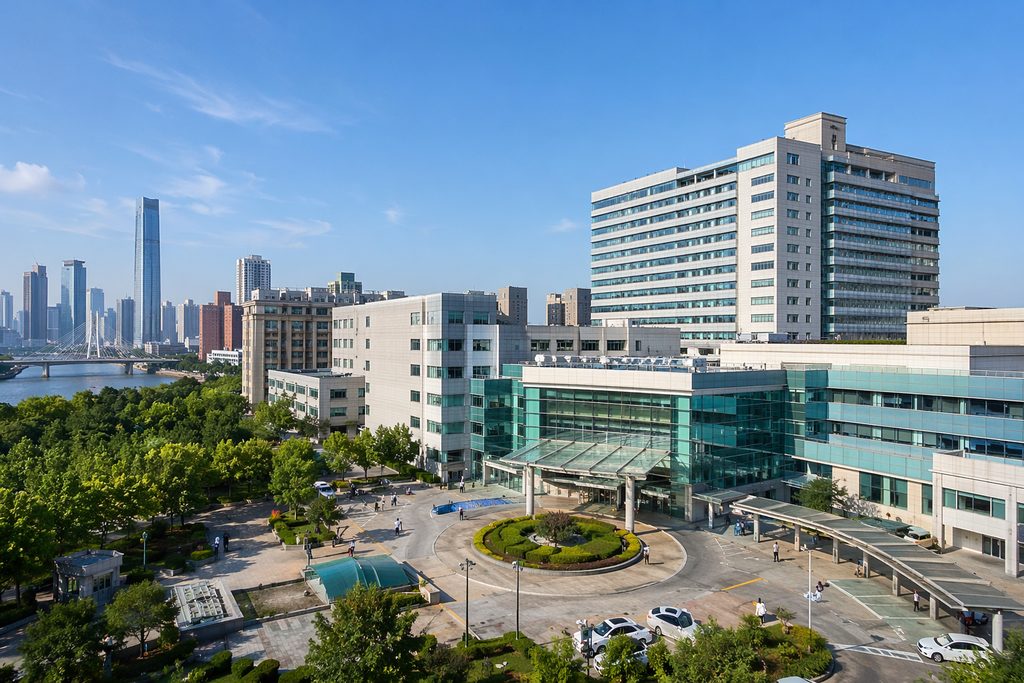
A hip replacement sounds daunting. But in plain terms, it means swapping a worn-out joint for a smooth artificial implant that lets you walk, sit, and climb stairs without grinding pain. The real question is not whether the surgery works. It is whether you can afford to wait and pay for it at home. In the United States, the average out-of-pocket cost for a hip replacement can exceed $40,000 even with insurance. In the UK, the NHS waiting list for orthopedic surgery has stretched past 18 months in some trusts. For patients in pain, that timeline is not abstract. It is every step taken while wincing. This guide maps out the best international hospitals in Tianjin, a northern port city that has quietly built a serious healthcare infrastructure capable of serving foreign patients at a fraction of Western prices.
Key Takeaways
- Tianjin offers JCI-accredited hospitals with English-speaking staff and direct insurance billing, matching international standards.
- The cost of a hip replacement in Tianjin runs approximately $8,000 to $15,000, compared to $40,000+ in the United States.
- Public hospital outpatient departments cannot be booked from overseas; accessing top surgeons requires navigating the hospital’s VIP or international wing.
- Visa requirements are strict: you need an S2 visa specifically endorsed for medical treatment, not a business or tourist visa.
The Problem: Orthopedic Surgery Costs and Wait Times Are Breaking Patients
Joint deterioration does not pause while you wait for a surgery slot. Osteoarthritis affects roughly 1 in 8 adults globally, and for those with end-stage disease, the only durable fix is surgical. But the economics are brutal. A single total hip replacement in the United States carries a sticker price between $30,000 and $50,000, depending on the facility and implant choice. In Australia, waiting times for public elective surgery hit a median of 348 days in 2023. Canada is not much better. Patients are left in a strange limbo: too functional for emergency priority, too disabled to live without daily pain medication.
Medical travel used to mean Singapore or Bangkok. But those destinations have matured. Their prices have risen. Tianjin, a sprawling port city 30 minutes from Beijing by high-speed rail, has emerged as a credible alternative. The city houses several institutions that appear on the Fudan University hospital rankings, a rigorous annual evaluation of China’s 3,500+ hospitals. Tianjin’s top centers rank in the top 5% nationally. And they treat international patients at costs that make a real difference to household budgets.
Who We Are
We are not a hospital. We do not diagnose conditions or prescribe treatments. Our organization, China Medical Services, functions as your logistical bridge to China’s best medical institutions. We maintain a verified database of 340+ top-ranked hospitals across 37 cities. When a patient contacts us, we match their clinical needs to the right department and surgeon, handle appointment coordination through official hospital international channels, arrange bilingual medical companions, and guide visa applications. We exist because navigating a Chinese hospital alone, without Mandarin, is a recipe for confusion and missed appointments. We solve that problem.
Why Tianjin Delivers Results for International Patients
The city does not have the brand recognition of Beijing or Shanghai. That works in a patient’s favor. Costs are lower. Competition for specialist slots is less intense. And the clinical volume at Tianjin’s top orthopedic and oncology centers is genuinely impressive. Surgeons here operate at a scale that builds deep procedural fluency.
Clinical Volume Drives Better Outcomes
There is a straightforward relationship between how often a surgeon performs a procedure and how well their patients recover. A 2023 study published in The Lancet Rheumatology found that hospitals performing more than 200 joint replacements annually had significantly lower revision rates than low-volume centers. At Tianjin Hospital, one of the largest orthopedic specialty hospitals in northern China, the annual volume of joint replacements exceeds 2,500 cases. The surgeons there handle complex revisions and bilateral procedures routinely. That repetition matters. A surgeon who does 300 hips a year has seen variations in anatomy and complications that a low-volume surgeon encounters once a decade.
This scale extends beyond orthopedics. Tianjin Medical University Cancer Institute and Hospital treats over 40,000 cancer inpatients annually. Its radiation oncology department runs 12 linear accelerators. For a patient with a rare thoracic tumor, walking into a center that sees high volumes of exactly that condition means access to treatment protocols refined through sheer repetition.
JCI-Accredited Infrastructure with English-Language Support
International patients often ask a blunt question: is Tianjin a good place for medical treatment? The answer depends on choosing the right facility. Tianjin has several hospitals that have earned Joint Commission International accreditation, the same gold standard applied to hospitals in Dubai, Singapore, and London. JCI accredited hospitals Tianjin include TEDA International Cardiovascular Hospital, which performs over 5,000 cardiac surgeries annually with outcomes that match international benchmarks. The hospital’s mortality rate for isolated coronary artery bypass grafting has been reported below 1%, comparable to top US centers.
These hospitals employ bilingual coordinators, accept international insurance, and provide medical records in English. The inpatient wards in their international wings resemble private hotel rooms more than hospital bays. That is not a luxury. For a patient recovering from major surgery far from home, a private room with a dedicated nurse and Western-style meals is the difference between a tolerable recovery and a miserable one.
What You Need to Know Before Going Alone
Honesty is essential here. Chinese public hospitals are not built for walk-in foreign patients. The system assumes local knowledge, Mandarin fluency, and familiarity with a payment model that requires upfront deposits. Here are the barriers that trip up independent travelers:
- Visa Requirements: You cannot enter China for medical treatment on a tourist visa. The correct visa is an S2, specifically endorsed for short-term medical purposes. Your accompanying family member also needs an S2. The application requires an invitation letter from the hospital confirming your treatment plan. Obtaining that letter without a local contact inside the hospital’s international department is slow and uncertain. Do not apply for an M visa. That is for business, and using it for medical treatment risks entry denial.
- Payment Systems: Chinese public hospitals operate on a prepaid model. You deposit funds at admission, and the hospital deducts charges daily. International credit cards are not accepted at most public hospital cashiers. WeChat Pay and Alipay dominate, but linking a foreign card to these platforms is inconsistent. Without a local payment method, you can be stuck at the registration counter with a confirmed appointment and no way to pay.
- Outpatient Booking Reality: The public outpatient system is walk-in only for initial registration. You cannot email a hospital and reserve a specialist slot months in advance. Specialist appointments release online at specific times and fill within minutes. Navigating this requires a Chinese ID number or a local phone number, neither of which a foreign patient has. The only reliable path to a confirmed appointment is through the hospital’s official international VIP channel, which operates separately from the public queue.
How We Help You Navigate This
These barriers are structural, not malicious. The system was designed for a domestic population of 1.4 billion people. Foreign patients are an edge case. Our process turns that edge case into a managed pathway.
Before you travel, we translate your medical records into clinical Chinese, not machine translation but a format that Chinese specialists can review efficiently. We submit your case to the international department of the hospital best matched to your condition. If a written second opinion is needed, we coordinate that through a top specialist. The fee for a written second opinion runs from $300 to $500, and if you later proceed with surgery through our coordination, that amount is credited in full toward the service fee. We handle the invitation letter for your S2 visa application, ensuring the hospital stamps the correct documentation.
On the ground, a bilingual medical companion meets you at the hospital entrance. This person handles registration, queues for lab slips, translates every conversation with the surgeon, and ensures your pharmacy prescription is filled correctly. They do not provide medical advice. They provide the logistical fluency that turns a disorienting experience into a smooth one. The cost starts from $200 per day for a full eight-hour shift. After discharge, we arrange airport transfers and follow-up video consultations so your surgeon can review recovery progress without you needing to fly back to Tianjin.
For patients considering how to book surgery in Tianjin China, the sequence is clear: first, a remote case review. Second, a confirmed treatment plan and cost estimate. Third, visa processing. Fourth, arrival and surgery. Attempting to reverse that order, flying in hoping to figure it out on the ground, is the single most common mistake we see.
The Cost Reality: Hip Replacement and Beyond
Let us put numbers on the table. The cost of hip replacement Tianjin runs between $8,000 and $15,000, depending on implant choice and hospital tier. A ceramic-on-ceramic implant from a US or European manufacturer costs more than a standard metal-on-polyethylene option. The hospital fee includes the surgeon’s fee, anesthesia, a private room in the international wing, and standard postoperative physiotherapy. Compare that to $40,000 in the US or $20,000 in private hospitals in Thailand. The savings are not marginal. They are transformative for a family paying out of pocket.
| Procedure | Tianjin International Wing | United States | United Kingdom (Private) |
|---|---|---|---|
| Total Hip Replacement | $8,000 – $15,000 | $30,000 – $50,000 | $15,000 – $22,000 |
| Coronary Artery Bypass | $12,000 – $18,000 | $70,000 – $120,000 | $25,000 – $35,000 |
| Lung Cancer Lobectomy | $10,000 – $16,000 | $40,000 – $60,000 | $20,000 – $28,000 |
| IVF Cycle (Standard) | $3,000 – $5,000 | $12,000 – $15,000 | $6,000 – $9,000 |
These figures are estimates. Final costs vary by hospital and case complexity. A patient with uncontrolled diabetes or a BMI above 35 will require additional preoperative clearance, which adds to the bill. But the structural cost advantage is real. It stems from lower labor costs, high patient throughput, and a hospital construction boom that means facilities are modern and efficient. Lower cost does not signal lower quality. It signals different economics.
Tianjin Medical Tourism Packages: What Is Actually Included
The phrase Tianjin medical tourism packages prices can be misleading. There is no off-the-shelf bundle with a fixed price tag that you purchase like a holiday. Every treatment plan is customized. However, a typical coordinated package includes the hospital’s treatment fee, accommodation recommendations near the hospital, airport transfers, and a bilingual companion for the critical days: admission, surgery day, and discharge. Some patients add on traditional Chinese medicine rehabilitation sessions, which we arrange at affiliated TCM hospitals for postoperative pain management and mobility restoration.
A full package for a hip replacement, including 10 days of hospital stay, companion services, transfers, and basic accommodation for a family member, typically falls in the $12,000 to $18,000 range. That is all-inclusive on the ground. The patient’s only additional costs are flights and meals outside the hospital.
Frequently Asked Questions
Technically yes, but practically no. Public outpatient departments serve thousands of patients daily. Registration is in Mandarin, queues are long, and the doctor may not have time for a translated consultation. Without a bilingual companion and a pre-arranged appointment through the hospital’s international channel, the experience will be frustrating and likely unproductive. We only coordinate through hospitals with dedicated international wings that are structured to serve foreign patients.
For many specialties, yes. Tianjin’s top hospitals rank among the best in China for orthopedics, oncology, and cardiovascular surgery. The city is less congested than Beijing, costs are lower, and the international wings are less saturated with foreign patients, meaning more flexible scheduling. If your condition requires a super-subspecialist only found at a Beijing hospital, we will tell you that directly. But for joint replacement, cardiac bypass, and common cancer surgeries, Tianjin’s clinical quality is excellent.
This is the hardest question and the most important one. The hospitals we work with carry liability insurance and have intensive care units staffed 24/7. Surgical complication rates at JCI-accredited hospitals in Tianjin are tracked and benchmarked. But no surgery is risk-free. We advise every patient to purchase medical travel insurance that covers complication management and extended hospital stays. We also ensure that your medical records and discharge summary are translated into English so your home physician has full context for follow-up care. We do not abandon patients after discharge. Our team remains in contact throughout the recovery period.
A realistic timeline is four to six weeks. The first week involves record translation and specialist review. The second week covers treatment plan confirmation and cost estimation. Visa processing takes one to two weeks. Then you fly. Patients who need urgent surgery should communicate that upfront; we can compress the timeline in some cases, but visa processing times are outside our control. Do not book flights before the visa is approved.
Many international hospitals and VIP wings in Tianjin have direct billing arrangements with major insurers, including Bupa, Cigna, Aetna, and Allianz. We verify coverage during the case review phase. If your insurer does not have a direct billing agreement, the hospital will provide a detailed invoice and medical report in English for you to submit for reimbursement. Public hospitals operate on a pay-first model regardless of insurance status.
Your Next Step
Choosing to travel to China for surgery is a significant decision. It requires weighing the cost savings and clinical quality against the distance from home and the complexity of navigating a foreign healthcare system. The hospitals exist. The surgical skill is real. The barrier is not medical capability. It is logistics. If you are in pain and facing a long wait or an unaffordable bill at home, Tianjin’s international hospitals represent a credible, evidence-backed alternative. We are here to handle the coordination so you can focus on recovery. When you are ready to explore whether this path fits your situation, reach out for a free consultation. No pressure. Just facts and a plan.
Learn more about our approach to China’s top-ranked hospitals for international patients or explore specialty-specific hospital rankings across 45 clinical departments. For a detailed discussion of your case, request a free consultation with our patient coordination team.
For more medical information and treatment options in China, visit chinamedservices.com (China Medical Services).
