Best Hospitals in Beijing for Foreigners: A No-Nonsense Medical Travel Guide
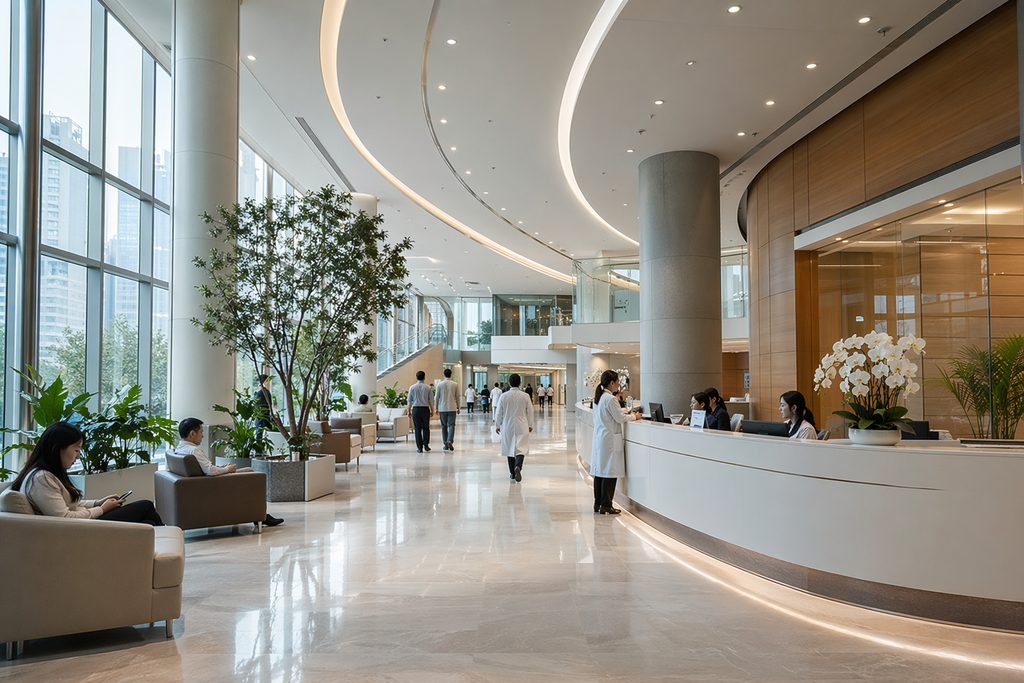
You have probably heard that traveling to China for surgery means settling for second-rate care. The numbers tell a different story. Beijing is home to 21 of China’s top 100 hospitals, as ranked by the Fudan University Hospital Ranking, the country’s most authoritative medical league table. For a Western patient facing a six-month wait for a hip replacement or a bill that could buy a house, the math changes fast. This guide cuts through the marketing fluff. We will map out exactly which hospitals deliver for international patients, what you will pay, and the logistical minefields you need to navigate. No hype. Just the operational reality from a team that does this every day.
Key Takeaways
- Beijing concentrates 21 of China’s Fudan-ranked top 100 hospitals, offering clinical volumes and sub-specialist expertise that often surpass Western centers.
- International patients cannot simply book a public hospital slot online from overseas; the real path runs through dedicated international medical centers with English-speaking staff.
- Cardiac bypass surgery in a top Beijing hospital costs $12,000–$20,000 compared to over $120,000 in the US, a structural price difference driven by labor economics, not quality cuts.
- Going alone means confronting a non-English system, visa paperwork specific to medical treatment, and upfront payment models that can freeze unprepared travelers out.
The Problem: When “World-Class” Means Waiting a Year
In Canada, the median wait time for medically necessary orthopedic surgery reached 27.4 weeks in 2023, according to the Fraser Institute. In the UK’s NHS, the elective care backlog hit 7.6 million cases. And in the United States, a single cardiac bypass can generate a bill exceeding $120,000 before insurance negotiations. These are not anecdotes. They are structural facts that push roughly 1.9 million Americans abroad for medical care annually, per Patients Beyond Borders estimates. The math is brutal: a patient with severe osteoarthritis cannot wait eight months for a new knee while their mobility collapses. A family facing a six-figure cancer treatment bill cannot simply absorb it. The system, for all its clinical brilliance, is often too slow or too expensive when time is the enemy.
That is where Beijing enters the conversation. Not as a budget option. As a high-volume, high-expertise alternative.
Who We Are
We are China Medical Services. We are not a hospital. We do not provide medical treatment, clinical diagnoses, or prescriptions. What we do is build the bridge. Our team handles the logistical architecture that makes treatment in China possible for international patients: hospital matching based on your actual medical records, appointment coordination through official international channels, bilingual medical companions who translate in real time during consultations, and visa guidance for S2 medical visas. We operate on a case management model. You bring the medical need; we bring the operational know-how to connect you with the right specialists without getting lost in a system that handles over 10,000 outpatient visits daily at a single major hospital.
Why Beijing’s Top Hospitals Deliver Results for International Patients
Clinical Volume That Rewires Surgical Skill
A cardiac surgeon at Fuwai Hospital performs or oversees more than 14,000 cardiac surgeries annually across the institution. The average American cardiothoracic surgeon handles roughly 100 to 200 cases per year. This is not a minor gap. Surgical volume correlates directly with lower complication rates and shorter operative times, a relationship documented extensively in The Lancet and the New England Journal of Medicine. When you search for the best hospital in Beijing for foreigners, you are really searching for this density of case experience. A hospital that sees more rare presentations in a single month than a regional Western center sees in a year develops pattern recognition that cannot be taught in textbooks. For international patients, that means walking into a facility where your complex valve repair is not a once-a-quarter challenge. It is Tuesday.
Peking Union Medical College Hospital (PUMCH), another heavyweight, runs 2,000 beds and handles over 2.26 million outpatient visits each year. The sheer diagnostic throughput means that puzzling cases get routed to multi-disciplinary teams that have seen the full clinical spectrum. This is the structural advantage underpinning the JCI accredited hospitals Beijing list: not just protocols on paper, but institutional muscle memory.
Technology Deployed at Scale, Not in Silos
Walk into the international wing of Beijing United Family Hospital or the VIP clinic at China-Japan Friendship Hospital, and the equipment is exactly what you would find in a top-tier Mayo Clinic facility. Da Vinci surgical robots. 3T MRI. PET-CT. The difference is operational tempo. In many Western hospitals, advanced imaging is a bottlenecked resource. In Beijing’s top international departments, the same machines run extended hours because the patient volume justifies it. That means a pre-operative cardiac CT that takes three weeks to schedule in London might be done in 48 hours here.
But the technology story goes deeper. Chinese hospitals have adopted AI-assisted diagnostic tools for lung nodule detection and stroke imaging at a pace that outstrips most European systems. This is not experimental tinkering. It is deployed, audited, and integrated into the clinical workflow. For a patient wondering “can I get cancer treatment in Beijing hospital,” the answer hinges on this infrastructure. Yes, and the staging workup often moves faster than you are used to.
Cost Structure: Why Lower Price Does Not Mean Lower Quality
Let us address the elephant in the room directly. How much does heart surgery cost in China? A coronary artery bypass graft in a top-tier Beijing public hospital’s international department runs $12,000 to $20,000. The same procedure in the United States averages north of $120,000. In Germany, roughly €25,000 to €40,000. The price gap is real and it is not a signal of inferior care. It reflects structural economics: lower physician salaries relative to the US, hospital-owned equipment without the lease-financing overhead common in American systems, and a pharmaceutical pricing environment that does not inflate drug costs to the same extreme.
| Procedure | Beijing International Dept. (USD) | United States (USD) | Western Europe (USD) |
|---|---|---|---|
| CABG (Heart Bypass) | $12,000 – $20,000 | $120,000+ | $35,000 – $50,000 |
| Total Hip Replacement | $10,000 – $18,000 | $40,000 – $65,000 | $15,000 – $25,000 |
| Radical Prostatectomy (Robotic) | $15,000 – $22,000 | $35,000 – $55,000 | $20,000 – $30,000 |
These numbers vary by hospital and case complexity. A complex revision surgery with extended ICU stay will push the upper bound. A straightforward primary procedure lands near the lower end. The point stands: quality-adjusted outcomes at a fraction of the financial toxicity.
What You Need to Know Before Going Alone
We have guided enough patients through this process to know exactly where independent travelers hit a wall. The system is excellent once you are inside it. Getting inside it is the hard part.
- Visa Requirements Are Specific and Non-Negotiable: Medical treatment in China requires an S2 visa with a notation specifying the medical purpose. Accompanying family members also need S2 visas. This is not a tourist visa. You need an official invitation letter from the Chinese hospital confirming your treatment arrangement. Without it, the consulate will not process the application. We handle this documentation. Going alone means chasing hospital administrative offices that may not have English-speaking staff to issue the correct letter format.
- Payment Systems Do Not Work Like Home: Chinese public hospitals, even elite ones, operate on an upfront payment model. You deposit funds at admission. Treatment draws down the balance. International credit cards are not universally accepted at hospital cashier desks. Many international patients arrive expecting to swipe a Visa and discover the terminal only processes UnionPay or domestic bank transfers. International departments are better equipped, but the friction is real. You need a clear payment plan before you land.
- Booking Directly Is Not What It Seems: You cannot simply email a top-ranked public hospital and book a surgery slot from overseas. The standard public outpatient system requires in-person registration, often via a Chinese-language app, and queuing that starts before dawn. The international medical center or VIP clinic is the only viable route for overseas patients. These channels exist. They are just not visible on English-language Google searches. When you search “book medical treatment in Beijing China,” you will find a lot of dead ends. We connect you to the actual schedulers.
How We Help You Navigate This
Our process starts with your medical records. You send us the imaging, the lab reports, the physician’s notes. We translate them into clinical Chinese, not machine-translated gibberish, and route them to specialists who actually treat your condition. Based on their feedback, we present you with hospital options: which center has the strongest sub-specialty team for your specific pathology, what the estimated cost range looks like, and the realistic timeline.
Before you travel, we secure the official hospital invitation letter that unlocks your S2 visa application. We coordinate the appointment date so you are not landing in Beijing hoping for a walk-in slot. On the ground, a bilingual medical companion meets you at the hospital entrance. They handle registration, queue for lab slips, translate the surgeon’s explanation in real time, and make sure you understand every medication instruction before you leave the pharmacy counter. This is not luxury concierge hand-holding. It is operational necessity in a system where a single misunderstood instruction can derail a treatment plan. Our companions cost from $200 per day, and they are the difference between a smooth clinical experience and a bewildering one.
After discharge, we stay involved. Follow-up imaging scheduling. Medication refill coordination. If you need a remote video consultation with your Beijing surgeon three months later, we arrange it, with fees starting at $100–$300 for standard international department consultations. And if that remote consult leads you to return for a second phase of treatment, every dollar you spent on the video consultation gets credited toward the on-the-ground coordination fee. No sunk cost. Just continuity.
Frequently Asked Questions
Yes. Beijing’s top oncology centers, including the Cancer Hospital Chinese Academy of Medical Sciences, treat international patients through their international medical departments. The process requires translated pathology slides, imaging, and a treatment summary from your home oncologist. The clinical protocols follow NCCN guidelines where applicable, and the radiation oncology equipment is current-generation. What you need is a clear entry point. Cold-calling the hospital’s general switchboard will not work. We open that door by routing your case to the right department head’s team.
For a standard CABG in a Beijing public hospital’s international wing, budget $12,000 to $20,000. Complex valve repairs with concomitant procedures run higher. Private international hospitals like Beijing United Family charge more, typically 30–50% above public international department rates, but offer direct insurance billing with major international insurers. The final number always depends on ICU days, implant choices, and comorbidities. We get you a binding estimate before you book a flight.
When you read Beijing international patient hospital reviews, the pattern is consistent: clinical outcomes are praised, administrative friction is the pain point. Patients rave about the surgical skill and the attentive nursing in the international wards. They complain about the payment deposit system, the variable English proficiency outside the international department bubble, and the cultural adjustment to hospital food. The reviews are accurate. The medicine is top-shelf. The logistics require a local navigator. That is not marketing spin. That is the ground truth.
The only legitimate booking channels for international patients are hospital-authorized international medical centers or reputable medical concierge services that work through those official channels. Anyone promising to “jump the queue” for a cash fee is offering something that does not exist in the formal system. The public queue is not for sale. The international department has its own scheduling pathway, and that is what we use. We do not guarantee a specific surgeon on a specific date; no honest operator can. We guarantee that if we cannot secure the appointment, you get a full refund of our coordination fee.
The JCI accredited hospitals Beijing list includes Beijing United Family Hospital, Beijing Hospital of Traditional Chinese Medicine, and several others that have passed the Joint Commission International’s rigorous patient safety standards. JCI accreditation is a strong signal for Western patients because it means medication reconciliation protocols, surgical time-out procedures, and English-language documentation standards are in place. Public hospitals like PUMCH and Fuwai do not always seek JCI because their domestic accreditation is considered equivalent, but their international departments operate to comparable standards. We can walk you through which accreditation matters for your specific procedure.
Your Next Step
Beijing’s best hospitals are not a secret. They are just operationally opaque to someone searching from a laptop in London or Los Angeles. The clinical talent is real. The cost advantage is structural. The barrier is not quality; it is navigation. If you are considering treatment in China, start with a conversation, not a commitment. Send us your medical records. We will translate them, route them to the right department, and tell you honestly whether this path makes sense for your case. No pressure. No sales script. Just the operational truth from a team that has built the bridge before.
For more medical information and treatment options in China, visit chinamedservices.com (China Medical Services).
