Strabismus Surgery Cost China: Eye Alignment Packages With a Companion
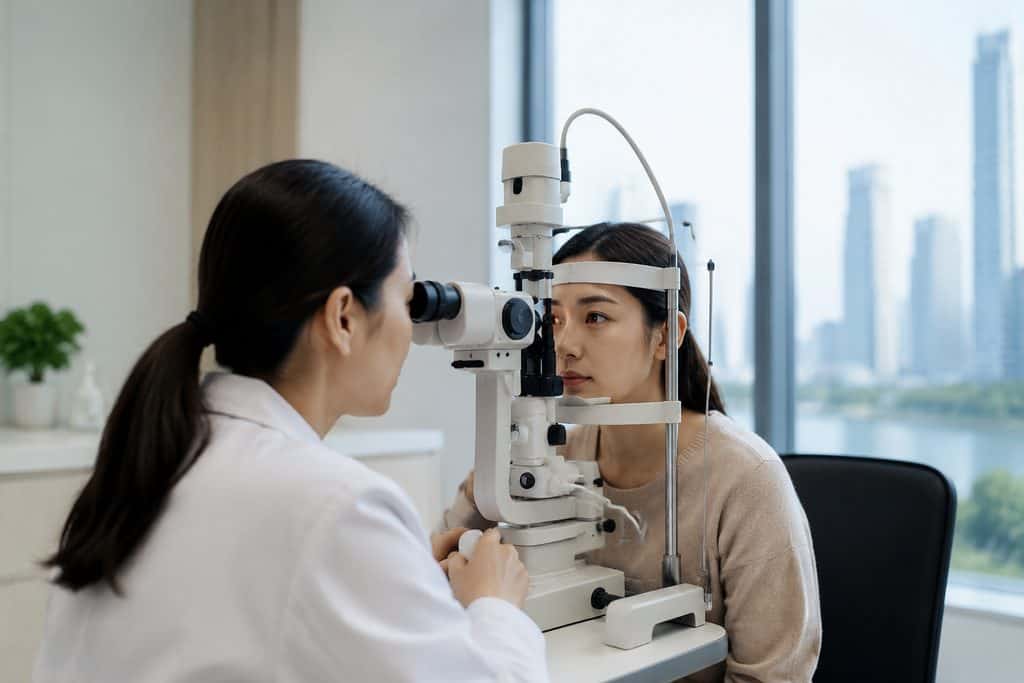
You have probably seen the numbers from back home. A straightforward eye muscle correction billed at $12,000 to $15,000 per eye. Sometimes more, depending on the surgeon and the facility. The assumption that follows is almost automatic: a lower price must mean a lower standard of care. The data tells a different story. China’s top ophthalmology centers now handle surgical volumes that reshape a surgeon’s expertise. A pediatric strabismus specialist at a major Chinese public hospital may perform over 500 eye alignment procedures a year. That repetition breeds a level of precision that is hard to replicate in lower-volume settings. The real question is not whether the care is good enough. It is how to access it without getting lost in translation, paperwork, and the sheer scale of a 35,000-hospital system. This article breaks down the actual strabismus surgery cost in China, what full-service packages with a companion actually include, and the step-by-step reality of making it happen.
How This Actually Works, Step by Step
The process starts long before you board a plane. Most patients we work with begin by sending us their existing medical records. That means recent ophthalmology reports, visual acuity tests, and any imaging like a Hess chart or orbital CT if it exists. We translate these documents and route them to a relevant specialist.
The first concrete step is a remote evaluation. For strabismus, this is usually a written second opinion or a video consultation. The specialist reviews the records and asks targeted questions. What is the angle of deviation? Has this been stable or progressive? Any prior surgeries? The goal is to determine whether you are a suitable candidate for surgery in China before you spend a cent on travel.
If the remote evaluation confirms surgery is indicated, the next phase is planning the trip. We coordinate with the hospital’s international department to lock in a consultation slot. This is not the surgery date yet. Chinese public hospitals require an in-person examination before scheduling any operation. The initial visit typically happens within a few days of your arrival. The surgeon performs a comprehensive sensorimotor exam, measures the deviation with prisms, and confirms the surgical plan.
Surgery is then scheduled. The wait between the first consultation and the operation can be as short as a few days or as long as two weeks, depending on the surgeon’s schedule and the hospital’s capacity. The procedure itself is usually outpatient or requires a single overnight stay. Post-operative follow-ups happen at the 1-day, 1-week, and sometimes 1-month mark. The last of these can often be coordinated with an ophthalmologist back home if you cannot stay that long.
What the Strabismus Surgery Cost in China Actually Covers
The headline number is between $2,500 and $5,500 per eye for adult strabismus correction at a top-tier public hospital’s international department. This is the all-in hospital bill: surgeon’s fees, anesthesia, operating room, the adjustable suture technique if used, and one night of inpatient observation if needed. Pediatric cases sometimes fall on the lower end of that range. Complex reoperations or cases involving multiple muscles can push toward the upper end.
To put that in perspective, the same procedure in the United States averages $12,000 to $15,000 per eye. In the UK, private strabismus surgery runs £4,000 to £6,000. Germany and France sit in a similar bracket. The differential is not marginal. It is a factor of three to five.
But the hospital bill is only one piece. A full-service eye muscle correction surgery price abroad needs to account for everything else. Our coordination packages start from $300 for basic appointment scheduling and run upward depending on complexity. A bilingual medical companion costs from $300 per day. This person does not just translate words. They translate the system. They know which floor the orthoptic lab is on, which window processes pre-payment, and how to read the queue number on a screen that updates in Mandarin. For a typical strabismus trip requiring three hospital visits — initial consultation, surgery day, and one follow-up — you might budget $900 to $1,200 for companion services.
Airport transfers, accommodation near the hospital, and visa documentation support add another layer. A round-trip airport transfer is $200. A decent hotel near a major Shanghai hospital runs $80 to $150 per night. All told, a realistic total for a strabismus surgery package with companion, including flights and a 10-day stay, lands between $6,000 and $10,000. That is still well below the surgical fee alone in many Western countries.
| Cost Component | Estimated Range (USD) | Notes |
|---|---|---|
| Strabismus surgery (per eye, hospital bill) | $2,500 – $5,500 | Varies by complexity; includes surgeon, anesthesia, facility |
| Written second opinion (remote) | $300 – $500 | Credited toward coordination if you proceed within 90 days |
| Video consultation with specialist | $100 – $300 | Same credit policy applies |
| Bilingual medical companion (per day) | from $300 | Half-day or full-day; 3 days typical for strabismus |
| Airport transfer (round-trip) | $200 | Private car, English-speaking driver |
| Accommodation (per night, mid-range) | $80 – $150 | Near-hospital location recommended |
| Hospital appointment coordination | from $300 | Refunded if appointment cannot be secured |
| Estimated total (10-day trip, including flights) | $6,000 – $10,000 | Excludes international airfare variability |
A Realistic Timeline
People often underestimate the waiting periods baked into medical travel. Here is what a strabismus surgery journey actually looks like, week by week.
| Stage | Duration | What Happens |
|---|---|---|
| Document collection & translation | 1–2 weeks | You gather existing eye exam records; we translate them into Chinese for the specialist |
| Remote specialist review | 1–2 weeks | The ophthalmologist reviews your case and provides a written opinion or schedules a video call |
| Visa application (S2) | 1–4 weeks | You apply at your local Chinese embassy or consulate with the hospital invitation letter we help procure |
| Travel to China & initial consultation | Day 1–3 of trip | In-person sensorimotor exam; surgical plan confirmed |
| Surgery scheduling gap | 2–14 days | Wait time between consultation and operation; varies by surgeon availability |
| Surgery & immediate recovery | 1 day | Outpatient or single overnight stay; adjustable sutures may require a brief return visit next day |
| First follow-up | 1 week post-op | Suture adjustment if needed; vision check; discharge clearance |
| Return home & local follow-up | 1 month post-op | Coordinate with your home ophthalmologist for long-term monitoring |
The total time away from home is typically 10 to 14 days. That assumes no complications and a reasonably responsive visa office. If your case requires adjustable sutures — common in adult strabismus surgery — the surgeon may want to see you the morning after surgery to fine-tune the alignment before you leave the hospital. This adds a day but dramatically improves outcomes.
What Can Go Wrong — and What Happens Then
No surgical journey is risk-free. Being honest about failure modes is how trust gets built.
The most common disruption is a visa delay. Embassies process S2 applications on their own timeline. If the visa does not arrive before your planned travel dates, we reschedule the hospital slot. There is no penalty for this from our side, but airline change fees are yours to bear. Book refundable tickets if your window is tight.
Another friction point is the surgeon determining during the in-person exam that surgery is not indicated, or that the surgical plan needs to change significantly. This happens. A remote evaluation is based on records and a video call. The hands-on prism cover test can reveal nuances that change the approach. If surgery is deemed unnecessary, you have traveled for a consultation, not an operation. Our coordination fee covers the appointment regardless. Any unused companion days are refunded or credited.
Post-operative overcorrection or undercorrection is a known risk in strabismus surgery, occurring in roughly 10 to 20 percent of cases depending on complexity. The adjustable suture technique, widely used in Chinese eye centers, mitigates this by allowing fine-tuning within 24 hours of the initial surgery. If a second procedure is needed down the line, it would typically be scheduled months later, after the eye has stabilized. That would be a separate trip and a separate surgical fee, though many hospitals offer a reduced rate for reoperations within a certain window.
Infection, diplopia, or loss of vision are rare but real. The infection rate in ophthalmic surgery at JCI-accredited or Fudan-ranked hospitals in China is comparable to international benchmarks — well under 1 percent. If a complication arises after you return home, your local ophthalmologist manages it. We can facilitate communication with the Chinese surgeon for continuity of care, but we do not provide medical advice.
Choosing the Best Strabismus Hospital in Shanghai vs. Other Cities
Shanghai dominates the conversation for a reason. The city houses several of China’s highest-volume eye centers. When patients ask about the best strabismus hospital Shanghai has to offer, two names consistently surface. The Eye and ENT Hospital of Fudan University runs one of the largest pediatric and adult strabismus services in the country. Its surgeons publish in international journals and regularly present at global strabismus conferences. Shanghai Ninth People’s Hospital, affiliated with Shanghai Jiao Tong University, is another heavyweight, particularly strong in complex oculoplastic and strabismus cases involving prior trauma or failed surgeries.
But limiting your search to Shanghai misses strong alternatives. Zhongshan Ophthalmic Center at Sun Yat-sen University in Guangzhou is a national referral center for complicated eye alignment cases. Beijing Tongren Hospital’s ophthalmology department is ranked among the top in China by the Fudan specialty reputation list. West China Hospital in Chengdu handles a massive patient volume and has dedicated strabismus surgeons who perform over 400 procedures annually.
The decision should hinge on the specific surgeon’s experience with your type of strabismus, not just the hospital brand. A surgeon who does 300 adult reoperations a year is a different proposition than one who primarily treats congenital esotropia in toddlers. During the remote evaluation phase, we help match your case profile to the right subspecialist. The hospital choice follows the surgeon, not the other way around.
How much is squint eye surgery in China at these different centers? The price band does not vary dramatically between top-tier public hospitals. You might see a 10 to 15 percent difference between a Shanghai international department and a Guangzhou one, but the bigger variable is case complexity, not geography. Private international hospitals like Jiahui or United Family charge more — typically $6,000 to $9,000 per eye — but offer a fully English-language environment and direct insurance billing. For some patients, that trade-off is worth it.
Practical Considerations: Records, Visa, Payment, and Follow-Up
You cannot walk into a Chinese public hospital and book a surgery from overseas. The system does not work that way. What you can do is arrive with everything prepared so that the in-person steps move fast.
Medical records are the foundation. Bring every relevant document: previous eye exam printouts, prism cover test measurements, any orbital imaging, and a detailed surgical history if this is a reoperation. If the records are not in English, we translate them. If they are incomplete, the surgeon may order new tests on site, which adds time and cost.
The visa is an S2, endorsed for medical treatment. Your accompanying family member applies for the same category. The hospital’s international department provides an invitation letter that supports the application. We guide you through the documentation but do not control the embassy’s decision. Apply at least four weeks before your intended travel date.
Payment at public hospitals is upfront. You pay the estimated surgical bill before the procedure, typically by credit card, wire transfer, or sometimes cash. International health insurance with out-of-network benefits may reimburse you afterward, but the hospital does not bill your insurer directly. Private international hospitals like those listed on our private hospitals page often do direct billing, but their surgical fees are higher.
Language is the invisible friction. Even in an international department, the nurses, the anesthesiologist, and the billing staff may not speak fluent English. A bilingual companion bridges every one of those interactions. This is not a luxury add-on. It is the difference between a smooth process and a profoundly stressful one.
Follow-up care back home needs to be arranged before you leave. Identify an ophthalmologist in your city who is willing to take over post-operative monitoring. Send them the Chinese surgeon’s operative notes and discharge summary. Most are happy to collaborate. We can help format the records in a way your home doctor can easily digest.
Frequently Asked Questions
Can I book eye alignment surgery in China without traveling there first for a consultation?
No. Chinese public hospital regulations require an in-person examination before any surgery is scheduled. The remote video consultation confirms candidacy and builds the surgical plan, but the final decision happens after the surgeon examines you in person. Anyone promising a locked-in surgery date before you arrive is not being straight with you.
What is included in a strabismus surgery package with companion services?
The hospital bill covers the surgeon, anesthesia, operating room, and immediate post-op observation. Our coordination package layers on top: bilingual companion for all hospital visits, appointment scheduling, document translation, visa invitation support, and logistical troubleshooting. It does not cover airfare, hotel, meals, or the hospital surgical fee itself. Think of it as the operating system that makes the medical part possible.
Is the adjustable suture technique standard for adult strabismus surgery in China?
Yes, it is widely used in major centers. The surgeon places the muscle with a slipknot, wakes you up, checks alignment, and adjusts the knot before finalizing it. This happens within 24 hours of the initial surgery and significantly reduces the reoperation rate. Not every case is suitable — the surgeon will confirm during the pre-op evaluation.
How much is squint eye surgery in China for a child versus an adult?
Pediatric strabismus surgery in China typically falls in the $2,500 to $4,000 range per eye. Adult cases, especially reoperations or those involving multiple muscles, trend toward $3,500 to $5,500. The difference reflects anesthesia complexity and surgical time more than anything else. These are international department prices. Standard public ward prices are lower but come without English-language support.
What happens if the surgery result is not satisfactory?
The adjustable suture technique catches many alignment issues within the first day. If a residual deviation persists after healing — typically assessed at the 6-week mark — a second procedure may be indicated. This is not uncommon in complex strabismus. The Chinese surgeon will advise on timing. Reoperation fees are usually reduced, but you will need to travel again. We recommend discussing this scenario openly during the initial video consultation so expectations are grounded from the start.
Your Next Step
The decision to travel for eye muscle correction surgery is never just about the strabismus surgery cost in China. It is about whether the system can deliver a result you trust, in a way that does not exhaust you. Our role is narrow and specific. We do not practice medicine. We connect you with surgeons who do, at hospitals that have been vetted through the Fudan ranking system and JCI accreditation standards, and we put a competent bilingual companion at your side for every hospital visit.
If you are considering this path, the most useful thing you can do right now is send us your existing eye examination records. We will route them to a relevant strabismus specialist for a remote evaluation. From there, you will have a clear clinical opinion and a concrete cost estimate — not a generic price range, but a number tied to your actual case. Visit our patient coordination page to start that conversation. There is no charge for the initial inquiry, and no pressure to commit. The goal is to give you enough clarity to make a decision you feel solid about.
For more medical information and treatment options in China, visit chinamedservices.com (China Medical Services).
