Top Gynecologists in China: Fertility, Fibroid, and Oncology Access
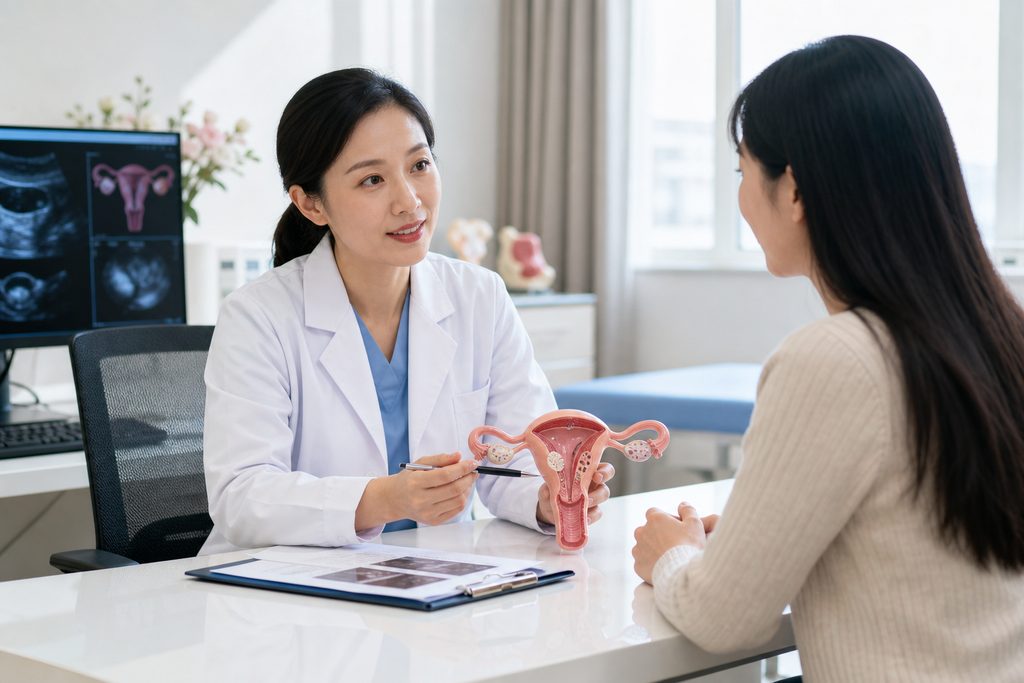
A woman in London waits 18 weeks for a myomectomy consultation. A patient in Los Angeles faces a $30,000 bill for a hysteroscopic procedure. Meanwhile, the gynecologic surgery team at a top Shanghai teaching hospital completes over 4,000 similar minimally-invasive procedures annually. The cost starts around $4,000. The gap in access and the best gynecologist for fibroids in China price is not a marketing claim. It is a structural reality of global healthcare economics. But navigating that gap requires more than a plane ticket. It demands a clear map.
The Short Answer: Who Are the Top Gynecologists and Women’s Health Surgeons in China?
There is no single “best” surgeon. There are elite-tier hospital departments where teams of specialists handle complex gynecologic, fertility, and oncologic cases at volumes rarely seen in the West. The Peking Union Medical College Hospital (PUMCH) Obstetrics and Gynecology department is consistently ranked in the highest Fudan Hospital Ranking tier (A++++). Renji Hospital in Shanghai, affiliated with Shanghai Jiao Tong University, is a national reference center for reproductive medicine. For gynecologic oncology, the Cancer Hospital Chinese Academy of Medical Sciences in Beijing and Fudan University Shanghai Cancer Center are the top destinations. The real question is not who is best, but which team’s specific expertise maps to your diagnosis and how to connect with them.
Who This Is Right For — and Who It Isn’t
Traveling for gynecologic care is not for everyone. A clear-eyed assessment at the start saves time and heartache.
Typically a good candidate:
- Diagnosed with symptomatic uterine fibroids and seeking uterus-preserving options like myomectomy or Uterine Fibroid Embolization (UFE) at a lower cost.
- Facing long public-system wait times for fertility treatments like IVF and looking for high-volume centers with advanced genetic screening.
- Diagnosed with a gynecologic malignancy (cervical, ovarian, endometrial cancer) and seeking a second opinion or surgical treatment from a high-volume oncology center.
- Has a stable condition, a confirmed diagnosis with recent imaging and pathology reports, and the physical stamina for international travel.
Who should not pursue this:
- Patients with an undiagnosed condition who expect a diagnostic workup from scratch during a short trip. A full diagnostic pathway takes time.
- Those requiring emergency surgery or in an unstable clinical state.
- Patients who need continuous, long-term follow-up with a single provider and cannot return to China periodically.
- Anyone who expects a Western-style private-room luxury experience in a public hospital’s general ward. The clinical expertise is world-class. The ward amenities are functional. The VIP and international wings bridge this gap, but at a different price point.
The Options, Compared: Pathways to Care
Not all access routes are equal. The right one depends on your budget, language needs, and clinical complexity. Here is how the main pathways compare for a patient seeking a best gynecologist for fibroids in China price point.
| Pathway | Typical Hospital Type | Surgeon Level | Language Support | Estimated Surgery Cost (USD) |
|---|---|---|---|---|
| General Public Ward | Top-tier Public (Fudan A++++ / A+++) | Senior Consultant / Professor | Minimal; self-arranged translator needed | $4,000 – $8,000 |
| International / VIP Ward | Same Public Hospital | Same Senior Consultant, often department head | Dedicated English-speaking coordinator | $8,000 – $15,000 |
| Private International Hospital | United Family, Jiahui, Raffles | Experienced, often Western-trained | Fully English-speaking environment | $15,000 – $25,000 |
| Written Second Opinion (Remote) | Any top-tier hospital | Subspecialist in your condition | Translated report provided | $300 – $500 |
A patient with a straightforward fibroid case and a tight budget might target the public VIP ward, gaining senior surgeon access with logistical support. A patient with recurrent ovarian cancer and complex prior surgeries might start with a written second opinion from a gynecologic oncologist at the Cancer Hospital Chinese Academy of Medical Sciences before committing to travel. The remote option is not a lesser service. It is the most rational first step for complex oncology cases.
Fertility, Fibroids, and Oncology: Matching the Condition to the Center
China’s hospital system is vast, but the elite centers have clear peaks of specialization. A general “women’s health” search is too broad to be useful. The precision comes from matching your specific condition to the department that lives and breathes it.
For fertility, the question of top fertility hospitals in Shanghai for foreigners leads directly to the Reproductive Medicine Center at Renji Hospital. Their annual IVF cycle volume exceeds 10,000, with clinical pregnancy rates that are reported in line with top global centers. They handle complex cases involving preimplantation genetic testing (PGT). The International Medical Center at Shanghai First Maternity and Infant Hospital is another strong option, specifically designed with English-language pathways for obstetrics and gynecology patients. For those researching how to find a good female oncologist in China, the reality is that gynecologic oncology in China’s top centers is frequently led by female surgeons. At the Fudan University Shanghai Cancer Center, the gynecologic oncology department has a high proportion of female attending surgeons, a fact that surprises many Western patients. You can specify this preference during the hospital matching process, and it is a common, easily accommodated request.
For oncology, the distinction matters. Ovarian cancer surgery, particularly optimal debulking, is a procedure where surgeon volume correlates with patient outcomes. The Cancer Hospital Chinese Academy of Medical Sciences in Beijing and Fudan University Shanghai Cancer Center both run dedicated gynecologic oncology surgical services that manage extremely high caseloads. A patient considering radical surgery for cervical cancer will find that nerve-sparing radical hysterectomy techniques are standard at these centers, not experimental.
What It Costs: A Realistic Breakdown
The uterine fibroid embolization cost abroad is one of the most searched terms because the procedure is often not covered by insurance in some countries or carries high deductibles. In China, a uterine fibroid embolization (UFE) performed by an interventional radiologist at a top public hospital typically ranges from $3,500 to $6,000. A laparoscopic myomectomy at the same tier ranges from $5,000 to $9,000.
These figures are for the hospital procedure itself. They do not include the coordination service fee, flights, accommodation, or post-discharge recovery stay. A realistic all-in budget for a fibroid surgery trip, including a two-week stay and a bilingual companion for key hospital visits, starts around $12,000 and can reach $20,000 for a VIP pathway. The question is hysterectomy safe in Beijing is often driven by cost anxiety, but the safety data is reassuring. Minimally invasive hysterectomy at a Fudan-ranked A++++ hospital carries a complication profile comparable to major Western centers, with the added benefit of surgeons who perform a high volume of these procedures weekly. Safety is a function of volume and system, not geography.
For those looking to book hysteroscopy surgery China package, the concept of a fixed-price “package” is more common in private international hospitals. Public hospital international wings provide detailed estimates, but final billing reflects actual consumables and length of stay. A hysteroscopic myomectomy package at a JCI-accredited private hospital in Shanghai or Beijing can be quoted as a flat fee, typically between $6,000 and $10,000, covering the surgeon, anesthesia, one night of inpatient stay, and basic medications.
Practical Considerations: Records, Visas, and the Language Barrier
A successful trip is built on paperwork before it is built on plane tickets.
Medical records. Chinese specialists expect a complete file: recent imaging (MRI or CT reports and DICOM files on a CD or USB), pathology slides and reports for oncology cases, a detailed summary of prior treatments, and a list of current medications. All documents must be translated into Chinese. Our team handles this translation and ensures the files are formatted to the receiving hospital’s specifications. A consultation without properly prepared records is a wasted appointment.
The visa is straightforward but specific. Medical treatment falls under the S2 visa category, a short-term private affairs visa. You will need an invitation letter from the hospital, proof of appointment, and accommodation details. The S2 visa is not a medical visa. There is no such category. But it is the correct instrument for this purpose. Processing times vary by embassy, and we guide patients through the documentation package. Never book a non-refundable flight before the visa is in your passport.
Payment. Public hospitals, including their international wings, operate on a prepayment model. You deposit a sum at admission, and the hospital draws down from it. Credit cards are accepted at international wings, but cash or UnionPay is more common in general wards. Private international hospitals often have direct billing agreements with major insurers. Check yours. Most patients pay out of pocket and seek reimbursement later.
Language. A top surgeon in Beijing may read English medical journals fluently but not speak conversational English comfortably. The consultation will require a medically fluent interpreter. This is not a role for a bilingual relative. A mistranslated symptom or drug name has consequences. A professional bilingual medical companion ensures the clinical nuance is not lost. They also handle the practical chaos of a Chinese public hospital: queuing for registration, collecting results, and navigating the sprawling campus. The hospital’s scale is the first culture shock for most Western patients. A single-day outpatient volume can exceed 10,000 visits. A companion makes that scale manageable instead of overwhelming.
Follow-up. A surgeon in Shanghai can do a brilliant job. But they cannot see you for a six-week post-op check if you are back in Manchester. The discharge plan must include a clear summary in English for your local gynecologist, with a direct contact channel for the Chinese team should questions arise. This continuity handoff is part of the coordination we structure before you ever leave home.
Frequently Asked Questions
Yes. The question of how to find a good female oncologist in China is common, and the answer is simpler than most patients expect. In China’s top-tier gynecology and gynecologic oncology departments, female surgeons are not a rarity. They are often the majority of the attending staff. When you submit your case, you can specify a preference for a female surgeon, and this is routinely accommodated without compromising on the seniority or specialization of the care team.
The safety profile of a laparoscopic hysterectomy at a Fudan A++++ hospital in Beijing is on par with top US centers. The surgeons perform these procedures in high volumes. The intensive care units are well-equipped. The risk is not the surgery itself. It is the journey home. A long-haul flight too soon after major pelvic surgery elevates the risk of deep vein thrombosis. The clinical safety is high. The logistical safety requires a well-planned recovery period in Beijing before flying out, typically 10 to 14 days post-discharge for a hysterectomy.
Top-tier Chinese hospitals have robust internal systems for managing surgical complications. They have ICU capacity, interventional radiology for hemorrhage control, and experienced senior consultants on call. What they do not have is a legal framework that mirrors Western medical malpractice systems. Financial compensation for adverse outcomes is not a standard expectation in the same way it might be at home. This is a hard truth. The clinical safety nets are real. The legal recourse is different. Go in with your eyes open. The value proposition is high-quality surgery at a fraction of the cost, not a replica of your home country’s legal environment.
You can arrange a coordinated surgical plan, but at a public hospital, you cannot click “buy” on a fixed-price book hysteroscopy surgery China package like an e-commerce transaction. The pathway works like this: you send your records for a remote evaluation. The specialist confirms you are a candidate and outlines the plan. You then travel for an in-person consultation and pre-operative assessment. If all aligns, the surgery is scheduled, often within the same trip. The coordination service handles the scheduling and prepayment logistics. Private international hospitals can offer a more bundled, fixed-price package, but the clinical pre-assessment step is never skipped.
Your Next Step
The barrier to world-class gynecologic surgery is no longer clinical. It is informational and logistical. The surgeons exist. The technology is deployed. The cost differential is real. What is missing for most international patients is a reliable bridge: someone to translate the records, identify the right department, and manage the on-the-ground reality of a Chinese hospital visit.
That is what our team at China Medical Services does. We are not a hospital. We do not employ doctors or offer medical advice. We are a coordination team that connects you with the top 5% of China’s 35,000+ hospitals, ranked by the Fudan Hospital Ranking and JCI accreditation. We handle the document translation, the hospital matching, the visa guidance, and the bilingual companion support on the ground. If you are considering a remote second opinion or planning a trip for a procedure, the logical first step is a conversation. It costs nothing to explore whether this pathway fits your situation.
Review your options for a free initial consultation. We will ask about your diagnosis, review what records you have, and give you a clear, unvarnished picture of what is possible.
For more medical information and treatment options in China, visit chinamedservices.com (China Medical Services).
