Western-Managed Care at Sir Run Run Shaw Hospital Hangzhou: What International Patients Actually Get
When 42-year-old Michael first heard the diagnosis, he had no idea where to start. A software architect from Portland, he needed a complex orthopedic procedure. His insurance deductible was crushing. A colleague mentioned Hangzhou. “Is there even a real western hospital Hangzhou cost advantage,” he asked us, “or is this just medical tourism hype?”
The short answer is yes, the cost advantage is real and substantial. The western hospital Hangzhou cost for a procedure like a total knee replacement at Sir Run Run Shaw Hospital’s international wing typically runs from $15,000 to $22,000. Compare that to $45,000 to $70,000 in the United States. But cost is the easy part. The more complicated question is whether you’ll receive care that feels familiar—English-speaking doctors, no crowded public hallways, a single point of contact who manages the chaos. That is what we’ll unpack here.
Who This Is Right For — and Who It Isn’t
Sir Run Run Shaw Hospital (SRRSH) is a powerhouse. It’s a university hospital affiliated with Zhejiang University School of Medicine, and it’s one of the few institutions in mainland China that operates a dedicated international medical center modeled on Western care standards. But it’s not a copy-paste of a Mayo Clinic satellite.
A good candidate typically meets these criteria:
- You need an elective or semi-elective procedure—orthopedics, cardiology, general surgery, or a comprehensive health screening.
- You are stable enough to fly and sit through a first-day in-person evaluation. No hospital in China will schedule surgery without examining you first.
- You are paying out-of-pocket, through a high-deductible plan, or via a self-funded employer arrangement. Direct insurance billing is limited here compared to private international hospitals in Shanghai.
Who should probably not pursue this path?
- Patients in an active medical crisis who need immediate, unplanned admission. The international center requires pre-coordination.
- Anyone expecting a standalone, walk-in “western clinic” disconnected from a massive Chinese public hospital. The international wing sits inside a very busy, 2,400-bed institution.
- Those unwilling to place a deposit before admission. Chinese hospitals operate on a prepayment system. You fund a deposit account, and services draw down from it.
If you fit the first list, the value proposition is strong. If you’re in the second, a private international hospital with direct insurance billing—like a United Family facility—might be a better match, though the medical complexity they handle is often lower.
The Options, Compared
When patients search for “medical tourism packages Hangzhou China,” they usually mean one of three things. The table below lays them out honestly.
| What You Get | Standard Public Route | SRRSH International Center | Private International Hospital (e.g., United Family) |
|---|---|---|---|
| Doctor | Senior professor, but brief visit | Senior professor, extended consult | Western-trained or bilingual attending |
| Language | Mandarin only | English-speaking coordinator + doctor | Fully English-speaking staff |
| Environment | Crowded, fast-paced | Private suite, quieter zone | Boutique, hotel-like |
| Cost (Knee Replacement) | $10,000–$15,000 | $15,000–$22,000 | $30,000–$45,000 |
| Wait Time | Days to weeks for a bed | Coordinated, days | Coordinated, days |
| Who Handles Logistics | You, alone | International center staff | Hospital concierge |
The public route delivers the same surgical hands for less money. But without Mandarin fluency, you’ll drown in paperwork and hallway navigation. The private international hospital feels like home. But you pay a premium for the environment, and the surgical volume for complex cases is lower. The SRRSH International Center occupies the middle lane: high-volume clinical expertise inside a managed, English-supported bubble. That middle lane is what most of our patients end up choosing.
Inside the Sir Run Run Shaw International Patient Price List
There is no single, static “Sir Run Run Shaw international patient price list” published online like a restaurant menu. Chinese hospital pricing is itemized. You pay a consultation fee, a bed fee, a surgical fee, an anesthesia fee, and consumables line by line. That said, the international center provides a formal quotation after reviewing your medical records and imaging.
Here’s what a typical quotation includes, based on cases we have coordinated:
- Initial specialist consultation: $150–$250. This is not a video call. It’s an in-person evaluation.
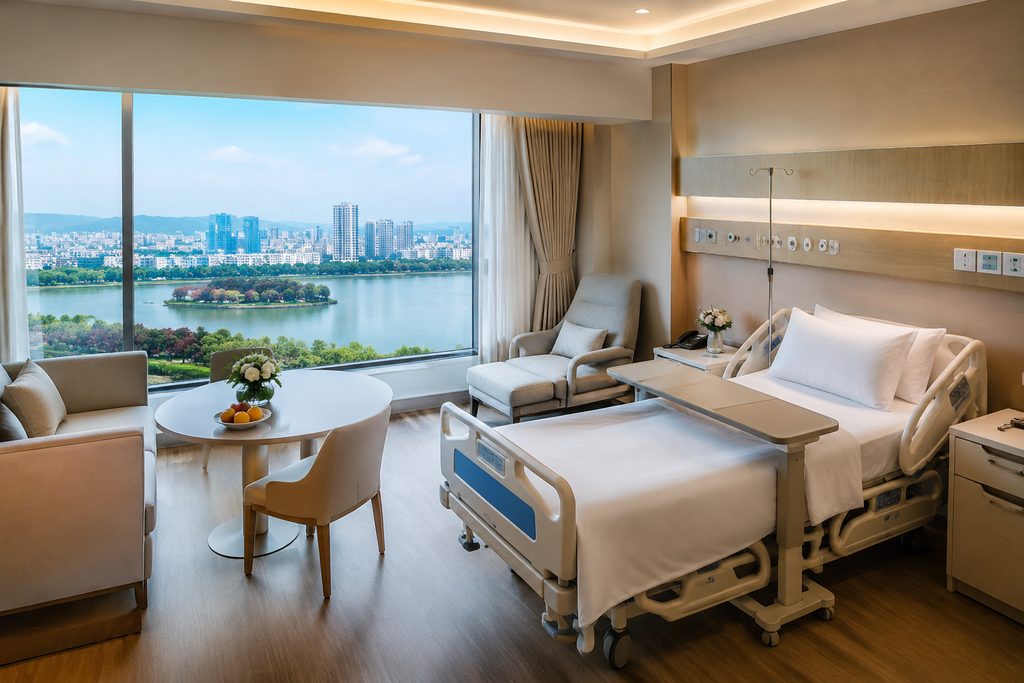
- Private inpatient suite: $200–$400 per night. Larger than a standard room, with a dedicated nursing station nearby.
- Surgical procedure: The surgeon’s fee, operating theater, and basic instrumentation. This is the core line item and varies wildly by complexity.
- Imaging and lab work: MRI, CT, and full blood panels are often done on-site within hours, not days. Budget $500–$1,200 for a comprehensive pre-op workup.
- Implant or consumables: If you need a specific imported joint prosthesis or cardiac stent, this is billed at cost plus a hospital markup. Imported implants cost more than domestic ones. You can choose.
The quotation will be in Chinese yuan. The hospital converts to USD at the day’s rate. You wire a deposit upfront. Unused funds are refunded at discharge. This prepayment model unsettles some Western patients at first. It’s simply how the system works across all Chinese hospitals.
Is Sir Run Run Shaw Hospital Safe for Foreigners?
We hear this question phrased bluntly: “Is Sir Run Run Shaw Hospital safe for foreigners?” The concern is rarely about crime. It’s about clinical safety, communication, and infection control.
On clinical safety, the data is reassuring. SRRSH holds Joint Commission International (JCI) accreditation, the same global standard used by hospitals in Singapore, Dubai, and the U.S. It earned its first JCI gold seal in 2006 and has been re-accredited through multiple cycles. That means medication management, surgical safety checklists, and patient identification protocols meet an audited international benchmark.
The hospital also operates under a unique governance structure. It was founded in 1994 through a partnership between Zhejiang University and the Loma Linda University Health system in California. That American influence persists in its administrative philosophy. Rounds are structured. Nursing ratios in the international wing are generous. The electronic medical record is bilingual.
Infection rates? The hospital publishes its data. Surgical site infection rates for clean orthopedic procedures sit well below 1%, consistent with OECD averages. You’ll notice hand sanitizer stations everywhere. Staff wear fresh PPE per patient encounter.
The real risk is not clinical. It’s expectation mismatch. If you arrive expecting a quiet, carpeted lobby with a Starbucks and zero waiting, you’ll be jarred. The international center is calm. But you still walk through a massive public atrium to reach it. The contrast is stark. Knowing this ahead of time makes the difference between feeling safe and feeling disoriented.
What It Costs: A Real Budget Breakdown
Let’s move beyond the hospital bill. The western hospital Hangzhou cost conversation often ignores the surrounding expenses. Here’s a realistic budget for a 14-day trip—one week pre-op and evaluation, one week inpatient and immediate recovery.
- Flights: $1,200–$2,500 round-trip from the U.S. West Coast, economy. Business class triples that.
- Visa: $140–$200 per person for an S2 short-stay private affairs visa. Your accompanying family member needs their own S2. Processing takes 5–10 business days at most consulates.
- Accommodation for family: $80–$150 per night for a serviced apartment near the hospital. The Dragon Hotel and nearby serviced residences are a 10-minute walk.
- Local transport and meals: $40–$70 per day for two people. Hangzhou is inexpensive compared to Shanghai.
- Bilingual medical companion: from $300 per day. This is a separate service from the hospital’s own coordinator. A companion handles pharmacy runs, discharge paperwork translation, and the gap between what the hospital provides and what you actually need.
All in, the non-medical spend lands between $4,000 and $7,000. Add that to a $20,000 procedure, and you’re still at roughly one-third of the U.S. cash price. The math holds.
How to Book Surgery at Sir Run Run Shaw Hospital
You cannot book surgery at Sir Run Run Shaw Hospital by filling out a web form and picking a date. The pathway is sequential.
First, you send your medical records. Imaging on a CD or cloud link, physician notes, and a brief summary of your treatment history. The international center’s triage nurse reviews these with the relevant department head. This takes three to five business days. They either accept your case or decline. A declination is rare and usually means your condition is better suited to a medical specialty the hospital doesn’t prioritize for international patients.
If accepted, you receive a preliminary treatment plan and a cost estimate. You then apply for your S2 visa using the hospital’s invitation letter. Do not book flights until the visa is in your passport.
You arrive in Hangzhou. Day one is the face-to-face consultation. The surgeon examines you, reviews fresh imaging, and confirms the plan. You sign consent forms. You pay the deposit. Surgery is typically scheduled within 48 to 72 hours after that. The hospital keeps a buffer of operating room time for international patients, but it’s finite.
The inpatient stay lasts as long as clinically necessary. For a joint replacement, expect five to seven days. Discharge happens when you can walk, tolerate food, and have stable vitals. You then recover at your hotel or a nearby serviced apartment until your surgeon clears you to fly—usually seven to ten days post-op for uncomplicated cases.
The entire process, from first email to flying home, spans four to six weeks. There’s no shortcut. Anyone promising a faster timeline is cutting corners.
Practical Considerations: Records, Language, and the English-Speaking Doctor Hangzhou Review
You’ll need a complete medical dossier. Not a one-page summary. We’re talking the full chart: recent labs, imaging reports and the raw DICOM files, operative notes from any prior surgeries, current medication list with dosages, and a physician’s clearance letter stating you are fit for elective surgery and air travel. Missing documents cause delays.
On language: the international center assigns an English-speaking coordinator. The surgeons themselves often speak functional to fluent English, particularly those who trained abroad. But do not expect every nurse or radiology tech to converse in English. That’s where a bilingual companion fills the gap—escorting you from your suite to the MRI suite, translating the technician’s instructions, and making sure you don’t accidentally drink water before a fasting blood draw.
The “English-speaking doctor Hangzhou review” you might read online varies. Some patients rave about a cardiologist who explained every angiogram frame in perfect English. Others complain that the surgeon was brusque and relied on the coordinator. Both can be true. Chinese surgical culture values efficiency. A 15-minute pre-op consult with a top surgeon here is normal. It’s not rudeness. It’s a different communication style. Knowing this prevents the “I flew 6,000 miles and he spent 10 minutes with me” shock.
Payment is another friction point. The hospital accepts wire transfers and UnionPay. Some international credit cards work at the cashier, but don’t count on it for the full deposit amount. Bring a card that can handle a large single transaction, or better, wire the funds in advance. Insurance reimbursement is your responsibility. The hospital provides an itemized receipt and discharge summary in English for you to submit to your insurer.
Frequently Asked Questions
Yes. The international center offers a written second opinion service. You send your records. A senior specialist reviews them and provides a treatment recommendation and a rough cost estimate. This costs between $300 and $500 and takes about a week. It’s not a binding surgical quote, but it tells you whether your case is appropriate for their team. If you later proceed to surgery, that fee is often credited toward your coordination service.
This is the hardest question, and the answer is straightforward. SRRSH is a full-service tertiary hospital with a 24/7 emergency department, an intensive care unit, and every medical subspecialty in-house. If a complication arises, you are already inside the facility best equipped to manage it in the entire province. The international center has protocols for escalating care. The hospital carries liability insurance. But you are still in China, under Chinese medical law. Malpractice litigation is not the same as in Western jurisdictions. The practical reality is that the hospital’s reputation depends on good outcomes, and they marshal resources aggressively to avoid bad ones.
In the private inpatient suites, yes. One family member can stay overnight on a convertible sofa bed. The nursing staff will not provide meals for them, but the hospital canteen and nearby restaurants make food easy. For the initial consultation and imaging visits, family members wait in a dedicated lounge area.
The international center coordinator will arrange a follow-up appointment with the same surgeon before you fly home. If you need ongoing care after returning to your home country, the surgeon will provide a detailed handoff letter for your local physician. Finding a standalone English-speaking general practitioner in Hangzhou outside the hospital system is difficult. The international center remains your medical home base while you’re in the city.
Your Next Step
The western hospital Hangzhou cost advantage is real, but it’s not a transaction. It’s a logistical project. You’re not buying a surgery off a shelf. You’re coordinating a clinical journey that spans two healthcare systems, a language barrier, and a different cultural approach to medicine. The hospital’s international center does its part well. The gaps—visa paperwork, pre-arrival record translation, day-of navigation, and post-discharge handholding—are where most patients stumble.
Our team handles those gaps. We are not a hospital. We don’t diagnose or treat. We are a medical concierge service that connects you with institutions like Sir Run Run Shaw Hospital and manages the non-clinical logistics from first contact to your flight home. If you want to understand whether your specific case makes sense for Hangzhou, start with a free consultation. We’ll review your situation, explain the realistic timeline and budget, and help you decide if this path is right for you. No pressure. Just clarity.
For more medical information and treatment options in China, visit chinamedservices.com (China Medical Services).
