China Hospital Billing for Foreigners: Deposits, Insurance, and Payment
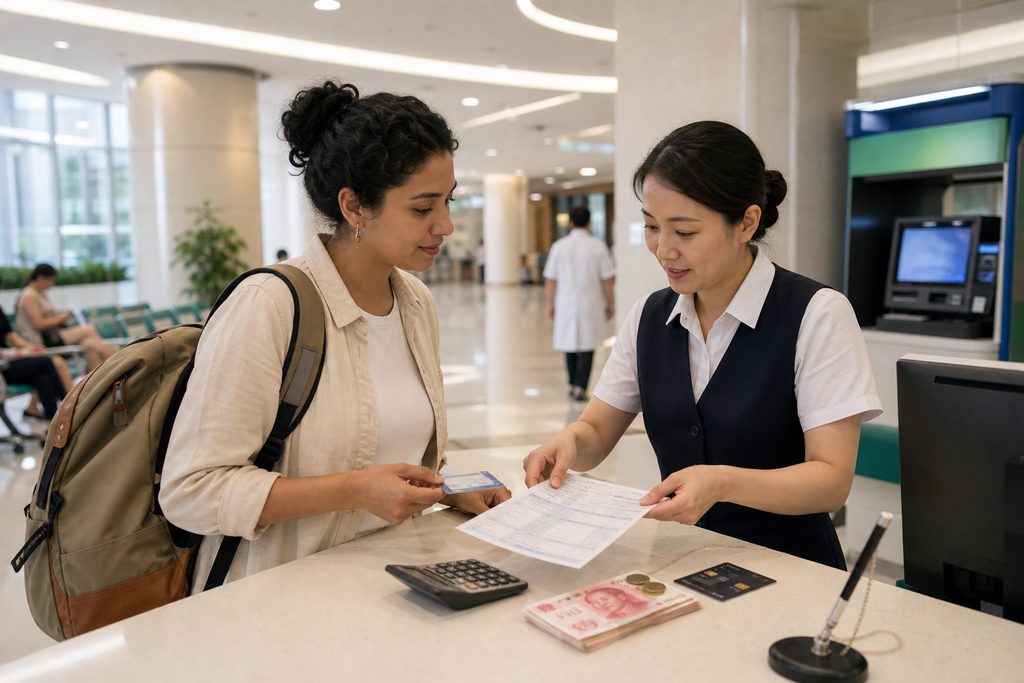
You have probably heard that paying for medical care in China is a cash-only, chaotic mess that leaves foreigners stranded. The reality is more structured than that, but it does operate on a logic entirely its own. Walking in unprepared means frozen credit cards, rejected insurance, and a hospital bed held hostage by a deposit slip. That is stressful. And it is avoidable.
Our team has guided patients through the financial side of treatment at more than 340 top-ranked hospitals across 37 cities. We have seen every billing scenario. The system works. But it demands a specific kind of preparation that most international patient guides ignore. This article covers what actually happens when you need to settle a hospital bill in China: the deposits, the currency rules, the insurance realities, and the step-by-step flow of money from admission to discharge.
Key Takeaways
- China’s top hospitals require a substantial upfront deposit, often 50-100% of the estimated treatment cost, before admission or major procedures.
- International health insurance is rarely accepted for direct billing at public hospitals; you pay first and seek reimbursement later.
- Currency exchange and cross-border transfer limits create real logistical hurdles that require a strategy before you land.
- A transparent cost estimate obtained before travel is the single most important document for avoiding financial shock.
The Problem: A Hospital System Not Built for Foreign Wallets
China’s public hospital system serves over 3.5 billion outpatient visits annually. It is a machine optimized for domestic patients who pay via WeChat, Alipay, or a national insurance card tapped at a kiosk. A foreign passport and a Visa credit card break that workflow entirely.
Hospitals like Peking Union Medical College Hospital or West China Hospital process thousands of transactions per hour. Their billing departments are not equipped to call an insurance help desk in Delaware or wait for a wire transfer to clear from a bank in Dubai. The expectation is clear: funds must be available, in the right currency, at the right moment. If they are not, treatment pauses. We have seen it happen. A patient arrives for a scheduled cardiac ablation, but the deposit fails to post. The cath lab slot is lost. The surgeon moves on. The patient starts over. That is not a system failure. That is a system working exactly as designed, just not for you.
Why the Chinese Hospital Payment Model Delivers Speed and Value
The upfront payment structure frustrates many Western patients at first. But it is the same mechanism that keeps costs remarkably low and treatment timelines remarkably short. Understanding the structural reasons behind it helps you navigate it rather than fight it.
Cash-Flow Efficiency Lowers the Cost Base
American hospitals carry enormous accounts receivable. They employ entire departments to chase insurance claims and patient debts. Those overhead costs get baked into every bill. A Chinese public hospital operates on a near-zero receivables model for international patients. The deposit covers the expected cost. The final settlement happens at discharge. No collections department. No 90-day billing cycle. That administrative lightness is one reason a hip replacement that costs $40,000 in the US runs $8,000 to $12,000 at a top orthopedic center like Peking University Third Hospital. The money you wire ahead of time directly funds your care, not a billing bureaucracy.
Volume Creates Predictable Pricing
High-volume centers develop a deep institutional knowledge of what procedures actually cost. Fuwai Hospital performs over 14,000 cardiac surgeries a year. That is more than any other hospital on the planet. When you do something that many times, the cost of every suture, every hour of OR time, and every night in the ICU becomes a known quantity. The hospital can generate a reliable medical treatment cost estimate for a Beijing hospital with a precision that surprises patients accustomed to the vague “we’ll bill you later” approach. That estimate becomes the basis for your deposit. It is not a guess. It is actuarial reality built on massive case volume.
How Hospital Deposits Actually Work for Foreign Patients
This is the part that catches people off guard. You do not simply hand over a credit card at the registration desk and sort out the rest later. The deposit process is formal, front-loaded, and non-negotiable.
When a hospital accepts your case, the international patient office issues a formal cost estimate. For a surgical procedure, this typically covers the surgeon’s fee, anesthesia, operating room time, implant or device costs, standard ward bed charges, and a buffer for routine medications and consumables. The deposit required is usually 100% of this estimate for major surgery, though some hospitals accept 70-80% with the balance due at discharge. For outpatient consultations or diagnostic workups, the deposit is lower, often matching the estimated cost of the tests ordered.
The funds must arrive in the hospital’s designated bank account before your admission date. This is not a matter of policy flexibility. The hospital’s internal system will not generate an admission order without a confirmed financial clearance. No clearance, no bed. No bed, no surgery.
Currency Exchange for Hospital Payment in China: The Real Rules
Currency exchange for hospital payment China transactions is governed by strict capital controls. You cannot simply show up with a bag of US dollars and pay at the counter. The hospital’s licensed bank account accepts foreign currency, but the path from your account to theirs requires careful routing.
China’s State Administration of Foreign Exchange caps individual inbound transfers at $50,000 per person per year without special documentation. For treatments exceeding that amount, the hospital provides a formal treatment contract and admission notice. You take these documents to your bank to justify the larger transfer. This usually works smoothly, but it takes time. Banks have compliance departments. Compliance departments ask questions. Budget at least five to seven business days for a large wire to clear and post to the hospital’s account.
Exchange rate fluctuation is a real variable. The hospital’s estimate is calculated in RMB. If your home currency weakens against the RMB between the estimate and the wire, you will come up short. We advise patients to add a 5-10% buffer to the transfer amount. Any excess is refunded at discharge or applied to follow-up care. The alternative, a shortfall, means scrambling to send a second wire while your admission date slips.
International Patient Insurance Accepted in China: What You Need to Know
You pay the difference before discharge. The hospital will present an interim bill during your stay if costs are trending above the deposit. This is not punitive. It is standard procedure. Settle the outstanding balance at the discharge office. The hospital will not release your discharge summary or final medical report until the account is cleared.
No. We never touch patient funds intended for hospital payment. The money goes directly from your account to the hospital’s licensed bank account. Our role is to help you obtain the accurate cost estimate, coordinate with the hospital’s international office, and guide you through the wire transfer process. You maintain full control and a direct paper trail to the hospital.
Request a complete discharge package from the hospital’s international office before you leave. This should include the admission summary, operative report, discharge summary, final itemized bill, and all relevant imaging reports. Most hospitals provide these in English for international patients. Verify the package is complete before you depart. Obtaining missing documents after you return home is slow and difficult.
Your Next Step
The financial path to treatment in China is well-marked but unfamiliar. It rewards preparation and punishes improvisation. The patients who move through it smoothly are the ones who secure a formal cost estimate early, structure their payment to clear well before the admission date, and maintain meticulous records from the first consultation to the final receipt. Our team has walked hundreds of international patients through this exact process across China’s best hospitals. We do not provide medical care or make diagnoses. We make sure the logistics, the language, and the paperwork do not stand between you and the treatment you need. If you are ready to understand the real costs for your specific case, we can help you build that picture. Start with a free consultation to discuss your situation
Frequently Asked Questions
Yes. The hospitals used for international patients are JCI-accredited and follow the same international safety standards as top hospitals in the US and Europe. Surgical teams perform high volumes of procedures — often more than their Western counterparts — which studies show leads to better outcomes.
Costs vary by procedure and hospital, but international patients typically save 40-80% compared to US prices — even when factoring in travel and accommodation. A consultation with our team will give you an exact, all-inclusive quote with no hidden fees.
Send us your existing medical reports to get started. We handle everything from hospital selection and appointment scheduling to visa assistance and post-operative recovery planning. Your medical records are reviewed by the specialist before you even book a flight.
For more medical information and treatment options in China, visit chinamedservices.com (China Medical Services).
