Executive Physical Exam in Beijing Shanghai Guangzhou: Full Body Checkup Costs and Process
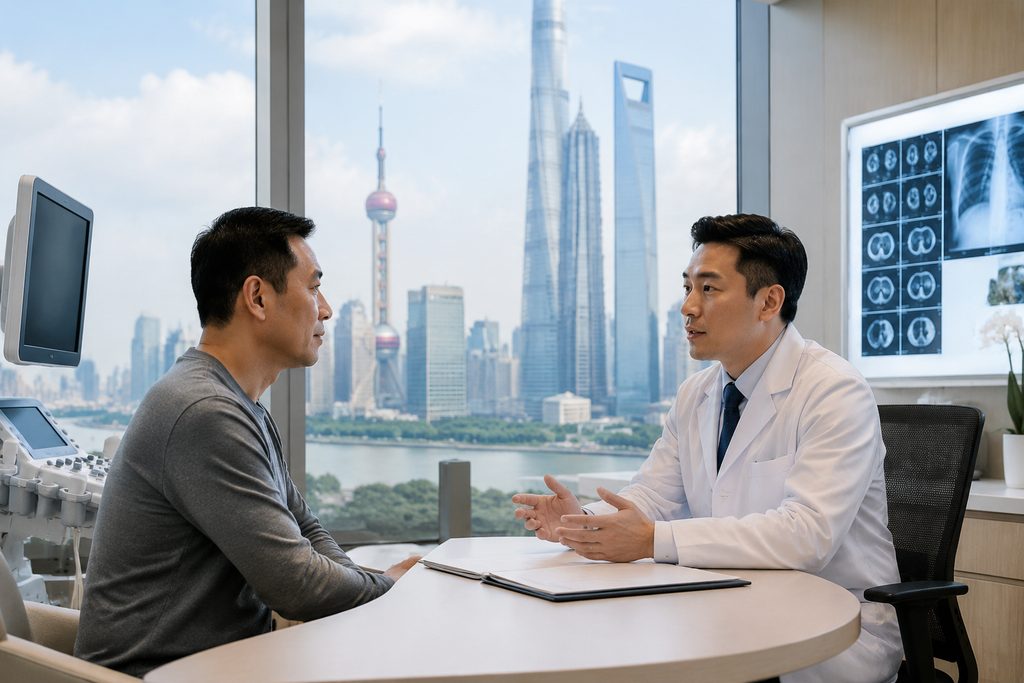
An executive physical exam is a comprehensive head-to-toe health screening, compressed into a half-day or full-day protocol. It goes far beyond a standard annual checkup. We are talking about advanced cardiac imaging, full tumor marker panels, low-dose CT lung scans, and detailed metabolic profiling — all completed in a single, orchestrated visit. The draw for international patients is straightforward: in the United States, a comparable package at a clinic like the Mayo Clinic or Cleveland Clinic can run $4,000 to $10,000 and involve a multi-week scheduling ordeal. In Beijing, Shanghai, or Guangzhou, the executive physical exam cost at a top-tier hospital’s international department typically ranges from $800 to $3,000, with results often delivered within 24 to 72 hours. The speed and depth are what make this model structurally different.
Key Takeaways
- An executive physical exam at a top-tier Chinese hospital costs $800–$3,000 — roughly one-fifth to one-third of a comparable US screening, with full results in 1–3 days.
- These packages bundle advanced diagnostics (low-dose CT, cardiac ultrasound, tumor markers) that are often billed separately — and defended by insurance — in Western systems.
- Language is the single biggest barrier. Public hospital screening centers operate almost entirely in Mandarin; international departments and private hospitals offer English-speaking staff and streamlined workflows.
- You cannot simply email a public hospital to book a package. Coordination requires navigating hospital-specific portals, pre-payment systems, and on-the-ground logistics — all of which a bilingual case manager can handle.
The Problem: Executive Screenings at Home Are Expensive, Slow, and Fragmented
In the US, a true executive-level physical — one that includes a coronary calcium score, abdominal ultrasound, comprehensive blood panel, and same-day specialist review — can cost $6,500 on average, according to a 2023 Kaiser Family Foundation analysis of out-of-network billing data. In the UK, the NHS does not offer elective executive screenings, and private providers like Nuffield Health charge £1,500–£4,000 for packages that often exclude advanced imaging unless you pay for add-ons. Wait times for a private screening slot in London or New York commonly stretch to three or four weeks. And then you wait another week for results. That lag time is not just inconvenient. It is anxiety-inducing. You fly through a battery of tests, and then you sit at home waiting for a phone call that might deliver bad news. The Chinese model flips this. The entire workflow is designed for speed and density. A patient arrives at 7:30 AM, completes blood draws, imaging, and specialist consultations, and often receives a preliminary report by late afternoon. A full written report with imaging interpretations follows within 24 to 72 hours. The system works because these hospitals run on massive volume.
Who We Are
We are not a hospital. We do not provide medical treatment, interpret your lab results, or make clinical recommendations. What we do is remove every logistical obstacle between you and a thorough, efficient health screening at one of China’s 340+ top-ranked hospitals. Our team handles hospital selection, package translation, appointment coordination, pre-payment, and on-the-ground bilingual accompaniment. We are case managers, not clinicians. Our job is to make sure you walk into the right department, at the right time, with someone who speaks your language — and that your results get back to you clearly and quickly.
Why China’s Executive Physical Exam Model Delivers Results
Clinical Volume Drives Diagnostic Speed
A senior radiologist at a major Shanghai teaching hospital may read over 100 CT scans in a single shift. That is not an exaggeration — it is a function of patient volume that has no parallel in most Western institutions. Fuwai Hospital in Beijing performs over 14,000 cardiac surgeries annually, the highest volume of any heart center globally. When you undergo a cardiac screening at a hospital with that throughput, the interpreting physician has seen more variant anatomy and subtle pathology by Tuesday morning than many Western radiologists encounter in a month. Volume does not guarantee quality. But for pattern-recognition tasks like reading imaging studies, it correlates strongly with diagnostic accuracy. A 2020 study published in *The BMJ* found that radiologists who interpret higher daily volumes demonstrate significantly higher sensitivity for detecting pulmonary nodules on chest CT. The same principle applies to laboratory workflows. High-volume labs run quality control checks more frequently, calibrate instruments multiple times per day, and process specimens in batched, standardized protocols that reduce handling errors.
Package Design Eliminates Fragmentation
An executive physical exam package at a hospital like Peking Union Medical College Hospital (PUMCH) or Ruijin Hospital in Shanghai is a pre-designed, fixed-sequence protocol. You do not schedule a cardiology appointment, then wait two weeks for a radiology slot, then circle back for blood work. Everything is mapped onto a single flow: registration, vital signs, blood and urine collection, ultrasound, CT, treadmill stress test, specialist consultation. The package is the product. This design eliminates the fragmentation that plagues Western executive screenings, where a patient might see a cardiologist on Monday, a gastroenterologist on Thursday, and receive lab results the following week — with no single physician synthesizing the full picture until a follow-up visit weeks later. In the Chinese model, a supervising physician reviews all results at the end of the examination day and delivers a verbal summary. The written report follows within days. That immediacy is the core value proposition.
Cost Advantage Without Quality Compromise
Let us address the obvious question: if it costs $1,500 in Shanghai versus $6,500 in New York, is something being cut? The answer is structural, not clinical. Chinese hospital labor costs are lower — a board-certified radiologist in Shanghai earns a fraction of what a US counterpart earns, even at top-tier institutions. Hospital infrastructure is amortized differently. Equipment is the same: Siemens, GE, and Philips MRI and CT scanners dominate Chinese hospital imaging departments, identical to what you would find at Cedars-Sinai or Johns Hopkins. The reagents running on automated chemistry analyzers come from Roche, Abbott, and Beckman Coulter. The cost difference reflects labor economics and operational efficiency, not inferior technology or rushed protocols. A full body checkup package at a Fudan-ranked hospital in Shanghai — including low-dose chest CT, abdominal ultrasound, cardiac ultrasound, carotid artery ultrasound, comprehensive metabolic panel, complete blood count, tumor markers (AFP, CEA, CA19-9, PSA or CA125), thyroid function, and a final physician consultation — typically runs $1,200 to $2,200 depending on the gender-specific add-ons and the hospital tier. In Guangzhou, prices are often 10–15% lower, with comparable package depth at institutions like Sun Yat-sen University Cancer Center and Nanfang Hospital.
What Is Included in an Executive Health Screening in China
Packages vary by hospital, but a standard executive physical exam at a top-tier international department in Beijing or Shanghai typically includes these core components. The depth is what surprises most Western patients.
| Component | What It Covers | Approximate Time |
|---|---|---|
| Comprehensive Blood Panel | CBC, full metabolic panel, lipid profile, HbA1c, thyroid function (TSH, T3, T4), liver and kidney function, uric acid, electrolytes | 15 min (blood draw) |
| Tumor Marker Panel | AFP (liver), CEA (colorectal), CA19-9 (pancreatic), PSA (prostate, male) or CA125 (ovarian, female), EBV antibodies (nasopharyngeal, common in southern China) | Included in blood draw |
| Cardiac Assessment | 12-lead ECG, echocardiogram (cardiac ultrasound), treadmill stress test or coronary calcium score (by low-dose CT) depending on age and risk profile | 45–60 min |
| Imaging Suite | Low-dose chest CT (lung cancer screening), abdominal ultrasound (liver, gallbladder, pancreas, spleen, kidneys), carotid artery ultrasound (stroke risk), thyroid ultrasound | 60–90 min |
| Specialist Consultation | Internal medicine physician review of all results, physical examination, summary report and recommendations | 30–45 min |
| Optional Add-Ons | Gastroscopy/colonoscopy (under sedation), coronary CT angiography, whole-body MRI, dermatology full-body skin check, gynecological exam with HPV co-testing | Varies |
This is not a menu you piece together yourself. The hospital has pre-configured packages — usually labeled “Executive Male,” “Executive Female,” “Cardiac-Focused,” or “Oncology-Focused” — and you select the tier that matches your age, risk factors, and family history. The package defines the scope. Add-ons are available, but the core protocol is standardized. That standardization is what enables the single-day throughput.
How Long Does a Full Body Checkup Take in Shanghai?
In a word: fast. A standard executive physical exam at Huashan Hospital’s international department or Jiahui Health’s flagship screening center in Shanghai typically runs from 7:30 AM to approximately 1:00 PM — roughly five to six hours door-to-door. The exact duration depends on whether you add a gastroscopy or colonoscopy, which requires sedation and recovery time and can extend the visit to a full eight-hour day. But the core non-invasive protocol is consistently completed by early afternoon. Guangzhou hospitals follow a similar rhythm. At the First Affiliated Hospital of Sun Yat-sen University, the international medical center opens registration at 7:00 AM, and the screening workflow is designed to complete all imaging and blood draws before the outpatient clinics get busy at 9:00 AM. This operational design — routing executive screening patients through a dedicated fast-track corridor — is what makes the half-day timeline possible. You are not competing with the general outpatient crowd. You are on a separate track, with a coordinator moving you from station to station.
Best Hospital for Full Body Checkup in Guangzhou
Guangzhou has three standout options for international patients seeking an executive physical exam. The First Affiliated Hospital of Sun Yat-sen University operates a well-established international medical center with English-speaking staff and a dedicated screening floor. Their executive packages are comprehensive and competitively priced, typically ranging from $900 to $1,800. Nanfang Hospital (Southern Medical University) is another strong choice, particularly for patients who want to combine a general screening with specialized gastrointestinal assessment — their endoscopy center is among the busiest and most experienced in southern China. For patients who prefer a fully Western-style environment with JCI accreditation and direct insurance billing, United Family Guangzhou offers executive physicals in a boutique setting. The trade-off is price: expect to pay $2,000 to $3,500 at United Family, roughly double the public hospital international department rate. But you get a fully English-native workflow, no language friction whatsoever, and a more leisurely pace. Which is the best hospital for a full body checkup in Guangzhou? It depends on your priorities. Clinical depth and cost efficiency favor the public hospital international departments. Comfort, language ease, and insurance compatibility favor the private international hospitals. Both options deliver high-quality diagnostics.
Book Executive Physical Exam Package China: The Process Step by Step
Step 1: Define Your Screening Goals
Before you contact a hospital or a coordination service, get clear on what you want screened. Are you 45 with a family history of colorectal cancer? You need a colonoscopy add-on. Are you a 55-year-old former smoker? Low-dose chest CT is non-negotiable. Do you have unexplained fatigue, weight changes, or a family history of autoimmune disease? Tell the coordinating team upfront so they can recommend the right package tier. A generic “full body checkup” without context will get you a generic package. Specificity gets you a screening that actually matches your risk profile.
Step 2: Select Your Hospital and Package
This is where most international patients hit a wall. Chinese hospital websites are often entirely in Mandarin. Package brochures are PDFs with no English translation. Pricing is not published online for international departments — you have to call or email, and someone has to respond in English. This is not a system designed for self-service by foreigners. Our team maintains current package details and pricing for executive physical exam programs across Beijing, Shanghai, and Guangzhou. We present you with options in plain English: here is what Hospital A offers at this price point, here is what Hospital B includes that Hospital A does not, here is the scheduling availability for each. You choose. We then handle the booking.
Step 3: Pre-Payment and Confirmation
Chinese public hospitals require pre-payment to secure an executive screening slot. This is not a deposit — it is full payment of the package fee before you arrive. Payment methods accepted by hospital international departments typically include wire transfer (slow, with intermediary bank fees) or Alipay/WeChat Pay (which require a Chinese bank account). Credit card acceptance is inconsistent. This is a genuine friction point. Our service handles the payment on your behalf — you pay us via international wire or card, and we settle with the hospital in RMB through our local corporate accounts. You receive a confirmed appointment letter with the date, time, hospital address in English and Chinese, and pre-screening instructions (fasting requirements, medication adjustments).
Step 4: Visa and Travel Logistics
For an executive physical exam, you need an S2 visa with a notation indicating medical purpose. The hospital’s international department will issue an invitation letter confirming your appointment — this is a required document for the visa application. Processing time at Chinese embassies and consulates varies by country, but four to six weeks is a safe planning window. Do not book flights until the visa is in hand. Our team provides the invitation letter, guides you through the application, and can arrange airport pickup and hotel accommodation near the hospital. The goal is to remove every variable that could cause stress before you even set foot in the screening center.
Step 5: The Screening Day
You arrive at the hospital at the designated time — typically 7:00 to 7:30 AM, fasting. A bilingual medical companion from our team meets you at the entrance. They handle registration, escort you to each station, translate instructions, and ensure the workflow stays on track. You do not navigate the hospital alone. You do not guess which corridor leads to ultrasound. You do not struggle to explain your medical history in Mandarin. The companion is your interface with the system. The screening proceeds station by station. Blood draw first, then imaging, then the stress test, then the specialist consultation. By early afternoon, you are done. The companion ensures you receive your preliminary verbal summary before you leave, and confirms the timeline for the written report.
Step 6: Results and Follow-Up
The written report — typically 10 to 20 pages, with imaging findings, lab values, reference ranges, and the supervising physician’s summary and recommendations — is delivered within 24 to 72 hours. If the report is in Chinese, we provide a full English translation. If a finding requires follow-up — a lung nodule that needs interval scanning, an elevated tumor marker that warrants further investigation — we can coordinate a follow-up consultation with the relevant specialist, either in person or via video consultation. The screening is not the end of the relationship. It is often the beginning of a longer-term health monitoring plan.
What You Need to Know Before Going Alone
Some patients attempt to book an executive physical exam directly with a Chinese hospital’s international department. It is possible. But there are real barriers that make self-booking difficult, and understanding them upfront prevents wasted time and frustration.
- Language Barrier at Every Touchpoint: Even hospitals with “international” departments may have only one or two English-speaking staff members. If that person is on leave, your email goes unanswered for two weeks. Package brochures are in Chinese. Pre-screening instructions are in Chinese. The consent form you sign on the day of the exam is in Chinese. You can manage this with translation apps and patience. But when you are fasting, jet-lagged, and trying to find the CT department in a 2,000-bed hospital complex, a translation app is a thin reed.
- Payment Systems Are Not Built for Foreign Cards: Hospital international departments may accept Visa or Mastercard in theory. In practice, the POS terminal often fails, or the staff member does not know how to process an international transaction. Wire transfers take five to seven business days and incur intermediary bank fees of $25 to $50. Alipay and WeChat Pay dominate the Chinese payment ecosystem, and setting up either as a foreigner without a Chinese bank account is a multi-step process that requires passport verification and, in some cases, an in-person visit to a bank branch in China.
- No On-the-Ground Support if Something Goes Wrong: If your blood pressure spikes during the screening and the physician wants to admit you for observation, who handles the hospital admission paperwork? If the CT finds an incidental mass and you need an urgent specialist consultation the next day, who books it? If you need a prescription filled before you fly home, who takes you to the pharmacy and explains the dosing? Self-booking saves the coordination fee. But it leaves you alone in a system that was not designed for you.
How We Help You Navigate This
These barriers exist for structural reasons, not because Chinese hospitals are hostile to foreigners. They are simply optimized for a domestic patient population that speaks Mandarin, pays via WeChat, and navigates the system through social networks and local knowledge. Our role is to bridge that gap. We handle the hospital selection, package comparison, appointment booking, and pre-payment. We provide the invitation letter for your S2 visa. We arrange airport pickup and hotel accommodation. On the day of your screening, a bilingual medical companion meets you at the hospital and stays with you through every step — registration, blood draw, imaging, specialist consultation, and results collection. After you return home, we deliver the translated report and can coordinate follow-up consultations if needed. The entire process is designed to feel seamless, not because China’s healthcare system is seamless, but because we absorb the friction on your behalf.
Frequently Asked Questions
Beijing tends to be the most expensive of the three cities, with executive physical exam packages at PUMCH or China-Japan Friendship Hospital international department ranging from $1,200 to $3,000 depending on package depth and add-ons. Shanghai is comparable, typically $1,200 to $2,200 for a comprehensive package at Huashan or Ruijin. Guangzhou is generally 10–15% less expensive, with packages at Sun Yat-sen University First Affiliated Hospital running $900 to $1,800. Private international hospitals in all three cities — United Family, Jiahui, Parkway — charge $2,000 to $4,000, reflecting the fully English-native environment and JCI accreditation. These prices are all-inclusive of the package components listed in the brochure. Add-ons like colonoscopy or coronary CT angiography are billed separately.
A standard non-invasive executive physical exam in Shanghai takes approximately five to six hours, typically from 7:30 AM to 1:00 PM. You receive a verbal summary from the supervising physician at the end of the examination. The full written report — including imaging interpretations, lab values with reference ranges, and clinical recommendations — is delivered within 24 to 72 hours, depending on the hospital. If you add a gastroscopy or colonoscopy with sedation, the day extends to approximately eight hours, and pathology results from any biopsies taken during the procedure may take an additional five to seven days.
Yes, you can contact a hospital’s international department directly by email or phone. Some hospitals, particularly the private international chains like United Family and Jiahui, have English-language websites with package information and online booking. Public hospital international departments are harder to reach independently — response times are slow, package details are often sent as Chinese-language PDFs, and payment logistics can be challenging without a local bank account. Self-booking works if you have patience, a high tolerance for ambiguity, and someone on the ground who can help with payment. Most international patients find that the coordination fee — starting from $300 for appointment booking — pays for itself in time saved and stress avoided.
This is the question everyone asks, and it deserves a direct answer. If the screening identifies a finding that requires further investigation — a lung nodule, an elevated tumor marker, a cardiac abnormality — the supervising physician will recommend next steps during your verbal summary on the day of the exam. You have options. You can pursue follow-up testing at the same hospital, often within days. You can request a referral to a specialist at a different hospital in our network. You can take the report home and follow up with your local physician. Our team can facilitate any of these paths — booking urgent specialist consultations, arranging additional imaging, or coordinating a remote second opinion with a top specialist via video consultation. The screening is a starting point, not an endpoint. And if the finding is serious, the fact that you caught it early — rather than months later, after symptoms appeared — is the entire reason you traveled for the exam in the first place.
Is
For more medical information and treatment options in China, visit chinamedservices.com (China Medical Services).
