Pediatric Surgery at Shanghai Fudan Children’s Hospital: What Parents Should Know About China’s Rank 2 Center
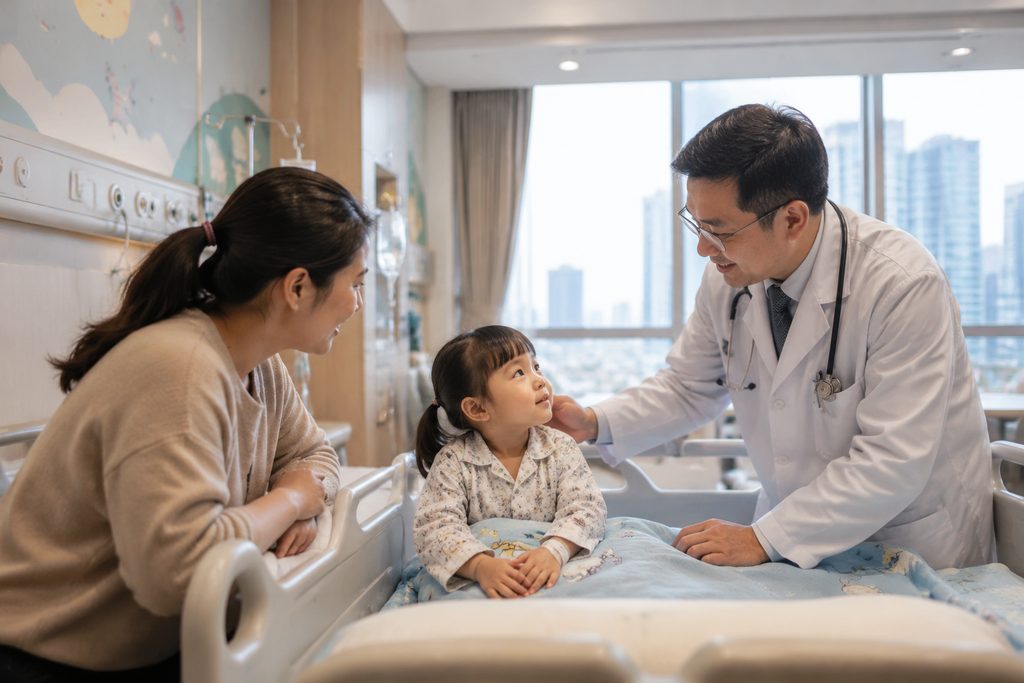
While a family in the United Kingdom might wait 18 months for a routine pediatric urology procedure on the NHS, the surgical team at the Children’s Hospital of Fudan University performs over 40,000 operations annually. The volume gap is staggering. But volume alone does not calm a parent’s anxiety. The question that keeps families up at night is simpler: is this the right place for my child, and what will it actually take to make it happen?
Pediatric Surgery at Fudan: The Short Answer
The Children’s Hospital of Fudan University is consistently ranked second among all children’s hospitals in China on the Fudan Hospital Ranking, a distinction that places it firmly among the top-tier pediatric centers in the country. For international families, that translates to a surgical environment with subspecialty depth, high case volumes, and modern facilities. The real picture is more nuanced than a ranking. Access for a foreign child requires navigating a system built primarily for domestic patients, and the pathway that makes sense for one family may be completely wrong for another. The cost, often the first thing parents search for, is not a fixed number. A straightforward hernia repair and a complex cardiac reconstruction exist in different financial universes. What the ranking does tell you is that the clinical expertise is there. How you access it is where the planning begins.
Who This Is Right For — and Who It Isn’t
This hospital is not a universal solution. It fits a specific profile of international family.
Families who tend to benefit most:
– Those seeking a definitive second opinion on a complex pediatric diagnosis before committing to surgery at home.
– Families already living in Asia or those with cultural ties to Shanghai who want a top-ranked facility without relocating to the West.
– Parents facing a high-acuity, low-volume procedure where surgeon experience correlates directly with outcomes, and Fudan’s caseload offers that repetition.
– Families whose home system has a wait time that would meaningfully affect their child’s development or prognosis.
Situations where you should probably look elsewhere:
– A child with a rare genetic syndrome requiring a fully integrated, long-term multidisciplinary team that has worked together for decades in a Western academic medical center. Fudan has excellent subspecialists, but care coordination across departments may not mirror the integrated clinic model some families depend on.
– Families who need guaranteed, legally binding continuity of care that transfers seamlessly to their home country’s medical record and follow-up system. This can be managed with planning, but it is not automatic.
– Any family unwilling to have a bilingual coordinator involved. The hospital’s international wing does have English-speaking staff, but the depth of communication required for surgical consent, post-op instructions, and discharge planning is not a place for optimistic assumptions about language overlap.
The Options, Compared
You are not choosing between Fudan and nothing. The decision sits inside a broader landscape of pediatric surgical options. Here is how the paths stack up for an international family in 2026.
| Factor | Fudan Children’s (Public VIP) | Top US Children’s Hospital | Private International Hospital (Shanghai) |
|---|---|---|---|
| Surgeon case volume | Extremely high | High | Moderate |
| Cost (complex procedure) | $15,000 – $45,000 | $100,000 – $250,000+ | $40,000 – $80,000 |
| English-language consent & records | Available via international dept | Native | Native |
| Wait time for surgery | Days to weeks (VIP) | Weeks to months | Days to weeks |
| Post-op follow-up at home | Requires coordination | Seamless | Requires coordination |
The public VIP pathway at Fudan — accessed through the hospital’s international department, not the general outpatient hall — occupies a middle ground. It offers the same surgeons and operating theaters as the public track, but with scheduling priority, English-capable coordination, and private inpatient rooms. It costs roughly 1.5 to 2 times the standard public rate, which still lands at a fraction of the US price. The private international hospitals in Shanghai, such as Jiahui or United Family, offer a fully Western-style experience with direct insurance billing, but their surgical teams handle far fewer cases of the rarest conditions. The trade-off is real: volume and subspecialty depth versus administrative ease and cultural familiarity.
What the “Rank 2” Designation Actually Means for Your Child’s Surgery
The Fudan hospital ranking is the most referenced hospital evaluation system in China, and its pediatric specialty list carries weight. But parents need to understand what the ranking measures. It evaluates clinical reputation among peers, research output, and academic impact. It does not measure patient satisfaction scores, nurse-to-patient ratios, or infection control metrics in the way a JCI accreditation does.
What matters more than the number is the subspecialty structure. Fudan Children’s runs dedicated surgical departments in neonatal surgery, pediatric cardiothoracic surgery, neurosurgery, orthopedics, urology, and general pediatric surgery. A parent considering how safe is pediatric surgery in China should look at that departmental depth. A hospital that does a little of everything is not the same as one where a surgeon spends their entire career operating on infant congenital heart defects. The safety profile follows the volume. Complication rates in high-volume pediatric centers, across any country, trend lower than in hospitals that perform a procedure a handful of times a year. This is not a China-specific truth; it is a surgical truth.
And yet. The international patient experience at a Chinese public hospital, even a top-ranked one, is not frictionless. Payment is upfront. Medical records from home must be translated into Chinese for the surgical team. The consent process, while legally sound, may feel abbreviated compared to the exhaustive risk-benefit conversations common in some Western systems. None of this means unsafe. It means different. The best children’s hospital in China for surgery will still feel foreign to a family from Toronto or London, and that foreignness can be mistaken for lower quality when it is simply a different operational rhythm.
Shanghai Fudan Children Hospital Pediatric Surgery Cost: A Realistic Breakdown
The Shanghai Fudan Children Hospital pediatric surgery cost is not a menu price you can pull from a website. It builds from several components, and the range is wide because the procedures are wide.
A simple, minimally invasive procedure — say, an orchidopexy for an undescended testicle or an uncomplicated inguinal hernia repair — through the international VIP department typically runs between $4,000 and $8,000. That includes the surgeon’s fee, anesthesia, operating theater time, and a short inpatient stay in a private room. It does not include pre-operative imaging if you need fresh scans, nor does it cover the coordination and translation services that most international families use.
A complex procedure — congenital diaphragmatic hernia repair, a spinal fusion for severe scoliosis, or a cardiac surgery requiring cardiopulmonary bypass — lands in the $20,000 to $50,000 range. The variance comes from ICU days, implant hardware, and whether the child needs a multidisciplinary surgical team in the room. These figures are still roughly one-fifth to one-tenth of what the same procedures cost at a major US children’s hospital.
What is not included in the hospital bill: visa fees, round-trip flights, accommodation for parents during the child’s hospitalization and recovery, meals, local transportation, and any post-discharge rehabilitation or follow-up imaging your home doctor will require. A realistic total budget for a family traveling from North America or Europe for a mid-complexity surgery, staying in Shanghai for three to four weeks, should factor in an additional $6,000 to $12,000 beyond the hospital charges.
Practical Considerations: Records, Visas, and the Day-of Logistics
Bringing a child to Shanghai for surgery is a documentation exercise before it is a medical one.
Medical records are step one. The surgical team will need all relevant imaging — MRI, CT, echocardiogram — on a CD in DICOM format, not just printed reports. They will need a detailed referral letter from your home pediatrician or specialist, translated into Simplified Chinese. Pathology slides, if relevant, must be sent as physical specimens, not digital images. A written second opinion from Fudan’s team, which our team can facilitate remotely before you travel, costs $300 to $500 and lets you confirm that the surgery is indicated and feasible before you commit to the trip. That fee is credited in full if you later proceed with surgery coordination through us.
Visas are straightforward but specific. The correct category is an S2 visa, annotated for private affairs including medical treatment. The accompanying parent or parents apply under the same category. The hospital’s international department will issue an invitation letter and a medical treatment confirmation document, which you submit with your visa application. Processing times vary by country, but four to six weeks is a safe planning window. Do not book non-refundable flights until the visa is in hand.
On the day of admission, expect a process that is efficient but not leisurely. Registration, payment of the deposit, blood work, and a pre-operative anesthesia consultation often happen in a single morning. The surgical consent will be in Chinese. You have the right to have it translated and explained before signing. A bilingual medical companion — a service that runs from $300 per day — handles the physical navigation of the hospital, the queueing for labs and pharmacy, and the real-time interpretation during rounds and consent discussions. The hospital is enormous. Without someone who knows the floor plan and the process, a stressed parent can burn hours just finding the right window.
After discharge, the surgeon will provide a summary in Chinese. You will need a certified English translation for your home doctor. Follow-up imaging at specific post-op intervals is standard. Plan for this before you leave Shanghai. Know what scans your home team will want at the 3-month and 6-month mark, and get the protocol in writing from the Fudan team so your local radiologist can replicate it.
Frequently Asked Questions
Can we really book pediatric surgery at Shanghai Fudan hospital from overseas?
Not in the way you book a hotel room. You cannot reserve a specific surgery date and surgeon from abroad through the general public system. What you can do is initiate a remote evaluation. Our team sends your child’s complete medical records to the relevant surgical department at Fudan Children’s for review. If the team confirms that surgery is indicated and they are willing to take the case, we then coordinate a treatment timeline through the hospital’s international department. The booking happens after clinical acceptance, not before. Families who try to book pediatric surgery Shanghai Fudan hospital by simply showing up at the outpatient clinic will find themselves at the back of a very long queue.
What do Fudan Children’s Hospital international patient reviews actually say?
The honest answer is that formal, verified Fudan Children’s Hospital international patient reviews are scarce in English. You will not find a large volume of Google reviews or RateMDs entries. What exists in medical travel circles and on expatriate forums tends to cluster around two poles: deep gratitude from families whose children received life-changing complex surgeries, and frustration from families who underestimated the language barrier and the cultural differences in bedside communication. The pattern is clear. Families who invested in a bilingual coordinator and set realistic expectations about the pace and style of care report positive outcomes. Those who expected an experience that mirrors a Western private hospital often describe stress that had nothing to do with the surgical skill.
How safe is pediatric surgery in China at a top-ranked hospital like Fudan?
At a hospital of this tier, the safety profile for the surgery itself — the technical execution in the operating room — is comparable to high-volume Western centers. The anesthesiologists are pediatric specialists. The infection control protocols are modern. The weak points for an international family are not in the OR. They are in the handoffs: the transition from recovery room to inpatient floor, the clarity of discharge instructions, the availability of someone to answer a panicked question at 2 a.m. in English. Safety, in this context, is not just about the surgery. It is about the communication ecosystem around it. That ecosystem can be shored up with planning and the right support on the ground.
What should we know before our child has surgery in China that nobody tells you?
The post-operative diet will be Chinese hospital food. It is nutritious, but it is not what your child is used to eating. You will likely be the one feeding them. The inpatient room will have a parent cot, not a proper bed. You will be tired. The pharmacy will dispense medications with Chinese labels. You need someone to translate the dosing instructions and cross-check them against the surgeon’s orders before you leave the hospital. And your child’s medical record from this admission will not automatically transfer into your home country’s health system. You are the custodian of that continuity. What to know before child surgery in China is that the surgery itself may be world-class, but the administrative and cultural wrap-around is entirely on you to manage.
Your Next Step
The Children’s Hospital of Fudan University offers surgical expertise that ranks among the best in Asia, at a cost that makes it a serious alternative for families facing prohibitive bills or long waits at home. Getting it right means doing the groundwork before you ever set foot in Shanghai.
Our team at China Medical Services handles the logistics that make this possible for international families: remote surgical evaluation coordination, document translation, visa invitation support, and bilingual medical companionship on the ground. We are not a hospital. We do not diagnose, treat, or make clinical recommendations. What we do is close the gap between a family’s need and a top-ranked surgical department’s capacity, with clear communication and no false promises.
To start with a no-obligation discussion about your child’s case and whether Fudan Children’s is a viable path, visit our patient services page. The remote evaluation comes first. Everything else follows from what the surgical team says.
For more medical information and treatment options in China, visit chinamedservices.com (China Medical Services).
