Myanmar Patient Medical Travel to China: Border Entry, Hospital Matching, and Translation Guide
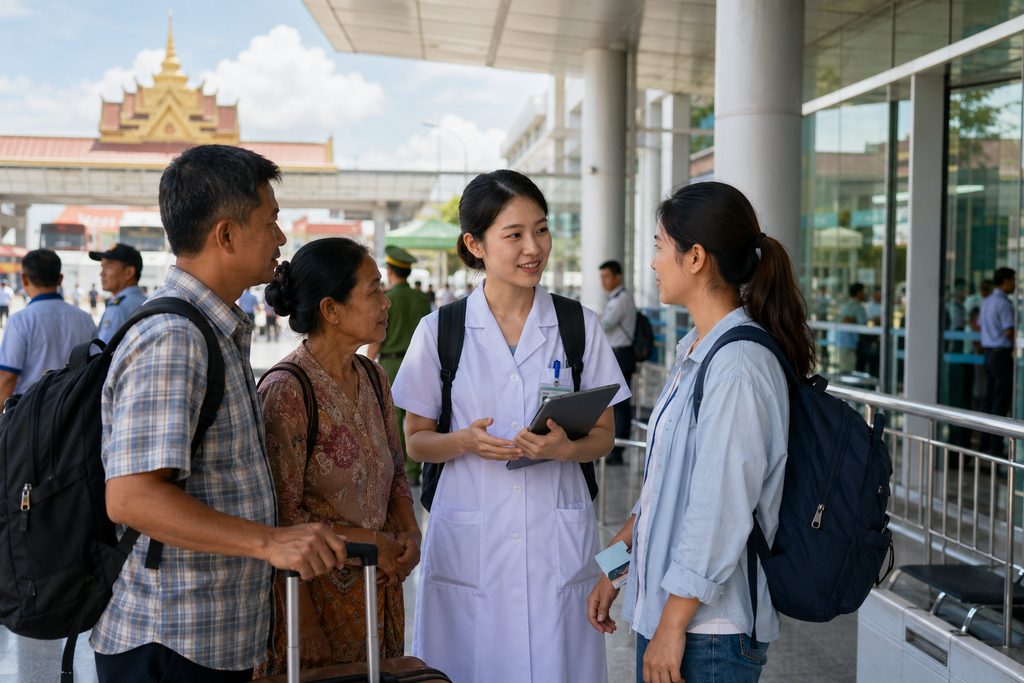
A medical journey across a border sounds complicated. But for many Myanmar patients, it is simpler than waiting months for a diagnosis or treatment that is not available locally. The route from Yangon or Mandalay to Kunming is a well-traveled path. We have guided patients through it many times. The process involves three core challenges: getting the right visa, finding the right hospital, and breaking the language barrier. This guide walks through each one.
Key Takeaways
- Myanmar patients can enter China via Kunming or Ruili using an S2 medical visa, with processing times as short as 4–7 working days.
- Top hospitals in Yunnan, including First People’s Hospital of Yunnan Province, offer specialties like oncology and cardiology at costs 60–80% lower than private hospitals in Bangkok or Singapore.
- Language is the biggest practical barrier — Burmese-to-Chinese medical translation is scarce inside Chinese public hospitals, making a bilingual companion essential for accurate communication.
- You cannot book surgery remotely through a standard public outpatient channel. An in-person consultation is mandatory before any procedure is scheduled.
The Problem: Limited Access to Advanced Care at Home
Myanmar’s healthcare system faces severe capacity constraints. According to the World Health Organization’s 2022 Global Health Expenditure report, Myanmar spends approximately $60 per capita on health annually. That is less than 5% of what Thailand spends. The result is predictable. Complex oncology cases, cardiac surgeries, and advanced orthopedic procedures often require referral abroad.
Bangkok has been the traditional destination. But the cost at private hospitals there can be overwhelming. A single cardiac bypass in Bangkok runs $25,000 to $40,000. Singapore is even higher. For a family in Yangon, that represents years of income. The alternative — traveling north into China — is not as widely understood. That is a missed opportunity.
Who We Are
We are China Medical Services. We are not a hospital. We do not provide medical treatment or clinical diagnoses. Our team acts as your logistical architects — we bridge the gap between you and China’s top-tier medical expertise. We maintain verified relationships with over 340 top-ranked hospitals across 37 cities in China. For Myanmar patients specifically, we handle the practical details: visa documentation, hospital selection in Yunnan and beyond, appointment coordination through international departments, and bilingual medical companions who speak Burmese. We exist because navigating a Chinese public hospital without language support is nearly impossible. We solve that problem.
Why Yunnan Is the Logical Entry Point for Myanmar Patients
The geography is obvious. Kunming is a 90-minute flight from Yangon. The land border at Ruili-Muse is open for travelers with proper documentation. But proximity is not the only advantage. Yunnan province has invested heavily in its tertiary hospital system over the past decade. Several institutions now rank among China’s strongest in specific specialties.
The Clinical Case for Staying in Kunming
Patients often assume they need to go to Beijing or Shanghai for quality care. That instinct is understandable. But it is not always correct. Yunnan’s top hospitals handle enormous patient volumes. The First People’s Hospital of Yunnan Province, for example, manages over 2 million outpatient visits annually. Its oncology department treats a caseload that rivals many Western cancer centers. High volume drives diagnostic speed and procedural efficiency.
For cardiac patients, Yan’an Hospital in Kunming is a recognized center. Its cardiology department performs over 5,000 interventional procedures each year. That scale means the team has seen complex presentations many times over. For a Myanmar patient, staying in Kunming also means lower travel costs, easier follow-up logistics, and a climate that is not a shock to the system.
But some conditions do require travel further inland. We are honest about that. If a patient needs a highly specialized pediatric cardiac surgery, we may recommend going to Fuwai Hospital in Beijing. Fuwai performs over 14,000 cardiac surgeries annually — the highest volume of any center globally. The decision always starts with the diagnosis, not the geography.
How to Enter China from Myanmar for Surgery: Visa Rules That Matter
This is where many patients get stuck before they even begin. The visa category is specific. Medical travelers must apply for an S2 visa, annotated for medical treatment purposes. The S2 is a short-term private visit visa. When the purpose is clearly documented as medical treatment, the Chinese embassy or consulate in Yangon can process it efficiently.
The documentation package matters. You cannot walk in with a hospital name scribbled on paper. You need a formal invitation letter from the Chinese hospital, a detailed treatment plan, and proof of financial means. Our team prepares this package for patients. We coordinate with the hospital’s international department to issue the official invitation. Without that document, the visa application will stall.
Visa Warning: The M visa is for commercial and trade activities only. It is not valid for medical treatment. Some agents incorrectly advise patients to apply for an M visa because it is faster. That is a serious mistake. Entering on the wrong visa category can result in treatment denial at the hospital and potential immigration complications. Always use the S2 visa for medical travel.
For family members accompanying the patient, the same S2 visa applies. The application should list all travelers together with the patient as the primary. Processing times at the Chinese Embassy in Yangon typically range from 4 to 7 working days with complete documentation. Rush processing is sometimes available for urgent cases with supporting medical evidence.
Myanmar Patient Medical Travel to China Cost: A Realistic Breakdown
The financial question is always central. Patients need to plan with real numbers. The total Myanmar patient medical travel to China cost breaks into three categories: hospital treatment, service coordination, and living expenses.
Hospital treatment costs in China run significantly below Western and even Thai private hospital benchmarks. A coronary artery bypass graft at a top Yunnan public hospital costs between $12,000 and $18,000. The same procedure at a private Bangkok hospital runs $25,000 to $40,000. In the United States, it exceeds $120,000. Cancer treatment costs vary widely by protocol, but a standard chemotherapy cycle in Kunming typically costs 60–70% less than in Singapore.
| Procedure | China (Public Hospital Intl. Dept.) | Bangkok (Private) | Singapore (Private) |
|---|---|---|---|
| CABG (Heart Bypass) | $12,000–$18,000 | $25,000–$40,000 | $45,000–$70,000 |
| Knee Replacement | $8,000–$14,000 | $15,000–$22,000 | $22,000–$35,000 |
| Cancer Chemotherapy (per cycle) | $1,500–$4,000 | $4,000–$8,000 | $6,000–$12,000 |
| PET-CT Scan | $500–$900 | $800–$1,200 | $1,200–$2,000 |
Service coordination costs are separate. A bilingual medical companion starts from $200 per day. Hospital appointment coordination starts from $300. These are not hidden fees — they are the cost of having someone who speaks the language, knows the hospital layout, and can navigate the registration and payment systems. For patients who need a top-specialist video consultation before traveling, that costs $500 to $800. Any consultation fee is fully credited toward in-person coordination if the patient proceeds within 90 days.
Living expenses in Kunming are modest. A comfortable serviced apartment near the hospital runs $30 to $60 per night. Meals are inexpensive. Budget $1,500 to $2,500 per month for accommodation and daily needs, depending on the patient’s requirements and the number of accompanying family members.
Best Hospital in Yunnan for Myanmar Patients: Matching Specialty to Institution
There is no single best hospital. The question is: best for what condition? Hospital matching starts with the diagnosis. Our team uses the Fudan University hospital rankings — China’s most authoritative evaluation system — to match patients to institutions based on their specific clinical needs.
For oncology, the First People’s Hospital of Yunnan Province and the Yunnan Cancer Hospital are the primary referral centers. Both are ranked in the top tier of provincial cancer hospitals. They offer radiotherapy, chemotherapy, surgical oncology, and increasingly, immunotherapy protocols. For patients who need more specialized cancer care — such as proton therapy or CAR-T cell therapy — we may recommend traveling to Shanghai or Guangzhou, where those technologies are more established.
For cardiology and cardiac surgery, Yan’an Hospital in Kunming and the First People’s Hospital both run high-volume programs. Yan’an is particularly strong in interventional cardiology. For complex congenital heart cases, we often coordinate with Fuwai Hospital in Beijing or Zhongshan Hospital in Shanghai, both ranked among China’s top cardiac centers.
For orthopedics, particularly joint replacement, the Second People’s Hospital of Yunnan Province has a dedicated joint surgery center. Chinese orthopedic surgeons at top centers perform 200 to 500 joint replacements annually, compared to roughly 65 for the average US surgeon. That volume translates into refined surgical technique and efficient recovery protocols.
Patients can browse our full hospital database at our top-ranked hospitals directory. For specialty-specific rankings, the departments page breaks down the top 10 hospitals by specialty across all 45 Fudan-ranked categories.
Burmese Translator Hospital China Prices: What Language Support Actually Costs
This is the practical concern that keeps many Myanmar patients awake at night. Chinese public hospitals are vast, crowded, and operate entirely in Mandarin. Signage is sometimes bilingual in English at international departments, but Burmese is almost never available. The registration counter, the payment window, the pharmacy queue — every step requires communication.
A professional Burmese translator in a Chinese hospital context is not just someone who speaks both languages. They need to understand medical terminology in both Burmese and Chinese. They need to know how the hospital works — which window to visit first, which form to fill out, which department handles which test. That is why we provide bilingual medical companions, not just interpreters.
The cost for a Burmese translator in a hospital in China varies. Independent freelance interpreters in Kunming charge $80 to $150 per day. But there is a quality risk. A freelancer may not know medical vocabulary. They may not understand hospital procedures. Our bilingual medical companion service starts from $200 per day. The companion handles registration, payment, queue management, and interpretation between the patient and the doctor. For a patient facing a serious diagnosis, that support is not a luxury. It is the difference between understanding the treatment plan and nodding along without comprehension.
Book Cancer Treatment in China from Myanmar: The Step-by-Step Process
Cancer treatment cannot be booked like a hotel room. It requires a confirmed diagnosis, a treatment protocol, and an in-person consultation. Here is the actual sequence for a Myanmar patient who wants to book cancer treatment in China.
Step one is diagnostic clarity. The Chinese hospital needs to see the patient’s full medical records: pathology reports, imaging studies (CT, MRI, PET-CT), and any prior treatment history. These documents must be translated into Chinese or English. Our team handles that translation. We submit the records to the international department of the target hospital for preliminary review.
Step two is the specialist review. A relevant oncologist reviews the case and confirms that the hospital can take the patient. This is not a formal second opinion yet — it is a feasibility assessment. The hospital confirms they have the appropriate treatment modalities available and that the patient’s condition warrants travel.
Step three is the video consultation. This costs $500 to $800 for a top specialist. The patient and family speak directly with the treating physician via video link. Our companion is on the call to interpret. The doctor explains the proposed treatment plan, expected timeline, and likely outcomes. This is the moment when the patient decides whether to proceed.
Step four is travel coordination. With the treatment plan confirmed, we issue the hospital invitation letter, prepare the visa documentation package, and coordinate travel dates. The patient applies for the S2 visa at the Chinese Embassy in Yangon.
Step five is arrival and consultation. The patient arrives in China, attends the in-person consultation, and undergoes any additional testing the hospital requires. Only after this consultation is the treatment schedule finalized. Surgery or chemotherapy begins according to the hospital’s schedule, not before.
This process cannot be shortcut. Any service that promises to book cancer treatment in China without an in-person consultation is either misleading the patient or operating outside standard hospital protocols. The public hospital system requires the patient to be physically present and evaluated before treatment begins.
What You Need to Know Before Going Alone
Some patients try to manage this process independently. We understand the impulse to save on coordination costs. But the barriers are real and can derail a medical trip entirely.
- Visa Documentation: The Chinese hospital will not issue an invitation letter to an individual patient who simply calls or emails. The international department requires a formal referral through a recognized coordination channel. Without that letter, the S2 visa application cannot proceed.
- Payment Systems: Chinese public hospitals operate on a prepaid deposit system. Patients load money onto a hospital card at admission, and services are deducted as they are provided. The payment terminals accept UnionPay and WeChat Pay. International credit cards are often not accepted. Without a local payment method or someone who can navigate the deposit system, a patient can be stuck at the registration counter for hours.
- Medical Records Translation: Chinese doctors need records in Chinese. A pathology report in Burmese or English will not be accepted as-is. The translation must be medically accurate. A general translator who renders “carcinoma” as “growth” creates a dangerous information gap. Professional medical translation is not optional.
How We Help You Navigate This
These barriers exist for structural reasons, not because the system is designed to exclude foreign patients. Chinese hospitals want to treat international patients. They simply lack the internal infrastructure to manage the language, payment, and logistical friction points. That is the gap we fill.
Before travel, we handle medical records translation, hospital selection based on Fudan rankings and specialty match, and the formal referral to the hospital’s international department. We secure the invitation letter and guide the patient through the S2 visa application. We do not issue the visa — only the Chinese embassy can do that — but we ensure the documentation is complete and correctly formatted.
During treatment, our bilingual medical companion is with the patient at every hospital visit. Registration, payment, blood draws, imaging appointments, specialist consultations — the companion handles the logistics and interprets every clinical conversation. The patient focuses on treatment and recovery. The companion handles the friction.
After discharge, we coordinate follow-up appointments, medication refills, and any necessary rehabilitation. If the patient returns to Myanmar and needs a follow-up video consultation, we arrange that through the same specialist. The continuity of care does not end at the airport.
Frequently Asked Questions
Yes, the Ruili-Muse border crossing is open and accepts travelers with valid S2 visas. However, we recommend flying into Kunming Changshui International Airport for patients who are already unwell. The land border involves long queues, unpredictable wait times, and limited medical support en route. A 90-minute flight from Yangon is safer and more comfortable for most patients. If cost is the primary constraint and the patient is stable enough for the overland journey, the Ruili crossing is viable with proper documentation.
For a patient with complete medical records and a clear diagnosis, the timeline is typically 3 to 5 weeks. That breaks down as: 1 week for records translation and hospital matching, 1 week for specialist review and video consultation, 1 week for visa processing, and 1 to 2 weeks for travel and the in-person consultation. Emergency cases can sometimes be accelerated, but the hospital consultation requirement cannot be waived. No responsible hospital will schedule surgery without examining the patient first.
This happens occasionally. The preliminary records review is designed to catch this early. If the hospital’s oncology department reviews a case and determines they do not have the appropriate treatment modality, they will say so before the patient travels. In that scenario, we pivot. We may recommend a different hospital within China, or we may honestly advise the patient to consider an alternative destination. We do not earn a fee if the patient cannot be treated. Our incentive is aligned with the patient’s best outcome.
In specific specialties, yes. The top hospitals in Yunnan are staffed by physicians trained in China’s rigorous residency programs, many with fellowship experience in the US or Europe. Their patient volumes are extremely high, which builds procedural expertise. The technology — imaging equipment, surgical robots, radiation therapy systems — is modern and well-maintained. The main difference is the patient experience. A Chinese public hospital is efficient but not luxurious. The corridors are crowded. The nursing model is different from Western hospitals — family members are expected to assist with basic care. This is not a quality issue, but it is a cultural difference patients should expect. Private international hospitals like United Family offer a Western-style experience at a higher cost. We can coordinate with either type of institution depending on the patient’s preferences and budget.
Your Next Step
Medical travel is a decision made under pressure. The diagnosis is already there. The clock is ticking. The instinct is to move fast. But moving fast in the wrong direction wastes time that matters. The first step is getting the right information: which hospital, which specialist, what the treatment will cost, and whether the logistics are manageable. That is what we provide — not a sales pitch, but a clear-eyed assessment of your options in China.
If you are a Myanmar patient considering treatment in China, start with a conversation. Tell us your diagnosis. Share your records. We will tell you honestly whether China is the right destination for your case, and if so, which hospital and at what cost. There is no charge for that initial consultation. You can reach our team at our patient coordination page. We respond within one business day.
You deserve clarity before you book a flight. Let us provide it.
For more medical information and treatment options in China, visit chinamedservices.com (China Medical Services).
