Pancreatic Surgery at Shanghai Ruijin Hospital: Navigating Complex Care as an International Patient
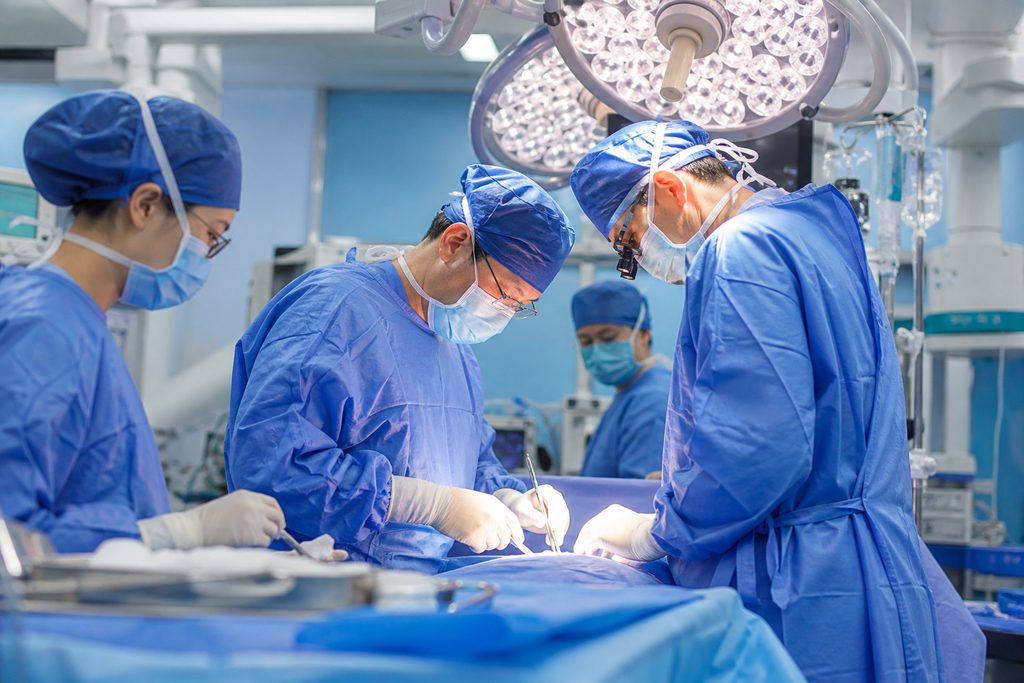
A diagnosis requiring complex pancreatic surgery is a heavy blow. The Whipple procedure, distal pancreatectomy, and other resections are among the most demanding operations in modern medicine. They require not just a surgeon, but an entire ecosystem of intensive care specialists, interventional radiologists, and pathologists who see high volumes of these cases. When you start searching for pancreatic surgery cost Shanghai Ruijin Hospital, you are really asking a deeper question: can I access world-class expertise without an impossible wait or a financially devastating bill? Our team has spent years helping international patients answer exactly that.
How This Actually Works, Step by Step
The gap between a Google search and a hospital bed in Shanghai is filled with concrete steps. We see patients get overwhelmed by the unknowns. Here is the real sequence, stripped of marketing gloss.
You start with records. Every page of them. We need your most recent contrast-enhanced CT scans in DICOM format, full pathology reports, tumor marker bloodwork, and a detailed clinical summary from your treating physician. A surgeon cannot give a meaningful opinion without imaging they can manipulate on their own screens. We arrange certified medical translation. This step alone can take three to five business days.
Our team then submits your translated file to the General Surgery Department’s international liaison office at Ruijin Hospital. The department’s pancreas specialty group reviews the materials. This is not a chatbot. A real surgical team evaluates resectability, vessel involvement, and your fitness for a major abdominal operation. You receive a written second opinion. The fee ranges from $300 to $500, and that amount is fully credited toward any subsequent coordination service within 90 days.
If the opinion confirms a surgical pathway, the next fork in the road appears. Do you travel for an in-person consultation first, or do you proceed directly to a coordinated admission plan? Most complex pancreas cases require an in-person evaluation. The surgeon needs to see you, run their own labs, and often order a fresh triple-phase CT. We coordinate that appointment through the hospital’s VIP international clinic. You do not queue in the general outpatient hall. You get a fixed time slot with an English-speaking coordinator present.
The final step is admission and surgery. Once the surgeon confirms the plan, we coordinate the inpatient admission, deposit payment, and your pre-operative workup schedule. This is where having a bilingual medical companion on the ground shifts from a luxury to a necessity.
The Ruijin Pancreas Program: Volume, Speed, and Surgical Aggression
Patients searching for complex pancreas surgery China price often worry that lower cost means lower quality. That assumption falls apart when you look at surgical volume. Ruijin Hospital’s General Surgery Department performs an extraordinarily high number of pancreatic resections annually. Volume is the single strongest predictor of outcomes in pancreatic surgery, more than any technology or individual reputation. A 2016 study in the New England Journal of Medicine demonstrated that hospitals performing more than 19 Whipples per year had mortality rates below 3%, while low-volume centers exceeded 8%.
Ruijin’s pancreas team operates well above that threshold. The department, historically shaped by surgical pioneers in Shanghai, approaches borderline resectable and locally advanced tumors with a level of aggressiveness that many Western centers cannot match. Why? Because their multidisciplinary tumor board meets multiple times weekly. The interventional radiology suite is ready for same-day portal vein embolization. The ICU team has managed thousands of post-pancreatectomy patients. The system is built for throughput without sacrificing vigilance.
But let’s be direct. Aggressive surgery carries risks. Pancreatic fistula rates, even in the best hands, hover around 15-20%. Post-pancreatectomy hemorrhage is rare but catastrophic. Ruijin’s team manages these complications with standardized protocols and 24/7 interventional radiology backup. When you ask how safe is pancreas surgery in China for complex cases, the honest answer is that safety is a product of system readiness, not national borders. Ruijin’s system is ready.
A Realistic Timeline
Hope for speed, plan for the real world. Here is the timeline we map out with every pancreas patient, based on actual coordination experience.
| Phase | Action | Typical Duration |
|---|---|---|
| Week 1 | You send records; we begin certified translation and DICOM verification | 3–5 business days |
| Week 2 | Translated file submitted to Ruijin pancreas group for written second opinion | 5–7 business days for review |
| Week 3 | You receive written opinion; decision to proceed; we open coordination for in-person consultation | 1–2 days for decision |
| Week 4–5 | S2 visa application with hospital invitation letter; flight and accommodation booking | 10–14 calendar days for visa processing |
| Week 6 | Arrival in Shanghai; in-person surgical consultation and fresh imaging at Ruijin | 2–3 days in Shanghai |
| Week 7–8 | Surgical scheduling, pre-operative clearance, admission | 1–3 weeks depending on OR availability |
| Week 9 | Surgery and inpatient recovery | 10–21 days inpatient |
| Month 3 | Return home; follow-up coordination with local oncologist; remote check-in with Ruijin team | Ongoing |
This timeline assumes no major delays in document translation, visa processing, or OR scheduling. The single most common bottleneck? Incomplete imaging. If your CT slices are too thick or your arterial phase is missing, the surgeon will ask for a repeat scan before giving an opinion. That adds two weeks. Get the DICOM files right the first time.
What Can Go Wrong — and What Happens Then
We earn trust by describing failure modes honestly. Here are the ones we have seen and how they are handled.
The tumor is unresectable upon re-staging. You arrive in Shanghai, and the fresh triple-phase CT shows vascular encasement that was not visible on your older scan. The surgeon cancels the resection plan. This is devastating but not a dead end. The same team pivots to neoadjuvant chemotherapy coordination or refers you to their interventional oncology colleagues for irreversible electroporation or targeted therapy trials. Your coordination fee still applies to the alternative pathway.
A major post-operative complication occurs. Pancreatic fistula, delayed gastric emptying, or hemorrhage. Ruijin’s surgical ICU is equipped for this. Your inpatient stay extends beyond the initial estimate. Costs rise. We help you communicate with your insurance provider and adjust your accommodation and visa extensions. Our ground team remains with you daily. You are not abandoned in a foreign hospital corridor with a translation app.
The surgeon you expected is unavailable. You read best pancreatic surgeon Shanghai Ruijin Hospital reviews and fixated on one name. That surgeon’s schedule shifts. The department assigns another attending from the same pancreas specialty group. This is normal. In Chinese top-tier academic hospitals, complex cases are discussed at group level. The individual surgeon matters, but the team protocol matters more. We communicate the change transparently before you travel.
What the Numbers Actually Mean: Cost and Outcome Data
Let’s talk about the pancreatic surgery cost Shanghai Ruijin Hospital specifically. A Whipple procedure at Ruijin’s international VIP department typically ranges from $25,000 to $40,000 USD, all-inclusive of surgeon fees, anesthesia, inpatient stay, and standard post-operative care. A distal pancreatectomy runs lower, generally $18,000 to $28,000. These figures assume an uncomplicated course. A prolonged ICU stay can add $2,000 to $3,000 per day.
Compare this to the United States, where a Whipple routinely exceeds $150,000, often approaching $250,000 at major academic centers. Even with insurance, the out-of-pocket maximum can be crushing. The cost differential is not marginal. It is transformative.
Now, what is the success rate of pancreatic surgery at Ruijin Hospital? Define success carefully. If you mean 30-day mortality for a Whipple, Ruijin’s published data and internal audits place it consistently below 2%, in line with the world’s highest-volume centers. If you mean five-year survival for pancreatic adenocarcinoma, that number remains stubbornly low everywhere—around 20-25% for resected patients who complete adjuvant chemotherapy. Ruijin’s outcomes mirror those of Heidelberg, Johns Hopkins, and MD Anderson. The difference is not magical cure rates. It is access, cost, and the willingness to operate on borderline cases that other centers might turn away.
When you search for best pancreatic surgeon Shanghai Ruijin Hospital reviews, understand that Chinese academic surgeons do not cultivate Western-style online review profiles. You will not find a RateMDs page. What you will find are publication records in journals like Annals of Surgery and JAMA Surgery, conference presences at IHPBA and E-AHPBA, and a department history that has trained generations of Chinese pancreatic surgeons. Reputation here is measured in academic output and surgical volume, not patient star ratings.
Practical Considerations: Visas, Records, and Follow-Up
The medical decision is only half the battle. Logistics can derail a treatment plan just as surely as a complication.
Your visa category is S2, with a stated purpose of private medical treatment. Ruijin’s international department provides the formal invitation letter required by the Chinese embassy or consulate. Processing time varies by country, but budget 10 to 14 calendar days. Family members accompanying you also apply for S2 visas. We guide you through the documentation package, but we never guarantee approval. That is the consular officer’s decision alone.
Payment is upfront. Chinese public hospitals, even VIP wings, require a deposit before admission. The initial deposit for a complex pancreas resection is typically $20,000 to $30,000, with reconciliation upon discharge. International insurance with out-of-network benefits can reimburse you afterward, but the hospital does not bill your insurer directly. We provide itemized invoices and translated discharge summaries for your claim. If you need direct billing, consider a private international hospital instead, accessible through our private hospital network.
Language is the invisible barrier. Ruijin’s VIP clinic has English-speaking coordinators, but the ward nurses, dieticians, and pharmacists may not speak fluent English. A post-operative instruction about drain management is too important to misunderstand. Our bilingual medical companions stay with you during critical handoffs, translating in real time and ensuring you understand every discharge instruction before you leave the floor.
Follow-up at home is non-negotiable. You need a local oncologist who will accept the Ruijin team’s chemotherapy roadmap and administer adjuvant treatment. We help you prepare a complete treatment summary in English before you depart Shanghai, so your home team receives a clear protocol, not a puzzle.
Frequently Asked Questions
You can try, but the friction is significant. Ruijin’s general outpatient system requires in-person registration and Mandarin fluency. The international VIP department accepts remote inquiries, but a self-organized approach often hits language barriers, missing documents, and scheduling confusion. Our coordination service exists to absorb that friction. We handle document translation, submission, appointment scheduling, and on-the-ground accompaniment so you arrive to a prepared team, not a chaotic registration hall.
Safety, measured by perioperative mortality and major morbidity, is equivalent at China’s top-tier academic centers like Ruijin when compared to high-volume Western centers. The key variable is not geography. It is annual surgical volume, ICU capability, and multidisciplinary infrastructure. Ruijin checks all three boxes. The risk profile of a Whipple is similar in Shanghai and in Boston. The difference is that Ruijin may accept a borderline resectable case that a lower-volume Western center would refer for palliative chemotherapy alone.
Adjuvant therapy can be administered in Shanghai under the same oncology team, or you can return home with a detailed protocol. Many patients choose to complete their first cycle in Shanghai to ensure the regimen is tolerated, then transition to a local oncologist. We coordinate the handoff, including translation of all chemotherapy orders and cumulative dose tracking.
You do not need to make that call alone. The pancreas specialty group assigns your case based on complexity, tumor characteristics, and surgeon subspecialty within the group. Some attendings focus on vascular resections. Others specialize in minimally invasive approaches. Our written second opinion includes the rationale for the assigned surgical team. If you have a strong preference based on your own research, we communicate that, but the final assignment is clinical, not commercial.
Your Next Step
A complex pancreas diagnosis forces hard decisions under pressure. You need a clear surgical opinion, a realistic cost picture, and a team on the ground who will not disappear when things get difficult. Our organization provides exactly that: case management, translation, and coordination through Ruijin’s official international pathway. We do not practice medicine. We do not promise outcomes. We make the system navigable so you can focus on the decision that matters most.
If you are ready to send your records for a written second opinion, or if you simply want to talk through the process with someone who has done this before, reach out for a free consultation. No pressure. No hard sell. Just a clear conversation about your options and what comes next.
For more medical information and treatment options in China, visit chinamedservices.com (China Medical Services).
