Liver Cancer Surgery at Shanghai Zhongshan Hospital: Accessing China’s Top Hepatobiliary Department
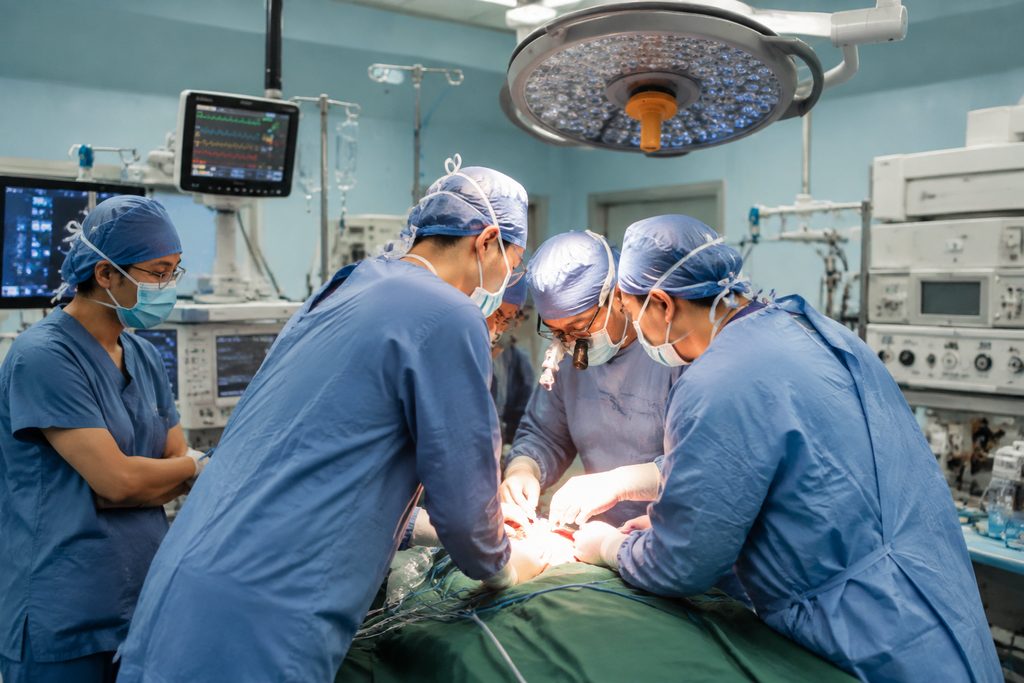
While a patient in the UK might wait 62 days just to start treatment after an urgent GP referral for suspected cancer, the Department of Hepatic Surgery at Zhongshan Hospital in Shanghai performs over 4,000 liver resections annually. That single department’s yearly volume exceeds what many entire national health systems accomplish. The surgeons here have removed more hepatocellular carcinomas than almost any team on the planet. But volume alone is not the point. The point is what that volume produces: a level of sub-specialization and intraoperative judgment that only comes from repetition. For a disease where surgical margins are measured in millimeters and one unexpected bleed can change everything, that matters.
This article is for the person staring at a scan result and trying to figure out whether getting on a plane to Shanghai makes sense. We are not doctors. We do not give medical advice. What we do is help international patients navigate the logistics of accessing hospitals like Zhongshan — from getting your records in front of the right department to having someone who speaks both languages stand next to you at the registration window. Let’s walk through what you actually need to know.
Shanghai Zhongshan Hospital Liver Tumor Surgery Price: The Short Answer
For an uncomplicated open liver resection at Zhongshan Hospital, international patients should budget between $18,000 and $35,000 USD. That covers the surgery itself, standard inpatient stay, anesthesia, and basic post-operative monitoring. A laparoscopic case often lands between $22,000 and $40,000 USD, reflecting the specialized equipment and longer operating time. These are out-of-pocket figures for self-paying international patients going through the hospital’s international medical service channels.
And here is the caveat that makes every single number on this page incomplete: your tumor’s location, size, proximity to major vessels, your underlying liver function, and whether you need a simple segmentectomy or a complex trisegmentectomy will swing the final figure dramatically. A small peripheral lesion in a patient with healthy liver parenchyma is a different operation from a central tumor abutting the vena cava in a cirrhotic liver. No one can quote you a firm price without seeing your imaging. Anyone who does is guessing.
Who This Is Right For — and Who It Isn’t
Zhongshan’s liver surgery program is built for patients who need a resection and are medically fit enough to undergo it. That sounds obvious, but the specifics matter.
Patients who typically benefit most from making this trip:
- Those with hepatocellular carcinoma (HCC) confined to the liver, with preserved liver function (Child-Pugh A, ideally), where resection offers a genuine chance at long-term control.
- Patients with colorectal liver metastases who are candidates for curative-intent resection, including those requiring staged procedures or portal vein embolization to grow the future liver remnant.
- Individuals with large or centrally located tumors deemed borderline resectable at their home hospital, where Zhongshan’s surgical volume and intraoperative ultrasound expertise may change the calculus.
- Patients with hilar cholangiocarcinoma (Klatskin tumors) requiring complex biliary reconstruction alongside the liver resection — a procedure where experience genuinely correlates with outcomes.
Who should not pursue this path:
- Patients with decompensated cirrhosis (ascites, jaundice, encephalopathy) who are not surgical candidates anywhere — the flight alone carries risk.
- Those with extensive extrahepatic disease where systemic therapy, not surgery, is the appropriate next step.
- Anyone medically unstable for long-haul air travel. A 12-hour flight after a recent bleed or with a new portal vein thrombus is not a trivial undertaking.
- Patients expecting a Western-style private room and English-speaking nurses on the general ward. The international VIP wards offer more comfort, but the baseline experience on a standard Chinese hospital floor is functional, not luxurious. If that reality will cause you distress, this is not your path.
Being honest about who should not come is how trust works. We would rather you stay home with the right treatment than travel for the wrong one.
The Options, Compared
When you are facing a liver resection, you are not choosing between Zhongshan and nothing. You are choosing between Zhongshan and whatever your home country offers, plus a handful of other international destinations. Here is how the practical dimensions stack up.
| Factor | Shanghai Zhongshan Hospital | US Major Academic Center | Private Hospital (e.g., Singapore/Thailand) |
|---|---|---|---|
| Annual liver resections per department | 4,000+ | 200–400 (typical high-volume center) | 50–150 |
| Cash price, uncomplicated open resection | $18,000–$35,000 | $120,000–$250,000+ | $40,000–$80,000 |
| Surgeon sub-specialization | Hepatobiliary-only; many surgeons do only liver cases | Often mixed HPB/general surgery practice | Variable; smaller teams |
| Wait time to surgery (after decision) | 1–4 weeks (international channel) | 2–8 weeks (varies by insurance and center) | 1–3 weeks |
| Language barrier outside international department | Significant — Mandarin essential for general wards | None for English speakers | English widely spoken |
| Post-operative follow-up continuity | Requires coordination with home physician | Seamless within same system | Requires coordination |
If you have comprehensive insurance that covers a US academic center and the wait is acceptable, staying home makes sense. If you are paying cash and the US price would wipe out your savings, Zhongshan’s cost differential is real and the surgical volume is unmatched. Singapore and Thailand offer a middle ground on price with fewer language barriers, but their liver surgery volumes do not approach Zhongshan’s. The trade-off is straightforward: you trade convenience and linguistic ease for deep surgical experience and a lower bill. Whether that trade is worth it depends on your tumor and your temperament.
Zhongshan Hospital Liver Cancer Treatment Package for Foreigners: What Actually Exists
There is a phrase that shows up in search queries a lot: “Zhongshan Hospital liver cancer treatment package for foreigners.” Let us be direct about what this means and what it does not.
Zhongshan does not sell an all-inclusive “package” the way a medical tourism agency in Bangkok might bundle surgery, hotel, and airport transfers into one price. What exists is the hospital’s International Medical Center (IMC) and VIP clinic pathway. Through this channel, international patients can access expedited scheduling, English-speaking coordination staff, and private or semi-private inpatient rooms on designated international wards. The hospital will generate a treatment plan with itemized cost estimates after reviewing your imaging and records. That estimate covers hospital charges, surgeon fees, anesthesia, and ward costs. It does not typically bundle airfare, accommodation for family, or post-discharge rehabilitation.
What a coordination service like ours does is bridge the gap between that hospital estimate and the reality of getting it done. We translate and format your medical records to Chinese clinical standards — which is more than just language; it means organizing imaging sequences and lab panels in the order a Chinese hepatobiliary surgeon expects to see them. We hand-carry those records to the department, facilitate the video consultation where the surgeon reviews your case directly with you, and if surgery is agreed upon, we handle the scheduling logistics, visa support documentation, and on-the-ground bilingual accompaniment. The “package” is not a fixed-price product. It is a sequence of coordinated steps that turns a hospital’s clinical capability into an accessible treatment episode for someone who does not speak the language or understand the system.
What It Costs: A Realistic Breakdown
Let us put numbers to what an international patient actually pays, start to finish. These are ranges based on cases we have coordinated. They are not quotes. Your case will differ.
Hospital costs (paid directly to Zhongshan):
- Open liver resection, uncomplicated, 7–10 day stay: $18,000–$35,000
- Laparoscopic liver resection, 5–7 day stay: $22,000–$40,000
- Complex resection with biliary reconstruction: $35,000–$55,000
- Pre-operative workup (CT/MRI, labs, anesthesia clearance): $1,500–$3,000
Coordination and support costs (paid to service providers like us):
- Written second opinion from Zhongshan specialist: $300–$500
- Video consultation with the treating surgeon: $500–$800
- Hospital appointment and admission coordination: from $300
- Bilingual medical companion (per day, during hospitalization): from $300/day
- Airport transfer round-trip: $200
What is not included and you must budget for separately:
- Round-trip airfare for patient and one companion
- Accommodation for companion during hospitalization and recovery period
- Post-discharge stay in Shanghai (surgeons typically want to see you for at least one follow-up 7–14 days after discharge before clearing you to fly)
- Any complication-related extended stay or re-operation
- Adjuvant therapy if recommended after pathology returns
One financial mechanism worth knowing: any consultation fee you pay for a remote second opinion or video consultation is credited in full toward our on-the-ground coordination fee if you proceed to surgery within 90 days. You are not paying twice for the same case management. The credit applies to coordination services only, never to hospital treatment charges.
Practical Considerations: Records, Visa, and the First 48 Hours
The surgery itself is only half the logistical puzzle. The other half is getting there and functioning once you land.
Medical records preparation. A Chinese liver surgeon needs to see a triphasic CT or multiphasic MRI with contrast, no more than 4–6 weeks old at the time of review. They need recent liver function tests, a full blood count, coagulation profile, and tumor markers including AFP, CA19-9, and CEA. If you have hepatitis B or C, they need viral load and serology. If you had prior treatment — TACE, ablation, systemic therapy — they need the dates, agents, and response assessments. All of this must be translated and reformatted. A DICOM CD is the universal imaging currency; bring the physical disc, not just a report.
Visa. Medical treatment in China falls under the S2 short-term private affairs visa category. You will need an invitation letter from the hospital — the International Medical Center issues these for confirmed patients. Your accompanying family member applies under the same S2 category. Processing times vary by embassy, but plan for 2–4 weeks. Do not book a non-refundable flight until the visa is in your passport. The M visa is for commercial trade activities and has nothing to do with medical treatment. Anyone who tells you to apply for an M visa for surgery is wrong.
Payment. Zhongshan requires a deposit before admission, typically 50–80% of the estimated hospital cost. Payment is by wire transfer or major credit card. The hospital does not do direct insurance billing for international policies — you pay upfront and seek reimbursement from your insurer afterward. Get pre-authorization from your insurance company in writing before you travel, and understand exactly what they will and will not cover for treatment outside your home country.
The first 48 hours after landing. You will need to complete hospital registration, get a hospital medical card created, undergo any repeat imaging or labs the surgeon requires, and sign surgical consent forms. None of this happens in English on the general campus. This is the moment where having a bilingual companion who knows which building houses which department and what order to do things in saves you from spending two exhausted, hungry days wandering a massive hospital complex trying to find the CT room.
Is Liver Cancer Surgery Safe in China? What the Data Says
The question is fair, and it deserves an answer grounded in published outcomes, not reassurance.
Zhongshan Hospital’s Department of Hepatic Surgery reports a perioperative mortality rate for liver resection below 1% in published series — a figure that aligns with the world’s best centers. A 2016 study in the journal *Medicine* analyzing over 8,000 liver resections at the department found a 30-day mortality of 0.3% for patients without cirrhosis and 1.1% for those with cirrhosis. These are not cherry-picked numbers from a marketing brochure. They are published, peer-reviewed surgical outcomes from one of the highest-volume liver centers in existence.
Safety in liver surgery is largely a function of three things: the surgeon’s ability to control intraoperative bleeding, the anesthesia team’s management of central venous pressure during parenchymal transection, and the post-operative unit’s capacity to catch and manage complications early. Zhongshan has dedicated liver surgery operating rooms, liver-specialized anesthesiologists, and a surgical ICU accustomed to hepatobiliary patients. The team sees post-hepatectomy liver failure, bile leaks, and hemorrhage with enough frequency that nothing about these complications surprises them. That institutional familiarity translates to earlier recognition and faster intervention.
The infection control standards in the international wards meet international benchmarks. Blood products are screened. Surgical instruments undergo modern sterilization protocols. If your mental image of a Chinese hospital is a 1990s news clip, it is outdated.
The real safety question is not about the sterile field or the surgeon’s hands. It is about communication. A post-operative complication at 2 a.m. is managed by the night resident, not your primary surgeon. That resident does not speak English. If you cannot describe your pain, your nausea, or the fact that your abdomen suddenly feels different, you are relying entirely on the nursing staff’s clinical observation skills — which are good, but are not a substitute for a patient who can advocate for themselves. This is not a reason to avoid Zhongshan. It is a reason to have a bilingual companion physically present during your inpatient stay.
How to Book Liver Cancer Surgery in Shanghai for International Patients: The Actual Sequence
This is the process, stripped of marketing language.
Step one: Remote evaluation. You send your records — imaging, labs, pathology, treatment history — to the department for review. This happens either through the hospital’s international office directly or through a coordination service that translates and delivers them. The surgeon reviews the materials and provides a written opinion: is the tumor resectable, what operation is proposed, what is the anticipated recovery. This written second opinion costs $300–$500 and takes 5–10 business days. It is the gate through which everything else passes. If the surgeon says no, you have lost a few hundred dollars and gained clarity. If the surgeon says yes, you proceed.
Step two: Video consultation. You speak directly with the surgeon via video link. You ask your questions. The surgeon explains the planned operation, the risks, the expected hospital stay, and the recovery timeline. This is your chance to assess the person who will hold the scalpel. Cost: $500–$800.
Step three: Scheduling and visa. Once both sides agree to proceed, the hospital issues an invitation letter and a treatment plan with cost estimates. You apply for the S2 visa. You wire the deposit. A surgery date is confirmed — typically 2–4 weeks out, depending on the surgeon’s schedule and your medical urgency.
Step four: Arrival and preparation. You land in Shanghai. You complete registration, repeat imaging if needed, and undergo pre-operative clearance. Surgery happens. You stay inpatient for 5–10 days, depending on the procedure and your recovery trajectory.
Step five: Post-discharge monitoring and return. You stay in Shanghai for at least one follow-up visit, typically 7–14 days after discharge. The surgeon checks your wound, reviews labs, and clears you to fly. You return home with a discharge summary, operative note, pathology report, and a recommended surveillance schedule. You share all of this with your local oncologist or hepatologist, who takes over long-term follow-up.
Frequently Asked Questions
What is the cost of liver resection at Zhongshan Hospital Shanghai for a foreigner without Chinese insurance?
An uncomplicated open liver resection for a self-paying international patient typically ranges from $18,000 to $35,000 USD, inclusive of surgery, anesthesia, and standard inpatient ward stay. Laparoscopic cases run $22,000 to $40,000. Complex resections with biliary reconstruction can reach $55,000. These are direct hospital charges. Coordination services, travel, accommodation, and any post-discharge care add to the total. The final number depends entirely on the specifics of your case — tumor location, liver function, and the extent of resection required.
Who is the best hepatobiliary surgeon in China for liver cancer?
We do not rank individual surgeons, and any service that claims to is selling you a story. What we can say is that Zhongshan Hospital’s Department of Hepatic Surgery, led by surgeons who have spent their entire careers doing nothing but liver cases, is consistently ranked among China’s top hepatobiliary units. The department includes multiple professors and chief physicians, each with thousands of personal cases. The surgeon assigned to your case will depend on tumor characteristics, scheduling, and the department’s internal triage. You are not buying a named surgeon. You are buying access to a system that produces world-class liver surgeons at scale.
Is liver cancer surgery safe in China
For more medical information and treatment options in China, visit chinamedservices.com (China Medical Services).
