Stem Cell Therapy Worth It in China: Our Service Reviews Your Case
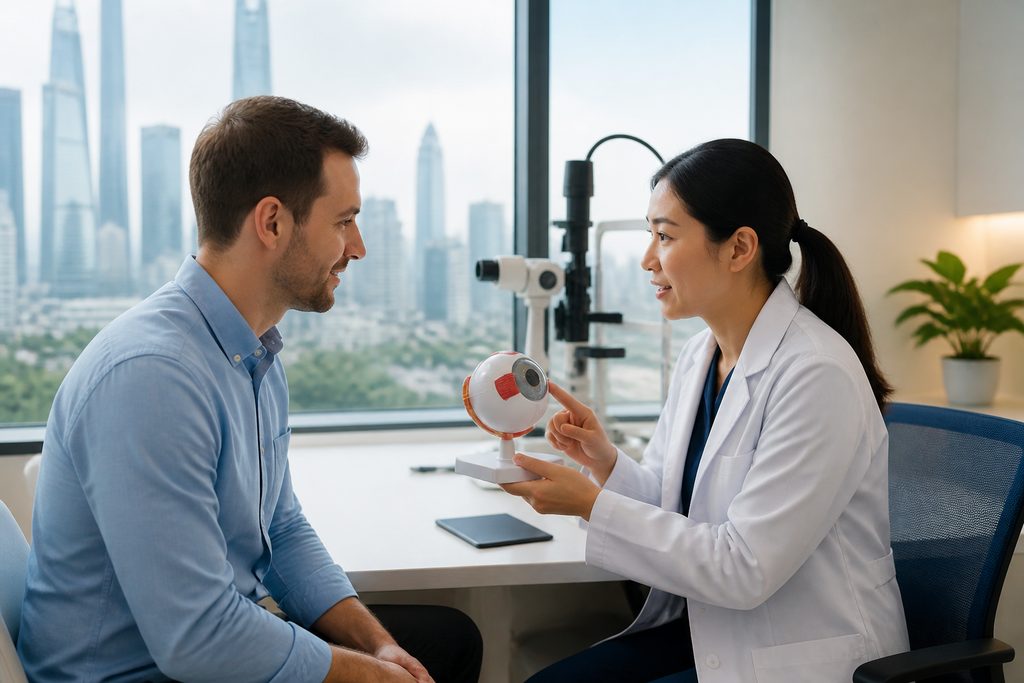
According to a 2024 report by the China Stem Cell Group, more than 60,000 international patients sought regenerative medicine consultations in China last year — a figure that has tripled since 2019. That surge makes one question unavoidable: is stem cell therapy worth it in China? The honest answer depends entirely on your condition, your expectations, and which clinic you choose. The stem cell therapy cost China ranges from $18,000 to $45,000 per treatment cycle, far below the $50,000–$150,000 often quoted in the United States or Europe. But price alone never tells the full story.
We review each case individually before recommending any hospital or protocol. That is not marketing language. That is how responsible care works when a patient considers crossing borders for an unproven or experimental treatment.
Stem Cell Therapy in China: The Short Answer
For certain orthopedic, neurological, and autoimmune conditions, stem cell therapy in China can be worth it — if you are matched with a hospital that operates under China’s 2015 stem cell clinical trial regulations and if your condition has published evidence supporting the specific cell type being offered. For other conditions, it is not worth it. Not yet.
China has invested heavily in regenerative medicine. The National Medical Products Administration (NMPA) has approved a limited number of clinical trials for mesenchymal stem cells (MSCs) targeting conditions like knee osteoarthritis, spinal cord injury, and diabetic foot ulcers. But the gap between a registered clinical trial and a clinic selling “stem cell packages” to foreigners is enormous. That gap is where patients get hurt — financially and physically.
Who This Is Right For — and Who It Isn’t
Our team sees hundreds of inquiries each month. We tell roughly half of them to stay home. That is not an exaggeration. Many people chasing stem cell therapy abroad are doing so out of desperation, not evidence.
Who is typically a good candidate for a case review:
- Patients with knee osteoarthritis who have failed conservative treatment and want to explore MSC injections before joint replacement
- Patients with documented spinal cord injury or stroke who understand that current stem cell approaches are investigational
- Patients with autoimmune conditions like lupus or Crohn’s disease who have plateaued on biologics
- Patients who can provide complete medical records in English or Chinese, including imaging and lab work
- Patients with realistic expectations: improvement in symptoms, not a cure
Who should not pursue this route:
- Patients with active cancer. Stem cell therapies can theoretically promote tumor growth in certain contexts, and no ethical clinic in China will treat an oncology patient with unproven cell products
- Patients seeking “anti-aging” or cosmetic stem cell infusions. These are not approved indications anywhere in China’s regulated hospital system
- Patients who cannot verify the cell source, processing lab, and regulatory status of the clinic
- Patients expecting a one-time injection to reverse years of degenerative disease
- Patients who cannot travel for in-person evaluation. Remote treatment promises are a red flag
Being explicit about who should not come is what protects the people who should.
The Options, Compared
When someone asks “is stem cell treatment safe in China,” the real question is: which China are you talking about? There are three distinct tiers of providers.
| Provider Type | Cost per Cycle | Regulatory Oversight | Realistic Outcome |
|---|---|---|---|
| Public academic hospital (e.g., Peking Union Medical College Hospital, West China Hospital) | $18,000–$30,000 | NMPA clinical trial or hospital ethics committee approval | Documented, peer-reviewed results for specific conditions |
| Private international hospital with JCI accreditation | $30,000–$45,000 | JCI standards plus Chinese health authority licensing | Higher service quality, English-speaking staff, similar clinical evidence base |
| Unregulated clinic or “wellness center” | $10,000–$25,000 | None meaningful | Unknown cell source, unknown processing, high risk of complications |
The third row is the one that generates most of the horror stories. And it is also the row that advertises most aggressively online. If a clinic promises dramatic results for multiple unrelated conditions, guarantees a cure, or quotes a price without reviewing your records first — you are looking at row three. Walk away.
Patients with a confirmed diagnosis and documented treatment history usually fit best with row one. Patients who want a more Western-style experience with hotel-level service and direct insurance billing may prefer row two. Our database of 340+ top-ranked hospitals includes both public academic centers and private international facilities, so we can compare options honestly.
How Much Does Stem Cell Therapy Cost Abroad: The China Comparison
The “how much does stem cell therapy cost abroad” question usually starts with sticker shock at US or European prices. Let’s put the numbers side by side.
| Country | Cost per MSC Cycle (USD) | Wait Time | Regulatory Status |
|---|---|---|---|
| United States | $50,000–$150,000 | 3–12 months for clinical trial slots | FDA tightly restricts most MSC therapies to trials |
| Germany / Switzerland | $40,000–$90,000 | 2–6 months | Strict national regulations, limited approved indications |
| Japan | $35,000–$70,000 | 1–4 months | Accelerated approval pathway for regenerative products |
| China (public academic hospital) | $18,000–$45,000 | 2–8 weeks after records review | NMPA clinical trial framework, hospital-level oversight |
China’s cost advantage is real, but it comes with a trade-off: fewer English-speaking staff in public hospitals, more administrative friction, and the need for a bilingual medical companion who understands how Chinese hospital systems actually work. That is where a service like ours changes the experience.
Can Stem Cell Therapy Help My Condition? The Evidence Map
Not all stem cell therapy is the same. The cell type matters. The source matters. The dose matters. And the condition being treated matters most of all.
Published evidence is strongest for:
- Knee osteoarthritis: Multiple randomized controlled trials show MSC injections reduce pain and improve function at 12–24 months compared to hyaluronic acid. A 2023 meta-analysis in Stem Cells Translational Medicine pooled 22 trials and found a mean 40% reduction in WOMAC pain scores.
- Spinal cord injury: Chinese research groups, particularly at the Chinese Academy of Sciences and affiliated hospitals, have published phase I/II data showing modest neurological improvement in a subset of patients receiving intrathecal MSC injections. The effect is real but unpredictable.
- Diabetic foot ulcers: Several Chinese hospitals have reported higher healing rates with MSC-loaded scaffolds versus standard wound care. This is one of the few indications approaching regulatory approval.
- Crohn’s fistula: Allogeneic MSC therapy for perianal fistulas has strong European trial data, and Chinese centers are running parallel studies.
Evidence is weak or absent for: autism, cerebral palsy in older children, ALS, Parkinson’s disease, Alzheimer’s, COPD, and general “anti-aging.” If a clinic offers stem cells for any of these as a standard treatment, that is a signal to stop and reconsider.
We cannot tell you whether stem cell therapy will help your specific condition. No one can — not with certainty. What we can do is review your records, identify which clinical trials or hospital programs in China match your diagnosis, and connect you with the right department. Our specialty hospital directory covers 45 disciplines, including orthopedics, neurology, and immunology, so the matching process is grounded in real hospital capabilities, not marketing brochures.
What It Costs: Breaking Down the Stem Cell Therapy Cost China
The headline number is never the whole number. Here is what a typical MSC treatment cycle in a Chinese public academic hospital actually includes — and what it does not.
Included in the $18,000–$45,000 range:
- Initial consultation and case review by the treating department
- Imaging and laboratory work required before treatment
- Cell harvesting (if autologous — from your own bone marrow or adipose tissue) or allogeneic cell product
- Cell processing and expansion in a GMP-certified laboratory
- The injection or infusion procedure itself
- One to three nights of hospital observation
Not included:
- International flights and ground transportation
- Visa fees
- Hotel or apartment accommodation before and after the hospital stay
- Bilingual medical companion services (typically from $300 per day)
- Follow-up imaging or consultations after you return home
- Physical therapy or rehabilitation, which is often essential for orthopedic cases
So the real all-in cost for an international patient is usually $25,000–$55,000 when travel, accommodation, and support services are counted. Still significantly below US prices. But not the “$15,000 package” some websites advertise.
Any clinic quoting a fixed “stem cell package” price before reviewing your medical records is not operating like a hospital. Hospital pricing in China varies by case complexity, cell type, and required monitoring. A legitimate quote always follows a records review.
Practical Considerations: Records, Visas, and What Happens After You Fly Home
Coming to China for stem cell therapy is not like booking a dental vacation. There are real logistical hurdles, and most of them are paperwork.
Medical records. Chinese hospitals will not evaluate you without complete records: diagnosis reports, imaging files (DICOM format preferred), lab results, current medication list, and a referral letter from your home physician if available. All documents must be translated into Chinese. Our team handles translation and submission as part of the case review.
Visa category. Medical treatment in China falls under the S2 visa, which covers short-term private affairs including medical care. Accompanying family members also apply for S2. The M visa is for commercial and trade activities — it has nothing to do with medical treatment. We help patients prepare the supporting documents from the receiving hospital, which the Chinese embassy or consulate requires.
Payment. Public hospitals in China generally require prepayment before admission. International credit cards are not always accepted at public hospital counters, though hospital international departments usually have more flexible arrangements. Private international hospitals accept major cards and often bill insurers directly. We advise patients on payment logistics before they arrive.
Language. Even at top academic hospitals, most clinical staff speak limited English. The international department may have translators, but availability is inconsistent. A bilingual medical companion who knows how to navigate registration, imaging, payment, and pharmacy queues changes the entire experience.
Follow-up after returning home. This is the part most patients forget to plan for. Stem cell therapy outcomes are measured over months, not days. You will need follow-up imaging and clinical assessments at 3, 6, and 12 months. If your home physician is not on board with monitoring a treatment received abroad, you will have a problem. We always recommend discussing your plans with your local doctor before booking any travel.
Frequently Asked Questions
In regulated hospitals operating under NMPA clinical trial oversight or hospital ethics committee approval, the safety profile of MSC therapy is generally good, with the most common adverse events being transient fever, injection-site pain, and headache. In unregulated clinics, the risks are serious: infection, immune reactions, tumor formation, and unknown cell products. The safety question is really a question about which provider you choose.
Most online reviews of stem cell clinics are unreliable — they are either paid promotions or anonymous posts with no verifiable details. What you can verify: whether the hospital appears in the Fudan University hospital rankings, whether it has a registered clinical trial on ClinicalTrials.gov or the Chinese Clinical Trial Registry, and whether the treating department publishes peer-reviewed research. We cross-check all three before making any recommendation.
You cannot book a treatment package the way you book a hotel. Chinese public hospitals require an in-person consultation before any procedure is scheduled. What you can do before arriving is complete a remote case review, get a preliminary treatment plan from the hospital’s international department, and coordinate your visit dates. Some private international hospitals offer more flexible virtual consultation options, including video consultations from $100–$300, but even they require an in-person evaluation before treatment.
That is a real possibility. Stem cell therapy for many conditions remains experimental, and published response rates vary widely. For knee osteoarthritis, roughly 60–70% of patients report meaningful improvement at 12 months. For spinal cord injury, the proportion is much lower. No ethical provider guarantees results. If a clinic promises a cure or your money back, that is a red flag, not a reassurance.
Almost certainly not, unless you have a specialized international policy that explicitly covers experimental or regenerative treatments abroad. Most insurers classify stem cell therapy as investigational. You should assume you are paying out of pocket. Some private international hospitals in China offer direct billing for the hospital stay portion, but the cell therapy itself is typically excluded.
Your Next Step
The decision about stem cell therapy in China comes down to evidence, provider quality, and honest expectations. Price matters, but it should never be the deciding factor. If the treatment is not right for your condition, paying $18,000 instead of $80,000 is still a bad deal.
We are China Medical Services, a patient coordination team based in China. We are not a hospital, and we do not diagnose or treat any condition. What we do is review your case, match it against our database of 340+ top-ranked Chinese hospitals across 37 cities, and coordinate the logistics — records translation, hospital communication, visa documentation, and bilingual companionship on the ground. If you are considering stem cell therapy abroad, start with a records review, not a plane ticket. Request a free consultation and we will tell you honestly whether China is worth pursuing for your specific case.
For more medical information and treatment options in China, visit chinamedservices.com (China Medical Services).
