Tui Na for Back Pain in China: How We Coordinate Your Session
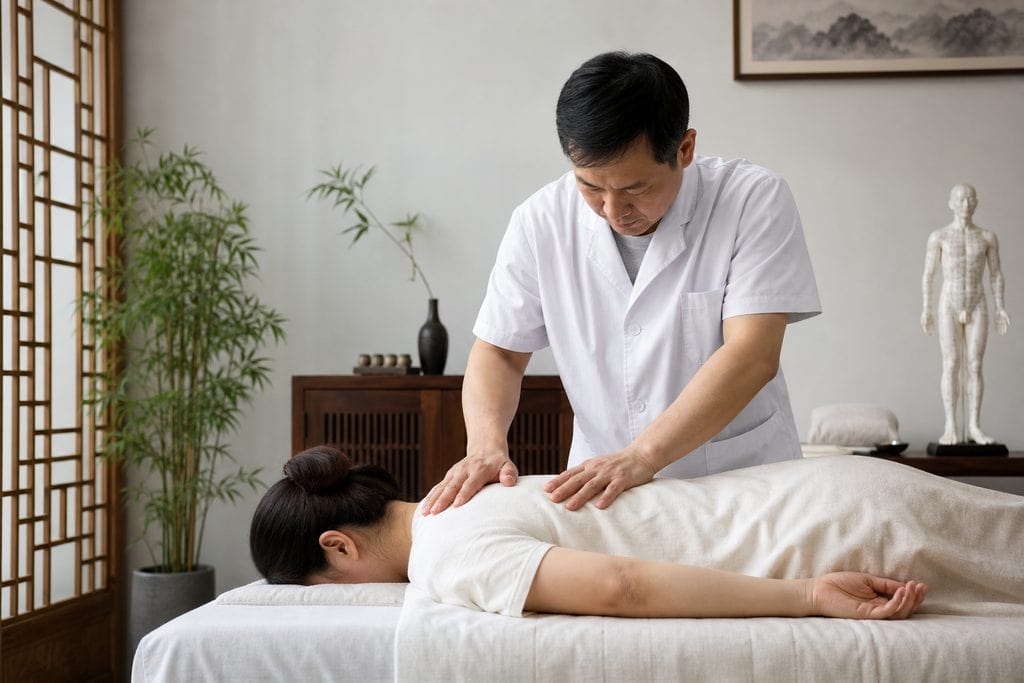
Tui Na Massage for Back Pain in China: How We Coordinate Your Session
According to the Global Burden of Disease Study 2021, lower back pain affects approximately 619 million people worldwide — roughly 1 in 13 of us. For many, the search for relief leads through physical therapy, medication, or surgery. But an increasing number of international patients are looking east. The tui na massage for back pain cost China is a fraction of what comparable manual therapy costs in the US or Europe, and the clinical infrastructure supporting it is unlike anything in the West. Our team at China Medical Services coordinates these sessions for patients from over 40 countries. Here is exactly how the process works, what it costs, and whether it is right for you.
Key Takeaways
- Tui na sessions at top Chinese TCM hospitals typically range from $30–$80, compared to $100–$250 for comparable manual therapy in the US.
- China has 35,000+ hospitals, and our database covers 340+ top-ranked institutions — including dedicated TCM hospitals with specialized tui na departments.
- Language barriers and hospital navigation are the biggest obstacles for foreign patients; most public TCM hospitals do not have English-speaking front-desk staff.
- Tui na is most effective for chronic, non-specific lower back pain when combined with targeted exercise — not as a standalone cure.
The Problem: Back Pain Is Expensive, Persistent, and Poorly Served by Conventional Medicine
Back pain is the single leading cause of disability worldwide, according to the World Health Organization. In the United States alone, the annual direct medical cost of low back pain exceeds $134 billion, according to a 2020 analysis published in JAMA. That figure does not include lost wages, reduced mobility, or the psychological toll of living with daily pain.
Standard treatment pathways often fail. The American College of Physicians now recommends non-pharmacologic therapies — including massage, acupuncture, and spinal manipulation — as first-line treatment for chronic low back pain. But access is the problem. A single 60-minute therapeutic massage in New York or London runs $120–$250. Insurance coverage is inconsistent. Ten sessions? That is $1,200–$2,500 out of pocket. And the evidence for long-term benefit is mixed when treatment is delivered sporadically rather than in a structured course.
This is where Chinese tui na enters the picture. It is not a spa treatment. It is a hospital-based therapeutic discipline with a formal training pathway, clinical protocols, and a price point that makes a full course of treatment realistic for most patients.
Why Tui Na in China Delivers Results — and Why the Cost Is So Different
Clinical Volume Drives Practitioner Competence
A tui na physician at a major TCM hospital in Shanghai or Beijing may treat 20–40 patients per day. Over a year, that is 5,000–8,000 patient encounters. Compare that to a licensed massage therapist in the US, who might see 800–1,500 clients annually. The volume differential is enormous, and it shows in technique. Chinese tui na practitioners develop a tactile diagnostic ability — palpating muscle tension, identifying trigger points, and adjusting pressure in real time — that comes only from thousands of repetitions.
Tui na training in China is also more rigorous than most Western massage certification programs. Practitioners complete a five-year bachelor’s degree in Chinese medicine, including coursework in anatomy, physiology, orthopedics, and internal medicine, followed by clinical rotations. In the US, massage therapy licensure requires 500–1,000 hours of training. The gap is structural, not cosmetic.
Hospital Integration Means Real Diagnostic Oversight
Most tui na in China happens inside hospitals — not strip-mall clinics. When you book a session at a top TCM hospital like Shuguang Hospital in Shanghai or Guang’anmen Hospital in Beijing, your practitioner has access to your imaging, your medical history, and — critically — the ability to refer you to an orthopedist or neurologist within the same building if something looks wrong.
This matters for back pain specifically. Lower back pain can stem from muscular strain, disc herniation, facet joint dysfunction, sacroiliac joint problems, or — in rare but serious cases — infection, fracture, or malignancy. A tui na practitioner working inside a hospital system is trained to screen for red flags and escalate when necessary. A standalone massage therapist is not.
Structural Cost Advantages Without Quality Compromise
The tui na massage for back pain cost China reflects structural economics, not inferior care. Chinese hospital salaries are lower than Western equivalents. Hospital real estate in Chinese cities, while not cheap, is far less expensive per square foot than in Manhattan or London. And tui na departments operate at high throughput — a practitioner seeing 30 patients a day at $40 per session generates $1,200 in daily revenue, which comfortably covers costs in the Chinese system.
To be direct: you are not paying for a luxury spa experience. You are paying for clinical competence delivered efficiently. The table below shows typical session prices at different tiers of Chinese institutions.
| Institution Type | Session Length | Typical Cost (USD) | English Support |
|---|---|---|---|
| Public TCM Hospital (standard department) | 30–45 min | $15–$35 | Rare — Chinese-speaking staff only |
| Public TCM Hospital (international/VIP department) | 45–60 min | $50–$120 | Usually available |
| Private International Hospital (e.g., United Family, Jiahui) | 45–60 min | $80–$180 | Always available |
| Specialist Tui Na Clinic (reputable private) | 30–60 min | $25–$60 | Varies — often limited |
Prices vary by hospital and case complexity. A course of 10 sessions at a public TCM hospital might total $200–$400 — less than two sessions of comparable manual therapy in the US.
Is Tui Na Effective for Chronic Back Pain? What the Evidence Says
The short answer: yes, with caveats. A 2021 systematic review published in Complementary Therapies in Medicine analyzed 15 randomized controlled trials of tui na for chronic low back pain. The pooled results showed that tui na produced clinically meaningful reductions in pain intensity and disability scores compared to no treatment or sham therapy. Effect sizes were comparable to those reported for conventional massage and spinal manipulation.
But the evidence has limits. Most studies are small, conducted in China, and follow patients for only 4–12 weeks. Long-term outcomes beyond six months are under-researched. And tui na works best as part of a package — combined with core stabilization exercises, postural correction, and activity modification — not as a standalone intervention.
So how does tui na relieve lower back pain? The mechanisms are both mechanical and neurological. On the mechanical side, tui na techniques — rolling (gunfa), kneading (roufa), pressing (anfa), and rubbing (cafa) — increase local blood flow, reduce muscle spasm, and improve tissue extensibility. On the neurological side, the sustained pressure and rhythmic manipulation stimulate mechanoreceptors and nociceptors in the skin and muscle, which modulates pain signaling at the spinal cord level. Some research also points to endorphin release and reduced cortisol levels following tui na sessions.
For chronic non-specific low back pain — the most common subtype — the evidence is strongest. For acute disc herniation with radiculopathy, tui na should be approached cautiously and only after imaging and orthopedic consultation. Not every back pain patient is a tui na candidate.
How We Coordinate a Tui Na Session: The Actual Process
Here is what happens when you contact us about a tui na course for back pain. The process is not instant, and it is not fully remote. You should understand both realities before deciding.
Step 1: Intake and records review. You send us your existing medical records — imaging reports (MRI, CT, X-ray), physician notes, current medication list, and a description of your pain history. Our team translates these into Chinese and shares them with the tui na department at your selected hospital. This step typically takes 3–5 business days.
Step 2: Hospital and practitioner matching. We identify 2–3 hospitals that fit your needs. If you want the lowest cost, we recommend a public TCM hospital’s standard department — but warn you that English support will be minimal. If you need English-speaking staff, we steer you toward a hospital international department or a private international hospital. The choice affects both price and experience.
Step 3: Visa guidance. For medical treatment in China, the applicable visa category is the S2 visa, which covers short-term private affairs including medical treatment. Your accompanying family members also apply for S2 visas. We provide the supporting documentation — hospital invitation letters, treatment plans, and accommodation details — required by the Chinese embassy or consulate in your country. Approval is never guaranteed; the embassy makes the final decision. Plan for 2–4 weeks of visa processing time.
Step 4: Arrival and first appointment. Once you arrive in China, our bilingual medical companion meets you at your hotel or the hospital entrance. They handle registration, payment, queue management, and translation throughout your first consultation. The tui na physician will conduct an initial assessment — including palpation and review of your imaging — before beginning treatment. Your first session may be shorter than subsequent ones, as the practitioner establishes a baseline.
Step 5: Treatment course. A typical course is 8–12 sessions over 2–3 weeks, delivered 3–5 times per week. This frequency matters. Tui na’s benefits accumulate with consistent, repeated treatment — not sporadic sessions. Your companion accompanies you to each session or, if you prefer, only to the first few until you are comfortable navigating independently.
Choosing the Right Hospital: What Actually Matters for Tui Na
The best tui na clinic Shanghai back pain patients ask about is usually not a single clinic — it is a hospital department. Shanghai has several strong options. Shuguang Hospital, affiliated with Shanghai University of Traditional Chinese Medicine, operates one of the largest tui na departments in the country, with dedicated wards for musculoskeletal conditions. Yueyang Hospital of Integrated Traditional Chinese and Western Medicine is another top choice, known for its integration of tui na with modern rehabilitation protocols.
In Beijing, the tui na therapy price Beijing hospital patients typically encounter ranges from $20–$60 per session at public institutions. Guang’anmen Hospital and Dongzhimen Hospital, both affiliated with Beijing University of Chinese Medicine, are the most frequently recommended. Their tui na departments are large, well-staffed, and accustomed to treating complex musculoskeletal cases.
What should you actually evaluate when choosing a hospital? Three factors matter more than rankings.
First, department size and specialization. A dedicated tui na department with 10+ practitioners and specific expertise in spinal conditions is better than a general TCM department where tui na is an afterthought. Ask how many back pain patients the department treats monthly. We can obtain this information for you.
Second, imaging and referral capability. If your back pain has not been formally diagnosed — or if your diagnosis is uncertain — choose a hospital with on-site orthopedics and imaging. The tui na physician should be able to order an MRI and refer you to a spine surgeon within the same institution if needed. This is a significant advantage of hospital-based tui na over standalone clinics.
Third, English capability and international patient infrastructure. This is where most foreign patients struggle. Public TCM hospitals are efficient and inexpensive, but their front-desk staff rarely speak English. Registration forms are in Chinese. Payment systems may not accept foreign cards. Our companion service exists precisely because these frictions are real and can derail your treatment before it begins.
Who should NOT pursue tui na for back pain: If you have acute, severe back pain following trauma — especially if you have neurological symptoms like leg weakness, bowel or bladder dysfunction, or saddle anesthesia — seek emergency evaluation immediately, not tui na. If you have a suspected or confirmed spinal fracture, spinal infection, or metastatic cancer to the spine, tui na is contraindicated. If you are pregnant, tui na should only be performed by a practitioner specifically trained in prenatal techniques, and only after obstetric clearance. If you are taking anticoagulants, disclose this before any manual therapy.
Practical Considerations: Documentation, Payment, and Follow-Up
You will need to bring certain records to make your tui na course effective and safe. Bring your most recent MRI or CT reports — not just the images, but the written radiology reports, which we translate into Chinese. Bring a list of all current medications with dosages. Bring any prior physical therapy or chiropractic treatment records. If you have had spinal surgery, bring the operative report. Incomplete records lead to delays or, worse, treatment decisions made without full information.
Payment is straightforward but requires planning. Public Chinese hospitals generally do not accept foreign credit cards at the registration desk. You will need cash (Chinese yuan) or a Chinese mobile payment platform like WeChat Pay or Alipay — both of which require a Chinese bank account or an international card linked through specific setup processes. We can guide you through this, but it is not something to figure out on arrival day. Private international hospitals typically accept major foreign credit cards and may bill your international insurance directly. Check with your insurer before traveling — most US and European insurers do not cover tui na, but some cover the associated hospital consultation fees if you have out-of-network benefits.
Language is the biggest practical barrier. Even in Shanghai and Beijing, English proficiency among hospital staff is inconsistent. Our bilingual medical companion handles registration, payment, queue management, and translation during your sessions. The companion rate starts from $300 per day, and for many patients, 2–3 days of companion service — covering your first consultation and first treatment session — is sufficient. After that, you may feel comfortable navigating independently, especially if you have learned a few key phrases or use a translation app.
After you return home, follow-up is important. Tui na’s benefits fade without maintenance. We recommend a home exercise program — your tui na physician can provide one — and periodic follow-up sessions if you return to China or access a local practitioner familiar with tui na techniques. If your back pain recurs or worsens, seek local orthopedic evaluation. Tui na is a management tool, not a permanent cure.
Frequently Asked Questions
A 10-session course at a public TCM hospital typically costs $200–$400 total. At a hospital international department, expect $500–$1,200. At a private international hospital, $800–$1,800. These figures exclude travel, accommodation, visa fees, and companion services. The final cost varies by hospital and case complexity.
Not directly with public hospitals. Public Chinese hospitals require in-person registration — you cannot book a tui na appointment from overseas through the standard outpatient system. What we can do is coordinate through the hospital’s international department or VIP channel, which allows advance scheduling for foreign patients. This typically costs 1.5–2 times the standard rate but guarantees your appointment time and provides English support.
Post-treatment soreness for 24–48 hours is common, especially after the first few sessions. But if you experience sharp, radiating pain, numbness, or weakness — particularly in the legs — stop treatment and seek orthopedic evaluation immediately. This is why we recommend hospital-based tui na departments: the referral pathway to a spine specialist is immediate, not delayed by days or weeks.
Usually not as a standalone therapy. Some international insurance plans cover hospital-based consultation and treatment fees if the tui na is delivered as part of a broader rehabilitation program, but most exclude manual therapy delivered outside of physical therapy or chiropractic frameworks. Check your policy’s fine print before committing. We can provide itemized receipts and treatment documentation to support any claim you wish to file.
How do I know if I need tui na, acupuncture, or something else?
That depends on your diagnosis. For muscular and myofascial back pain, tui na is often the most direct intervention. For pain with a strong inflammatory component, acupuncture may be more appropriate. For structural problems like disc herniation with nerve compression, neither is first-line — you need orthopedic evaluation first. A written second opinion from a Chinese TCM or orthopedic specialist can clarify which path makes sense for your specific case. This costs $300–$500 and
For more medical information and treatment options in China, visit chinamedservices.com (China Medical Services).
