Implant Supported Bridge in China: How We Coordinate Your Restoration
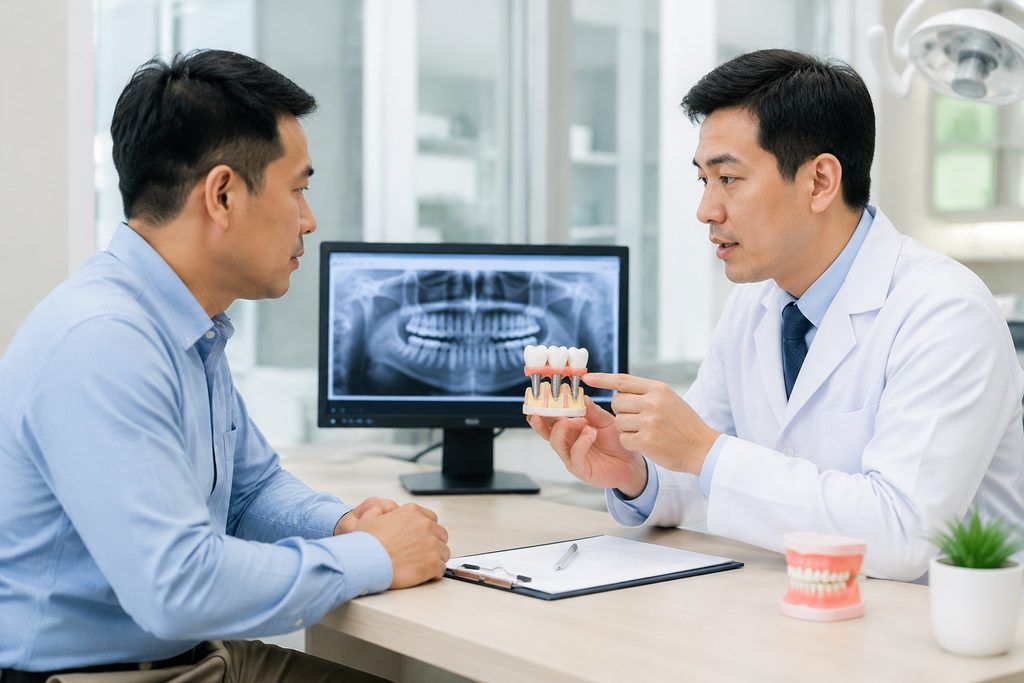
While the average American with missing teeth often faces a treatment plan that stretches over 12 to 18 months and a bill exceeding $25,000 for a full-arch restoration, patients traveling to major Chinese dental centers frequently complete the same implant supported bridge procedure in under 3 weeks for roughly a third of the cost. That disparity isn’t marketing hype. It is a structural difference in how Chinese oral surgery departments are organized—high patient volume, integrated lab facilities, and aggressive scheduling protocols. But cost savings alone don’t make a medical decision. Coordination, quality verification, and clear expectations do.
Implant Supported Bridge Cost China: The Short Answer
For a full-arch implant supported bridge in China, expect to pay between $8,000 and $15,000 depending on the implant system, the hospital tier, and whether you choose a public hospital‘s international department or a private dental hospital. A single implant-supported bridge replacing three to four teeth typically runs $3,500 to $6,000. Those figures include the surgical placement, the prosthetic bridge, and standard zirconia or porcelain-fused-to-metal materials.
The complication? Those numbers shift based on bone grafting needs. If your jawbone has atrophied from years of missing teeth, you may need a sinus lift or ridge augmentation first. That adds $800 to $2,500 and another healing window. So the short answer is straightforward, but the real answer requires a CT scan review.
Who This Is Right For — and Who It Isn’t
We see two types of international patients who benefit most from traveling for this procedure. The first is someone with multiple missing teeth who has been quoted a full-arch restoration price in the US, UK, or Australia that feels unmanageable. The second is someone who needs a failed bridge replaced and wants to upgrade to implants without paying Western specialist fees twice.
Good candidates typically have:
- Stable blood sugar if diabetic (HbA1c below 7.5% is the usual threshold Chinese oral surgeons look for)
- No active, uncontrolled periodontal disease
- Adequate bone volume on the CT scan, or willingness to undergo grafting
- Realistic expectations about healing timelines
Who should not pursue this? Anyone with a heavy smoking habit that they cannot pause for 8–12 weeks post-surgery. Smokers face significantly higher implant failure rates—some studies show 2.5 to 3 times the risk. Also, patients on bisphosphonate medications for osteoporosis should not undergo implant surgery without a thorough medical review. And if you need a single front tooth replaced and you are highly particular about gingival contour aesthetics, the multiple-visit protocol required may not suit a compressed travel schedule.
The Options, Compared
You are not choosing between “China” and “home.” You are choosing between four distinct treatment models, each with different cost, speed, and continuity implications.
| Option | Full-Arch Cost (USD) | Typical Completion Time | Follow-Up Model |
|---|---|---|---|
| US private specialist | $24,000 – $45,000 | 6 – 18 months | Local, ongoing |
| US dental school clinic | $12,000 – $18,000 | 12 – 24 months | Local, student-supervised |
| China public hospital (international dept.) | $8,000 – $15,000 | 2 – 4 weeks (surgical phase + immediate prosthesis) | Remote + local dentist back home |
| China private dental hospital | $7,000 – $13,000 | 2 – 3 weeks | Remote + local dentist back home |
If you live near a major US dental school and have a year to spare, the second column is genuinely competitive. But most of our patients are working adults who cannot block out six months of appointments. For them, the China public hospital international department model offers the best balance: experienced surgeons, English-speaking coordination, and a price point that justifies the flight.
How We Coordinate Your Restoration: The Step-by-Step Reality
Here is what actually happens when you book a dental implant bridge through our coordination service. This is not a concierge fantasy where everything is seamless. It is a structured process with defined checkpoints.
Week 0: Remote records review. You send us your panoramic X-ray or, ideally, a CBCT scan from your local dentist. We translate the relevant clinical notes and forward them to the oral surgery department at a shortlisted hospital. A surgeon reviews your case and confirms candidacy—or flags grafting needs—before you book any flight.
Week 1: Arrival and clinical evaluation. You land in Shanghai, Beijing, or Guangzhou. Day one is a face-to-face consultation and a fresh CBCT at the hospital. The surgeon finalizes the implant positions. If bone grafting is needed, this is when you find out definitively.
Week 1–2: Surgical placement. Implant surgery happens within days of the consultation. For a full-arch case, that means placing 4 to 6 implants per arch. The procedure itself takes 2 to 4 hours under local anesthesia or sedation. Many patients return to their hotel the same day.
Week 2–3: Bridge fabrication. The dental lab—often in the same hospital complex—fabricates your bridge while you recover. For immediate-load protocols, you walk out with a temporary bridge on the same day as surgery. The final bridge is delivered 7 to 14 days later, depending on the lab’s schedule.
Week 3: Final fitting and departure. The final bridge is seated, occlusion is checked, and you receive post-operative instructions in English. You fly home with a completed restoration.
That is the compressed timeline. It works because Chinese oral surgery departments process dozens of implant cases daily. The lab technicians, the surgeons, and the prosthodontists all sit in the same building. No shipping impressions to a third-party lab in another state. No six-week gap between surgery and impression.
Is Implant Supported Bridge Safe in China?
The safety question deserves a direct answer. Yes—provided you are treated at a hospital with documented volume and international protocols. The implant systems used in Chinese top-tier hospitals are the same brands you know: Straumann, Nobel Biocare, Osstem, and Dentsply Sirona. The sterilization standards at public tertiary hospitals and JCI-accredited private facilities meet international benchmarks.
But “China” is not one standard. A back-alley clinic in a third-tier city is not the same as the stomatology department of a Fudan-ranked hospital. Our database includes 340+ top-ranked hospitals across 37 cities—the top 5% of China’s 35,000+ institutions, ranked by Fudan and JCI. When you ask us to coordinate, we restrict referrals to that pool. No exceptions.
What about long-term failure rates? Chinese implant survival studies published in peer-reviewed journals report 5-year survival rates of 95–98% for standard implants, consistent with global data. The variable is not the implant. It is the maintenance. Patients who return home and skip their 6-month checkups are the ones who develop peri-implantitis.
What It Costs: Breaking Down the Full Mouth Implant Bridge Package China
The headline number is only part of the story. Here is what a typical full mouth implant bridge package in China includes—and what it does not.
Included in most packages:
- Pre-operative CBCT and surgical planning
- Implant fixtures (brand specified in your quote)
- Surgical placement fees
- Provisional bridge (immediate load where applicable)
- Final zirconia or hybrid bridge
- Standard post-operative medications
Usually not included:
- Bone grafting materials and procedures ($800 – $2,500 extra)
- Sedation or general anesthesia fees ($300 – $800)
- Hotel, flights, and local transport
- Any revision work after you leave China
The implant supported bridge cost China patients actually pay depends on three variables: the number of implants, the material choice, and the hospital tier. A public hospital international department typically charges 1.5 to 2 times the standard local rate—that premium buys English-speaking staff and faster scheduling. A private dental hospital like those listed on our private hospital directory may offer direct insurance billing if your policy covers overseas dental work.
Practical tip: Ask for a written quote that separates the surgical fee from the prosthetic fee. If a clinic gives you one bundled number without itemization, walk away. Transparent pricing is the first sign of a legitimate provider.
Practical Considerations: Documentation, Visas, and Follow-Up
You need more than a passport for this trip. Here is what actually matters on the ground.
Medical records. Bring your most recent panoramic X-ray and any CBCT scans on a USB drive, not just printed film. Chinese oral surgeons want the DICOM files. If you have a history of diabetes, heart disease, or bisphosphonate use, bring a letter from your physician clearing you for surgery.
Visa. For medical treatment in China, the applicable short-stay category is the S2 visa, which covers private affairs including medical treatment. Your hospital appointment confirmation letter and our coordination documents support the application. We guide you through the current consulate requirements, but approval always rests with the visa officer. Do not book non-refundable flights until the visa is in your passport.
Payment. Chinese hospitals require prepayment. Most international departments accept Visa, Mastercard, and bank transfers. Some accept UnionPay only—confirm before you travel. US dental insurance rarely covers overseas treatment, but you can often submit a superbill for out-of-network reimbursement. Check your policy’s “foreign treatment” clause.
Follow-up after returning home. This is the part nobody thinks about. You need a local dentist willing to do maintenance checkups on implants placed abroad. Find that dentist before you leave. Some refuse to touch “foreign work.” Others are happy to take over routine care. We help you prepare a clinical summary in English for that handoff.
Frequently Asked Questions
For a full-arch case with immediate loading, the surgical phase and temporary bridge happen in one day. The final bridge is delivered 7 to 14 days later. Total time in China: 2 to 3 weeks. Cases requiring bone grafting add a separate healing window of 3 to 6 months before implants can be placed, which means two trips or a longer stay.
Yes, the hospital’s list price is the same either way—our coordination fee is separate and starts from $300 for appointment coordination. What you gain is not a discount but navigation: records translation, department selection, scheduling, and an English-speaking companion during hospital visits. If you speak Mandarin and have family in China, you may not need us. Most of our patients do not.
Implant failure within the first year is rare but real—roughly 2 to 5% depending on patient factors. If it happens, you have two options: return to the Chinese hospital for revision (some offer a warranty period for the implant fixture, though not for the surgical fee), or see a local oral surgeon. The implant manufacturer’s warranty typically applies globally, but the labor is on you. We can coordinate the return visit if needed.
No reputable Chinese hospital will schedule surgery without a face-to-face clinical evaluation. You can do a remote records review first—we arrange that as a written second opinion from $300 to $500—but the final surgical plan requires an in-person CBCT and consultation. That is non-negotiable at any serious institution.
Your Next Step
An implant supported bridge in China is not a gamble if you choose the right hospital and understand the timeline. It is a calculated alternative for patients who value speed and cost efficiency over local convenience. Our team at China Medical Services handles the coordination: records translation, hospital matching, appointment scheduling, and on-the-ground bilingual support. We are not a hospital, we do not diagnose, and we do not promise outcomes. We make the logistics legible. If you want to know whether your case is a good fit, send us your records. The review is the first step, and it costs nothing to ask.
For more medical information and treatment options in China, visit chinamedservices.com (China Medical Services).
