Surgery Recovery Hotel in China: Where to Stay, Heal, and Save
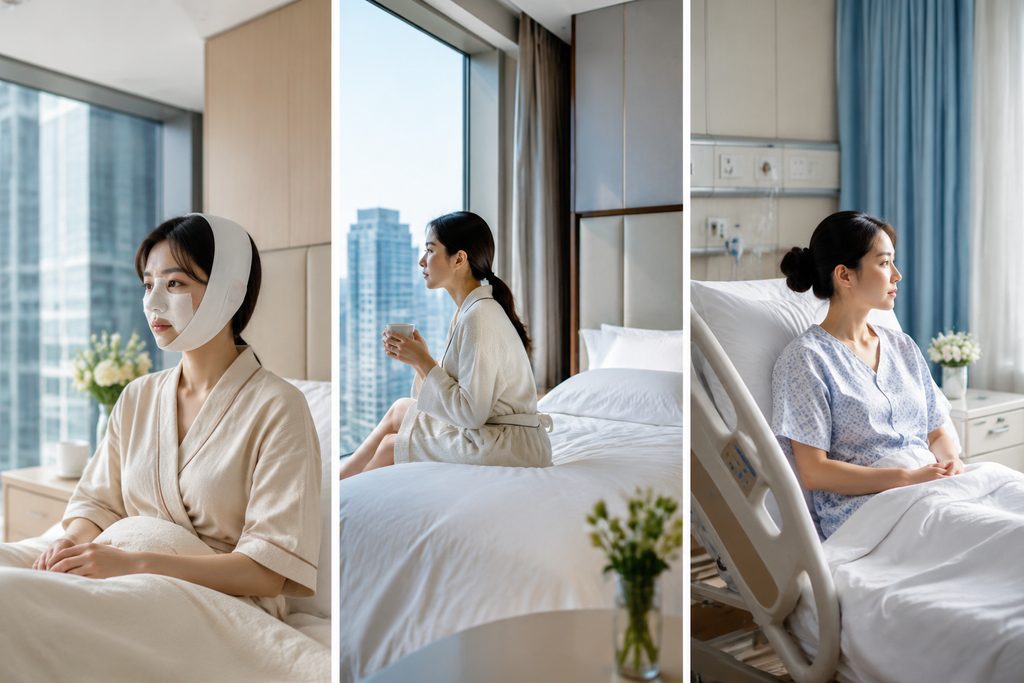
When 54-year-old Daniel from Manchester booked his hip replacement at a Shanghai orthopedic hospital, he budgeted carefully for the procedure itself. What caught him off guard was the question his surgeon raised at the pre-op consultation: “Where will you stay for the two weeks after discharge?” Daniel had assumed he’d just find a hotel. Instead, he discovered a whole category of accommodation he’d never heard of — recovery hotels and serviced medical apartments designed specifically for post-surgical patients. The recovery hotel after surgery China price ranged from $60 to $400 per night depending on the level of medical oversight, and that single variable reshaped his entire travel budget.
If you’re planning surgery in China, where you recover matters as much as where you’re operated on. This guide walks through the real options, what they cost, how to evaluate safety, and the timing questions most patients don’t think to ask until it’s too late.
How This Actually Works, Step by Step
You don’t book a recovery hotel the way you’d book a holiday room. The process is sequential, and skipping steps creates problems you’ll feel weeks later.
First, your Chinese surgeon or the hospital’s international department gives you a discharge plan. This document specifies how many days of local recovery you need before flying, what kind of wound care or mobility restrictions apply, and whether you need daily nursing visits or just a comfortable bed near the hospital. You send this to us, or to whichever coordinator you’re working with.
Then we match the discharge requirements against available properties near your hospital. That matching step matters. A five-star hotel in the city center is useless if your surgeon wants you within 15 minutes of the orthopedic ward for a week of follow-up checks.
Next comes booking. Recovery-oriented properties in hospital districts fill up — especially in Beijing and Shanghai during peak surgical seasons. Lead time of two to three weeks is common. Some hospital-affiliated recovery suites book out a month ahead.
Finally, you arrive, have surgery, and transfer to your recovery accommodation on discharge day. The property should have your discharge paperwork on file, know your mobility status, and have arranged any nursing visits or equipment rentals you need. That handoff is where a coordinator earns their fee.
Recovery Hotel After Surgery in China: Price Ranges and What You Actually Get
Let’s talk numbers. The recovery hotel after surgery China price varies enormously based on three factors: proximity to a top-tier hospital, level of medical staffing, and city. Here’s what current market rates look like.
| Accommodation Type | Typical Nightly Rate (USD) | Medical Support Included | Best For |
|---|---|---|---|
| Standard hotel near hospital | $60–120 | None — self-managed recovery | Minor procedures, independent travelers |
| Serviced apartment with kitchen | $80–150 | None, but space for a family caregiver | 2–4 week recoveries, dietary needs |
| Medical recovery hotel (nursing on call) | $150–300 | Nurse visits 1–2x daily, wound care | Moderate surgeries, solo travelers |
| Hospital-affiliated recovery suite | $200–400 | 24/7 nursing station, doctor rounds | Complex surgeries, older patients |
| Private hospital VIP room (extended stay) | $300–600 | Full hospital care, no transfer needed | Immediate post-op week, high-risk cases |
Rates fluctuate by season and hospital district. A recovery room near Shanghai’s Zhongshan Hospital will cost more than an equivalent room in Chengdu. But the Shanghai room might save you a 45-minute commute to follow-up appointments. Price is only one variable.
What does a $200 medical recovery hotel include that a $90 business hotel doesn’t? Typically: a hospital-style bed with adjustable positioning, grab bars in the bathroom, a nurse call button, daily vital sign checks, wound dressing changes, and staff who understand post-surgical restrictions. Some properties add physiotherapy rooms and dietitian-planned meal delivery. That’s the difference between “a place to sleep” and “a place to heal.”
Is It Safe to Recover in a Hotel After Surgery in China?
The honest answer: it depends on the surgery and the hotel. A standard business hotel is safe for minor procedures — arthroscopic knee work, hernia repair, some cosmetic surgeries — where the main risk is discomfort, not complication. You need a clean room, an elevator, and a phone to call for help. Standard hotels deliver that.
But for anything involving general anesthesia lasting over two hours, abdominal incisions, orthopedic hardware, or cardiovascular work, a standard hotel room introduces real risks. Bathroom floors without non-slip treatment. Beds too low or too soft for safe transfers. Staff with no training in recognizing post-surgical red flags like fever spikes, wound dehiscence, or deep vein thrombosis symptoms.
So is it safe to recover in a hotel after surgery in China? Yes — if you choose the right category of hotel. Medical recovery hotels and hospital-affiliated suites are designed for exactly this purpose. Their staff have seen thousands of post-op patients. They know what normal recovery looks like and what warrants a call to your surgeon. That pattern recognition is the safety feature you’re actually paying for.
Warning: If your surgeon recommends a specific recovery facility, take that recommendation seriously. Discharge against medical advice to save $50 a night is a false economy when a complication costs thousands and delays your flight home by weeks.
Medical Hotel Shanghai Post Surgery Packages: What’s Included
Shanghai has the most developed medical recovery accommodation market in China. The concentration of top-ranked hospitals in one city created a supporting ecosystem of recovery properties within walking distance of major surgical centers.
Typical medical hotel Shanghai post surgery packages bundle the room with a defined set of services. A representative package might include: 7 nights in a medical-grade room, twice-daily nursing checks, wound care supplies, three meals designed for post-surgical recovery (soft diet, high protein options), one physiotherapy session, and airport transfer at the end of your stay. Package pricing runs $1,200 to $2,500 for a week, depending on the property and the intensity of nursing support.
Some Shanghai recovery hotels partner with specific hospital departments. A property near Ruijin Hospital might have a standing arrangement with the orthopedic department for post-hip-replacement protocols. That integration means the recovery hotel’s nurses understand your surgeon’s specific discharge instructions — which medications, which movements to avoid, which signs trigger an immediate call back to the ward.
If you’re considering surgery in Beijing instead, the recovery hotel market there clusters around the Haidian and Dongcheng districts, near Peking Union Medical College Hospital and Fuwai Hospital. The model is similar, though Beijing properties skew toward serviced apartments with nursing add-ons rather than dedicated medical hotels.
A Realistic Timeline
| Stage | Duration | What Actually Happens |
|---|---|---|
| Medical records translation & review | 1–2 weeks | Your home-country records are translated into Chinese and reviewed by the target hospital’s international department |
| Visa processing (S2) | 2–4 weeks | Hospital invitation letter is issued, then you apply for the S2 visa at your local Chinese embassy or consulate |
| Recovery hotel booking | 2–3 weeks lead time | Book after your surgery date is confirmed, not before — dates shift |
| Arrival & pre-op consultation | 2–5 days | In-person consultation, pre-op testing, surgical consent |
| Surgery & hospital stay | 3–10 days | Varies by procedure; heart surgery longer, arthroscopy shorter |
| Recovery hotel stay | 1–4 weeks | Determined by your surgeon’s discharge plan and your flight-readiness |
| Final follow-up & clearance to fly | 1–2 days | Surgeon signs off, you receive medical records in English for your home doctor |
Total door-to-door: 6 to 10 weeks for a typical surgical trip. That’s the number most patients underestimate. They budget for the surgery and the flight, then discover they need four weeks of local recovery before a long-haul flight is safe.
How Long Should I Stay in China After Surgery Before Flying Home?
This question has no single answer, but surgeons use predictable rules of thumb. How long should I stay in China after surgery before flying home depends on three factors: the procedure’s invasiveness, your individual risk for complications like DVT, and the flight duration.
For minor procedures under local or brief general anesthesia — think arthroscopy, cataract surgery, simple hernia repair — most surgeons clear patients to fly after 3 to 5 days of local recovery. The flight itself is low-risk if you can walk, hydrate, and move your legs.
For moderate surgeries — laparoscopic procedures, joint replacements, uncomplicated cardiac stenting — the standard clearance window is 10 to 14 days. Your surgeon wants to see the wound healing without infection, your pain managed on oral medication only, and your mobility sufficient for an airport and airplane cabin.
For major surgeries — open heart procedures, complex spinal fusion, cancer resections — expect 3 to 6 weeks before a long-haul flight is advisable. The risk of DVT on a 12-hour flight after major surgery is real, and your surgeon will want to rule out complications before you’re 10,000 kilometers from their operating room.
Practical tip: Ask your surgeon for the flight clearance criteria at your pre-op consultation, not after surgery. Knowing the specific milestones — “wound dry for 72 hours,” “walking 20 minutes unassisted” — lets you plan your recovery hotel stay accurately from the start.
What Can Go Wrong — and What Happens Then
Recovery doesn’t always follow the script. Here are the failure modes we see most often, and what actually happens in each case.
The complication you didn’t expect. A wound infection develops on day five. A fever spikes. You feel something give. In a medical recovery hotel, the nursing staff recognizes the problem and contacts your surgeon immediately. In a standard hotel, you’re on your own to figure out whether it’s serious and how to get back to the hospital. The cost difference between those two scenarios can dwarf the entire accommodation budget.
The recovery takes longer than planned. Your surgeon planned for two weeks of local recovery, but at your one-week check, the wound isn’t healing as expected. You need another ten days. Recovery hotels in hospital districts often have flexible extension policies — they understand this happens. But if you booked a standard hotel through a discount platform, you may find your room is sold out for the extension window, forcing a move mid-recovery.
You flew home too early. This is the one that keeps surgeons up at night. A patient insists on flying at the earliest possible date, lands, and develops a complication at home. Their local doctor has no context for the surgery, no relationship with the Chinese surgeon, and no access to the operative notes. The fix: never push for early clearance. Your surgeon’s conservative timeline is a feature, not a bug.
The recovery hotel didn’t match the description. You booked a “medical recovery hotel” that turned out to be a standard hotel with a wheelchair ramp. This happens with third-party booking platforms. The recourse: book through a coordinator who has physically visited the property, or through the hospital’s own international department referral. Photos lie. Site visits don’t.
Book Surgery Recovery Resort China: Evaluating Your Options
Some patients search for a surgery recovery resort China experience — combining rehabilitation with a comfortable, even pleasant, environment. The concept exists, though it’s less developed than in Thailand or South Korea. What you’ll find in China falls into three tiers.
The first tier is hospital-integrated. Some private international hospitals in Shanghai and Beijing — including JCI-accredited facilities — operate recovery floors that feel more like a hotel than a ward. Private rooms, room service, family visiting areas. You stay in the same building where you had surgery, which eliminates transfer logistics entirely. The trade-off is cost: these rooms run $300 to $600 per night, and insurance rarely covers the “hospitality” premium.
The second tier is dedicated recovery centers. These are standalone facilities near major hospital clusters, staffed by nurses and physiotherapists, with rooms designed for post-surgical patients. Some offer traditional Chinese medicine adjuncts — acupuncture for pain management, herbal dietary support — which appeals to patients who want an integrated recovery approach. Expect $150 to $300 per night.
The third tier is the serviced apartment with medical add-ons. You rent a furnished apartment near the hospital, then contract nursing visits and physiotherapy separately. This gives you the most space and autonomy, and often the best value for longer recoveries. But it requires more coordination, and you’re managing multiple vendors instead of one.
How do you evaluate a specific property? Ask these questions: How many post-surgical patients have you hosted in the past year? What’s your protocol when a patient develops a fever or wound issue at night? Can you provide references from international patients who recovered here? What’s your cancellation policy if my surgery date shifts? The answers reveal whether you’re dealing with a genuine recovery facility or a rebranded hotel.
Best Hospital with On-Site Recovery Hotel Beijing
Beijing’s hospital landscape differs from Shanghai’s. The top public hospitals — Peking Union Medical College Hospital, Fuwai Hospital, Beijing Tiantan Hospital — operate at enormous scale, with outpatient volumes exceeding 10,000 patients daily. On-site recovery accommodation in the Western sense is rare at public facilities. What exists instead is a network of recovery-oriented hotels and serviced apartments in the immediate hospital districts.
For patients seeking the best hospital with on-site recovery hotel Beijing, the realistic answer is the private international hospital sector. Facilities like Beijing United Family Hospital and Raffles Hospital Beijing offer private rooms that function as recovery suites — you can stay in the same building post-surgery, with nursing care and physician rounds. These are JCI-accredited, English-speaking environments with direct insurance billing for many international insurers.
The trade-off is cost. A private hospital recovery room in Beijing runs $300 to $500 per night, and the surgery itself will cost more than at a top public hospital. But for patients who prioritize convenience, language access, and integrated care over pure cost savings, the private route eliminates the transfer problem entirely.
If you’re having surgery at a public hospital like Fuwai — which performs over 14,000 cardiac surgeries annually, more than any other hospital globally — your recovery accommodation will be a nearby property. The hospital’s international department can recommend trusted options, or a coordinator can arrange one that matches your discharge plan.
Practical Considerations: Records, Visa, Payment, and Follow-Up
Your recovery accommodation is one piece of a larger logistical puzzle. Here’s what else you need to have sorted before you land.
Medical records. Your home-country records need professional translation into Chinese before any serious surgical consultation. Hospital international departments won’t review untranslated documents. Budget one to two weeks for this step.
Visa. Medical treatment in China falls under the S2 visa category — not the M visa, which is for commercial and trade activities. Your hospital provides an invitation letter and treatment confirmation, which you submit with your S2 application. Processing takes two to four weeks at most embassies. Family members accompanying you apply for S2 as well, with their relationship to you documented. For stays exceeding 180 days, the S1 category applies.
Payment. Public hospitals in China require prepayment — you deposit funds at admission and the hospital draws down against your account. Insurance reimbursement happens after the fact, not through direct billing. Private international hospitals are more likely to offer direct insurance billing, which is why some patients choose them despite higher list prices.
Language. Top public hospitals process thousands of patients daily. English-speaking staff exist in international departments, but once you’re on the ward or in a recovery hotel, you’ll encounter Mandarin as the default. A bilingual companion — whether a family member or a hired coordinator — changes the experience dramatically. This is the single most underrated variable in the whole process.
Frequently Asked Questions
Yes. The hospitals used for international patients are JCI-accredited and follow the same international safety standards as top hospitals in the US and Europe. Surgical teams perform high volumes of procedures — often more than their Western counterparts — which studies show leads to better outcomes.
Costs vary by procedure and hospital, but international patients typically save 40-80% compared to US prices — even when factoring in travel and accommodation. A consultation with our team will give you an exact, all-inclusive quote with no hidden fees.
Send us your existing medical reports to get started. We handle everything from hospital selection and appointment scheduling to visa assistance and post-operative recovery planning. Your medical records are reviewed by the specialist before you even book a flight.
For more medical information and treatment options in China, visit chinamedservices.com (China Medical Services).
