Middle East Patients Guide to China Treatment: Halal and Companion Service
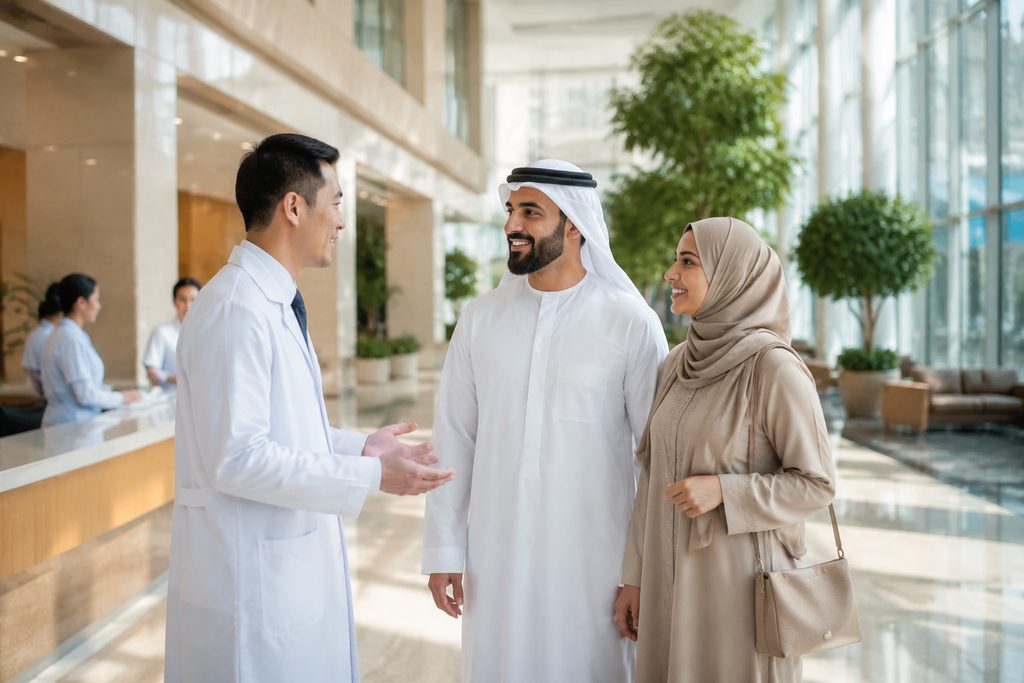
Halal Hospital China Medical Tourism: The Short Answer
For Middle East patients, halal hospital China medical tourism is not only possible but increasingly practical. Major Chinese cities — Beijing, Shanghai, Guangzhou, and Shenzhen — now offer designated halal meal services in international hospital wards, prayer facilities, and bilingual companion support. The cost advantage is real: cardiac surgery in a top Chinese public hospital runs $12,000–20,000 versus $120,000+ in the United States. Cancer treatment costs typically land at one-fifth to one-third of Western prices.
But the picture gets more complicated once you look at logistics. Halal food availability varies sharply by hospital and city. Prayer rooms exist but are not universal. And the language barrier remains the single biggest friction point for Arabic-speaking patients. This guide breaks down exactly what to expect — and what to arrange before you fly.
Who This Is Right For — and Who It Isn’t
Not every medical traveler should board a plane to China. Knowing the difference saves time, money, and real risk.
Typically a good candidate:
- You need a complex procedure — cardiac bypass, orthopedic surgery, oncology treatment, or advanced diagnostics — and face months-long waits at home.
- Your condition is stable enough for international travel and a 2–6 week stay.
- You have a clear diagnosis and medical records in English or Arabic that can be translated.
- You want access to hospitals ranked in China’s top 5% — the 340+ institutions on our top-ranked hospital database — without paying US or European prices.
- You can afford to pay upfront. Chinese public hospitals require prepayment; insurance reimbursement happens after discharge.
Who should not pursue this:
- Patients in acute crisis who cannot tolerate a 7–12 hour flight.
- Anyone expecting a Western-style private room with hotel amenities in a public hospital’s standard ward. That requires the international VIP wing, at 1.5–2× standard pricing.
- Travelers without a companion or the budget for a bilingual medical escort. Navigating a 10,000-patient-per-day hospital without Chinese language support is genuinely difficult.
- Those seeking experimental treatments unavailable elsewhere. Chinese top hospitals excel at high-volume, evidence-based care — not unproven therapies.
The Options, Compared
Middle East patients weighing China against other destinations often consider Turkey, Germany, Thailand, and the UAE itself. Here is how the landscape actually compares for treatment quality, cost, and cultural accommodation.
| Factor | China (Top Public) | Turkey | Germany | Thailand |
|---|---|---|---|---|
| Cardiac bypass cost | $12,000–20,000 | $15,000–25,000 | $40,000–70,000 | $18,000–30,000 |
| Cancer treatment (typical course) | $20,000–60,000 | $25,000–50,000 | $80,000–150,000 | $30,000–70,000 |
| Halal food availability in hospitals | Growing, mainly in international wards | Widespread, culturally native | Limited, often pre-packaged | Good in private international hospitals |
| Prayer facilities | Available in select international hospitals | Common | Rare | Common in Muslim-majority areas |
| Arabic-speaking staff | Rare; interpreters arranged separately | Some hospitals employ Arabic staff | Rare | Some in medical tourism hubs |
| Wait time for major surgery | Days to 2 weeks after consultation | 1–3 weeks | Weeks to months | 1–4 weeks |
| Hospital accreditation focus | Fudan ranking + JCI for private | JCI common | National quality boards | JCI common |
Turkey wins on cultural familiarity and halal infrastructure. Germany wins on perceived prestige and regulatory transparency. China wins on cost-to-expertise ratio and sheer clinical volume — Fuwai Hospital in Beijing alone performs over 14,000 cardiac surgeries annually, the highest in the world. If you prioritize surgical experience at the lowest price point, China is difficult to beat. If halal food access is your top concern, Turkey or a Chinese private international hospital are your realistic options.
Halal Food, Prayer Rooms, and Companion Service: What Actually Exists
This is the section every Middle Eastern patient asks about first. Let’s be precise about what Chinese hospitals offer — and what they don’t.
Is halal food available in Chinese hospitals?
Short answer: sometimes. In major international hospital wards in Beijing and Shanghai, halal-certified meal services are increasingly common. United Family Healthcare and Jiahui International Hospital — both JCI-accredited private systems — provide halal meal options on request. Public hospital international wings, such as those at Peking Union Medical College Hospital and Zhongshan Hospital, can often arrange halal meals with 24–48 hours advance notice.
But a standard public ward in a second-tier city? Unlikely to have dedicated halal kitchens. Many patients arrange meals through local halal restaurants or their accommodation. In cities with significant Muslim populations — Xi’an, Guangzhou, Yiwu — halal restaurants are abundant and delivery is straightforward. Our team typically maps halal dining options near your hospital before you arrive, part of the companion service planning.
Best hospitals in Shanghai with prayer rooms
Shanghai’s international hospitals lead on prayer facilities. Jiahui International Hospital provides a quiet room that can be used for prayer. Shanghai United Family Hospital offers similar accommodations. Among public hospitals, designated prayer spaces are less common — but private rooms in international wings can typically be used, and hospital staff are generally accommodating when requests are made respectfully through a companion or coordinator.
For patients who require regular prayer times, we recommend confirming the specific facility before booking. Not every hospital with halal food also has a prayer room, and vice versa. The two features do not always travel together.
Companion service: what it actually does
A bilingual medical companion in China is not a nurse and not a translator app. It’s a trained local coordinator who handles registration, queueing, payment, wayfinding, and real-time interpretation during consultations. For Arabic-speaking patients, the companion typically bridges Arabic-English-Chinese communication or works alongside a dedicated interpreter.
Pricing for bilingual medical companion service starts from $300 per day. That covers a half-day or full-day of accompaniment — registration, escort between departments, payment processing, and interpretation. Airport transfer runs $200 round-trip. These are coordination fees, not medical charges. Hospital treatment costs are paid separately and directly to the hospital.
China Treatment Packages for Middle East Patients: What They Cost
Let’s talk real numbers. The cost of cancer treatment in China for foreigners varies by cancer type, stage, hospital tier, and treatment protocol. A typical chemotherapy or radiotherapy course at a top public hospital’s international wing runs $20,000–60,000. At a private international hospital like United Family or Jiahui, expect $50,000–100,000 for a similar course. These figures exclude accommodation, flights, and companion services.
What drives the variance?
- Hospital tier: Public hospital international wing costs roughly 1.5–2× the standard public price. Private international hospitals cost 3–5× standard public pricing.
- Treatment complexity: Immunotherapy and targeted therapy drugs add substantially to cost. Some newer oncology drugs are not covered by Chinese national insurance for foreign patients, so you pay out-of-pocket.
- Length of stay: A 4-week radiotherapy course costs more in logistics than a 3-day surgical admission.
- Companion needs: Daily bilingual companion service adds $300 per day. For a 3-week stay, that’s $6,300 — a meaningful line item.
Practical Considerations: Visa, Records, and Payment
Here’s where medical travel plans often stall. Get these details right before booking flights.
Visa category. Foreigners traveling to China for medical treatment use the S2 visa, annotated for medical purposes. Accompanying family members also apply for S2. The M visa is for commercial and trade activities — it has nothing to do with medical travel. Do not let anyone tell you otherwise. For stays exceeding 180 days, the S1 visa applies. Approval requirements vary by embassy and typically include a hospital invitation letter or treatment confirmation. We provide document guidance, but we never guarantee approval.
Medical records. Chinese specialists need complete records: imaging (CT, MRI, PET scans on CD or DICOM format), pathology reports, blood work, and a summary of prior treatments. Arabic-language records must be translated to English or Chinese before your consultation. Our case management service includes document translation and organization.
Payment. Chinese public hospitals require prepayment for inpatient care. You deposit funds upfront; the hospital deducts charges daily. International credit cards are accepted at international wings and private hospitals, but standard public hospital payment windows often require UnionPay or cash. Insurance reimbursement happens after discharge — Chinese hospitals do not bill Western insurers directly. Private international hospitals like United Family and Raffles offer direct insurance billing with select international insurers.
Follow-up after returning home. Chinese specialists typically provide a discharge summary and treatment plan in English. For ongoing monitoring, you’ll need a local physician willing to continue care. We recommend establishing this relationship before you travel. Video follow-up consultations with your Chinese specialist are available — $100–300 for standard international department consultations, $500–800 for top-specialist video sessions.
Frequently Asked Questions
Yes, in major international hospital wards in Beijing, Shanghai, and Guangzhou. Private international hospitals like United Family and Jiahui provide halal meal options on request. Public hospital international wings can often arrange halal meals with advance notice. Standard public wards in smaller cities generally cannot. Confirm the specific hospital’s halal capability before booking your treatment.
The companion service covers on-the-ground support: hospital registration, queueing, payment processing, wayfinding, and interpretation during consultations. It does not include medical treatment, hospital charges, accommodation, or visa fees. The S2 visa is the correct category for medical travel — companions and patients both apply under S2. Pricing starts at $300 per day for companion support.
At a top public hospital’s international wing, a typical oncology treatment course runs $20,000–60,000 depending on cancer type, stage, and protocol. Private international hospitals charge $50,000–100,000 for similar courses. These figures exclude travel, accommodation, and companion services. Always request a written treatment plan with itemized costs before committing.
Chinese top-tier hospitals follow international clinical protocols, but complications can happen anywhere. You should know that public hospital international wings have English-speaking staff, but standard wards may not. Medical negligence claims in China follow Chinese law, not Western legal frameworks. For this reason, we recommend comprehensive international medical travel insurance that covers complications, emergency evacuation, and extended stays. Read the policy exclusions carefully — many standard travel policies exclude planned medical treatment abroad.
Your Next Step
China offers Middle East patients a combination that’s hard to find elsewhere: top-5% hospital expertise at one-fifth to one-third of Western prices, with halal infrastructure growing in the cities that matter most. The trade-off is logistics — language, visa paperwork, cultural navigation, and upfront payment. That’s where coordination makes the difference.
Our team at China Medical Services is not a hospital and we do not provide diagnoses or medical advice. We are a coordination service — we help you identify the right hospital, arrange written second opinions or video consultations, and provide bilingual companion support on the ground. Start with a free consultation to discuss your case and what’s realistic. No commitment, no pressure. Just an honest conversation about whether China is the right destination for your treatment.
For more medical information and treatment options in China, visit chinamedservices.com (China Medical Services).
