Accessible Hotels China: A Guide to Elderly Post-Discharge Recovery Stays
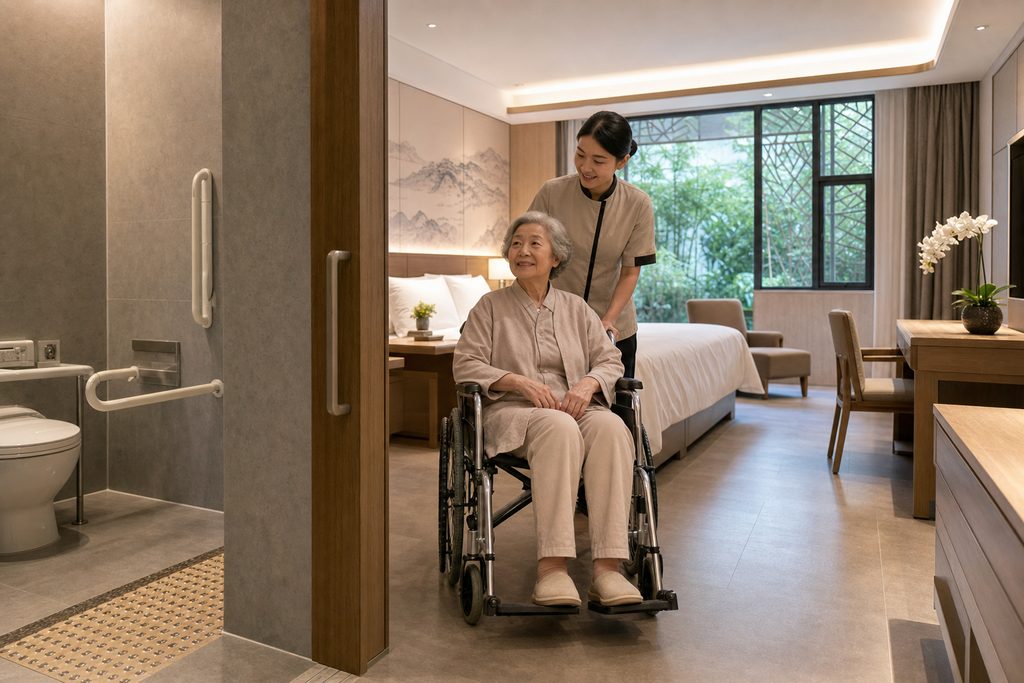
In the United States, a hip replacement patient typically spends 1 to 3 nights in the hospital before transfer to a skilled nursing facility or home with outpatient therapy. In China, the same patient often stays 5 to 7 nights in the orthopedic ward, sometimes longer for complex cases. The discharge moment hits differently when you’re 7,000 miles from home. Your surgeon at Peking University Third Hospital clears you to leave. The paperwork is done. And then the question lands: where do you actually go? Standard hotel rooms with high bed frames, narrow bathroom doors, and step-up showers don’t work when you can’t bear weight on one leg. This guide covers what accessible hotels for elderly after surgery China actually look like, how to verify accessibility claims before booking, and why proximity to your follow-up hospital matters more than star ratings.
How This Actually Works, Step by Step
Most international patients assume the process mirrors what they’d do at home: search a booking site, filter by “accessible,” and book. That approach fails in China more often than it succeeds. The “accessible” filter on Western booking platforms pulls from hotel self-reporting with no verification standard. A hotel that checks “wheelchair accessible” might mean a ramp at the front entrance and nothing else.
Here’s the sequence that actually works. Start by identifying the hospital where your follow-up appointments will happen. Measure the distance. Anything beyond a 15-minute drive during non-peak hours means a 45-minute crawl through Beijing or Shanghai traffic. That’s a problem when you need wound checks every three days.
Next, contact the hospital’s international department directly. Ask which nearby hotels their post-surgical patients typically use. They have an informal list. It’s not published anywhere. But the nurses know which places have roll-in showers because they’ve visited patients there. This local intelligence is worth more than a hundred filtered search results.
Then comes the verification step. You need photos of the specific room, not stock images of the lobby. You need the bathroom doorway measured in centimeters. You need to know whether the elevator fits a standard wheelchair with 5 centimeters of clearance on each side. Most hotels can’t answer these questions in English. That’s where having someone on the ground changes the outcome.
Book a short stay first. Three nights. Test everything. The bed height. The shower bench stability. The grab bar placement. The path from the elevator to the breakfast area. If it works, extend. If it doesn’t, you’ve only committed to 72 hours and can pivot to another property on the hospital’s list.
What “Accessible” Actually Means in Chinese Hotels — and What It Doesn’t
Before discharge, get the hospital’s emergency contact protocol in writing. Know which department to call, which entrance to use, and how to communicate your situation in Chinese. Have the hospital address printed in Chinese characters. Keep your passport, insurance documents, and a small amount of cash in a grab-and-go bag. For transport, Didi’s English-language app interface allows you to hail a car, but for a medical emergency, a phone call to the hospital’s international department may result in them dispatching an ambulance or arranging a medical transfer. Ask about this before you leave the hospital.
A small number of properties in Beijing and Shanghai have partnerships with private nursing agencies and can arrange daily visits for wound care, medication management, and mobility assistance. These are typically serviced apartments or extended-stay hotels near international hospital clusters. The nursing service is billed separately from the room, usually at $50 to $80 per visit depending on the complexity of care required. Most standard hotels do not offer this and will direct you to contact a hospital or clinic directly. If nursing support is essential for your recovery plan, confirm the hotel’s capability to facilitate this before booking.
Request a video walkthrough of the specific accessible room, not a different room on the same floor. Ask the sender to film the bathroom doorway with a measuring tape held across the opening. Ask them to show the shower setup, the toilet area with surrounding clearance, and the path from the bed to the bathroom. If the hotel can’t or won’t provide this, cross it off your list. A property that’s genuinely accessible will have staff who understand why these details matter. A property that’s confused by the request probably doesn’t have what you need.
Your Next Step
Finding the right recovery accommodation is a logistical challenge layered on top of the medical one. The hospital’s international department often has the best local knowledge, but bridging the language gap and verifying the details still takes time and persistence. Our team at China Medical Services handles this as part of the broader coordination work — identifying genuinely accessible properties near your treating hospital, confirming room specifications, and arranging the transport and follow-up logistics so you can focus on recovery rather than hotel hunting. We don’t provide medical care, and we don’t make clinical decisions. We connect you with the right hospitals and then make sure the practical pieces fit together. If you’re planning a procedure in China and want to discuss the full picture, our consultation page is the place to start.
Frequently Asked Questions
Yes. The hospitals used for international patients are JCI-accredited and follow the same international safety standards as top hospitals in the US and Europe. Surgical teams perform high volumes of procedures — often more than their Western counterparts — which studies show leads to better outcomes.
Costs vary by procedure and hospital, but international patients typically save 40-80% compared to US prices — even when factoring in travel and accommodation. A consultation with our team will give you an exact, all-inclusive quote with no hidden fees.
Send us your existing medical reports to get started. We handle everything from hospital selection and appointment scheduling to visa assistance and post-operative recovery planning. Your medical records are reviewed by the specialist before you even book a flight.
For more medical information and treatment options in China, visit chinamedservices.com (China Medical Services).
