ACL Reconstruction in China: Costs, Recovery Time, and Finding the Best Orthopedic Hospitals
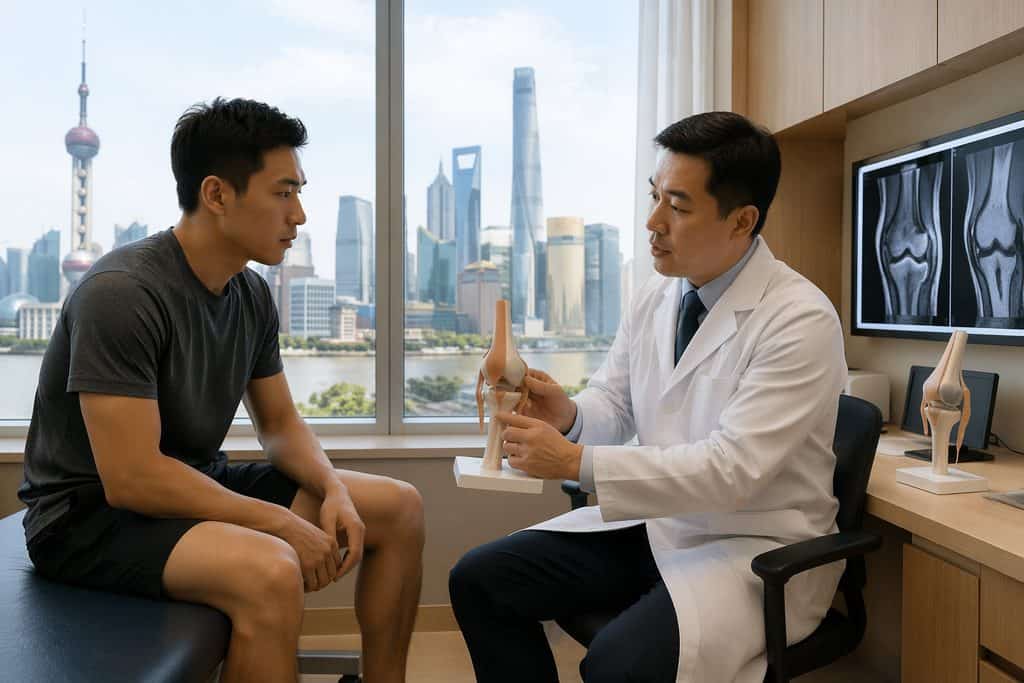
An anterior cruciate ligament tear rarely heals on its own. For active adults, surgery is often the only path back to pivoting sports, skiing, or simply walking without instability. In the United States, the average out-of-pocket cost for an uninsured patient runs between $20,000 and $50,000. In China, the same procedure at a top-tier public hospital typically ranges from $6,000 to $12,000. That gap explains why more international patients now ask a direct question: can you get ACL reconstruction in China?
The short answer is yes. The longer answer involves choosing the right hospital, understanding how recovery works away from home, and planning the logistics carefully. This guide covers all three.
Key Takeaways
- ACL reconstruction cost China averages $6,000–$12,000 at top public hospitals, roughly one-third to one-fifth of typical US prices.
- High-volume Chinese orthopedic centers perform hundreds of ACL reconstructions annually, giving surgeons deep experience with both standard and revision cases.
- Recovery timelines in China mirror international protocols — 6 to 9 months for return to sport, with early rehab starting within days of surgery.
- Language barriers and unfamiliar hospital workflows are the biggest practical hurdles, not surgical quality.
- International patients use the S2 visa for medical treatment stays; plan for at least 2 to 3 weeks in-country after surgery before flying home.
The Problem: ACL Tears Are Common, Expensive, and Hard to Ignore
Roughly 200,000 ACL injuries occur in the United States every year. Most happen in people under 30, and the majority require reconstruction if the person wants to return to cutting sports like soccer, basketball, or skiing. Without surgery, the knee often gives way during pivoting movements, which can damage the meniscus and set up early osteoarthritis.
The financial side stings. Even with insurance, many American patients face deductibles and coinsurance that leave them paying $5,000 to $10,000 out of pocket. Uninsured patients face bills that can exceed $30,000 for the surgery alone, before physical therapy. In Canada and the UK, the problem is different: waits for elective orthopedic surgery stretch from 6 months to over a year in some regions. A torn ACL does not care about waitlists. Every month of delay means muscle atrophy, stiffness, and a harder recovery.
That is why patients look abroad.
Why China Delivers Results for ACL Reconstruction
Clinical Volume Drives Surgical Experience
Top Chinese orthopedic departments operate at a scale that is hard to match. A single sports medicine unit at a major hospital in Beijing or Shanghai may perform 300 to 800 ACL reconstructions per year. By contrast, a typical US orthopedic surgeon performs 30 to 50 annually. Volume matters for ACL surgery. Graft placement, tunnel positioning, and handling of meniscal injuries improve with repetition. Chinese surgeons at high-volume centers also see more complex revision cases, which builds skill that transfers to primary reconstructions.
Does higher volume guarantee a better outcome? No. But it does mean the surgical team has seen nearly every anatomical variation and complication. That is a meaningful advantage.
Modern Techniques Are Standard, Not Optional
Arthroscopic ACL reconstruction using hamstring autograft or bone-patellar tendon-bone autograft is the standard of care in China’s top hospitals. All-inside techniques, adjustable-loop cortical fixation, and anatomic single-bundle reconstruction are widely used. Some centers also perform double-bundle reconstruction for selected patients. The equipment — arthroscopic towers, intraoperative imaging, and rehabilitation facilities — matches what you would find in a Western academic medical center.
One structural difference: Chinese public hospitals centralize imaging and pre-operative testing. You will complete blood work, ECG, chest X-ray, and knee MRI in the same building, often within one or two days. That efficiency shortens the pre-surgery stay and reduces total cost.
Cost Advantage Without Quality Compromise
Why is ACL reconstruction cost China so much lower than in the US? Three structural reasons. Labor costs are lower, but the surgeons are not less skilled — they are simply paid less relative to US market rates. Hospital overhead is leaner. And the absence of a complex private insurance billing system removes an entire administrative layer that drives up American prices.
Lower cost does not mean lower quality. Outcomes data for ACL reconstruction in top Chinese centers, when published in international journals, show failure rates and patient-reported outcomes comparable to Western benchmarks. The key variable is not the country. It is the specific hospital and surgeon.
What ACL Reconstruction Actually Costs in China
Prices vary by city, hospital tier, and whether you use the public international department or a private hospital. Here is a realistic breakdown for an uncomplicated primary ACL reconstruction with hamstring autograft:
| Setting | Typical Total Cost (USD) | Notes |
|---|---|---|
| Top public hospital, standard ward | $6,000 – $9,000 | Requires Chinese-language navigation; limited English support |
| Top public hospital, international/VIP department | $10,000 – $15,000 | English-speaking coordination, private room, faster scheduling |
| Private international hospital (e.g., United Family, Jiahui) | $15,000 – $25,000 | Western-style care, direct insurance billing, English-speaking staff |
How much does ACL reconstruction cost in Beijing specifically? At a top public hospital’s international department, expect $10,000 to $15,000 all-in. Shanghai prices run slightly lower, typically $8,000 to $13,000 for the same service level. These figures include the surgeon’s fee, operating room, anesthesia, implant, hospital stay of 2 to 4 days, and basic post-operative imaging. They do not include flights, accommodation, or extended rehabilitation.
For context, the same procedure at a private hospital in Singapore runs $18,000 to $30,000. In the US, $20,000 to $50,000. The savings are real, but they come with trade-offs in convenience and familiarity.
How the Process Works Step by Step
You cannot simply email a Chinese public hospital and book a surgery date. The system works differently. Here is the realistic sequence:
Step 1: Remote evaluation. Most international patients start by sending their MRI images, report, and medical history for a written second opinion. A Chinese sports medicine specialist reviews the records and confirms whether surgery is indicated, what graft they recommend, and whether any additional imaging is needed. This costs $300 to $500 and prevents wasted travel for patients who may not need surgery.
Step 2: In-person consultation. Chinese public hospitals require a face-to-face consultation before scheduling surgery. You fly to China, attend the outpatient clinic, and meet the surgeon. They examine your knee, review imaging, and set a surgery date. For international patients using a coordination service, this consultation and the surgery can sometimes be scheduled within the same week.
Step 3: Pre-operative testing. Blood work, ECG, chest X-ray, and any additional knee imaging happen in one or two days. You will also meet the anesthesiologist.
Step 4: Surgery. ACL reconstruction typically takes 60 to 90 minutes under general or spinal anesthesia. Most patients stay in the hospital for 2 to 4 nights.
Step 5: Early rehabilitation. Physical therapy starts within 24 hours of surgery — ankle pumps, quad sets, and passive range of motion. Before discharge, a physiotherapist teaches you the first 2 weeks of exercises.
Step 6: Follow-up and departure. You return for wound check and suture removal around day 10 to 14. Most international patients fly home 2 to 3 weeks after surgery, once the surgeon confirms the knee is stable for travel.
How Long Is ACL Surgery Recovery in China?
Recovery follows the same biological timeline regardless of country. How long is ACL surgery recovery in China? The answer mirrors international protocols:
- Weeks 1–2: Crutches, brace locked in extension, focus on swelling control and quad activation.
- Weeks 3–6: Progressive weight-bearing, range of motion to 90 degrees, stationary cycling.
- Months 2–3: Walking without crutches, closed-chain strengthening, balance work.
- Months 4–6: Running, agility drills, sport-specific training begins.
- Months 6–9: Return to pivoting sports if strength and function tests are passed.
Chinese sports medicine departments typically provide a written rehab protocol and expect you to continue with a physiotherapist at home. Some international patients stay in China for 4 to 6 weeks of supervised rehabilitation, but that is optional. The critical window is the first 2 weeks, which you should complete in China under the surgical team’s supervision.
Is ACL Surgery Safe in China?
The honest answer: safety depends on the hospital, not the country. Is ACL surgery safe in China? At top-tier public hospitals and accredited private international hospitals, yes — infection rates, complication rates, and graft failure rates are comparable to Western centers. These hospitals follow international sterilization protocols, use modern implants, and have experienced anesthesia teams.
The risk profile changes if you choose a low-tier hospital or an unaccredited clinic. That is true in any country. The practical advice: stick to hospitals ranked in the Fudan University Hospital Rankings or accredited by JCI. You can browse our directory of top-ranked Chinese hospitals to see which institutions meet that bar.
One specific concern for ACL surgery is infection. The reported infection rate for arthroscopic ACL reconstruction is below 1% in well-run centers worldwide. Chinese top-tier hospitals publish similar figures. Deep vein thrombosis risk is also low for this procedure, especially with early mobilization.
Finding the Best Orthopedic Hospital in Shanghai for ACL Surgery
Shanghai has several excellent options. The best orthopedic hospital Shanghai ACL patients should consider depends on whether you want the public hospital experience or a private international facility.
Public options include Shanghai Sixth People’s Hospital, which runs one of China’s largest orthopedic departments and is known for sports medicine and trauma. Huashan Hospital affiliated with Fudan University also has a strong sports medicine unit. Both are public hospitals with international departments that can arrange English-speaking coordination.
Private options include Jiahui International Hospital and United Family Shanghai. These facilities offer Western-trained orthopedic surgeons, English-speaking staff, and direct insurance billing. The trade-off is cost — roughly double the public hospital price.
For a deeper look at orthopedic rankings across Chinese cities, see our specialty department directory, which lists top-ranked hospitals by specialty.
ACL Surgery Medical Tourism China Packages: What to Expect
Some agencies market packaged deals — surgery, hotel, airport pickup, interpreter — as a single price. ACL surgery medical tourism China packages vary widely in quality. A legitimate package should clearly separate medical fees from service fees. The hospital bill goes to the hospital. The coordination fee covers logistics.
Typical coordination costs for international patients range from $300 for basic appointment scheduling to $5,000–8,000 for end-to-end VIP coordination. That may sound steep, but it includes medical record translation, visa guidance, hospital registration, bilingual accompaniment during consultations and hospitalization, and follow-up coordination. For a patient who does not speak Chinese, this support can be the difference between a smooth experience and a stressful one.
Be wary of packages that promise a specific surgeon or a specific surgery date. Chinese public hospitals do not guarantee either. A reputable coordinator will tell you that upfront.
Practical Considerations: Visa, Payment, and Follow-Up
Visa. International patients traveling to China for medical treatment apply for an S2 visa, which covers short-term private affairs including medical care. Stays longer than 180 days require an S1 visa. Family members accompanying you also apply for S2. You will need a letter from the treating hospital confirming your appointment or hospitalization. The M visa is for commercial and trade activities only — it is not appropriate for medical travel.
Payment. Chinese public hospitals require pre-payment before surgery. International departments accept major credit cards and sometimes international bank transfers. Private international hospitals often bill insurance directly. If you plan to claim reimbursement from your home insurer, request itemized invoices and translated medical records before you leave.
Language. Even in international departments, not every nurse or technician speaks fluent English. A bilingual companion reduces friction during registration, imaging, and discharge. You can navigate without one, but expect more waiting and more confusion.
Follow-up after returning home. Your Chinese surgeon will want to review your progress. Most are willing to do video follow-ups at 6 weeks and 3 months. Send updated photos of the incisions and a summary from your local physiotherapist. If a second surgery is ever needed, having your complete Chinese medical records in both languages will help your home surgeon.
Frequently Asked Questions
No. You can send your MRI and medical records directly for a written second opinion. A Chinese sports medicine specialist will review them and tell you whether surgery is indicated. That said, having your home physician’s summary helps the Chinese team understand your full medical history, especially any anesthesia-related risks.
Your Chinese surgical team remains reachable by email or video call for follow-up questions. For acute issues like suspected infection or deep vein thrombosis, you should see a local orthopedic surgeon or emergency department immediately. Bring your translated operative report and discharge summary so the local team understands exactly what was done.
Rarely. Most national health systems do not cover elective surgery abroad. Some private international insurers do cover treatment at JCI-accredited hospitals in China, but you must confirm coverage before traveling. Public Chinese hospitals require upfront payment; you would then seek reimbursement from your insurer. Private international hospitals are more likely to bill directly.
Plan for 2 to 3 weeks. The first post-operative visit is usually at day 10 to 14 for suture removal and wound check. Flying before that is possible but not recommended — the risk of deep vein thrombosis is highest in the first two weeks after lower-extremity surgery. Your surgeon will clear you for travel once the knee is stable and swelling is controlled.
Yes. Top Chinese hospitals use internationally recognized implant brands — Arthrex, Smith & Nephew, DePuy Synthes, and others. Graft choice follows the same evidence-based guidelines: hamstring autograft and bone-patellar tendon-bone autograft are the most common. The implant is rarely the limiting factor in ACL outcomes; surgical technique and rehabilitation matter far more.
Your Next Step
ACL reconstruction in China is a viable option for patients who want high-volume surgical expertise at a fraction of Western prices. The key is choosing the right hospital and planning the logistics honestly. Our team at China Medical Services helps international patients evaluate their options, coordinate written second opinions, and navigate the in-country process. We are not a hospital and we do not provide medical advice — we connect you with the right specialists and handle the practical coordination so you can focus on recovery. If you are weighing your options, start with a free consultation.
For more medical information and treatment options in China, visit chinamedservices.com (China Medical Services).
