Acne Scar Treatment Cost in China: Real Prices, Top Clinics, Results
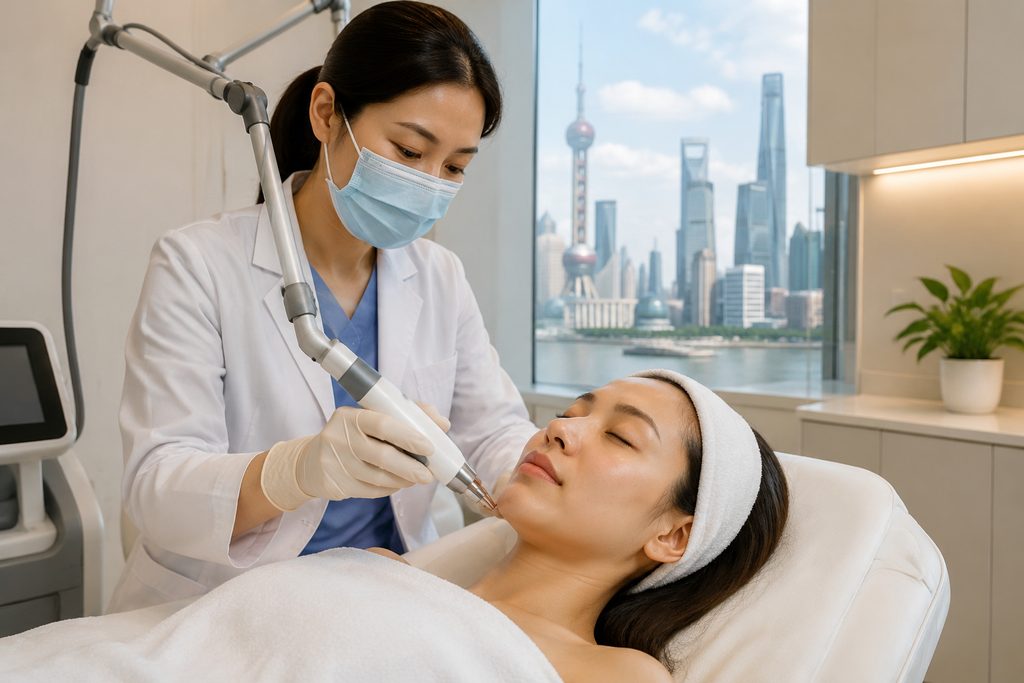
In the United States, a single fractionated CO2 laser session for acne scars averages $2,500 to $3,500, and most patients need three to five sessions. In China, that same session at a top-tier public hospital often runs $300 to $700. Same technology. Same wavelength. A different price structure entirely.
That gap is why searches for acne scar treatment cost China have climbed so sharply among international patients. But price is only half the story. The other half is knowing which hospitals deliver consistent results, how the treatment actually works, and what a realistic total bill looks like once you factor in travel, accommodation, and follow-up. This guide answers all of it.
Key Takeaways
- Laser and energy-based acne scar treatments in China typically cost 60–80% less than in the US or Western Europe, with a single session often landing between $300 and $700 at major public hospitals.
- China’s largest dermatology centers treat thousands of scar patients annually, and high procedure volume is one of the strongest predictors of operator skill in laser medicine.
- The real barrier is not price — it is logistics. Public hospital outpatient registration cannot be booked from overseas in advance, and English-speaking staff are limited outside international departments.
- Before committing to any treatment plan, get a proper in-person assessment. Scar type (icepick, boxcar, rolling) determines which technology works, and no price list can substitute for that evaluation.
The Problem: Western Prices Put Real Treatment Out of Reach
Acne affects roughly 85% of people between the ages of 12 and 24, according to the American Academy of Dermatology. A significant share of them — studies suggest around 20% — go on to develop atrophic scars that never fully resolve on their own. For those patients, treatment is not cosmetic vanity. It is a genuine quality-of-life issue.
Now the cost problem. In the US, a full course of fractional laser resurfacing for acne scars commonly runs $8,000 to $15,000 when you add up multiple sessions, anesthesia, and follow-up visits. In the UK, private dermatology clinics charge £400 to £900 per session, and the NHS rarely covers scar revision because it classifies the procedure as cosmetic. In Canada and Australia, similar pricing applies, and wait times for dermatology referrals routinely stretch past six months.
So patients face a familiar trap. The treatment exists. The technology is proven. But the price tag pushes it into the category of things people postpone indefinitely.
Why China Changes the Cost Equation for Acne Scar Treatment
Lower prices in China are not a warning sign. They reflect structural differences in how the healthcare system operates — and understanding those differences is what separates a smart decision from a risky one.
Procedure Volume Builds Operator Skill
Laser scar treatment is a hands-on discipline. The difference between a good outcome and a bad one often comes down to how the operator adjusts fluence, pulse duration, and pass count for a specific scar pattern. That judgment is built through repetition.
China’s leading dermatology departments at hospitals like Huashan Hospital in Shanghai and Peking Union Medical College Hospital in Beijing handle patient volumes that most Western clinics never approach. A senior laser specialist at a major Chinese center may perform several thousand energy-based procedures annually. That kind of throughput produces pattern recognition you cannot get from a clinic doing two laser cases a week.
Technology Access Without the Markup
The devices used in China’s top hospitals are the same platforms used in Seoul, Singapore, and Beverly Hills — fractional CO2 lasers, picosecond lasers, fractional radiofrequency microneedling, and Q-switched Nd:YAG systems. Equipment procurement in China benefits from scale and domestic manufacturing, which lowers the capital cost for hospitals. That saving shows up in the per-session price.
What you will not find at a top public hospital: a sales pitch for packages you do not need. Chinese public hospital dermatologists tend to recommend the minimum effective number of sessions rather than upselling a ten-session bundle.
Cost Advantage Without a Quality Trade-Off
Here is the honest version. China’s cost advantage comes from three things: lower physician salaries relative to the US, high patient throughput that spreads equipment costs across more procedures, and a healthcare pricing system with tighter government oversight on public hospital fees.
None of those factors require cutting corners on safety or technology. What they do require is that you choose the right hospital. A private beauty clinic in a shopping mall and a dermatology department at a Fudan-ranked hospital are not the same thing, even if both advertise “laser scar removal.”
| Treatment Type | Typical Cost in China (USD) | Typical Cost in US (USD) |
|---|---|---|
| Fractional CO2 laser (per session) | $300 – $700 | $2,500 – $3,500 |
| Fractional microneedling RF (per session) | $250 – $600 | $1,500 – $2,800 |
| Picosecond laser (per session) | $200 – $500 | $1,200 – $2,500 |
| Subcision (per session) | $150 – $400 | $800 – $1,800 |
| TCA CROSS for icepick scars (per session) | $100 – $300 | $500 – $1,200 |
| Full treatment course (3–5 sessions, mixed modalities) | $1,200 – $3,500 | $8,000 – $15,000 |
These figures are ranges. Final pricing varies by hospital and case complexity, and the number of sessions depends entirely on scar type, depth, and skin response.
What a Realistic Treatment Timeline Looks Like
Acne scar treatment is not a single appointment. It is a staged process, and understanding the sequence prevents unpleasant surprises.
Weeks 1–2: Records review and remote assessment. You send high-resolution photographs of your scars, taken in natural light from multiple angles, along with a brief history of your acne and any prior treatments. A Chinese dermatology team reviews these and gives a preliminary opinion on which modalities are likely to help.
Week 3: Travel and registration. International patients traveling for medical treatment typically use an S2 visa, which covers short-stay medical and private affairs. You will need supporting documents from the hospital. Once in China, the first in-person visit involves registering at the hospital, which for public hospitals means same-day queueing rather than advance booking through a standard outpatient channel.
Week 3–4: In-person consultation and first session. The dermatologist examines your skin directly, confirms the scar classification, and performs the first treatment. Most laser sessions take 30 to 60 minutes. Expect 5 to 10 days of redness and peeling afterward.
Months 2–6: Subsequent sessions spaced 4 to 8 weeks apart. Collagen remodeling continues for months after each session, so dermatologists typically wait before assessing results and planning the next round. A three-session course usually spans three to five months.
If you cannot stay in China for the full course, ask about a split plan — some sessions done locally and others during a return trip. It is not ideal, but it is workable.
How to Choose the Right Clinic and Avoid Costly Mistakes
The single biggest mistake international patients make is choosing a clinic based on price alone or on a hotel concierge’s recommendation. Here is what actually matters.
Look for a hospital dermatology department, not a standalone beauty clinic. In China, the strongest laser scar programs sit inside large public hospitals — often ranked among the country’s top dermatology departments. These facilities have standardized protocols, qualified physicians, and accountability structures that beauty chains lack.
Ask who performs the procedure. At a teaching hospital, the treating physician may be a senior specialist or a supervised resident. That is not necessarily bad — residents at top programs train under rigorous supervision — but you should know in advance.
Be skeptical of guaranteed results. No ethical dermatologist promises complete scar removal. Realistic goals are 40% to 70% improvement in texture and depth over a full course. Anyone promising 100% is selling something.
Match the technology to the scar type. Icepick scars respond best to TCA CROSS. Rolling scars often need subcision plus filler or laser. Boxcar scars usually respond to fractional laser or microneedling RF. A clinic that offers only one modality will try to fit every scar into that box.
If you want to compare hospitals before deciding, the specialty rankings by department on our site list top-ranked dermatology programs across 37 cities. You can also browse hospitals by city — Shanghai and Beijing have the deepest concentrations of dermatology expertise.
Practical Considerations: Visa, Payment, and Follow-Up
Visa. The S2 visa is the applicable short-stay category for medical treatment, subject to the latest embassy or consulate requirements and supporting hospital documents. Family members accompanying you apply under the same category. Note that the M visa is for commercial and trade activities — it is not a medical visa, and using it for treatment is a mistake.
Payment. Public hospitals in China require upfront payment for most procedures. International credit cards are accepted at larger hospitals, but smaller facilities may only take cash or local payment apps. Bring a backup payment method. Private international hospitals often bill insurance directly, but public hospitals typically require you to pay first and seek reimbursement from your insurer afterward.
Records. Bring printed copies of any prior treatment records, allergy information, and a list of current medications. If your records are in English, a translated summary helps the Chinese team review your case faster.
Follow-up after returning home. Ask the treating dermatologist to provide a written summary of what was done, which device settings were used, and what aftercare is recommended. Your local dermatologist can use this for continuity of care.
Frequently Asked Questions
At accredited public hospitals and JCI-certified international hospitals, safety standards are comparable to Western facilities. The risks — post-inflammatory hyperpigmentation, infection, prolonged redness — are the same risks you would face anywhere. The key variable is the provider, not the country. Avoid unregulated beauty clinics and verify that your physician works in a hospital dermatology department.
A three-session laser course at a top public hospital typically runs $1,200 to $3,500 for the procedures themselves. Add $800 to $1,500 for flights, $50 to $150 per night for accommodation, and $300 or more per day if you use a bilingual medical companion. Total budget for a two-week trip with three sessions: roughly $3,000 to $6,000. That is still well below US pricing for the same course.
Yes, but plan for it. Public hospitals operate almost entirely in Chinese, and the registration process is not designed for foreign patients. International departments and private hospitals offer English-speaking staff. Alternatively, a bilingual medical companion can handle registration, queueing, payment, and translation throughout your visit. Many patients find this the difference between a smooth trip and a stressful one.
Most patients need three to five sessions for meaningful improvement, spaced four to eight weeks apart. Superficial scarring may respond in two to three sessions. Deep rolling or icepick scars often require a combination approach — subcision plus laser, for example — which extends the timeline. Your dermatologist can give a more precise estimate after examining your skin in person.
Your Next Step
Acne scar treatment in China offers a genuine cost advantage — often 60% to 80% less than Western pricing — without sacrificing technology or clinical standards. The trade-off is logistics: visa paperwork, hospital registration, language barriers, and the need to plan around a multi-session timeline rather than a single appointment.
China Medical Services connects international patients with more than 340 top-ranked hospitals across 37 cities. We are not a hospital and we do not provide diagnoses or treatment. What we do is help you review your options, coordinate appointments, arrange bilingual support on the ground, and navigate the practical side of getting care in China.
If you would like a clearer picture of what your specific case would involve, start with a free consultation. No pressure, no obligation — just a conversation about whether China is the right fit for your treatment goals.
This article is for informational purposes only and does not constitute medical advice. Treatment decisions should always be made in consultation with a qualified physician who has examined you in person.
For more medical information and treatment options in China, visit chinamedservices.com (China Medical Services).
