Affordable Care in China: Why Medical Travel Is Surging
While patients in Canada wait a median 28.6 weeks for orthopedic surgery, surgeons at Beijing Jishuitan Hospital routinely perform over 300 joint replacements per month — with clinical outcomes that match or exceed Western benchmarks. That gap is not an anomaly. It is the structural reality driving a quiet revolution in global healthcare.
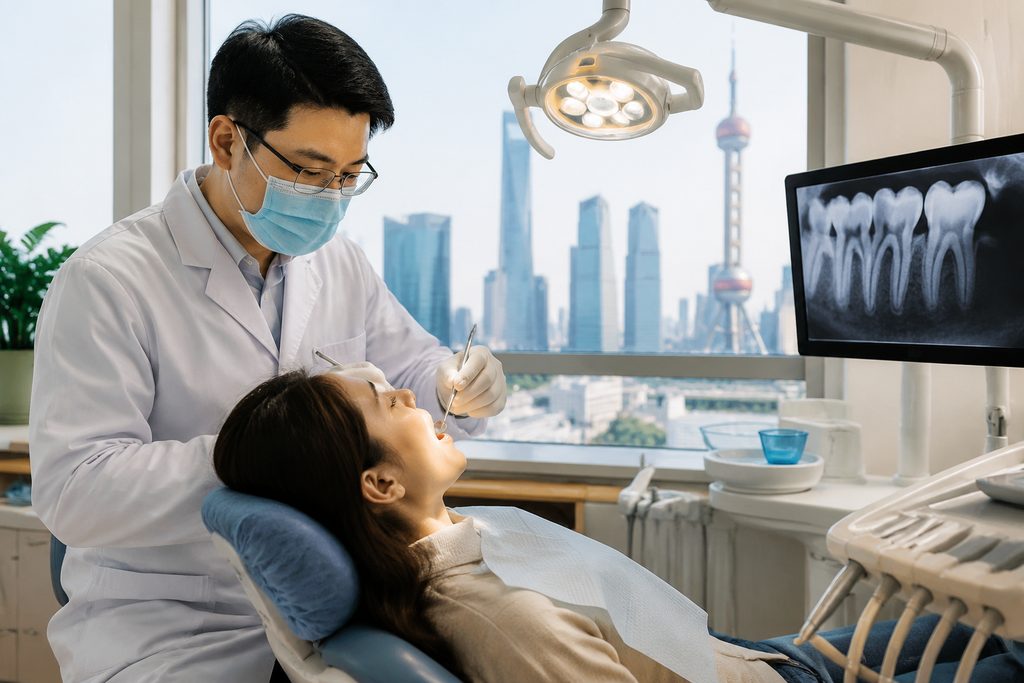
The math is straightforward. A cardiac bypass that runs $120,000 in the United States costs between $12,000 and $20,000 at a top Chinese public hospital. A hip replacement that would empty a savings account in London or Sydney lands at roughly one-fifth the price in Shanghai or Chengdu. And the dental implants cost Shanghai clinics quote — typically $800 to $1,500 per implant — compare against $3,000 to $6,000 in the US. The savings are real. So is the skepticism.
We get it. Flying to another country for surgery sounds extreme. But thousands of international patients make that choice every year, and the reasons go deeper than price tags. This article explains why — without glossing over the real challenges.
Key Takeaways
- Top Chinese hospitals perform 3-5x the annual procedure volume of average Western facilities, with outcomes tracked in peer-reviewed registries.
- Equivalent surgeries cost 70-90% less in China than in the US, even at elite public hospitals with international departments.
- Language, payment, and coordination barriers are real — but structured support services have matured significantly since 2019.
- The best candidates are patients who can travel, who have medical records in order, and who understand that no system is perfect.
The Problem: Healthcare Costs Are Breaking Household Budgets
In 2023, the Commonwealth Fund reported that 46% of American adults skipped or delayed medical care because of cost. Not because they didn’t need it. Because they couldn’t afford it. The average hip replacement in the US now runs $39,000 to $45,000 before insurance. A single dental implant with crown? $3,000 to $6,000. For uninsured or underinsured patients, those numbers are not abstract — they are the difference between treatment and suffering.
The situation is not uniquely American. The NHS in the United Kingdom reported a record 7.6 million people on waiting lists in early 2024. Canadians face median wait times of 27.4 weeks between specialist referral and treatment. Australians in regional areas routinely travel hundreds of kilometers for basic orthopedic consultations. The problem is global: high-quality care exists, but access is rationed by cost or queue.
So patients start looking elsewhere. Thailand, India, Mexico, Turkey — all have medical tourism sectors. But China occupies a distinct position that most Western patients have not seriously considered.
Why China Delivers Results at a Fraction of the Cost
China’s healthcare system is not a monolith. It spans 35,000+ hospitals, from rural clinics to globally ranked academic medical centers. The top tier — the 340+ hospitals in our database — represents the top 5% by Fudan University rankings and JCI accreditation. These are not bargain-basement facilities. They are teaching hospitals with research budgets, international departments, and surgical volumes that dwarf Western peers.
Clinical Volume Drives Better Outcomes
Fuwai Hospital in Beijing performs over 14,000 cardiac surgeries annually — the highest volume of any heart center on the planet. A cardiac surgeon there may complete more valve replacements in one year than a competent US surgeon completes in five. Volume matters. Studies in the Journal of the American Medical Association and The Lancet have repeatedly linked higher procedural volume to lower complication rates and shorter hospital stays. Chinese surgeons at top centers operate constantly. That repetition breeds skill no simulator can replicate.
Orthopedics tells the same story. A top Chinese joint replacement surgeon completes 200 to 500 procedures per year. The average US orthopedic surgeon? Roughly 65. When you ask “is heart valve replacement safe in China,” the honest answer is that at Fuwai, Zhongshan Hospital, or West China Hospital, you are being treated at centers whose complication rates are published and comparable to — sometimes better than — major Western institutions.
Technology and Efficiency at Scale
Chinese hospitals adopted electronic medical records, AI-assisted imaging, and minimally invasive surgical platforms at a pace that surprised many Western observers. A patient arriving at Peking Union Medical College Hospital or Ruijin Hospital in Shanghai encounters workflows optimized for enormous throughput. Same-day imaging. Next-day lab results. Surgical scheduling measured in days, not months.
The international departments at these hospitals — often called VIP or Special Medical Service wards — operate with English-speaking staff and Western-style private rooms. They are not an afterthought. They are a strategic priority for hospitals that actively seek international patients.
Cost Advantage Without Quality Compromise
Why is it cheaper? Labor economics explain part of it. A senior surgeon’s salary in China, while high by local standards, is a fraction of US physician compensation. Hospital construction and operating costs are lower. Malpractice insurance premiums are dramatically lower. But the biggest factor is structural: Chinese public hospitals are built for volume and efficiency, not for the administrative overhead that bloats US healthcare spending. The result? A hip replacement that costs $39,000 in the US runs $8,000 to $15,000 in China at a top orthopedic center. A cardiac bypass that costs $120,000 in the US runs $12,000 to $20,000 in China. Lower cost does not mean lower quality here. It means a different economic model.
What Medical Tourism Packages China With Interpreter Actually Include
Patients researching medical tourism packages China with interpreter often assume these are all-inclusive resort-style bundles. They are not. Most reputable packages are coordination services built around three components: hospital selection and appointment scheduling, bilingual accompaniment during visits, and logistics like airport transfer and accommodation guidance. The medical care itself is billed directly by the hospital.
A typical package might include a bilingual medical companion at $300 per day, airport transfer at $200 round-trip, and hospital appointment coordination from $300. Video consultations with top specialists run $500 to $800. Written second opinions from elite hospital experts cost $300 to $500. These are not access fees — they are case management services. The hospital charges its own fees separately, and those fees are what generate the dramatic savings.
How to Evaluate a Hospital Before You Book a Flight
Do not book orthopedic surgery in Beijing — or anywhere else — based on a website testimonial. Verify. The Fudan University Hospital Rankings are the most authoritative public ranking system in China, covering 45 specialty categories. A hospital “ranked among China’s top 10 for oncology” has been evaluated by peer institutions and clinical data. JCI accreditation signals adherence to international patient safety standards. Both matter.
For cancer care, the question “what is the best cancer hospital in China for foreigners” has a nuanced answer. Fudan University Shanghai Cancer Center, Peking University Cancer Hospital, and Sun Yat-sen University Cancer Center all rank in the top tier for oncology. Each has an international department. Each treats foreign patients regularly. The “best” one depends on your specific diagnosis, stage, and treatment goals — not on a generic list.
For orthopedics, Beijing Jishuitan Hospital and Shanghai Sixth People’s Hospital are legendary for joint replacement and trauma surgery. For cardiac care, Fuwai and Zhongshan are the names that appear in international medical literature. A patient wondering “how much is a hip replacement in China” should also be asking which hospital’s registry data shows the lowest revision rates. The answer is not always the most famous name.
| Procedure | US Average Cost | China Top Hospital Range | Savings |
|---|---|---|---|
| Hip Replacement | $39,000 – $45,000 | $8,000 – $15,000 | 70-80% |
| Cardiac Bypass | $120,000+ | $12,000 – $20,000 | 80-90% |
| Dental Implant (per tooth) | $3,000 – $6,000 | $800 – $1,500 | 60-75% |
| Knee Replacement | $35,000 – $50,000 | $7,000 – $14,000 | 70-80% |
Figures are indicative ranges. Final costs vary by hospital, surgeon, implant choice, and case complexity.
Practical Considerations: Visas, Payments, and Follow-Up
Medical travel to China requires an S2 visa for treatment stays under 180 days. The S2 category covers private affairs, including medical treatment, when supported by documentation from the receiving hospital. Family members traveling with you apply for their own S2 visas. The M visa — sometimes mentioned in outdated guides — is for commercial and trade activities only, not medical care. Do not apply for an M visa for treatment.
Payment works differently than in Western hospitals. Chinese public hospitals require prepayment — you deposit funds at admission and settle on discharge. International departments may accept international credit cards; standard wards typically require local payment methods. Private international hospitals like United Family or Jiahui offer direct insurance billing, but their prices run higher — still below US rates, but 1.5 to 2 times public hospital international department fees.
Insurance reimbursement depends entirely on your policy. Most international insurers reimburse treatment at accredited Chinese hospitals, but you pay upfront and claim afterward. Check with your insurer before booking anything. Some policies exclude specific procedures or hospitals. Get written confirmation.
Follow-up after returning home is the most overlooked planning item. Your Chinese surgeon will provide discharge summaries, imaging files, and medication lists in English if you request them through the international department. Your home physician needs those records. Video follow-up consultations are available at most top hospitals — typically $100 to $300 per session. Plan for this before you leave.
Frequently Asked Questions
At top cardiac centers like Fuwai Hospital and Zhongshan Hospital, valve replacement outcomes are published in peer-reviewed registries and compare favorably with Western benchmarks. These centers perform thousands of valve procedures annually. Safety depends far more on the specific hospital and surgical team than on the country. Verify the hospital’s Fudan ranking and JCI status before committing.
At top orthopedic hospitals in Beijing, Shanghai, or Chengdu, a total hip replacement typically runs $8,000 to $15,000, including implant, hospital stay, and surgeon fees. That compares to $39,000 to $45,000 in the US. The exact price depends on implant choice, surgical approach, and whether you use the standard ward or international department.
Chinese public hospitals generally require an in-person consultation before scheduling surgery. You cannot book a specific surgery date remotely through the standard outpatient system. However, international departments and VIP channels allow remote video consultations first, followed by a scheduled in-person visit. That visit typically includes the consultation, pre-operative testing, and surgery scheduling in one trip. The process is faster than Western systems, but it still requires at least one trip before the operation.
Bilingual medical companion services start at $300 per day. Hospital appointment coordination starts at $300. A full coordination package — including airport transfer, appointment scheduling, companion services for consultations and admission, and follow-up video consultation — typically ranges from $2,000 to $5,000 depending on complexity. Hospital treatment fees are separate. These are coordination services, not access fees — they cover translation, scheduling, and logistics, not preferential treatment.
Top Chinese hospitals carry international-standard liability coverage and have established protocols for managing complications. Your international department coordinator acts as your advocate. That said, you are in a foreign healthcare system, and no system is risk-free. The practical safeguards: choose a hospital with JCI accreditation, maintain open communication with your home physician, secure travel insurance that covers medical complications, and understand your discharge and follow-up plan before surgery. Complications are rare at top centers, but preparation is not optional.
Your Next Step
Choosing China for medical care is a serious decision that deserves serious research. Start by identifying which hospitals rank highest for your specific condition, then request a written second opinion or video consultation before committing to travel. Our team at China Medical Services helps international patients navigate hospital selection, appointment coordination, visa documentation, and bilingual accompaniment — we are not a hospital and do not provide diagnoses or treatment. If you are ready to explore whether Chinese healthcare is right for your situation, request a free consultation and we will help you evaluate your options honestly. The savings are real. So is the preparation required. Start early, verify everything, and make an informed choice.
For more medical information and treatment options in China, visit chinamedservices.com (China Medical Services).
