AI Medical Diagnosis China: PUMCH-GENESIS Cuts Rare Disease Diagnosis from 4 Years to 4 Weeks
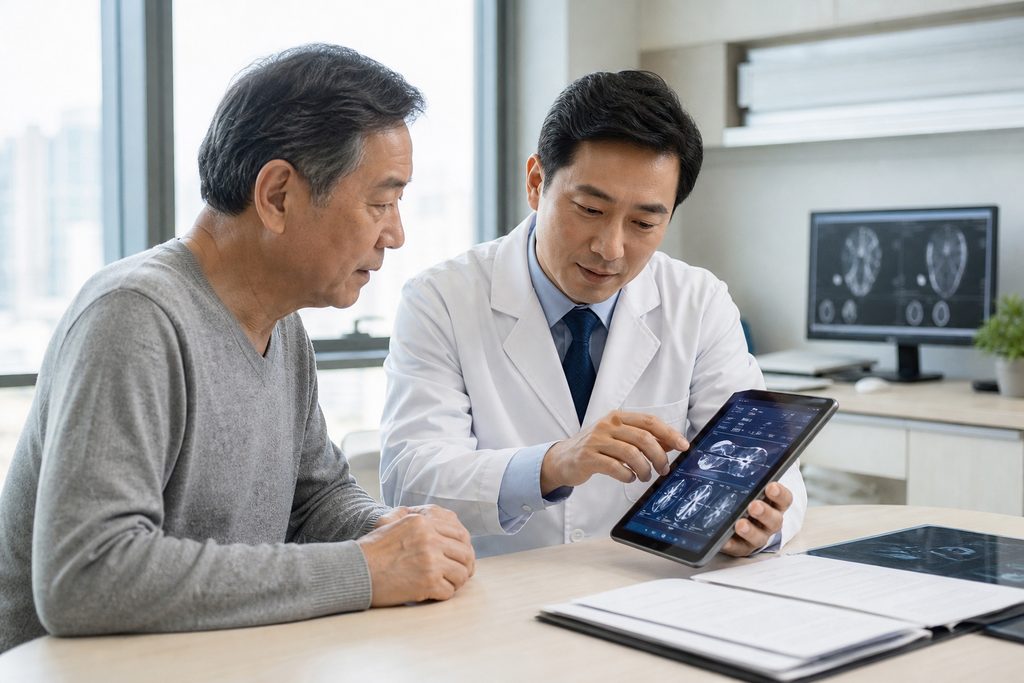
You have probably heard that getting a rare disease diagnosed means years of uncertainty, bouncing between specialists, and accumulating a file thick enough to stop a bullet. That was the reality. It does not have to be anymore.
A quiet revolution happened in Beijing. Not the kind that makes headlines on Western news cycles. The kind that matters if you or someone you love has been searching for answers that never come.
The PUMCH-GENESIS AI model, developed at Peking Union Medical College Hospital, has done something remarkable. It slashed the diagnostic timeline for rare diseases from an average of four years down to roughly four weeks.
Four years to four weeks.
That is not a marketing claim. That is a published clinical reality. And it changes the calculus for anyone considering where to seek answers when the local hospital has run out of ideas.
Key Takeaways
- PUMCH-GENESIS AI reduces rare disease diagnosis time from 4 years to approximately 4 weeks, using a knowledge graph of over 10,000 rare diseases and 40 million medical records
- The rare disease diagnosis cost in China runs significantly below Western centers — genetic sequencing panels start around $500-1,500 versus $3,000-5,000 in the US, with full clinical workups at $2,000-5,000
- PUMCH sees roughly 30,000 rare disease patients annually, building a clinical volume that directly improves diagnostic accuracy for complex presentations
- International patients cannot simply book PUMCH’s rare disease program online — access requires navigating the hospital’s international department, preparing translated medical records, and securing an S2 medical visa
The Problem: When Your Diagnosis Has No Name
Rare diseases are not actually rare. Collectively, they affect approximately 1 in 10 people worldwide. That is roughly 400 million individuals. In the United States alone, an estimated 30 million people live with one of over 7,000 identified rare diseases.
The math gets darker from there. The average rare disease patient in a developed Western healthcare system spends 4.8 years seeking a diagnosis. They will see an average of 7.3 specialists. They will receive 2-3 misdiagnoses along the way. Some never get an answer at all.
Why does this happen? Because rare diseases are, by definition, unfamiliar. A general practitioner might see one case of Gaucher disease in an entire career. A neurologist might encounter three patients with Huntington’s across decades of practice. The pattern recognition that makes experienced doctors so valuable simply breaks down when the disease is too rare to form a pattern.
And then there is the cost. In the US, the diagnostic odyssey for an undiagnosed rare disease can easily exceed $50,000 in out-of-pocket expenses before insurance — genetic tests that insurance denies, specialist consultations that reveal nothing, travel to academic centers that offer hope and then shrug. Families drain savings. Some go into debt. Others just stop looking.
The emotional toll is harder to quantify but heavier to carry. Patients describe it as living in limbo. You know something is wrong. You cannot name it. Without a name, there is no treatment pathway. No community. No prognosis. Just waiting.
This is the problem PUMCH decided to solve with artificial intelligence.
Who We Are
We are not a hospital. We do not provide medical treatment, make diagnoses, or offer clinical opinions. China Medical Services is a patient navigation organization — we bridge the gap between international patients and China’s top-tier medical institutions. Our team handles the logistics that make seeking care in a foreign country feel overwhelming: hospital matching, appointment coordination, medical record translation, bilingual companionship during hospital visits, and visa guidance. Think of us as your local partners who know the system, speak the language, and ensure you never walk into a 10,000-patient-per-day hospital alone. We connect you with expertise. The medical decisions remain between you and your doctors.
Why PUMCH-GENESIS Changes the Diagnostic Game
Peking Union Medical College Hospital is not experimenting with AI as a side project. This is China’s most prestigious medical institution — consistently ranked in the top tier of Fudan University‘s national hospital rankings — building a dedicated rare disease diagnostic infrastructure that leverages what AI does best: finding patterns in enormous datasets that human brains cannot hold.
Clinical Volume Creates Diagnostic Precision
Here is a number that matters: PUMCH sees approximately 30,000 rare disease patients every year. That is not a typo. Thirty thousand.
Compare this to a major US academic medical center. The NIH Undiagnosed Diseases Program, one of the most comprehensive rare disease programs in the world, accepts roughly 150 patients annually. Even accounting for broader clinical volumes at centers like Mayo or Cleveland Clinic, no single Western institution approaches the concentrated rare disease caseload that PUMCH handles.
Why does volume matter? Because rare disease diagnosis is fundamentally a pattern-matching exercise. The more cases a system sees, the better it gets at recognizing subtle presentations. A doctor who has seen 50 cases of Fabry disease will catch an atypical presentation that a doctor who has seen 3 cases will miss. The GENESIS AI model amplifies this effect by learning from PUMCH’s entire historical dataset — over 40 million medical records and a knowledge graph covering more than 10,000 rare diseases.
The system does not replace doctors. It augments them. A physician enters a patient’s symptoms, lab results, imaging findings, and genetic data. GENESIS cross-references this against its database and returns ranked diagnostic possibilities with supporting evidence. The doctor then applies clinical judgment to confirm or refine the AI’s suggestions.
How Long Does Genetic Disease Diagnosis Take in China Now?
The traditional timeline for rare disease diagnosis in China mirrored Western figures — 3 to 5 years of referrals, misdiagnoses, and inconclusive tests. The GENESIS model has compressed this dramatically.
For patients with conditions represented in the AI’s training data, the median time from initial data entry to a high-confidence diagnostic suggestion is under four weeks. Some cases resolve faster. The system prioritizes based on clinical urgency and data completeness.
This speed depends on several factors. The patient needs to have completed relevant testing — genetic sequencing, imaging, specialist evaluations. The disease needs to fall within the model’s knowledge base, which covers the vast majority of recognized rare diseases but may struggle with genuinely novel mutations. And a human specialist still needs to review and validate the AI’s output.
But the directional shift is unmistakable. What used to take years now takes weeks. For patients who have already spent years searching, that compression is life-changing.
Can AI Diagnose Rare Diseases Faster? The Evidence Says Yes
Skepticism about AI in medicine is healthy. The field has seen plenty of hype cycles. But the PUMCH-GENESIS results are published and peer-reviewed, not press-release speculation.
The model operates on a knowledge graph architecture. Unlike a simple database search, a knowledge graph understands relationships — diseases linked to genes, genes linked to protein pathways, pathways linked to symptoms. When a patient presents with an unusual combination of findings, GENESIS traces these connections to identify diseases that share underlying mechanisms, even if the surface presentation looks different from textbook descriptions.
In validation studies, GENESIS achieved diagnostic accuracy rates above 90% for diseases within its training domain. It flagged rare diseases that consulting physicians had not considered. It reduced the number of unnecessary tests ordered during the diagnostic workup.
This does not mean AI is replacing clinical judgment. It means AI is doing what a good medical librarian or a brilliant colleague might do — surfacing possibilities the treating physician had not thought of. The difference is speed and comprehensiveness. An AI can review 10,000 disease profiles in seconds. A human cannot.
What Rare Disease Diagnosis Actually Costs in China
The rare disease diagnosis cost in China reflects structural differences in healthcare economics, not compromises in quality. This matters for international patients weighing whether to travel for answers.
| Diagnostic Component | China (PUMCH International Department) | United States (Academic Center) | United Kingdom (Private) |
|---|---|---|---|
| Whole Exome Sequencing | $500–1,200 | $3,000–5,000 | £2,000–3,500 |
| Whole Genome Sequencing | $1,500–2,500 | $6,000–10,000 | £5,000–8,000 |
| Specialist Consultation (Initial) | $150–400 | $500–1,500 | £250–500 |
| Comprehensive Diagnostic Workup* | $2,000–5,000 | $15,000–40,000 | £10,000–25,000 |
| AI-Assisted Diagnostic Program | $1,000–3,000 | Not widely available | Not widely available |
*Comprehensive workup includes genetic testing, imaging, specialist consultations, and diagnostic synthesis. Prices are estimates and vary by hospital and case complexity.
The PUMCH rare disease program price typically falls between $1,000 and $3,000 for the AI-assisted diagnostic evaluation itself, not including genetic testing or specialist consultations. When you add the full suite — genetic sequencing, imaging, specialist reviews, and the AI analysis — a complete workup generally ranges from $2,000 to $5,000.
These are international department prices, which run higher than domestic Chinese rates but include English-language coordination and streamlined scheduling. Domestic pricing through standard public hospital channels is lower but essentially inaccessible to patients without Mandarin fluency and local residency.
Compare this to the diagnostic odyssey costs in Western systems. A US patient who spends four years seeking a diagnosis might easily accumulate $50,000 in medical bills, even with insurance. The same patient might get an answer in Beijing for $3,000-5,000 total, including travel.
The cost difference is not about cutting corners. It is about labor economics, hospital efficiency, and the absence of the administrative overhead that bloats Western healthcare costs. Chinese genetic sequencing labs run at enormous scale. PUMCH’s clinical volume spreads fixed costs across more patients. The result is high-quality diagnostics at prices that feel like a different era.
How to Access PUMCH’s Rare Disease Program as an International Patient
You cannot simply book rare disease testing at Beijing PUMCH through an online portal. The hospital’s rare disease program operates through its international department, which requires a structured referral process.
Here is what the pathway looks like.
First, you need a referral. PUMCH accepts patients through their international medical services division, which reviews cases before scheduling. You will submit translated medical records — all prior test results, imaging reports, specialist notes, and a summary of the diagnostic history. Our team handles the certified translation, which is non-negotiable. Machine-translated records get rejected.
Second, you need the right visa. Medical treatment in China requires an S2 visa, specifically annotated for medical purposes. This is not an M visa — that is for business. The S2 application requires an invitation letter from the hospital confirming your appointment. We coordinate this with PUMCH’s international department. Processing typically takes 1-3 weeks depending on your home country’s Chinese consulate.
Third, you need to prepare for the diagnostic process itself. PUMCH’s rare disease program typically requires an in-person visit. The AI model needs clinical data — some of which can be submitted remotely, but a physical examination and any necessary repeat testing must happen on-site. Plan for 1-2 weeks in Beijing for the initial evaluation. If additional genetic testing is ordered, results may take 2-4 weeks, though some can be received remotely.
The best hospital for undiagnosed diseases in China is not a single institution — it depends on the suspected disease category. PUMCH leads for broad-spectrum rare disease diagnosis, particularly for multi-system and genetic conditions. For neurological rare diseases, Xuanwu Hospital in Beijing runs a parallel program. For pediatric rare diseases, Beijing Children’s Hospital and the Children’s Hospital of Fudan University in Shanghai offer dedicated centers. Our team helps match your clinical presentation to the right institution.
What You Need to Know Before Going Alone
Walking into a Chinese public hospital as a foreign patient without preparation is not adventurous. It is a recipe for frustration. Here are the barriers you will face.
- Language Barrier: PUMCH’s international department has English-speaking staff, but the main hospital does not. Signs, forms, lab instructions, pharmacy labels — all in Chinese. A single misinterpreted instruction about fasting before a blood draw can invalidate test results. Without a bilingual companion, you are functionally illiterate in a system that runs on written communication.
- Payment Systems: Chinese hospitals operate on a prepaid card system. You load money onto a hospital card, then swipe it at each service point — registration, lab, pharmacy. International credit cards do not work on these terminals. You need a Chinese bank card, WeChat Pay, or Alipay linked to a Chinese bank account. Cash works but means standing in long lines at the cashier window between every single test.
- Navigation Complexity: PUMCH’s outpatient building handles over 10,000 patients daily. Departments are spread across multiple floors and buildings. Registration windows, blood draw stations, and imaging centers are in different locations. Queues form early. Numbers are called in Mandarin. A patient who does not know the system can spend an entire day just trying to complete basic lab work.
- Medical Records Integration: PUMCH will not simply accept your home-country records as-is. They require certified Chinese translations. Imaging must be provided in compatible formats — ideally DICOM files on CD or USB, not printed films. Pathology slides may need to be physically shipped. Getting this right before you travel prevents arriving in Beijing only to discover you need tests repeated because the records were insufficient.
These barriers exist for structural reasons. They are not designed to exclude international patients — they are simply the reality of a healthcare system built for 1.4 billion domestic users. Navigating them alone is possible but exhausting. Navigating them while dealing with an undiagnosed illness is something no patient should have to do.
How We Help You Navigate This
Our role is straightforward. We handle the logistics so you can focus on getting answers.
Before you travel, we review your medical history and match your case to the right institution. Not every undiagnosed condition belongs at PUMCH. Some are better served at a specialized center in Shanghai or Guangzhou. We make that determination based on your clinical presentation and the published expertise of each hospital’s departments. You can explore our database of top-ranked hospitals across China to understand the landscape.
We coordinate the referral. This means submitting your translated records to the hospital’s international department, securing the invitation letter required for your S2 visa, and scheduling your initial consultation. We do not promise a specific doctor — we promise to get you in front of the right specialist for your condition.
During your stay, a bilingual medical companion accompanies you to every appointment. This person handles registration, translates conversations with doctors in real time, navigates you through the hospital’s physical layout, manages payment at each service point, and ensures test instructions are understood and followed. They are not a doctor. They are your operational partner in a complex environment.
After you return home, we coordinate follow-up communications. If PUMCH orders additional testing with results that come back after your departure, we arrange for those results to be translated and transmitted to your home-country physician. If a telemedicine follow-up is needed, we schedule it through the hospital’s international department.
This is case management, not concierge medicine. We do not sell access. We sell coordination — the unglamorous, essential work of making sure the right records reach the right doctor, the right tests get ordered, and nothing falls through the cracks because of a language barrier or a missed queue number.
Frequently Asked Questions
Can I do the PUMCH rare disease evaluation remotely without traveling to China?
Partial remote evaluation is possible. You can submit medical records, genetic testing results, and imaging for preliminary review through PUMCH’s international department. Our video consultation coordination service can arrange a remote specialist review. But a definitive diagnosis through the GENESIS AI program typically requires an in-person visit. The model needs clinical data that cannot be captured remotely — physical examination findings, specific lab panels that must be run on-site, and imaging protocols that may differ from what was done in your home country. If you cannot travel, a written second opinion based on your existing records is an alternative starting point.
What if the AI cannot diagnose my condition?
This happens. No diagnostic system, AI or otherwise, solves every case. If GENESIS cannot return a high-confidence diagnosis, PUMCH’s specialists may recommend additional testing — broader genetic panels, metabolic screening, or referral to a subspecialty clinic within the hospital. Some patients receive a diagnosis through this extended process. Some do not. We are transparent about this uncertainty. What PUMCH offers is not a guarantee but a substantially higher probability of diagnosis than most patients can access locally, at a fraction of the cost and time of a Western diagnostic odyssey.
Is the PUMCH rare disease program price negotiable or covered by international insurance?
The program price is not negotiable — it is set by the hospital’s international department fee schedule. Some international insurance plans cover diagnostic evaluations at PUMCH, but this depends entirely on your policy. PUMCH’s international department operates on a fee-for-service basis: you pay upfront and file for reimbursement with your insurer. We can provide the itemized receipts and medical documentation your insurer requires, but we cannot guarantee coverage. Check with your insurance provider before committing to travel. Specifically ask about out-of-network international coverage for diagnostic services.
How do I know PUMCH is genuinely the best hospital for undiagnosed diseases in China for my specific case?
You do not, until your records are reviewed. PUMCH leads for general rare disease diagnosis, but China has other centers of excellence. Xuanwu Hospital in Beijing excels at neurological rare diseases. Ruijin Hospital in Shanghai has a strong program for rare endocrine and metabolic conditions. West China Hospital in Chengdu handles rare pulmonary and rheumatologic diseases. Our case review process matches your clinical history to the institution with the deepest relevant expertise. Sometimes that is PUMCH. Sometimes it is not. We tell you honestly either way.
Your Next Step
The diagnostic odyssey for a rare disease steals years from people who do not have years to spare. The PUMCH-GENESIS AI model changes the math — compressing a process that once took half a decade into a matter of weeks, at a cost that does not require mortgaging a house.
This is not a magic wand. Some conditions remain undiagnosed even after the most sophisticated evaluation. But for the thousands of patients who have already received answers through this program, the difference between four years and four weeks is the difference between a life on hold and a life moving forward.
If you have been searching without answers, we can help you understand whether PUMCH or another Chinese center of excellence is the right next step. The conversation starts with your medical history and ends wherever the evidence leads. No pressure. No promises we cannot keep. Just a clear-eyed assessment of your options.
Start with a free consultation — we will review your case and help you decide if this pathway makes sense for you.
For more medical information and treatment options in China, visit chinamedservices.com (China Medical Services).
