Air Ambulance into China: Fixed-Wing Medical Evacuation Coordination
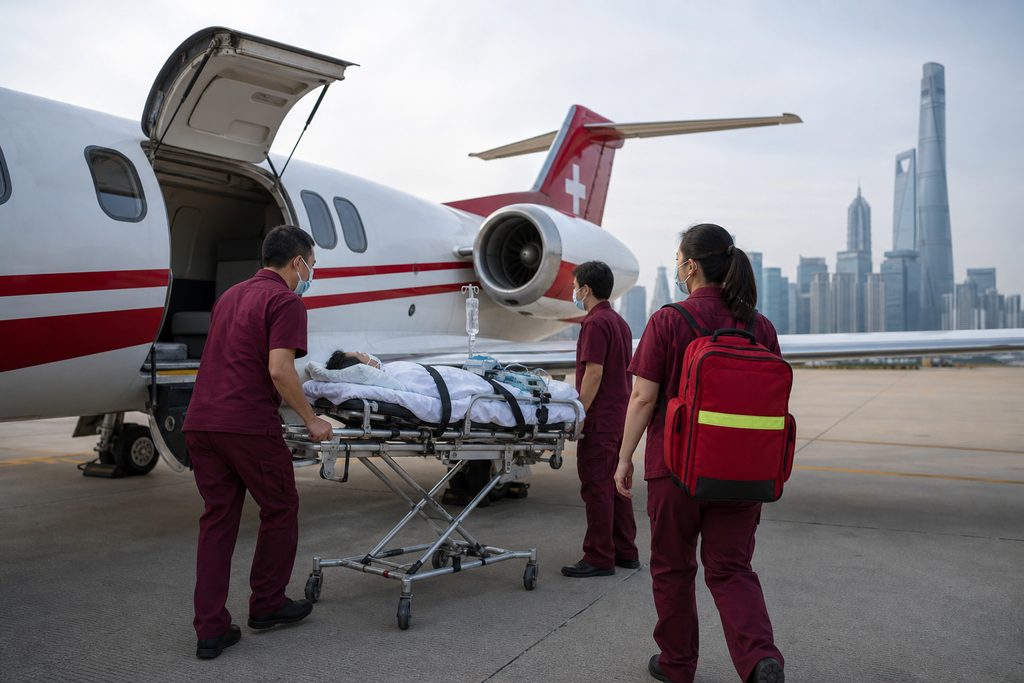
While a patient in London waits 18 weeks for a cardiac procedure under the NHS, a fully equipped fixed-wing air ambulance can transfer a critical patient from Dubai to a Shanghai cardiac center in under 9 hours. The clinical team is already onboard. The bed is confirmed. The window between instability and definitive care narrows by the hour. That speed gap is not a luxury — for many families, it is the entire calculation.
Key Takeaways
- Coordinating a fixed-wing medical evacuation into China requires advance landing permits, a confirmed receiving hospital bed, and a visa pathway — tasks that routinely take 72-96 hours even with professional support.
- The air ambulance to China cost for a long-range fixed-wing transfer typically falls between $80,000 and $180,000, depending on distance, medical crew configuration, and ground coordination complexity.
- China’s civil aviation authority mandates that foreign-registered air ambulances secure a diplomatic clearance through a licensed Chinese ground handler — a step no family can arrange independently.
- Without a bilingual coordinator who understands both the aviation regulations and the hospital admission process, flights get denied, beds get released, and patients get stranded.
The Problem: A Medical Flight Is Not a Commercial Ticket
Most families discover the hard truth only after a physician says the words “not stable enough for a commercial flight.” A loved one is in a hospital in Manila, or Jakarta, or Riyadh. The local facility cannot provide the neurosurgical intervention or the oncology protocol that the case demands. Returning to Europe or North America means a 12-hour flight with multiple fuel stops. China, by contrast, may be under four hours away — with a hospital that performs the exact procedure at a fraction of Western costs. But getting a stretcher-bound patient across an international border into China is not a matter of booking a ticket. It is a regulated, multi-agency clearance process that involves aviation authorities, immigration, customs, ground ambulance crews, and the receiving hospital’s international department — all of which must align within a narrow medical window.
The patient’s condition dictates the timeline. The bureaucracy does not care. That tension is what breaks families who try to manage this alone.
Who We Are
We are not an air ambulance operator. We do not own aircraft, and we do not provide clinical care. China Medical Services functions as the coordination layer between international patients, accredited fixed-wing air ambulance providers, and China’s top-tier hospitals. Our team handles the three-way handshake that makes a medical evacuation into China possible: securing the hospital bed, clearing the aviation permits, and ensuring the patient crosses the border legally and safely. We work with JCI-accredited and Fudan-ranked hospitals across 37 cities, from Beijing to Guangzhou. When a family calls us, they are not buying a flight. They are buying a sequenced, time-sensitive logistics plan that someone is accountable for.
Why Fixed-Wing Medical Evacuation into China Demands Specialized Coordination
The Aviation Clearance Layer: What Most Brokers Will Not Tell You
Foreign-registered aircraft entering Chinese airspace for a medical evacuation require a landing permit from the Civil Aviation Administration of China. That permit application must be submitted by a licensed Chinese ground handling agent. The application package includes the aircraft registration, airworthiness certificate, crew licenses, insurance documentation, and — critically — a confirmation letter from the receiving hospital stating that a bed is reserved and the patient is expected. Without that letter, the CAAC will not process the permit. And without the permit, the aircraft cannot depart. We have seen families charter an aircraft first, then scramble for the hospital letter. That sequence is backwards. It creates a situation where a jet is burning holding costs at $8,000 to $12,000 per day while paperwork stalls.
The correct sequence is: hospital confirmation first, aviation permit second, aircraft dispatch third. Our team secures the hospital letter through established relationships with international departments at hospitals like Huashan Hospital and Peking Union Medical College Hospital. Only then do we activate the air ambulance provider.
The Cost Structure: Why Air Ambulance to China Cost Varies So Widely
Families researching air ambulance to China cost often encounter price ranges that seem baffling — quotes from $55,000 to over $200,000 for what appears to be the same service. The variance is real and it is driven by concrete factors, not arbitrary pricing.
| Cost Factor | Impact on Total Price | Example |
|---|---|---|
| Distance and fuel stops | $15,000–$40,000 difference | Bangkok to Kunming (2.5 hrs) vs. London to Shanghai (12 hrs with stop) |
| Medical crew configuration | $8,000–$25,000 difference | Doctor + paramedic vs. full ICU team with perfusionist |
| Chinese ground handling and permits | $5,000–$12,000 | Includes CAAC permit facilitation, slot coordination, ground ambulance at both ends |
| Receiving hospital admission deposit | $10,000–$50,000+ | Required before the confirmation letter is issued; varies by hospital and case complexity |
| Bedside-to-bedside ground ambulance | $2,000–$6,000 | Two legs: origin hospital to departure airport, and arrival airport to receiving hospital in China |
When we quote a fixed-wing medical evacuation China price for a family, we break out every line. The aircraft charter itself is usually 50-60% of the total. The rest is coordination, permits, medical staffing, and ground transport. A Dubai to Guangzhou transfer with a dedicated critical care team on a Learjet 45XR typically lands between $95,000 and $130,000 all-in. A shorter hop from Seoul to Shanghai with a basic medical escort on a turboprop might run $55,000 to $75,000. These are not hidden fees. They are the real anatomy of a cross-border medical transfer into a jurisdiction with strict aviation controls.
Visa Reality: The Document That Grounds Flights
Even with a confirmed bed and an approved landing permit, a patient cannot legally enter China without the correct visa. Medical treatment requires an S2 visa with a notation specifying the treatment purpose. The accompanying family members also need S2 visas. This is not a formality. Chinese immigration at major airports like Shanghai Pudong and Beijing Capital will deny entry if the visa category is wrong. We have seen cases where a patient arrived on an L tourist visa, and the receiving hospital’s international department refused admission because the legal basis for treatment was absent.
Our team guides families through the S2 application at the nearest Chinese embassy or consulate. The invitation letter comes from the receiving hospital. Processing time varies by jurisdiction but typically takes 4-7 business days. Expedited processing exists in some countries. This step must run in parallel with the aviation clearance — not after it. A common failure mode is securing the flight and the bed, then realizing the visa appointment is three weeks out. The bed gets released. The permit expires. The family starts over.
What You Need to Know Before Attempting This Alone
International air ambulance China coordination service exists because the process is not designed for individuals. It is designed for professional operators who do this repeatedly and have pre-existing relationships with the gatekeepers. Here is what breaks when families try to self-coordinate:
- Hospital Confirmation Letters Are Not Issued to Strangers: A top-tier Chinese hospital will not issue a bed confirmation letter to a family that calls the general switchboard. The international department needs a verified medical summary in both English and Chinese, a financial guarantee, and a local contact who can be held accountable if the patient does not arrive. Without an intermediary who already has credentialing with that department, the request sits in an inbox.
- CAAC Landing Permits Require a Licensed Applicant: The Civil Aviation Administration does not accept permit applications from foreign individuals or foreign companies. Only a CAAC-licensed Chinese ground handler can submit. That handler will not process a medical evacuation permit without the hospital letter. This creates a chicken-and-egg problem that stalls families for weeks.
- Payment Systems Are Not International-Friendly: Chinese hospitals require a deposit before admission. The deposit is typically paid via domestic bank transfer or WeChat/Alipay — platforms that foreign credit cards often cannot access. International wire transfers take 3-5 business days and may be rejected if the purpose code is unclear. We bridge this gap with established payment channels that accept international funds and settle locally within hours.
How We Help You Navigate This
When a family contacts us about a medical repatriation to China by fixed-wing aircraft — whether the patient is a Chinese national needing to return home for care, or a foreign patient seeking treatment in a Chinese center of excellence — we start with the receiving hospital. Not the aircraft. The sequence is everything.
We collect the medical summary, imaging, and current stabilization status. Our bilingual case managers translate the records into clinical Chinese and submit them to the international department of the appropriate hospital. For cardiac cases, that might be Fuwai Hospital, which performs over 14,000 cardiac surgeries annually — the highest volume in the world. For oncology, it might be a Fudan-ranked cancer center in Shanghai or Guangzhou. The hospital reviews the case and either accepts or declines. If accepted, they issue a preliminary admission confirmation and estimate the deposit.
Only then do we engage the air ambulance provider. We brief them on the patient’s location, clinical requirements, and the receiving hospital’s coordinates. The provider confirms aircraft availability and crew configuration. Simultaneously, our ground handling partner in China begins the CAAC permit application using the hospital confirmation letter. We track the permit status daily. The visa application runs in parallel — we provide the invitation letter and guide the family through the consular process.
On the day of the transfer, the ground ambulance at both ends is pre-coordinated. The receiving hospital’s international department staff meet the patient at the airport. Our bilingual medical companion can be present at the bedside from the moment of arrival, handling admission paperwork, deposit settlement, and communication with the clinical team. This is the bedside-to-bedside chain that cannot break at any link.
Frequently Asked Questions
You can book the aircraft. You cannot book the landing permit or the hospital bed through the broker alone. Foreign air ambulance brokers are not licensed to submit CAAC permit applications. They must work through a Chinese ground handler. And the handler requires the hospital confirmation letter. If your broker does not have a coordination partner in China who can secure that letter, the aircraft will sit on the tarmac. Ask any broker you speak to: “Who is your licensed ground handler in China, and can you show me the hospital confirmation letter before I pay a deposit?” The answer will tell you everything.
Fixed-wing air ambulances configured for long-range medical evacuation carry intensive care capability — ventilators, infusion pumps, suction, defibrillators, and multi-channel monitoring. The medical crew, typically a critical care physician and a flight paramedic or nurse, manage the patient throughout the flight. They communicate with the receiving hospital via satellite phone if clinical guidance is needed mid-air. The aircraft can divert to an alternate airport in an emergency. That said, the decision to fly is never taken lightly. The sending physician, the air ambulance medical director, and the receiving hospital must all agree that the patient is stable enough for transport. If that consensus does not exist, the flight does not depart.
Sometimes. It depends on the policy. Some international health insurance plans with evacuation riders will cover medically necessary repatriation to the policyholder’s home country. If the patient is a Chinese national with a policy that includes repatriation, the insurer may cover the flight. If the patient is a foreign national seeking elective treatment in China, evacuation coverage typically does not apply — this is considered medical travel, not emergency repatriation. We advise families to contact their insurer before engaging any service. We can provide the medical necessity documentation and cost breakdown that insurers require for pre-authorization. But we cannot guarantee coverage. The financial responsibility ultimately rests with the patient or their family.
For a case where the hospital accepts the patient quickly and the visa embassy has appointment availability, the minimum realistic timeline is 5-7 business days. That assumes no complications with the CAAC permit, no aircraft positioning delays, and no last-minute clinical instability. More commonly, the process takes 10-14 days from first contact to bedside arrival. Complex cases involving multiple specialist consultations or patients in remote locations can extend to three weeks. Families who contact us while the patient is still stable enough to plan — rather than in crisis — have far more options and far lower costs.
Your Next Step
Coordinating a fixed-wing medical evacuation into China is a sequence of interdependent clearances — hospital, aviation, immigration — that must be executed in the right order with the right documentation. The air ambulance to China cost reflects not just the flight hours, but the ground infrastructure that makes legal entry possible. If your family is facing a decision about transferring a patient into China for medical care, the most valuable thing you can do right now is get clarity on whether a Chinese hospital will accept the case. Everything else flows from that.
Our team is available to review the medical situation, identify appropriate receiving hospitals, and provide a realistic timeline and cost estimate at no charge. Contact our coordination desk with the patient’s current location, diagnosis, and stabilization status. We will tell you honestly what is possible — and what is not.
For more medical information and treatment options in China, visit chinamedservices.com (China Medical Services).
