ANCA Vasculitis in China: Shanghai Case Assessment Guide
Key Takeaways
- Specialist assessment for ANCA-associated vasculitis in Shanghai typically runs $150–$500 for a written second opinion, and $500–$800 for a video consultation with a senior nephrologist or rheumatologist.
- Plasmapheresis in Shanghai generally costs far less than in the United States — most international departments quote per-session pricing in the low hundreds of dollars, though exact figures vary by hospital and case complexity.
- The hard part is not the medicine. It is access: public hospital outpatient slots cannot be reserved from overseas, so most international patients enter through hospital international departments or VIP channels.
- Never treat a price list as a treatment plan. ANCA vasculitis is a relapsing, organ-threatening disease, and any decision should follow a proper specialist review of your existing records.
The Problem: A Rare Disease With an Expensive, Slow Path to Care
ANCA-associated vasculitis affects roughly 20 people per million each year in Western populations, according to long-running epidemiology studies published in rheumatology journals. That sounds small until you are one of them. Then the number that matters is different: how long until a specialist sees you, and what will it cost.
In the United States, a course of rituximab for ANCA vasculitis can run $20,000 to $40,000 or more before insurance negotiations, and plasmapheresis sessions are often billed at $2,000 to $5,000 each. In the UK, the NHS delivers excellent care — but waiting lists for nephrology and rheumatology review have stretched in recent years, and private care is expensive.
For patients in the Middle East, Southeast Asia, Russia, and parts of Africa, the problem is sharper still. Local expertise in vasculitis may be thin. Travel to Europe or the US means visas, flights, and bills that can exceed a year’s income.
That is the gap this article addresses. China now treats a growing number of international patients, and Shanghai in particular has become a realistic option for complex immune-mediated disease. But “realistic” is not the same as “simple.”
Why Shanghai Delivers Results for ANCA Vasculitis Assessment
Clinical Volume and Rare-Disease Experience
China’s top-tier hospitals see patient volumes that most Western centers simply do not. A single large tertiary hospital in Shanghai may run hundreds of rheumatology and nephrology outpatient visits per day. ANCA vasculitis is rare everywhere, but at that scale, a major center accumulates meaningful experience with induction therapy, maintenance regimens, and relapse management.
Fudan University’s hospital rankings, which assess specialty reputation across 45 clinical disciplines, place several Shanghai institutions among the country’s leading centers for nephrology and rheumatology. We work with hospitals across China’s top-ranked hospitals, and the difference in case exposure is real — not marketing.
Diagnostics and Treatment Infrastructure
Assessment for ANCA vasculitis is not one test. It is a bundle: ANCA serology (PR3 and MPO), kidney function panels, urinalysis with microscopy, chest imaging, sometimes kidney biopsy, and in some cases ENT or ophthalmology review.
Large Shanghai hospitals can run this entire workup under one roof, often within days rather than weeks. Plasmapheresis, cyclophosphamide, rituximab, and glucocorticoid protocols are all available. That matters. Fragmented care is one of the biggest reasons vasculitis patients fall through the cracks.
Cost Structure Without Quality Compromise
You are right to be suspicious of “cheaper.” So let us be precise about why Chinese pricing differs.
Labor costs, drug procurement through national bulk purchasing programs, and sheer hospital throughput all push prices down. Physician salaries are lower than in the US. Hospital overhead is distributed across enormous patient volumes. The clinical protocols themselves — the drugs, the dosing, the monitoring — follow international standards.
What you are not buying is a shortcut. What you are buying is the same medicine at a different price point.
What ANCA Vasculitis Treatment Cost China Actually Looks Like
Here is where international patients get stuck. Public hospital price lists in China are written for domestic patients and domestic insurance. International departments quote differently, and no two hospitals quote identically.
What we can give you is a realistic range based on the services international patients actually use.
| Service | Typical Range (USD) | Notes |
|---|---|---|
| Written second opinion (top hospital specialist) | $300–$500 | Report review only; for reference, not a prescription |
| Video consultation (standard international dept.) | $100–$300 | Records plus live discussion |
| Video consultation (senior specialist) | $500–$800 | Rheumatology or nephrology lead |
| Multidisciplinary team (MDT) video review | $1,500–$2,000 | Rheumatology, nephrology, respiratory |
| In-person top-specialist consultation coordination | $800–$1,200 | Coordination fee only, not the hospital bill |
| Bilingual medical companion | from $300/day | Half-day 4 hrs / full-day 8 hrs |
| Hospital appointment coordination | from $300 | Full refund if the stated appointment cannot be secured |
Plasmapheresis deserves its own line. In Shanghai, per-session pricing through an international department typically falls well below Western rates, and the exact figure depends on whether the session is done in a nephrology ICU setting, a standard ward, or as part of an inpatient admission. Ask for the per-session quote in writing before you commit.
Any hospital treatment charges are billed by the hospital, not by us. Our fees cover case management — records translation, appointment coordination through official international departments, and interpretation. We do not charge access fees, and we cannot promise a specific doctor or a specific surgery date.
How a Shanghai Case Assessment Actually Works, Step by Step
This is the part most articles skip. Here is the real sequence.
Step 1 — Records collection. You send what you have: ANCA serology results with dates, kidney function trends, biopsy reports if done, imaging, and a current medication list. Incomplete records are the single most common reason an assessment stalls.
Step 2 — Translation and case file preparation. Chinese specialists read Chinese. Your records need accurate medical translation, not machine output. This usually takes two to five business days.
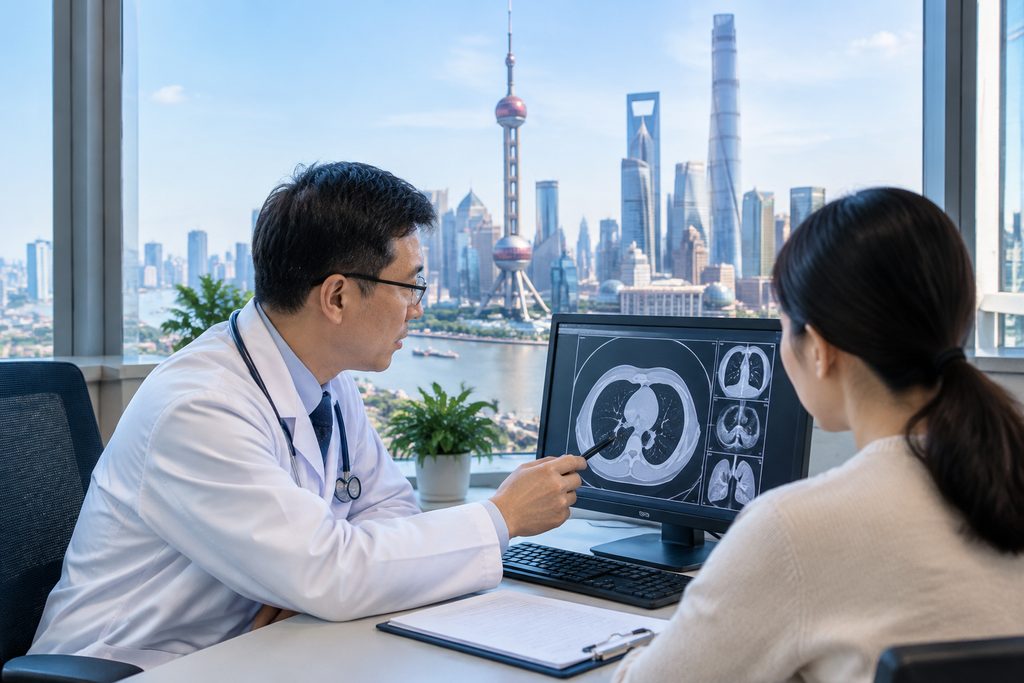
Step 3 — Specialist review. A rheumatologist or nephrologist at the selected hospital reviews the file. You receive a written opinion: what the records suggest, what further testing may be needed, and what treatment directions are reasonable.
Step 4 — Video discussion. If you want to hear the reasoning directly, a video consultation lets you ask questions. This is where most patients decide whether to travel.
Step 5 — Decision point. If in-person evaluation makes sense, we coordinate an appointment through the hospital’s international department. If it does not, you have saved a flight and a hotel bill.
Notice what is not in this sequence: a promise that you will be admitted. Admission decisions belong to the hospital.
Choosing a Center: Shanghai Versus Beijing, and What to Ask
Per-session pricing through an international department is typically well below US rates, but it varies by hospital, by whether the session occurs in an ICU or standard ward, and by how many sessions your protocol requires. Always request a written per-session quote and an estimated total before committing. We can help you obtain that estimate as part of a case assessment.
Yes. A written second opinion or video consultation lets a Chinese specialist review your existing records before you commit to travel. This is often the sensible first step — it clarifies whether in-person evaluation adds anything. Consultation fees are credited in full toward on-the-ground coordination if you proceed within 90 days.
Then you have your answer for a few hundred dollars instead of several thousand. Not every case benefits from travel, and we will tell you when we think it does not. A written opinion is for reference and does not replace care from your treating physician.
Your Next Step
The core message is simple: ANCA vasculitis is complex, but the path to a credible specialist assessment in Shanghai is more accessible than most patients expect — provided you start with records, not flights.
We are China Medical Services, a coordination service, not a hospital. We do not diagnose or treat. What we do is translate your records, connect you with the right international department, and handle the logistics once you decide to travel. If you would like a straightforward conversation about whether a Shanghai case assessment makes sense for your situation, you can start with a free consultation — no pressure, no obligation.
This article is for general information only and does not constitute medical advice. Treatment decisions for ANCA-associated vasculitis should always be made with a qualified physician who has reviewed your full medical history.
Frequently Asked Questions
Yes. The hospitals used for international patients are JCI-accredited and follow the same international safety standards as top hospitals in the US and Europe. Surgical teams perform high volumes of procedures — often more than their Western counterparts — which studies show leads to better outcomes.
Costs vary by procedure and hospital, but international patients typically save 40-80% compared to US prices — even when factoring in travel and accommodation. A consultation with our team will give you an exact, all-inclusive quote with no hidden fees.
Send us your existing medical reports to get started. We handle everything from hospital selection and appointment scheduling to visa assistance and post-operative recovery planning. Your medical records are reviewed by the specialist before you even book a flight.
For more medical information and treatment options in China, visit chinamedservices.com (China Medical Services).
