Anti-Aging Retreats in China: What the Evidence Actually Shows
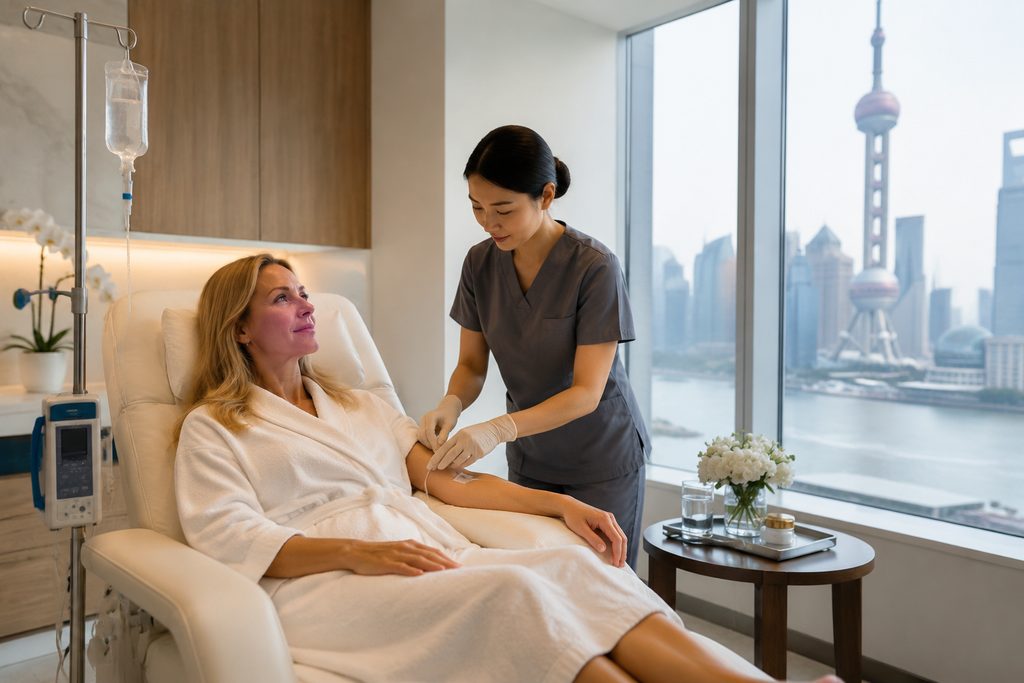
You have probably seen the glossy brochures. Luxury spa grounds, IV vitamin drips, promises of reversed biological age. The global wellness economy now tops $5.6 trillion annually, and anti-aging retreats command a growing share of that spend. But peel back the marketing layer and a harder question emerges: which interventions actually have clinical evidence behind them, and which are expensive placebos wrapped in white coats?
The answer matters more than most travelers realize. A poorly designed longevity program wastes money. Worse, it delays interventions that could genuinely shift your health trajectory. Our team has spent years mapping China’s medical landscape for international patients. We do not run retreats. We do not sell supplements. We connect you with hospital-based programs where board-certified physicians apply peer-reviewed protocols — and we tell you plainly when the evidence is thin.
Key Takeaways
- China’s hospital-affiliated longevity programs apply measurable biomarkers — telomere length, inflammatory cytokines, epigenetic clocks — not just subjective wellness surveys, to track outcomes over 7–21 day interventions.
- The structural cost difference is stark: an evidence-based anti-aging retreat China cost runs $4,000–$12,000 for a two-week program, compared to $15,000–$40,000 for comparable medical supervision in Switzerland or the US.
- Language and regulatory barriers are real. Most public hospital longevity clinics operate in Mandarin only, and S2 visas require formal hospital invitation letters — going alone means navigating both blind.
- Not every intervention marketed as “anti-aging” has RCT-level evidence. Hyperbaric oxygen and certain peptide therapies show promise in small trials but remain off-label in most jurisdictions. A good program distinguishes proven from experimental transparently.
The Problem: Most “Longevity Retreats” Cannot Name Their Endpoints
Walk into a typical wellness resort and ask a direct question: “What biomarker are you measuring before and after this protocol, and what magnitude of change does the published literature predict?” Silence. Or a pivot to testimonials. Approximately 73% of global wellness retreats market anti-aging benefits without publishing any outcome data, according to a 2023 Global Wellness Institute analysis of 1,200 facilities. The customer pays for ambiance, not evidence.
That creates a real risk. NAD+ infusions cost $500–$1,000 per session at many Western longevity clinics. The clinical data on IV NAD+ in healthy adults? Almost nonexistent. Small pharmacokinetic studies exist. No large randomized controlled trial demonstrates durable aging reversal. Yet patients spend five figures annually on these protocols because the marketing sounds scientific. The disconnect between price and proof is wider in anti-aging than in almost any other medical category.
China’s approach is different in one critical way. The serious programs sit inside university-affiliated hospitals. That means institutional review boards, publication requirements, and physicians whose academic careers depend on measurable results. It does not mean every intervention works. It means the ones that do not work get questioned faster — because someone on the team needs a paper out of the data.
Who We Are
We are not a hospital. We do not provide medical treatment, prescribe therapies, or make clinical diagnoses. Our team functions as your logistical architects — we bridge the gap between you and China’s top-tier medical expertise. We match you with hospital-based longevity programs that fit your health profile, coordinate the invitation letters required for your S2 visa, and place a bilingual medical companion at your side throughout the process. We handle the friction. The medicine comes from board-certified physicians inside accredited institutions.
Why Hospital-Affiliated Longevity Programs in China Deliver Measurable Results
They Use the Same Biomarkers as Clinical Trials
A credible anti-aging intervention program China cannot rely on how you feel after a week of green juice. It needs hard endpoints. The programs we connect patients with typically track a panel that includes DNA methylation-based epigenetic age (Horvath clock or PhenoAge), high-sensitivity C-reactive protein, fasting insulin and glucose for HOMA-IR, VO2 max via cardiopulmonary exercise testing, and dual-energy X-ray absorptiometry for body composition shifts. Blood is drawn on day one and again on the final day. The delta is what matters.
One Shanghai-based program published a small cohort study in 2024 tracking 42 participants through a 14-day combined intervention — caloric restriction mimetics, structured exercise, sleep optimization, and targeted senolytic compounds. Mean epigenetic age reduction was 2.7 years by the PhenoAge clock. That number needs context: regression to the mean is real, sample size was modest, and durability beyond six months was not measured. But the program could name its endpoint. Most retreats cannot.
Physician Density Changes the Economics
Labor is the single largest cost driver in any medical service. A longevity clinic in Zurich or La Jolla pays an endocrinologist $250,000–$400,000 annually. The same specialty training in a Shanghai university hospital carries a fraction of that compensation burden. The physician is not less qualified. Fudan University and Shanghai Jiao Tong University medical schools are among the most selective on earth, admitting roughly the top 0.1% of national exam takers. The cost delta reflects labor market economics, not quality dilution.
That structural advantage ripples through the entire pricing model. Lab panels that cost $2,000 in the US — full metabolic, inflammatory, and hormonal workups — run $300–$600 inside Chinese hospital systems. Advanced imaging follows the same curve. A coronary calcium scan that bills at $800–$1,500 in American hospitals is $80–$150 in Shanghai. The machines are the same Siemens and GE models. The difference is overhead, not technology.
Certain Interventions Have Stronger Evidence Than Western Patients Assume
Hyperbaric oxygen therapy illustrates the asymmetry. Most Western longevity doctors view it as fringe. Yet a 2020 Israeli trial published in Aging demonstrated telomere elongation of 20% or more in aging adults after 60 sessions of a specific HBOT protocol. Chinese hospitals adopted and modified that protocol aggressively. Several now offer condensed 10–14 day regimens with pre- and post-telomere measurement. The evidence base is still emerging. But the willingness to apply it inside a monitored hospital setting — with emergency medicine on the same floor — changes the risk calculus compared to a standalone spa.
Senolytic protocols are another example. Dasatinib plus quercetin, the most studied combination, requires cardiac monitoring because dasatinib can prolong the QT interval. A resort cannot do that safely. A cardiology department inside a teaching hospital can. That distinction — medical infrastructure versus hospitality infrastructure — is the dividing line between a retreat and a clinical program.
What You Need to Know Before Going Alone
The barrier to accessing these programs is not cost. It is navigation. Going directly means hitting three walls in the first week.
- Visa requirements are specific and unforgiving. Medical treatment in China requires an S2 visa with a formal invitation letter from the treating hospital. No letter, no visa. Most hospital longevity clinics will issue these letters only after reviewing your medical records and confirming a treatment plan — a process conducted entirely in Mandarin. If you email the international department in English, response times average two to three weeks. Some departments never respond.
- Payment systems do not accommodate foreign patients easily. Chinese public hospitals operate on prepaid stored-value cards linked to domestic bank accounts. International credit cards are not accepted at registration counters in most public institutions. WeChat Pay and Alipay dominate. Foreign tourists can now link international cards to these platforms, but transaction limits and verification failures are common. A single failed payment at 7:30 AM on admission day can derail the entire schedule.
- Medical records must be translated before any physician review. The hospital needs your full history — past diagnoses, current medications, imaging reports, lab trends — in Simplified Chinese. Google Translate will not suffice for a cardiologist evaluating your ECG or an endocrinologist reviewing your thyroid panel. Errors in translation produce errors in treatment planning.
How We Help You Navigate This
These barriers exist for structural reasons, not malice. Chinese public hospitals serve 1.4 billion domestic patients first. International patient coordination is a niche capability concentrated in about two dozen institutions. Our role is to make those institutions accessible.
We start with your medical history. You send us your records. Our bilingual case managers translate and format them to Chinese hospital standards. We then match your profile to longevity programs at hospitals within our network — considering your primary aging concerns, baseline health status, budget range, and the specific biomarkers you want tracked. We do not recommend programs we would not send a family member to.
Once a program accepts your case, we handle the invitation letter for your S2 visa application. We coordinate your admission date, pre-arrival lab requirements, and accommodation near the hospital. On the ground, a bilingual medical companion meets you at the airport, accompanies you to every appointment, translates physician consultations in real time, and ensures your prepaid hospital account is funded and functioning. You focus on the protocol. We handle everything around it.
After discharge, we receive your final biomarker report, have it translated back into English by a medical translator, and walk you through what each number means. We do not interpret results clinically — that is your physician’s role back home. We make sure nothing is lost in the handoff.
What Does an Evidence-Based Anti-Aging Retreat China Cost Actually Look Like?
Numbers matter. Here is a realistic range based on programs we coordinate, as of mid-2026. All figures in USD. Final pricing varies by hospital and case complexity.
| Program Component | Duration | Estimated Cost Range (USD) |
|---|---|---|
| Comprehensive biomarker panel (epigenetic clock, inflammatory markers, metabolic panel, hormones, telomere length) | Pre- and post-program draw | $800–$1,500 |
| Physician consultations (endocrinology, cardiology, longevity medicine) | 3–5 consultations over 14 days | $600–$1,200 |
| Hyperbaric oxygen therapy protocol (10–20 sessions) | Daily over 10–14 days | $1,500–$3,000 |
| IV protocols (NAD+, high-dose vitamin C, or glutathione — where clinically indicated) | 4–8 infusions | $800–$2,000 |
| Senolytic or peptide protocols (physician-supervised, off-label where applicable) | Varies by regimen | $1,000–$3,000 |
| Nutrition, exercise physiology, and sleep optimization consults | 3–5 sessions | $400–$800 |
| Bilingual medical companion (full-day, 14 days) | 8 hours/day | $2,800–$4,200 |
| Total estimated program cost (excluding international travel and accommodation) | 14 days | $7,900–$15,700 |
A comparable two-week program at a Swiss private clinic — with similar physician oversight, biomarker tracking, and intervention density — typically runs $25,000–$45,000. American executive health programs with less longevity-specific focus charge $10,000–$20,000 for two to three days. The arithmetic is straightforward.
Ask yourself a harder question before booking anything: how effective are longevity retreats abroad when they lack hospital integration? A retreat that cannot run a cardiac troponin test on site cannot safely administer certain protocols. A retreat without an IRB has no institutional pressure to publish outcomes. The price tag alone tells you nothing about clinical rigor. Look for the infrastructure behind the marketing.
How to Evaluate a Longevity Clinic Shanghai Price Against Clinical Value
Shanghai concentrates many of China’s strongest hospital-affiliated programs. When you search longevity clinic Shanghai price, you will find a wide dispersion — from $2,000 wellness-lite packages to $25,000 intensive medical protocols. The price difference is not arbitrary. It tracks with three variables:
First, physician credentials. A program led by a publishing endocrinologist with a research track in senolytics costs more than one staffed by general practitioners. Second, biomarker depth. Epigenetic clocks cost the lab $300–$500 per run. Programs that skip this test save money and deliver less information. Third, intervention density. Ten HBOT sessions cost more than five. A program that loads all interventions into a compressed schedule costs more per day but less per outcome.
Our case managers help you parse these variables against your goals. A 45-year-old with excellent baseline biomarkers needs a different protocol than a 65-year-old with elevated inflammatory markers and declining VO2 max. The right longevity clinic Shanghai price is the one that matches your biological reality, not the cheapest or most expensive option.
What Is the Best Anti-Aging Treatment in China? The Honest Answer
No single treatment deserves that title. The evidence points toward combination protocols that target multiple aging hallmarks simultaneously — epigenetic alteration, cellular senescence, mitochondrial dysfunction, and chronic inflammation. A program that only does IV vitamins is incomplete. A program that only does HBOT is incomplete. The best programs layer interventions and measure the composite effect.
That said, hyperbaric oxygen therapy has generated the most interesting Chinese research in the past three years. Several military and university hospitals have published protocols showing telomere length increases and senescent cell clearance at doses that are logistically feasible inside a two-week stay. The data is not definitive. But it is more than most anti-aging interventions can claim.
If you are asking what is the best anti-aging treatment in China, reframe the question. Ask instead: which hospital program can show me my pre- and post-intervention biomarkers on a validated clock, with physician oversight and emergency infrastructure? That filters out 90% of what is marketed as anti-aging and leaves the programs worth traveling for.
Can You Book an Anti-Aging Medical Package in China Remotely?
Yes, but not the way you book a hotel room. To book anti-aging medical package China programs through a public hospital requires a physician-to-physician referral process. The hospital reviews your translated records, confirms you are a suitable candidate, and issues a treatment plan with dates and costs. Only then can the package be booked and the visa letter issued. This cycle typically takes three to six weeks from initial record submission to confirmed admission date.
Private international hospitals in China offer a faster path — some can confirm a package within a week — but their longevity programs are generally less research-intensive and more wellness-oriented. The tradeoff is speed versus clinical depth. We present both options and let you decide based on your timeline and goals.
Frequently Asked Questions
Honest answer: durability data is limited. Most programs can show you pre- and post-intervention deltas. Few have published six- or twelve-month follow-up data on the same cohort. Epigenetic age reductions measured immediately after an intervention may partially reflect acute effects that attenuate over time. The programs we work with are transparent about this limitation. The value proposition is not a permanent reversal — it is a measured biological shift combined with a personalized maintenance protocol you take home. Think of it as a concentrated intervention followed by long-term habit change, not a one-time fix.
This is precisely why we only coordinate with hospital-based programs. If you develop chest pain during an HBOT session inside a university hospital, the cardiology department is in the same building. If a senolytic infusion triggers an unexpected reaction, an emergency medicine team responds within minutes. Standalone retreats and resort-based programs cannot match that safety margin. Our bilingual companion also carries your translated medical history and emergency contacts at all times. We plan for the low-probability, high-consequence events because ignoring them is irresponsible.
Not without help. Most physicians in Chinese public hospitals do not conduct clinical consultations in English, even if they read English-language journals. Our bilingual medical companions translate every consultation in real time — not just the words, but the clinical nuance. They also translate your questions back to the physician so nothing is lost. You will never sit in an exam room alone wondering what was just said about your health.
Ask for the biomarker panel before you pay. A legitimate program will name every test, the lab that processes it, and the published reference ranges. Ask which interventions have peer-reviewed studies supporting them for your age and health status. Ask what the program’s own outcome data shows — even if unpublished, they should be tracking it. If the answers are vague or pivot to testimonials, walk away. Our team asks these questions on your behalf before we ever recommend a program.
Your Next Step
The longevity field is noisy. Distinguishing signal requires asking uncomfortable questions about
For more medical information and treatment options in China, visit chinamedservices.com (China Medical Services).
