Aplastic Anemia Treatment in China: Costs, Hospitals, and How It Works
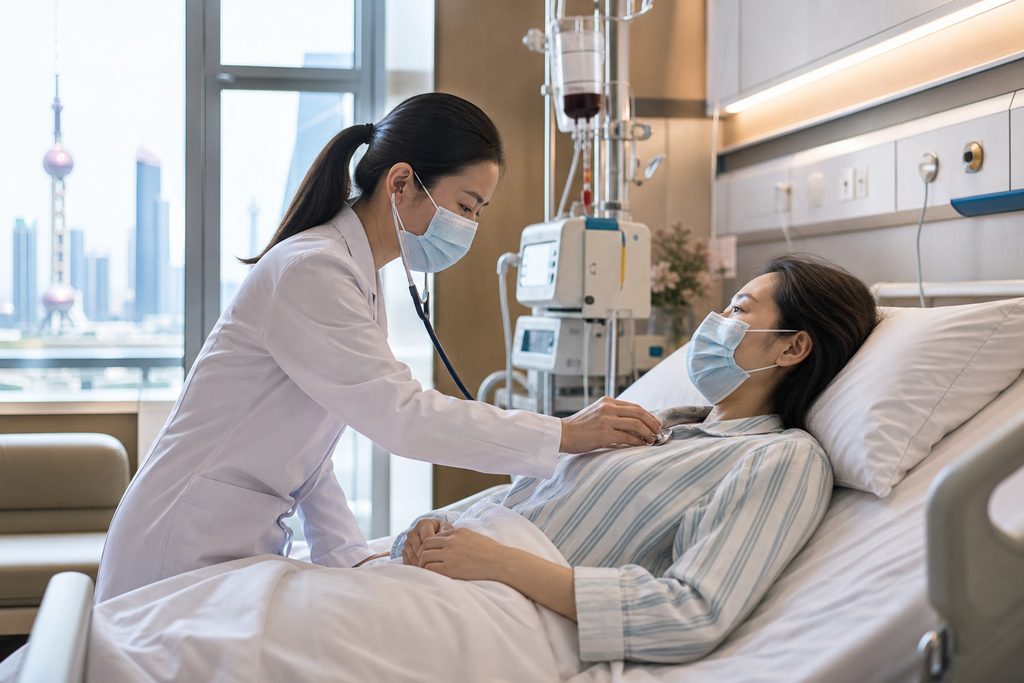
Aplastic anemia sounds terrifying, and the name does not help. In plain terms, it is a rare bone marrow failure disorder in which the marrow stops producing enough red cells, white cells, and platelets. Patients bruise, bleed, and catch infections easily. Without treatment, it can be fatal. The good news is that it is treatable, and aplastic anemia treatment in China has become a realistic option for international patients who face long waits or unaffordable quotes at home.
This guide covers three things: what treatment actually involves, what it costs in China compared with Western prices, and which Chinese hospitals see the highest volumes of this disease. We also explain the visa category, the appointment reality, and the honest limits of what any coordinator can promise.
Key Takeaways
- China’s top hematology centers treat hundreds of aplastic anemia cases each year, using immunosuppressive therapy (IST), eltrombopag-based regimens, and allogeneic hematopoietic stem cell transplant.
- Reported costs for matched-sibling transplant in China commonly fall in the $50,000–$120,000 range, versus $200,000–$500,000+ in the United States — but figures vary widely by hospital, donor type, and complications.
- The hard part is not the medicine. It is logistics: public hospital outpatient registration cannot be booked from overseas in advance, and you need a hospital international department or VIP channel to lock a specialist slot.
- Foreign patients enter on an S2 visa for short-stay medical treatment. The M visa is a commercial visa and has nothing to do with medical care.
The Problem: A Rare Disease With an Unforgiving Clock
Aplastic anemia affects roughly 2 to 3 people per million each year in Europe and North America, according to long-standing hematology registry data. In parts of Asia, incidence runs two to three times higher. That rarity cuts both ways. Fewer cases mean fewer specialists, and in countries with centralized health systems, it means referral queues measured in weeks.
For a patient with severe aplastic anemia and a neutrophil count near zero, weeks matter. The standard first-line options are well established: immunosuppressive therapy combining antithymocyte globulin (ATG) and cyclosporine, often now paired with a thrombopoietin receptor agonist such as eltrombopag. For younger patients with a matched sibling donor, allogeneic hematopoietic stem cell transplant is frequently the definitive path.
None of that is experimental. The bottleneck is access. A US or UK patient may wait months for a transplant slot, and the billed cost can exceed half a million dollars before complications. That gap is why families start searching for alternatives.
Why China Delivers Results in Hematology
China’s largest academic hospitals run hematology departments at a scale Western centers rarely match. That volume translates into pattern recognition, protocol refinement, and a deep bench of transplant experience.
Clinical volume that compounds expertise
Peking Union Medical College Hospital, Ruijin Hospital in Shanghai, and West China Hospital in Chengdu are among the institutions with the longest track records in bone marrow failure. The Fudan University Hospital Rankings place these centers in the top tiers for hematology, and several appear in the specialty reputation list for internal medicine and hematology. Volume here is not a marketing claim. A single large center may perform well over a hundred allogeneic transplants annually, spanning malignant and non-malignant indications alike.
Protocols aligned with international standards
Chinese transplant protocols for aplastic anemia follow the same backbone used in Europe and North America: reduced-intensity or myeloablative conditioning, calcineurin inhibitor-based graft-versus-host disease prophylaxis, and careful infection control during the neutropenic window. The difference is operational. Ward capacity, apheresis throughput, and pharmacy supply chains are built for high patient turnover, which shortens the gap between evaluation and admission.
Cost structure, not cost cutting
Lower prices do not come from cheaper medicine. They come from labor economics, high-volume procurement, and hospital efficiency. Physician salaries in China’s public system are a fraction of US levels, and generic or domestically manufactured supportive-care drugs carry far lower price tags. The clinical decisions themselves — which conditioning regimen, when to transplant, how to manage cytomegalovirus reactivation — follow mainstream international guidance.
Aplastic Anemia Treatment Costs in China vs. the US and Europe
Numbers below are reported ranges. They vary by hospital, donor type, disease severity, and complications. Treat them as orientation, not quotes.
| Treatment path | China (top public hospital) | United States | Western Europe |
|---|---|---|---|
| Immunosuppressive therapy (ATG + cyclosporine), first course | $15,000–$40,000 | $80,000–$150,000 | Covered by public systems; private $60,000+ |
| Matched-sibling allogeneic transplant | $50,000–$120,000 | $200,000–$500,000+ | $150,000–$300,000 private |
| Haploidentical (half-match) transplant | $60,000–$140,000 | $250,000–$550,000+ | Varies; often limited access |
| Eltrombopag add-on therapy (monthly) | $1,000–$3,000 | $6,000–$10,000 | $4,000–$8,000 |
| Private international hospital surcharge | 1.5x–2x public rate | N/A | N/A |
One caveat worth stating plainly: the cheapest number is rarely the real number. Transplant cost depends heavily on what happens after engraftment — infections, GVHD treatment, and extended inpatient days can push totals well above the initial estimate.
Public hospitals in China require prepayment. Insurance reimbursement typically happens after you return home, and not every policy covers treatment abroad. Confirm coverage in writing before committing.
How the Treatment Pathway Actually Works, Step by Step
This is where most international patients get surprised. The pathway is not a simple booking.
Step 1: Records review before travel
You send existing reports — bone marrow biopsy and aspirate results, cytogenetics, flow cytometry, complete blood counts, HLA typing if available, and any prior treatment history. A Chinese hematology team reviews them and returns a written assessment. This is the stage where a written second opinion ($300–$500 through our service) can clarify whether transplant is even indicated, or whether IST is the better first move.
Step 2: Video consultation with the specialty team
Beyond the written review, a video consultation lets you speak directly with the hematology team, ask about donor options, and hear their recommendations. Depending on the tier of specialist, this runs $100–$800, with multidisciplinary team consultations at $1,500–$2,000. Any consultation fee is credited in full toward on-the-ground coordination if you proceed within 90 days.
Step 3: Visa and documentation
Foreign patients traveling for medical treatment apply for an S2 visa, which covers short-stay private affairs including medical care. Accompanying family members apply under the same category. Stays beyond 180 days require an S1. Requirements shift, so verify current rules with the Chinese embassy or consulate in your country and bring the hospital’s invitation or appointment documentation.
Step 4: Arrival, registration, and admission
Here is the honest part. Public hospital outpatient registration in China generally cannot be reserved from abroad in advance. You queue on the day. Surgery and admission follow an in-person consultation, not a remote booking. To secure a specific senior specialist and English-language support, patients typically go through the hospital’s international department or VIP channel, which costs roughly 1.5 to 2 times the standard rate. Our appointment coordination service (from $300) handles registration, medical card creation, and scheduling through official channels. If we cannot secure the appointment you ordered, you get a full refund.
Step 5: Treatment and the neutropenic window
IST infusion, transplant conditioning, and engraftment monitoring all happen on an inpatient basis, typically over four to eight weeks for transplant. Expect isolation precautions. Expect daily labs.
Choosing a Hospital: What Actually Matters
Rankings help, but they are not the whole decision. Three factors matter more than a hospital’s overall prestige.
Transplant volume for aplastic anemia specifically. A center that performs 150 transplants a year across all indications may only handle a handful of acquired aplastic anemia cases. Ask directly how many non-malignant bone marrow failure transplants they perform annually.
Haploidentical experience. If no matched sibling donor exists, haploidentical transplant becomes the likely route. This technique has advanced rapidly in China, and some centers have published extensively on it. Experience here is not interchangeable between hospitals.
International patient infrastructure. Does the hospital have an international department with English-speaking coordinators? Can they issue the documentation your visa requires? Do they accept international bank transfers or international insurance? A world-class hematology unit without these systems creates friction you will feel daily.
Our specialty rankings by department list top hospitals for hematology and related fields, and our Fudan Top 100 hospital directory organizes centers by city so you can compare Beijing, Shanghai, and Guangzhou options side by side.
Practical Considerations for International Patients
Records and translation. Bring pathology slides and blocks if possible. Chinese hospitals often prefer to re-read bone marrow specimens. Certified translation of key reports speeds review considerably.
Payment. Public hospitals require prepayment, usually via bank transfer. International credit card acceptance varies. Private international hospitals like United Family, Jiahui, and Parkway offer direct insurance billing with certain carriers, but they are not typically the primary destination for complex transplant care.
Language. China’s top hospitals see tens of thousands of outpatients daily. Signage, forms, and pharmacy instructions are in Chinese. A bilingual medical companion (from $300 per day) handles registration, queueing, payment, interpretation, and navigation — practical labor, not medical decision-making.
Follow-up after returning home. Transplant patients need monitoring for GVHD, infections, and graft function for at least a year. Arrange a hematologist at home before you leave China, and request discharge summaries and medication lists in English.
Ask the hospital for a written cost estimate covering the first 100 days post-transplant, not just the procedure itself. Most financial surprises happen in that window.
Frequently Asked Questions
Yes, international patients are accepted at major Chinese transplant centers, subject to hospital rules and clinical evaluation. Access is not guaranteed — the hematology team must confirm you are a suitable candidate after reviewing your records. Donor availability and HLA matching follow standard medical criteria.
IST typically runs $15,000–$40,000 for a first course. Allogeneic transplant commonly falls between $50,000 and $140,000 depending on donor type and complications. Add travel, accommodation, and companion costs. Final pricing always varies by hospital and case complexity, so request a written estimate.
Transplant carries real risks, including graft failure, severe GVHD, and infection. No coordinator can eliminate those. What we can do is make sure you understand the plan before committing, that communication with the medical team is clear, and that you have a documented follow-up pathway at home. Clinical decisions rest entirely with the treating physicians.
Your Next Step
If you are weighing aplastic anemia treatment in China, the sensible first move is not booking flights. It is getting your records reviewed by a hematology team that treats this disease regularly, so you know whether transplant, IST, or another path fits your case. China Medical Services is a coordination company — we are not a hospital and we do not diagnose or treat anyone. We help you understand the hospital landscape, arrange second opinions and consultations, and handle the logistics if you decide to travel. Start with a free consultation and we will tell you honestly what is realistic.
For more medical information and treatment options in China, visit chinamedservices.com (China Medical Services).
