Beijing Children’s Hospital Pediatrics for International Patients: Costs, Booking, and Realities
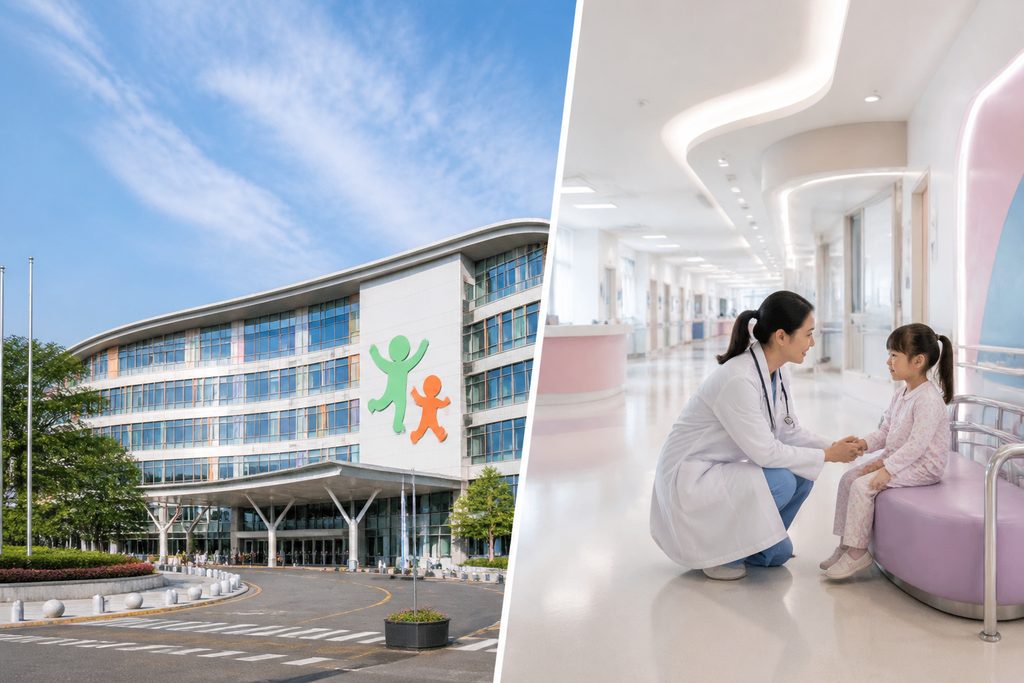
According to China’s National Health Commission, Beijing Children’s Hospital handles over 3 million outpatient visits annually, making it one of the highest-volume pediatric centers on earth. For international families, the Beijing Children’s Hospital international patient price question comes up fast — but the harder part is usually logistics, not money. A consultation through the hospital’s international department typically starts around $100–300 for a video session, while a written second opinion from a senior specialist runs $300–500. Those numbers mean little, though, without understanding how the system actually works when you are booking from abroad.
This guide walks through the real sequence, the costs you should plan for, and the failure points nobody mentions until you hit them. We coordinate care for families from the US, Europe, the Gulf states, and Southeast Asia who are considering treatment at Beijing’s top-ranked hospitals. What follows is what we tell every parent before they book a flight.
How This Actually Works, Step by Step
You cannot simply email the hospital and reserve a bed. Chinese public hospitals, including Beijing Children’s Hospital, operate on a face-to-face outpatient model. Surgery gets scheduled only after a specialist sees your child in person. Here is the sequence we guide families through:
Step 1 — You send records. Discharge summaries, imaging reports, lab results, genetic testing if relevant. We arrange certified translation into Chinese. This takes 2–5 business days depending on volume and complexity.
Step 2 — A specialist reviews the file. Through the hospital’s international department or a partnered telemedicine platform, the relevant pediatric subspecialty — cardiology, neurology, orthopedics, hematology — reviews your child’s case. A written second opinion costs $300–500. A video consultation, where you speak directly with the specialist, runs $500–800 for top-tier experts. This is the stage where you learn whether traveling to Beijing even makes sense.
Step 3 — You decide on the pathway. If the specialist confirms that treatment in Beijing is appropriate, you choose between the standard public route (cheaper, slower, Mandarin-only) or the hospital’s international/VIP channel (English-speaking coordinators, faster scheduling, roughly 1.5–2x the standard price). Most international families choose the latter.
Step 4 — Visa and travel. Medical treatment in China uses the S2 visa, annotated for medical purposes. Accompanying family members apply under the same category. Processing takes 1–4 weeks depending on your consulate. The hospital provides an official invitation letter confirming your child’s appointment.
Step 5 — Arrival and face-to-face consultation. You land in Beijing, attend the in-person appointment, complete any additional testing the specialist orders, and only then does the hospital schedule surgery or admission.
That last point matters. No reputable platform can guarantee a surgery date before the specialist sees your child in person. Anyone promising otherwise is not being straight with you.
What Beijing Children’s Hospital Actually Costs for International Patients
The Beijing Children’s Hospital international patient price structure differs sharply from what Chinese citizens pay through the standard public system. International patients typically access care through the hospital’s international medical department or special-needs clinic, which carries separate pricing. Here is what you should budget for:
| Service | Typical Cost (USD) | Notes |
|---|---|---|
| Video consultation (general specialist) | $100–300 | International department or private platform |
| Written second opinion (senior specialist) | $300–500 | For reference only, not a prescription |
| Top-specialist video consultation | $500–800 | Department director or nationally ranked expert |
| In-person specialist consultation (VIP channel) | $800–1,200 | Coordination fee; hospital charges separate |
| Multidisciplinary team (MDT) video review | $1,500–2,000 | Multiple specialists, one comprehensive plan |
| Bilingual medical companion | from $300/day | Registration, queuing, payment, translation, escort |
These are coordination and consultation figures. Actual treatment costs — surgery, hospitalization, medication — are billed separately by the hospital and vary significantly by diagnosis and case complexity. For context, pediatric cardiology cost China figures for complex congenital heart repairs at top public centers often land between $15,000 and $35,000, compared with $100,000–250,000 for equivalent procedures in the US. That gap is why families from North America and Europe increasingly look east.
Public hospitals in China require prepayment. Private international hospitals like United Family or Jiahui often bill insurers directly. Beijing Children’s Hospital sits in the public category, so expect to pay deposits before admission and settle balances before discharge. Your home insurance may reimburse afterward, but the hospital will not wait for that process.
How to Book Beijing Children’s Hospital from Abroad
The phrase “how to book Beijing Children’s Hospital from abroad” implies a direct booking exists. It does not — not for the standard outpatient system. Here is the honest picture.
Public hospital registration in Beijing operates through a real-name system tied to a Chinese ID or passport. Outpatient slots release on a rolling basis, often days in advance, and popular pediatric subspecialties fill within minutes. You cannot queue for these slots from overseas without a Chinese phone number, a local payment method, and someone physically present to handle the process.
The international department runs differently. It accepts inquiries by email and phone, assigns an English-speaking coordinator, and schedules appointments with senior specialists on a timeline that works for traveling families. Lead time for a first available slot ranges from one to four weeks depending on the department. Cardiology and neurology book further out than general pediatrics or dermatology.
Our team handles this coordination as part of case management: we translate and submit records, communicate with the international department, confirm appointment dates, and arrange the bilingual companion who meets you at the hospital entrance. The coordination fee starts at $300. If we cannot secure the appointment you requested, that fee is refunded in full. What we cannot do is promise a specific surgeon or a specific surgery date before the in-person consultation happens. Nobody legitimate can.
A Realistic Timeline
Families consistently underestimate how long the pre-arrival phase takes. Here is a realistic sequence based on cases we have coordinated:
| Stage | Duration | What Actually Happens |
|---|---|---|
| Document collection and translation | 3–7 days | Gathering records from your home providers; certified medical translation |
| Specialist file review | 5–10 days | The Beijing specialist studies the case; written opinion or video call scheduled |
| Decision and appointment booking | 1–4 weeks | International department assigns a slot; lead time varies by department |
| S2 visa processing | 1–4 weeks | Consulate processing after hospital invitation letter issued |
| Travel and in-person consultation | Day 1–3 in Beijing | Face-to-face evaluation; additional tests ordered as needed |
| Surgery or admission scheduling | 1–6 weeks after consult | Depends on urgency, bed availability, and specialist’s surgical calendar |
Total realistic window from first inquiry to surgery: two to four months. Urgent oncology or cardiac cases can move faster through the VIP channel. Elective procedures take longer. Families who plan for this timeline avoid the panic that comes from booking flights before the appointment is confirmed.
What Can Go Wrong — and What Happens Then
We would rather you hear this from us than discover it in a Beijing taxi. Several things go sideways regularly.
The specialist reviews the file and says no. This happens more than families expect. The Beijing expert determines that the proposed treatment is not indicated, or that the child is not a surgical candidate, or that the condition is better managed at home. The recourse: you have spent $300–800 on a consultation that saved you a trip. That is not a loss. That is the system working.
The visa gets delayed. S2 processing times fluctuate by consulate and season. Summer and early autumn see longer queues. If the visa does not arrive before your appointment date, the hospital will reschedule once without penalty in most cases. Our team tracks this and communicates with the international department on your behalf.
The specialist you wanted is not available. Top pediatric surgeons in Beijing have packed calendars. The international department may offer a colleague in the same department instead. You can accept, wait for the preferred specialist’s next opening, or request a different hospital entirely. Beijing has 21 hospitals on the Fudan Top 100 list, so alternatives exist.
Treatment costs exceed the estimate. Initial quotes cover the procedure. They do not always cover extended ICU stays, complications, or additional imaging. Ask for a written cost breakdown before admission and confirm what is included. Keep a 20–30% buffer in your budget.
Language breaks down at the ward level. The international department speaks English. The floor nurses may not. A bilingual companion bridges this gap — not just for translation but for navigating the physical hospital, which is enormous and crowded. This is the single most undervalued service we provide.
Is Beijing Children’s Hospital Good for Foreigners? Evaluating the Fit
The question “is Beijing Children’s Hospital good for foreigners” deserves a nuanced answer. The hospital is excellent. It is not always the right choice.
Beijing Children’s Hospital is a national clinical research center for pediatric medicine. Its subspecialty departments — pediatric hematology, cardiology, neurology, and respiratory medicine — rank among China’s top ten in the Fudan specialty reputation rankings. The hospital sees complex cases referred from across the country. Volume breeds expertise. A pediatric cardiac surgeon here may perform more complex repairs in a year than a Western counterpart does in five.
But the hospital is also a public institution serving a massive domestic population. The outpatient halls are crowded. Wait times between tests can stretch for hours. The food, the signage, the bedside manner — none of it resembles a Western private hospital. If you want a United Family or Jiahui experience, you should go to one of Beijing’s private international hospitals. If you want deep subspecialty expertise at a fraction of Western prices, Beijing Children’s Hospital is hard to beat.
For expat families already living in Beijing, the calculation differs. School communities often have established relationships with specific departments. Your child’s pediatrician at Raffles or United Family may refer directly to a known specialist at Beijing Children’s Hospital. In that case, the international department pathway still applies, but you have local context that overseas families lack.
Practical Considerations: Records, Visa, Payment, and Follow-Up
Before you commit to anything, sort out these four things.
Records. Chinese specialists expect complete documentation. Imaging should be provided as DICOM files on a disc or via secure upload, not just printed reports. Genetic testing results matter enormously for pediatric neurology and metabolic cases. If records are incomplete, the specialist will order repeat testing in Beijing — which adds cost and time.
Visa category. Repeating this because it is the most common mistake we see: medical treatment requires an S2 visa, not an M visa. M visas are for commercial and trade activities. Applying under the wrong category causes delays and sometimes refusals. The hospital’s invitation letter must clearly state the medical purpose.
Payment. Bring a payment method that works in China. International credit cards are accepted at the international department but not always at every payment window inside the hospital. Alipay and WeChat Pay dominate. Your companion can handle payments if you do not have these set up.
Follow-up at home. The Beijing specialist will provide a discharge summary and follow-up protocol. Your home physician receives translated copies. For ongoing monitoring — imaging, lab work, medication adjustments — you need a local provider willing to take over. Confirm this before you leave Beijing, not after you return home.
Frequently Asked Questions
A video consultation through the international department or a partner platform typically runs $100–300. A written second opinion from a senior specialist costs $300–500. A top-specialist video consultation ranges from $500–800. These are coordination-level fees; treatment costs are billed separately by the hospital.
No. Chinese public hospitals require an in-person consultation before scheduling surgery. The specialist must examine your child and review any additional testing. Any service claiming to guarantee a surgery date before this happens is not operating within the hospital’s actual rules.
That happens. The specialist may determine that the proposed treatment is not indicated, or that your child’s condition is better managed locally. You will have spent a few hundred dollars on a consultation that prevented an unnecessary international trip. The consultation fee is not refundable, but the travel costs you avoided are far larger.
The S2 visa, annotated for medical purposes. Accompanying family members apply under the same category. The M visa is for commercial and trade activities and is not appropriate for medical travel. Processing takes one to four weeks depending on your consulate.
As a public hospital, it generally requires prepayment and does not bill international insurers directly. You pay deposits and settle balances before discharge, then seek reimbursement from your insurer. Private international hospitals in Beijing, such as United Family, offer direct billing but at higher overall prices and with narrower subspecialty depth.
Your Next Step
Beijing Children’s Hospital offers world-class pediatric subspecialty care at prices that remain dramatically lower than Western equivalents. The challenge is not the medicine — it is the coordination. Records, translation, appointment booking, visa timing, on-the-ground navigation. Our team at China Medical Services handles those logistics so you can focus on your child. We do not practice medicine, and we do not promise outcomes. We connect you with the right specialists, translate what they tell you, and make sure you are not alone in a hospital where everything is in Chinese. Start with a free consultation to discuss your child’s case and whether Beijing makes sense.
The decision to seek care abroad for your child is heavy enough. The logistics should not be.
For more medical information and treatment options in China, visit chinamedservices.com (China Medical Services).
