Beijing Ditan Hospital Liver Disease for International Patients: Costs & Access
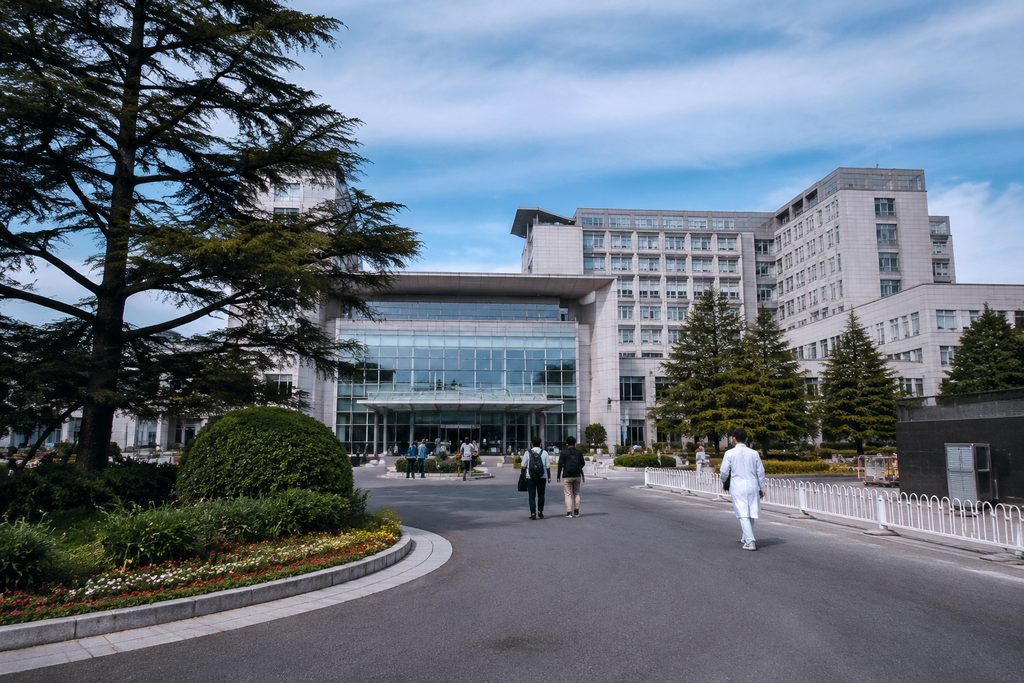
Have you been diagnosed with hepatitis B, cirrhosis, or another liver condition and wondered whether China’s specialized infectious disease hospitals could offer something your local system cannot? Beijing Ditan Hospital sits at the center of that question for thousands of international patients each year. Understanding the Beijing Ditan Hospital liver treatment cost for foreigners is the starting point — but knowing how to actually get through the door matters just as much.
Beijing Ditan Hospital, affiliated with Capital Medical University, is one of China’s most recognized centers for infectious diseases and hepatology. The hospital treats approximately 500,000 outpatient visits annually, with liver disease accounting for a substantial share. For foreign patients, the appeal is straightforward: deep specialization, high patient volumes that translate into clinical experience, and costs that typically run 60–80% below comparable care in the United States or Western Europe.
But accessing that care is not as simple as booking a flight. This guide explains the real process, the real costs, and the real risks — from someone who helps patients navigate this system every day.
How This Actually Works, Step by Step
The pathway to treatment at Beijing Ditan Hospital as a foreigner follows a sequence that surprises most first-time patients. Here is what actually happens.
Step 1: You submit your existing medical records. This means your most recent liver function tests, viral load results if you have hepatitis B or C, imaging reports (ultrasound, CT, MRI, FibroScan), and any biopsy pathology. Translation into Chinese is required before any Chinese physician reviews them. Our team handles this translation and formats the records according to what the hospital’s international department expects.
Step 2: A specialist reviews your case. Beijing Ditan Hospital’s hepatology department evaluates whether your case falls within their treatment scope. This is not a formality. Chinese public hospitals routinely decline cases they consider too advanced, too ambiguous, or better suited to a general hospital with broader internal medicine support. You get a written response, usually within 3–7 working days.
Step 3: You choose a consultation format. Options include a written second opinion (the reviewing physician provides analysis and treatment direction without a live conversation), a video consultation where you speak directly with the specialist, or traveling to Beijing for an in-person outpatient visit. The choice depends on how much certainty you need before committing to travel.
Step 4: If you travel, the hospital visit happens in person. Here is the reality of China’s public hospital system: you cannot pre-book a specific outpatient appointment from overseas for the standard public channel. You arrive, register on the day, and queue. The hospital’s international medical department offers a different route — advance coordination, English-speaking staff, and scheduled appointments with senior physicians. That route costs more, roughly 1.5–2 times the standard public fee.
Step 5: Treatment planning and admission. If the specialist recommends hospitalization or a procedure, admission depends on bed availability and the hospital’s internal scheduling. No one can guarantee a specific admission date from abroad. What we can do is coordinate the paperwork, accompany you through registration, and communicate with the department directly to minimize waiting.
Beijing Ditan Hospital Liver Treatment Cost for Foreigners: What the Numbers Actually Look Like
Let’s talk money. The Beijing Ditan Hospital liver treatment cost for foreigners varies widely depending on whether you use the standard public channel or the international department, and on the complexity of your condition. Here is a realistic breakdown based on current fee structures.
| Service | Public Channel (RMB) | International Dept (RMB) | Approx. USD |
|---|---|---|---|
| Outpatient specialist consultation | 50–100 | 300–800 | $45–115 |
| Liver function panel + viral markers | 300–600 | 500–1,000 | $70–140 |
| FibroScan / transient elastography | 150–300 | 300–500 | $40–70 |
| Abdominal MRI with contrast | 800–1,500 | 1,200–2,500 | $170–350 |
| Liver biopsy (inpatient, all-in) | 3,000–6,000 | 5,000–10,000 | $700–1,400 |
| Hepatitis B antiviral therapy (annual, oral) | 3,000–12,000 | — | $420–1,700 |
For context, a comprehensive liver evaluation — consultation, full blood work, imaging, and elastography — typically runs $300–600 at Beijing Ditan Hospital through the international department. The same workup in the U.S. commonly exceeds $2,500 before insurance. The gap widens for procedures: a transjugular liver biopsy with hospital stay might cost $1,200–2,000 in Beijing versus $8,000–15,000 in the U.S.
What about the question many patients search for — liver transplant cost China international patients? Here we must be direct. Beijing Ditan Hospital is not a major liver transplant center. That procedure in China is concentrated at hospitals like Beijing Friendship Hospital, Renji Hospital in Shanghai, and West China Hospital in Chengdu. For foreign nationals, transplant access involves additional regulatory and ethical review layers that no service provider can shortcut. We do not market transplant services, and we advise any patient considering that path to consult directly with a transplant center’s international office. The honest answer on cost: published figures for liver transplantation in China range from RMB 300,000–500,000 ($42,000–70,000) for the procedure itself, excluding immunosuppression and follow-up. But availability for foreigners is not something anyone should promise.
A Realistic Timeline
How long does this actually take? Longer than patients want, shorter than the worst-case scenarios. Here is an honest timeline for a foreign patient pursuing liver treatment at Beijing Ditan Hospital.
| Stage | What Happens | Typical Duration |
|---|---|---|
| Day 1–7 | Medical record collection and translation into Chinese | 5–7 working days |
| Day 8–14 | Specialist review at Beijing Ditan Hospital; written response | 3–7 working days |
| Week 3–4 | Video consultation scheduling (if chosen); physician availability | 1–2 weeks lead time |
| Week 4–6 | S2 visa application with hospital invitation letter | 1–3 weeks depending on embassy |
| Week 6–8 | Travel to Beijing; in-person outpatient visit | 2–3 days on site |
| Week 8–12 | Additional testing, treatment plan finalization, possible admission | 2–4 weeks if hospitalization needed |
The steps people forget are document translation and visa processing. Neither is fast. A hospital invitation letter helps with the S2 visa — Beijing Ditan’s international department can issue one once you have a confirmed consultation — but the embassy timeline is outside anyone’s control. Plan for six to eight weeks from first contact to sitting in a Beijing consultation room. If you need treatment, not just evaluation, add another month.
What Can Go Wrong — and What Happens Then
We would rather you hear this now than discover it in a Beijing hospital corridor. Here are the honest failure modes.
Your records are incomplete or in a format the hospital rejects. Chinese specialists are rigorous about documentation. A hepatitis B patient without a recent viral load and resistance profile may be asked to repeat everything on arrival. That means extra days and extra cost. The fix: have your records reviewed by someone who knows what Beijing Ditan expects before you submit them.
The specialist disagrees with your home physician. This happens more often than patients expect. Chinese hepatology protocols — particularly around hepatitis B antiviral initiation and cirrhosis management — sometimes differ from Western guidelines. The hospital will not adjust its recommendations to match your home doctor. You get their clinical opinion, period. The recourse is to take that written opinion back to your home physician and make an informed choice.
You arrive and the department is overwhelmed. Beijing Ditan’s outpatient volume is staggering — thousands of patients daily. Even with international department coordination, waiting times inside the hospital can stretch for hours. A bilingual companion who knows where to queue, which window takes which payment, and how to read the hospital’s internal signage turns a five-hour ordeal into a two-hour visit.
Admission is delayed. Bed availability in the hepatology ward fluctuates. If your condition is stable, you may wait one to three weeks for a non-urgent admission. If it is urgent, the hospital will admit you through the emergency pathway. No intermediary can jump this queue, and any service claiming otherwise is not being honest with you.
Is Beijing Ditan Hospital Good for Hepatitis B Treatment? Evaluating the Evidence
This is one of the most common questions we receive: is Beijing Ditan Hospital good for hepatitis B treatment? The answer requires understanding what the hospital is and is not.
Beijing Ditan Hospital is a national-level infectious disease hospital. It was designated as one of China’s key centers for viral hepatitis research and treatment. Its hepatology department manages a massive hepatitis B patient population — tens of thousands of chronic HBV patients annually. That volume matters. Chinese hepatologists see more hepatitis B cases in a month than many Western specialists see in a year. The clinical pattern recognition that comes from that exposure is real.
But volume is not the same as outcomes. Published outcome data for Beijing Ditan’s HBV program is not readily available in English-language literature. What we can say with confidence: the hospital follows China’s national hepatitis B treatment guidelines, which align closely with international standards from EASL and AASLD on most key points — antiviral initiation thresholds, first-line drug selection (entecavir, tenofovir, TAF), and cirrhosis monitoring. For patients with drug-resistant HBV or complex co-infections, the depth of experience at a center like Ditan is genuinely difficult to replicate elsewhere.
For international patients specifically, the calculus is different. If you have straightforward chronic hepatitis B that is well-managed on a first-line antiviral, traveling to Beijing offers little clinical advantage — your local hepatologist can manage that. The value proposition strengthens when you have treatment failure, suspected resistant virus, cirrhosis with complications, or a co-infection like hepatitis D. Those are the cases where Ditan’s specialization pays off.
For a broader comparison of liver centers across China, our department rankings page covers hepatology and infectious disease programs at multiple top-tier hospitals.
Practical Considerations: Records, Visa, Payment, and Language
Through the standard public channel, no — public hospital registration in China is same-day, in-person. Through the international medical department, yes, with advance coordination. The international route costs more but provides scheduled appointments and English-language support.
It is among the top specialized centers for viral hepatitis and infectious liver disease. But “best” depends on your diagnosis. For hepatocellular carcinoma, cancer centers like Fudan University Shanghai Cancer Center may be more appropriate. For autoimmune liver disease, general hospitals with strong rheumatology-immunology departments can be better. The right hospital follows the diagnosis, not the other way around.
Liver transplantation for foreign nationals in China involves regulatory review, donor allocation policies, and ethical approvals that make the process substantially more complex than standard treatment. Beijing Ditan Hospital is not a primary transplant center. Any patient considering this path should contact a transplant hospital’s international office directly and expect a lengthy evaluation process with no guaranteed outcome.
You have two options: use the hospital’s international department, which provides some English support, or engage a bilingual medical companion who handles registration, queuing, payment, and clinical translation. Most foreign patients do both. The international department handles scheduling; the companion handles the on-the-ground navigation that the department’s staff cannot provide.
Your Next Step
The decision to pursue liver treatment in China is not one to make lightly. It requires weighing clinical evidence, travel logistics, language barriers, and honest cost comparisons against what your home system offers. Our team at China Medical Services exists to make that evaluation easier. We translate records, coordinate with hospital international departments, arrange video consultations, and provide on-the-ground bilingual support in Beijing and 36 other cities. We do not practice medicine, and we do not promise outcomes — we handle the logistics so you can focus on the clinical conversation. If you are ready to explore whether Beijing Ditan Hospital is the right fit for your liver condition, start with a free consultation at our patient services page. We will walk you through the process, answer your specific questions, and help you decide if this path makes sense for you.
Frequently Asked Questions
Yes. The hospitals used for international patients are JCI-accredited and follow the same international safety standards as top hospitals in the US and Europe. Surgical teams perform high volumes of procedures — often more than their Western counterparts — which studies show leads to better outcomes.
Costs vary by procedure and hospital, but international patients typically save 40-80% compared to US prices — even when factoring in travel and accommodation. A consultation with our team will give you an exact, all-inclusive quote with no hidden fees.
Send us your existing medical reports to get started. We handle everything from hospital selection and appointment scheduling to visa assistance and post-operative recovery planning. Your medical records are reviewed by the specialist before you even book a flight.
For more medical information and treatment options in China, visit chinamedservices.com (China Medical Services).
