Beijing Jishuitan Hospital Burn Surgery: Scar Reconstruction & Complex Burn Care
Key Takeaways
- Beijing Jishuitan Hospital‘s burn center treats over 3,000 inpatients annually, making it one of the highest-volume burn units in China with outcomes comparable to top Western trauma centers.
- The hospital’s integrated approach pairs acute burn surgery with long-term scar reconstruction under one roof — a continuity model that eliminates the fragmented care many patients face elsewhere.
- International patients cannot simply book burn surgery online. The process requires an in-person consultation, specific visa documentation, and navigating a hospital that conducts daily business in Mandarin.
- Understanding the full cost picture before you travel — from surgery fees to post-operative compression therapy — prevents the financial surprises that derail recovery plans.
The Problem: Severe Burns Demand Expertise Most Hospitals Don’t Have
Burn injuries affect approximately 11 million people globally each year who require medical attention, according to the World Health Organization. A deep partial-thickness or full-thickness burn is not just a skin injury. It triggers a systemic inflammatory response that can cascade into organ failure within days. Survival depends on getting to a center that performs excision and grafting within the first 72 hours — and does it well.
Most general hospitals in any country can handle minor burns. They cannot manage a 40% total body surface area burn with inhalation injury. The mortality difference between a dedicated burn center and a general surgical ward is stark. Studies show a 25-30% relative reduction in mortality when patients are treated at verified burn centers versus non-specialized facilities. Yet access to these centers is uneven. In the United States, only about 130 burn centers exist nationwide. Wait times for non-emergent reconstruction can stretch past six months. In Europe, public system queues for scar revision surgery often run 8 to 12 months.
That timeline matters. Hypertrophic scars thicken and contract over time. A contracture across a joint — the elbow, the neck, the fingers — can freeze it into a fixed position. Releasing it early preserves function. Waiting a year for a surgery slot means permanent loss of range of motion.
Who We Are
We are China Medical Services, a medical concierge organization based in China. We are not a hospital. We do not treat patients, diagnose conditions, or influence clinical decisions. What we do is bridge the operational gap between you and China’s top-tier hospitals. Our team handles hospital matching, appointment coordination, bilingual medical interpretation, visa guidance, and logistical support throughout your stay. We work with 340+ top-ranked hospitals across 37 cities. We exist because navigating Chinese healthcare without language fluency and institutional knowledge is not just difficult — it can be unsafe. Our job is to make sure you never have to guess which window to queue at, which form to fill out, or whether the doctor understood your full surgical history.
Why Beijing Jishuitan Hospital Delivers Results in Complex Burn Care
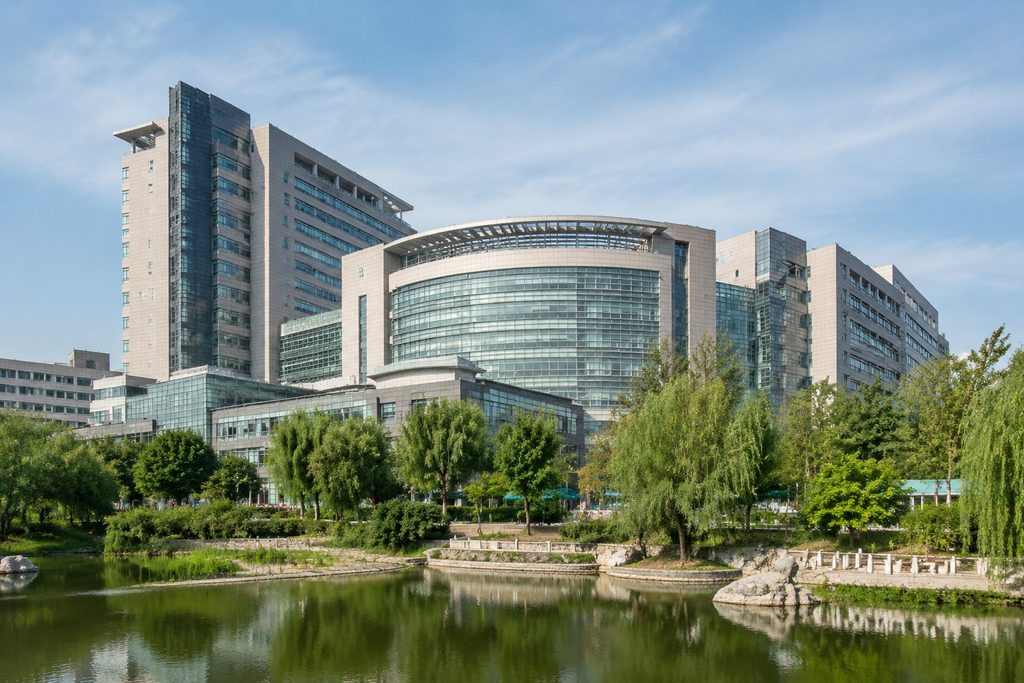
Beijing Jishuitan Hospital, also known as Beijing Jishuitan Hospital Peking University Fourth School of Clinical Medicine, houses one of China’s most established burn departments. The hospital was founded in 1956 and its burn unit was among the first specialized burn centers in the country. Today it functions as a national referral center. Patients with failed grafts, electrical burns, chemical burns, and extensive thermal injuries arrive here from across China and increasingly from abroad.
Volume That Builds Clinical Instinct
The burn center at Beijing Jishuitan Hospital admits more than 3,000 inpatients each year and handles over 80,000 outpatient visits annually. To put that in perspective, a busy US burn center might admit 300 to 600 patients per year. The surgical team here performs over 2,000 burn-related operations annually. That volume creates pattern recognition. A surgeon who has seen 500 electrical burns of the hand knows within seconds which deep structures are likely compromised. They do not need to open the fascia to confirm — they know from the entry and exit wound pattern. This is not about talent. It is about repetition at a scale few Western hospitals can match.
For complex burn treatment abroad price comparisons, the volume advantage translates directly into surgical efficiency. Graft harvesting, meshing, and application happen faster. Operating time is shorter. Anesthesia exposure is reduced. These are measurable variables that affect outcomes.
Integrated Acute Care and Scar Reconstruction
Most burn care systems split into two disconnected phases. The acute burn team saves your life, grafts the wounds, and discharges you. Six months later, you find a plastic surgeon for scar revision. Different hospital. Different medical record system. The new surgeon has never seen your original wound pattern.
Beijing Jishuitan Hospital operates differently. The same department manages the full arc of care — from initial resuscitation and escharotomy through staged reconstruction. When a patient arrives with deep burns, the team plans not just for survival but for functional recovery two years out. They position grafts with future contracture release in mind. They document scar maturation patterns at follow-up visits and time secondary procedures accordingly. This continuity matters enormously for how is deep burn treatment done in Beijing. The answer: as a single, coordinated pathway rather than a series of disconnected interventions.
Scar reconstruction here covers the full spectrum. Z-plasty and W-plasty for linear contractures. Tissue expansion for large scarred areas on the scalp or neck. Full-thickness skin grafts for delicate areas like the eyelids. Free flap transfers for deep defects exposing bone or tendon. Laser therapy for hypertrophic scars and erythema. The department has dedicated rehabilitation therapists who fabricate custom compression garments and splints on-site.
Cost Structure That Makes Treatment Accessible
Let’s address the question most international patients ask first: Beijing Jishuitan Hospital burn surgery cost. Acute burn surgery with skin grafting for a moderate burn (10-20% TBSA) typically ranges from $8,000 to $18,000 USD, depending on graft type, number of procedures, and length of ICU stay. Major burns requiring multiple staged procedures and extended intensive care can reach $30,000 to $50,000. Scar reconstruction procedures range from $3,000 to $12,000 depending on complexity — a fraction of what equivalent procedures cost in the United States, where a single contracture release with flap coverage can bill at $40,000 to $80,000.
These figures are estimates. Final costs vary by case complexity, hospital billing category, and whether you access care through the international VIP channel or the standard public pathway. The international channel costs more — typically 1.5 to 2 times the standard rate — but provides English-speaking coordination, priority scheduling, and private rooms. For patients asking book burn surgery at Beijing Jishuitan Hospital, the international channel is the only practical route. Standard public outpatient departments cannot accept overseas bookings.
| Procedure Type | Estimated Cost (USD) | Comparable US Cost (USD) |
|---|---|---|
| Acute burn surgery with grafting (moderate, 10-20% TBSA) | $8,000 – $18,000 | $60,000 – $120,000 |
| Major burn care (multiple surgeries, ICU) | $30,000 – $50,000 | $200,000 – $500,000+ |
| Scar contracture release with Z-plasty | $3,000 – $6,000 | $20,000 – $40,000 |
| Tissue expansion and reconstruction | $8,000 – $12,000 | $40,000 – $80,000 |
Why the cost difference? It is structural, not qualitative. Chinese hospital labor costs are lower. Operating room time charges less. Implant and graft material costs are domestically sourced. The clinical protocols — excision depth, graft thickness, infection control standards — follow the same evidence base as Western burn centers. Lower cost does not signal lower quality here. It signals different economics.
Surgical Expertise and Safety Standards
A question we hear frequently: is scar reconstruction surgery safe in China? At a top-tier center like Beijing Jishuitan Hospital, the safety profile mirrors international benchmarks. The hospital maintains strict infection control protocols. Operating theaters meet international standards. The burn ICU has isolation capability for patients with multidrug-resistant organisms. Complication rates for graft take, infection, and hematoma are tracked internally and align with published data from major burn centers globally.
What makes a surgeon the best burn scar reconstruction surgeon China offers is not a single name. It is a team. Burn reconstruction at this level involves burn surgeons, plastic surgeons, hand surgeons, and rehabilitation specialists working in concert. The department chief and senior attending surgeons each have 20 to 30 years of focused burn experience. Many trained abroad or participate in international burn society conferences. Their work appears in peer-reviewed journals. But the real credential is the case volume — there is no substitute for having managed thousands of burn sequelae cases across every anatomical region.
What You Need to Know Before Going Alone
We want to be honest about the barriers. They are real. We help patients navigate them, but you should understand what you are facing before you commit to the journey.
- Visa Requirements: Medical treatment in China requires an S2 visa with a notation specifying medical purpose. Your accompanying family members also need S2 visas. This is not the same as a tourist L visa or a business M visa. The application requires an invitation letter from the Chinese hospital — and obtaining that letter independently, without a local contact, can take weeks of back-and-forth. Hospitals do not issue these letters to patients who have not yet scheduled a consultation.
- Language and Navigation: Beijing Jishuitan Hospital’s public-facing operations run entirely in Mandarin. Registration forms. Consent documents. Pharmacy instructions. Nursing shift reports. Even the directional signage assumes Chinese literacy. A bilingual companion is not a luxury — it is the difference between understanding your post-operative wound care instructions and guessing.
- Payment Systems: Chinese public hospitals operate on a prepayment model. You deposit funds at admission, and the hospital deducts from that balance as services are rendered. International credit cards are not accepted at the public cashier windows. The international department can facilitate wire transfers and some card payments, but you need to arrange this in advance. Insurance direct billing is rare in public hospitals — you pay upfront and seek reimbursement from your insurer afterward.
- Appointment Reality: You cannot email the burn department and book a surgery date. The sequence is fixed: in-person consultation, diagnostic workup, surgical plan, then scheduling. For international patients, this means traveling to Beijing for the initial assessment, potentially returning home, then coming back for the procedure. We help compress this timeline where possible, but the clinical workflow cannot be circumvented.
How We Help You Navigate This
These barriers exist for structural reasons, not because anyone wants to make things difficult. Chinese public hospitals were designed to serve a domestic population of 1.4 billion people. International patient coordination is an added layer, not the default. Our role is to operate that layer on your behalf.
Before you travel, we gather your medical records, have them translated into Chinese by medical translators, and submit them to the burn department for preliminary review. This step does not guarantee a surgery slot, but it allows the surgical team to assess whether your case falls within their scope and whether they are accepting international patients at that time. We coordinate the invitation letter needed for your S2 visa application. We advise on accommodation near the hospital — a practical detail that matters when you are making daily outpatient visits for dressing changes over several weeks.
During your stay, a bilingual medical companion accompanies you to every appointment. This person handles registration, payment deposits, pharmacy queues, and real-time interpretation during consultations. They ensure the surgeon understands your full history and that you understand the surgical plan, risks, and post-operative protocol. After discharge, we remain available to coordinate follow-up video consultations and, if needed, subsequent trips for staged reconstruction.
Our service is case management — medical record preparation, hospital liaison through official international department channels, and bilingual companion support. We do not promise access to a specific named surgeon or an exact surgery date. We promise to coordinate professionally through the proper hospital pathways and to refund appointment coordination fees if we cannot secure the booking.
Frequently Asked Questions
Not a final one. The burn department will provide a cost estimate after reviewing your translated medical records and photos, but the definitive quote comes only after the in-person consultation. The surgeon needs to examine your scars, assess tissue quality, measure contracture angles, and determine the exact procedure. We can give you a realistic range based on similar cases we have coordinated, and that range is usually accurate within 15-20%. But no reputable surgical team will quote a fixed price sight-unseen.
Plan for a minimum of two to three weeks. The initial consultation and pre-operative workup takes two to three days. The surgery itself is typically a day procedure or requires a short hospital stay of three to seven days. After discharge, you need at least one follow-up appointment for suture removal and wound check before flying. For tissue expansion procedures, the timeline stretches over months because the expander needs gradual inflation — those cases usually involve multiple trips.
This is the hard question every international patient should ask. The surgeon will provide a detailed discharge summary in English (we ensure this) that your local physician can reference. We also facilitate post-operative video consultations so the Beijing team can assess wound photos and advise on management. But if you need emergency surgical intervention — a graft infection requiring debridement, for example — you will need to see a local burn specialist. We recommend establishing this backup plan before you travel. Identify a burn center near your home that can receive your case information and step in if needed.
Yes. China’s domestic population includes significant diversity in skin phototypes, and Beijing Jishuitan Hospital receives patients from across Asia, Africa, and the Middle East. The surgical team understands that darker skin types have different scarring tendencies and pigmentary responses. Their post-operative protocols adjust compression therapy duration and silicone gel application accordingly. That said, if you have a known history of severe keloid formation, discuss this explicitly during the consultation. The surgeon may modify the reconstruction approach — favoring tension-minimizing closure techniques and earlier steroid injections.
It starts with a conversation. You reach out to us through our consultation page. We ask for your medical history, photos of the burn scars or acute injury, and your treatment goals. We translate and submit these to the hospital’s international department. If the department confirms they can take your case, we coordinate the invitation letter, visa guidance, and appointment scheduling. The entire pre-travel coordination typically takes two to four weeks from initial contact to confirmed appointment. Faster timelines are sometimes possible for urgent acute burns — we prioritize those cases.
Your Next Step
Burn injuries and their scars affect more than skin. They affect movement, comfort, and how you feel in your own body. Finding the right surgical team — one with deep experience, integrated care pathways, and costs that do not exhaust your resources — changes the arc of recovery. Beijing Jishuitan Hospital offers that combination at a level that few centers worldwide can match.
If you are considering burn surgery or scar reconstruction in China, start with information. Learn what is possible for your specific case. Our team is here to help you understand the options, the realistic costs, and the path from where you are now to where you want to be. Contact us for a free initial consultation — no commitment, no pressure, just a clear conversation about what comes next.
For more medical information and treatment options in China, visit chinamedservices.com (China Medical Services).
