Complex Retinal Surgery China: Beijing Tongren Hospital for Recurrent Retinal Detachment
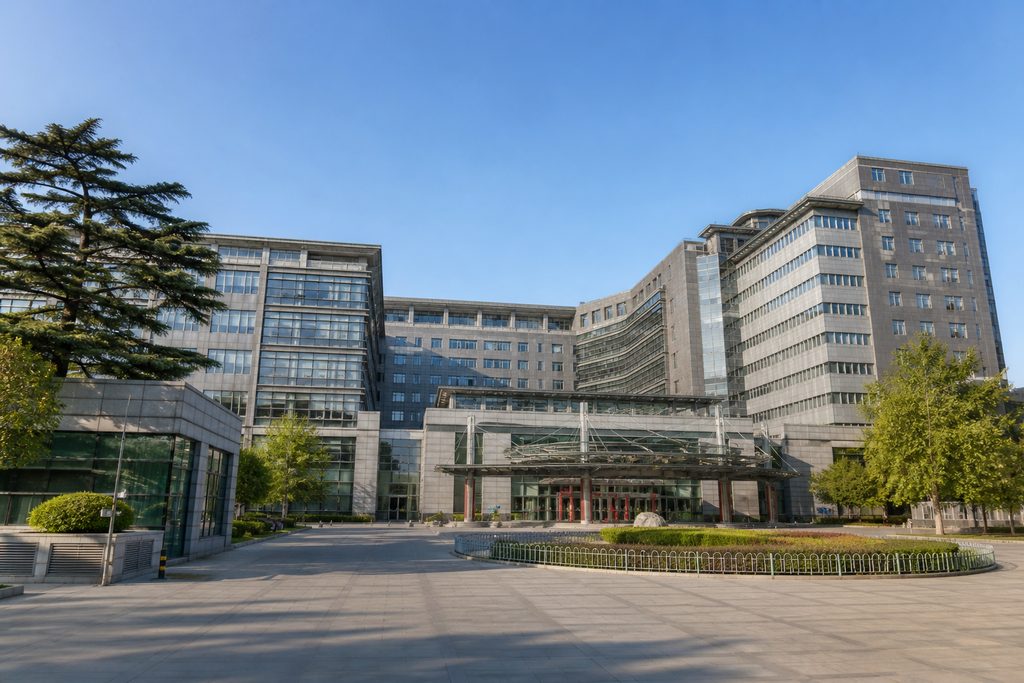
A patient in the United States facing a third surgery for recurrent retinal detachment might be quoted upwards of $25,000, with no guarantee the cycle ends there. At Beijing Tongren Hospital, that same complex procedure typically falls between $6,000 and $12,000. The cost difference is stark. But the volume of experience behind the surgeon’s hands matters more.
Key Takeaways
- Beijing Tongren Hospital performs over 15,000 retinal surgeries annually, building a depth of surgical experience that is difficult to match in lower-volume Western centers.
- The estimated Beijing Tongren Hospital retinal surgery cost for a complex recurrent detachment ranges from $6,000 to $12,000 USD — roughly one-third to one-half of the typical US price.
- Navigating the public hospital system independently is extremely difficult without Mandarin fluency; the international VIP pathway provides a structured alternative with English coordination.
- No surgical outcome is ever guaranteed, especially with recurrent detachments. Your specific retinal condition, the number of prior surgeries, and the presence of proliferative vitreoretinopathy will heavily influence the final visual prognosis.
The Problem: When a Retinal Detachment Keeps Coming Back
A first retinal detachment is frightening enough. A recurrent one is something else entirely. The retina, having been reattached once before, now sits in an eye that has already mounted a significant healing response. That response can turn hostile. Scar tissue can form on the retinal surface, contract, and pull the retina off again — a condition surgeons call proliferative vitreoretinopathy, or PVR. PVR is the single most common reason retinal detachment surgery fails, occurring in roughly 5% to 10% of primary repairs. Once PVR is established, each subsequent surgery becomes a more complex architectural problem. You are no longer just draining fluid. You are peeling membranes, sometimes removing the gel entirely, possibly filling the eye with silicone oil to keep the retina pinned down for months. The surgical time stretches. The recovery stretches. The anxiety compounds.
In many Western healthcare systems, the sheer volume of complex re-operations is spread thin. A retinal surgeon in a mid-sized American city might see a handful of severe PVR cases each month. That is not a criticism of their skill. It is a function of population distribution. But when you are facing a third surgery, you want a team that sees a handful of severe PVR cases every single day. You want pattern recognition that is practically instinctive. That is what draws patients to search for the best hospital for complex retinal surgery China. They are chasing volume. And Beijing Tongren Hospital is, by any measure, one of the highest-volume eye centers on the planet.
Who We Are
We are China Medical Services, a medical concierge team based in Beijing. We are not a hospital. We do not provide medical treatment, surgical opinions, or clinical diagnoses. What we do is dismantle the logistical barriers between you and China’s top-tier medical institutions. For a patient considering complex retinal surgery at Beijing Tongren Hospital, that means we handle the practical architecture of your trip: coordinating appointments through the hospital’s official international department, arranging bilingual medical companions who translate in real time during consultations, and managing the visa guidance, accommodation recommendations, and local transportation. We are your operational backbone. The medical decisions remain entirely between you and your treating surgeon. Our role is to make sure you can actually reach that surgeon without getting lost in a system that handles over 10,000 outpatient visits a day. You can learn more about how we work on our patient coordination page.
Why Beijing Tongren Hospital Delivers Results for Complex Retina Cases
When patients ask us “is Beijing Tongren Hospital good for retina surgery,” the answer does not come from marketing materials. It comes from the numbers. The hospital’s ophthalmology department is consistently ranked among the top two in China by the Fudan University Hospital Ranking, a rigorous annual evaluation. The retina service alone is a surgical powerhouse. Understanding why requires looking at three structural advantages that directly impact a patient with a recurrent detachment.
Surgical Volume That Creates Unmatched Pattern Recognition
Beijing Tongren Hospital’s ophthalmology department handles a staggering outpatient volume. The retina division performs more than 15,000 vitreoretinal surgeries each year. To put that in perspective, a busy retinal surgeon in the UK’s National Health Service might perform 200 to 300 such procedures annually. Tongren’s senior retina surgeons operate at a scale that is simply not achievable in most Western practice models. For a patient with recurrent retinal detachment surgery China price considerations aside, this volume translates into something specific: the surgeon has almost certainly managed a case nearly identical to yours, with the same configuration of scar tissue, the same history of prior buckling or vitrectomy, the same anatomical challenges. That kind of deep, repetitive experience is particularly valuable when intraoperative decisions must be made in real time — whether to use gas or silicone oil, whether to perform a retinectomy, how aggressively to dissect epiretinal membranes. These are not textbook decisions. They are judgment calls honed over thousands of cases.
Technology and Surgical Protocols at Scale
Tongren’s retina operating theaters are equipped with current-generation vitrectomy platforms — the same Alcon CONSTELLATION and Bausch + Lomb Stellaris systems found in top US eye centers. Small-gauge sutureless vitrectomy, typically 25-gauge or 27-gauge, is standard. Wide-angle viewing systems allow surgeons to see the peripheral retina clearly during complex membrane peeling. Intraoperative optical coherence tomography (OCT) is available to verify retinal attachment before the case concludes. But the technology itself is not the differentiator. It is the institutional protocols built around high volume. The surgical teams — nurses, scrub technicians, anesthesia providers — work together so frequently that the rhythm of a complex retinal case is deeply embedded. Turnover time between cases is minimal. Surgeons can perform eight to ten vitrectomies in a single operating day. This efficiency is not about cutting corners; it is about a system optimized through relentless repetition. For the international patient, this means you are stepping into a finely tuned surgical machine, not a department that occasionally handles a difficult retina case.
Cost Structure Without Quality Compromise
Let us address the question that brings many patients to this page: the Beijing Tongren Hospital retinal surgery cost. For a complex recurrent retinal detachment requiring vitrectomy, membrane peeling, and possibly silicone oil tamponade, the total hospital and surgeon fees typically range from $6,000 to $12,000 USD. That compares to $20,000 to $35,000 or more for an equivalent procedure in the United States, and roughly $15,000 to $25,000 in the UK for self-paying international patients. Why the gap? It is not because the care is inferior. Chinese hospital pricing for domestic patients is regulated by the government. Even international department pricing, while higher than the domestic track, is structurally lower than US hospital charges because the underlying cost base — labor, pharmaceuticals, device pricing negotiated for a massive national market — is fundamentally different. A vitrectomy pack that costs a hospital $500 in the US might cost $150 in China. Surgeon professional fees are lower because the overall compensation structure in Chinese public hospitals is different from the US fee-for-service model. The outcome data for retinal detachment repair at major Chinese centers, when adjusted for case complexity, is comparable to published Western benchmarks. You can explore more top-ranked hospitals on our hospital database page.
What You Need to Know Before Going Alone
We are direct about this because we have seen too many patients arrive unprepared. Walking into Beijing Tongren Hospital as a foreigner without a plan is overwhelming. The hospital sees over 10,000 outpatients daily. The main hall is a sea of people. Signs are in Chinese. Registration kiosks require a Chinese ID or a local phone number. The barriers are real and they are structural. Here is what you will face if you attempt to navigate independently.
- Language and Registration: The standard public outpatient system operates entirely in Mandarin. There is no English-language registration desk in the general hall. You cannot simply walk up and book an appointment with a senior retina specialist. The hospital uses a real-name registration system tied to a Chinese ID number. As a foreign passport holder, you fall outside this system. You will be redirected repeatedly, and you may never reach the right department.
- Payment Systems: Public hospital payment windows accept Chinese debit cards, WeChat Pay, and Alipay. International credit cards are not accepted in the general payment system. Even if you manage to register, you cannot pay. The international department operates on a different system and accepts wire transfers or international cards, but accessing that department requires prior coordination — it is not a desk you find by wandering the lobby.
- Medical Records and Imaging: The surgeon will need your full ophthalmic history: prior operative notes, OCT scans, fundus photographs, B-scan ultrasound images. These must be translated into Chinese and formatted in a way the hospital’s electronic system can accept. Handing a surgeon a stack of English-language records five minutes before a consultation does not work. The records need to be organized, translated, and submitted days in advance for proper review.
How We Help You Navigate This
Our process is designed to eliminate the friction points we just described. It starts before you ever board a plane. You send us your complete ophthalmic records. Our bilingual medical team translates them into clinical Chinese, paying careful attention to surgical terminology — “pars plana vitrectomy,” “scleral buckle,” “PFCL,” “endolaser” — terms that must be rendered precisely for a Chinese retina surgeon. We submit these records to the international department of Beijing Tongren Hospital for preliminary review. The surgeon confirms that your case is appropriate for their service and provides a preliminary opinion on approach. Only then do we coordinate your consultation appointment.
When you arrive in Beijing, a bilingual medical companion meets you at the hospital. This person’s job is to navigate the physical space, translate in real time during your face-to-face consultation with the surgeon, and ensure you understand every word of the surgical plan, the risks, and the postoperative regimen. They do not offer medical opinions. They are a language conduit and a logistical guide. After surgery, they accompany you to follow-up appointments, translate discharge instructions, and help you obtain your complete medical records and operative note in both Chinese and English for your home ophthalmologist. Our coordination services start from $300 for appointment booking, with full bilingual companion support available from $200 per day. Any consultation or coordination fees you pay are credited in full toward on-the-ground coordination if you proceed with surgery within 90 days. You can read more about our service model on the patient services page.
Frequently Asked Questions
Success rates for complex recurrent retinal detachment depend entirely on the specific anatomy of your eye. In published series from major Chinese eye centers, anatomic success rates for re-operations involving PVR range from 70% to 85% with silicone oil tamponade, which is consistent with international benchmarks. But “success” means retinal attachment — it does not guarantee full visual recovery. A retina that has been detached multiple times, particularly if the macula was involved, may never recover normal vision. The surgeon will give you a candid assessment based on your OCT and examination findings. No reputable surgeon will promise a specific visual outcome.
The $6,000 to $12,000 USD range typically covers the surgeon’s professional fee, the operating theater charges, the anesthesiologist’s fee, the vitrectomy consumables and intraocular tamponade agent (gas or silicone oil), and a standard inpatient stay of three to five days. It does not include preoperative testing, which may add $300 to $600, or postoperative medications. If silicone oil is used, a second surgery to remove the oil months later is a separate cost. The quote also excludes our coordination and companion fees, your travel, accommodation, and visa expenses. The final hospital quote is provided only after the surgeon has examined you in person.
No. This is a hard rule in the Chinese public hospital system, and it applies even through the international VIP channel. A senior surgeon will not schedule you for surgery based solely on overseas records. They must examine your eye under the slit lamp, review your imaging personally, and make their own assessment. What we can do is arrange a prioritized consultation slot so that you see the surgeon within days of arrival, not weeks. The surgical date is then set after that in-person evaluation. Anyone promising you a locked-in surgery date before you land is not being honest about how Chinese hospitals work.
After complex vitrectomy with gas or oil tamponade, you will typically stay in Beijing for at least two to three weeks. The first postoperative week involves frequent positioning — often face-down if gas is used — and daily or every-other-day checkups. The surgeon will want to see you several times to monitor intraocular pressure and confirm the retina remains attached. After you return home, your local ophthalmologist assumes follow-up care. We ensure you leave with a detailed discharge summary in English, including the surgical technique used, the tamponade agent and its expected duration, the medication regimen, and specific instructions for your home ophthalmologist. If silicone oil was used, you will need to plan for oil removal surgery, typically six to twelve months later, which can be done either back in China or by a retinal surgeon in your home country.
Silicone oil is not meant to stay in the eye permanently. It can emulsify over time, cause glaucoma, or damage the corneal endothelium. Removal is a separate surgical procedure, generally simpler than the initial detachment repair, and costs between $2,500 and $4,500 USD at Tongren. You can return to Beijing for this procedure, or a retinal surgeon at home can perform it. The decision depends on your home surgeon’s comfort with the technique and your willingness to travel again. We can coordinate the oil removal surgery on the same model as the primary procedure if you choose to come back.
Your Next Step
Recurrent retinal detachment is a serious, vision-threatening condition that demands a surgical team with deep, specific experience. Beijing Tongren Hospital offers that experience at a scale that is rare anywhere in the world, and at a cost that makes the prospect of traveling for care financially viable for many patients who would otherwise face prohibitive bills. The path is not simple, but it is navigable with the right support. If you want to understand whether your case is appropriate for treatment at Tongren, reach out to us. We will walk you through the process honestly, with no pressure and no promises we cannot keep.
For more medical information and treatment options in China, visit chinamedservices.com (China Medical Services).
