Bone Tumor Specialist: Shanghai Sixth Hospital Cost and Access
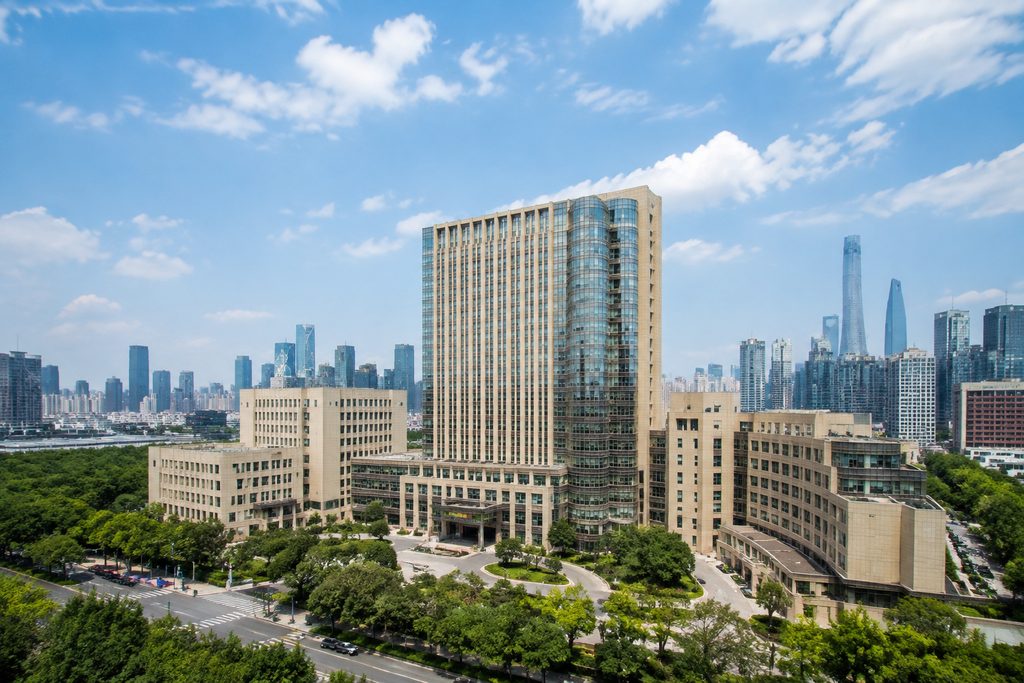
You’ve probably heard that getting world-class orthopedic oncology care means flying to the US or Europe and paying six figures. The reality is messier. Shanghai Sixth People’s Hospital runs one of the highest-volume bone tumor programs on the planet — and the bone tumor specialist Shanghai Sixth Hospital cost lands at a fraction of Western pricing. But getting in isn’t like booking a hotel room. There’s no online booking portal for the public outpatient clinic, no English-language hotline that connects you to a sarcoma surgeon, and no guarantee that showing up gets you a bed.
That gap — between world-class capability and real-world access — is exactly where international patients get stuck. This article walks through what the hospital actually offers, what it costs, how the process works from abroad, and where things can go wrong. No sugarcoating.
How This Actually Works, Step by Step
The sequence from “I found this hospital online” to “I’m in a Shanghai operating room” follows a predictable path. Here’s what it looks like in practice.
First, you gather everything you already have: MRI images (DICOM files, not just the printed report), CT scans, pathology slides if a biopsy was done, blood work, and any prior surgical notes. Your local oncologist’s summary letter helps. Translation matters — Chinese specialists review hundreds of cases weekly, and a clean, medically accurate English-to-Chinese translation of your records cuts evaluation time dramatically.
Second, you submit these records for a written second opinion or a video consultation. The orthopedic oncology team reviews the imaging and pathology, then tells you three things: whether the diagnosis is consistent with their reading, what surgical approach they’d recommend (limb-salvage resection, reconstruction with prosthesis or allograft, or amputation in rare advanced cases), and whether they believe treatment in Shanghai makes sense for your specific tumor type and stage.
Third, if the recommendation is to proceed, you schedule an in-person consultation. This is non-negotiable at public hospitals in China, including Shanghai Sixth. Surgery cannot be booked from overseas without a face-to-face outpatient visit. The surgeon needs to examine you physically, review the imaging on their own PACS system, and sign off on the surgical plan.
Fourth, after the in-person consultation, the hospital schedules admission. Lead time varies by department bed availability, your case urgency, and whether you’re going through the standard public route or the hospital’s international/VIP department. The international department offers English-speaking coordination and typically faster scheduling, at roughly 1.5 to 2 times standard pricing.
Fifth, you undergo pre-operative workup — cardiac clearance, anesthesia evaluation, blood typing, and often a repeat MRI or CT at the hospital itself. Chinese hospitals frequently re-image patients to ensure the scans match their own protocols. This adds days, not weeks.
Sixth, surgery happens. Post-operative recovery in-hospital typically runs 7 to 14 days for major limb-salvage procedures, longer if reconstruction is complex or if complications arise.
What Shanghai Sixth People’s Hospital Actually Offers for Bone Tumors
Shanghai Sixth People’s Hospital — officially Shanghai Jiao Tong University Affiliated Sixth People’s Hospital — carries a reputation in orthopedics that goes back decades. Its orthopedic department consistently appears in the Fudan University hospital rankings among China’s top 10 for orthopedics, and the hospital is widely regarded as one of the country’s reference centers for complex musculoskeletal cases. For bone and soft tissue sarcomas specifically, the orthopedic oncology team performs hundreds of resections annually, including limb-salvage procedures that many Western centers see only occasionally.
Volume matters in sarcoma surgery. A surgeon who does 80 limb-salvage resections a year has seen the anatomical variations, the intraoperative surprises, the borderline cases where a decision between resection margin and neurovascular preservation has to be made in minutes. That’s the argument for Shanghai Sixth — not a marketing line, but a statistical reality of surgical volume.
The department’s orthopedic oncology group handles osteosarcoma, Ewing sarcoma, chondrosarcoma, giant cell tumor of bone, and metastatic bone disease. For primary malignant bone tumors, the standard protocol mirrors what you’d find at MD Anderson or Memorial Sloan Kettering: neoadjuvant chemotherapy where indicated, wide-margin resection, and reconstruction using modular tumor prostheses, allografts, or composite techniques. The hospital also runs active clinical research programs in bone defect repair and biomaterials, which feeds directly into the reconstruction options patients are offered.
Is Shanghai Sixth Hospital good for malignant bone tumor surgery? The short answer is yes — with caveats. The surgical capability is genuinely world-class. The perioperative nursing, the English-language support on standard wards, and the patient-experience polish are not what a Western patient might expect from a US academic center. That’s not a quality judgment on the medicine; it’s a statement about the system. Chinese public hospitals run on volume. The standard wards are efficient, not luxurious.
How experienced are doctors at Shanghai Sixth Hospital bone tumor? The senior orthopedic oncology surgeons are typically professors at Shanghai Jiao Tong University School of Medicine, with 20-plus years in the specialty, international fellowship experience, and publication records that hold up to scrutiny. The department trains fellows from across China and increasingly from Southeast Asia and the Middle East. You’re not getting a junior registrar doing your resection — but you should verify the specific surgeon assigned to your case, because at a high-volume public hospital, the attending’s name on your admission record may not be the person who does every step of the procedure.
A Realistic Timeline
Here’s what the full arc looks like, assuming no major complications and prompt responses at each stage. These are ranges based on typical international patient experiences — not guarantees.
| Stage | Typical Duration | What Happens |
|---|---|---|
| Record collection & translation | 3–10 days | Gather DICOM files, pathology slides, prior reports. Medical translation into Chinese takes 2–5 business days depending on volume. |
| Written second opinion | 5–14 days | Orthopedic oncology team reviews records and returns written analysis with treatment direction. Faster if you go through the hospital’s international coordination channel. |
| Video consultation scheduling | 7–21 days | Top specialists have limited video slots. Expect 1–3 weeks lead time. |
| S2 visa application | 7–30 days | Requires invitation documents from the hospital. Processing varies by your home country’s Chinese embassy or consulate. |
| In-person consultation | 1–2 days in Shanghai | Outpatient visit, physical exam, review of imaging on hospital PACS. Surgical plan confirmed or adjusted. |
| Pre-op workup & admission wait | 5–21 days | Repeat imaging, cardiac clearance, anesthesia consult. Bed availability at the hospital determines the final admission date. |
| Surgery & inpatient recovery | 7–21 days | Depends on tumor location, resection extent, and reconstruction type. Limb-salvage with modular prosthesis typically runs 10–14 days. |
| Post-op follow-up in Shanghai | 7–14 days | Wound checks, early physiotherapy, pathology results review, chemotherapy planning if indicated. |
| Total realistic timeline | 6–12 weeks | From first contact to post-op departure. Faster if you skip the second opinion and go straight to in-person consultation, but that’s riskier. |
People forget the document translation step. They also forget that Chinese public hospitals do not hold beds for international patients who haven’t completed the in-person consultation. The timeline above reflects that reality.
What Can Go Wrong — and What Happens Then
Let’s be blunt about failure modes, because they’re real and they happen to real patients.
Your records get rejected or deemed insufficient. Chinese specialists are strict about imaging quality. If your MRI was done on an older machine or the DICOM files are incomplete, the team may request a repeat scan before giving any opinion. That means added time and cost. The fix: request the full DICOM dataset from your imaging center, not just the radiologist’s report. If the hospital requests a repeat scan, do it — arguing doesn’t help.
The in-person consultation changes the plan. A written second opinion is based on records. The in-person exam may reveal something different — a range-of-motion limitation, a soft-tissue component that imaging undersold, or a comorbidity that changes the surgical risk calculus. The surgeon may recommend a different reconstruction approach or, in rare cases, advise against surgery in Shanghai. That’s not a failure; it’s the system working. But it can feel destabilizing if you’ve already traveled.
Visa delays derail the schedule. The S2 visa for medical treatment requires supporting documents from the hospital — typically an invitation letter, a treatment plan summary, and proof of hospital registration. If your home country’s Chinese embassy is slow, or if your documents have discrepancies, the visa takes longer than expected. There’s no expedited medical visa category. You wait, or you adjust your timeline.
Surgery gets postponed. Public hospital beds in Shanghai are in constant demand. A trauma case can bump a scheduled elective sarcoma resection by days. The international department reduces this risk but doesn’t eliminate it. The recourse: flexibility in your travel dates and accommodation arrangements.
Complications arise, and you need extended care. Infection, wound dehiscence, prosthesis issues — these are known risks of orthopedic oncology surgery anywhere in the world. Shanghai Sixth handles them competently, but extended inpatient stays cost money and time. Make sure your insurance or personal funds cover a 30-day worst-case scenario, not just the 10-day best case.
What the Bone Tumor Specialist Shanghai Sixth Hospital Cost Actually Looks Like
Here’s where the numbers get concrete. The bone tumor specialist Shanghai Sixth Hospital cost varies by tumor type, procedure complexity, and whether you go through the standard public route or the international department. These are ranges based on typical published figures and patient-reported experiences — not quotes.
| Item | Standard Public Route (USD) | International/VIP Department (USD) | US Comparison (USD) |
|---|---|---|---|
| Initial outpatient consultation | $30–80 | $150–300 | $500–1,200 |
| Written second opinion (orthopedic oncology) | $300–500 | Included in coordination | $2,000–5,000 |
| Video consultation with senior specialist | $100–300 | $500–800 | $800–1,500 |
| MRI (3T, with contrast) | $150–300 | $300–500 | $2,500–5,000 |
| CT chest/abdomen/pelvis | $100–200 | $200–400 | $1,500–3,000 |
| Biopsy (if not already done) | $300–800 | $500–1,200 | $3,000–8,000 |
| Limb-salvage resection + modular prosthesis reconstruction | $15,000–30,000 | $25,000–50,000 | $80,000–200,000+ |
| Amputation (when indicated) | $5,000–12,000 | $8,000–20,000 | $40,000–90,000 |
| Inpatient stay (per day, standard ward) | $100–250 | $300–800 | $3,000–8,000 |
| Neoadjuvant/adjuvant chemotherapy (per cycle) | $1,500–4,000 | $2,500–6,000 | $15,000–40,000 |
These figures are illustrative and vary by hospital and case complexity. The Shanghai Sixth People’s Hospital orthopedic oncology price for a full limb-salvage treatment arc — diagnosis through surgery through initial recovery — typically lands between $25,000 and $60,000 for international patients. That compares to $150,000 to $400,000 for the equivalent pathway at a major US sarcoma center.
The math is straightforward. Even with flights, accommodation, and coordination services, most international patients spend 70–80% less in Shanghai than they would in the US for comparable surgical care. That’s the core value proposition, and it holds up under scrutiny.
Practical Considerations: Records, Visa, Payment, Language, Follow-Up
Let’s get specific about what you need to have in order before you contact anyone.
Medical records. You need the full DICOM dataset from every relevant MRI and CT — not screenshots, not printed films, not PDFs of the radiologist’s report. You also need the pathology report and ideally the actual slides or paraffin blocks if a biopsy was done outside China. Chinese pathologists frequently re-review the slides themselves; many sarcoma diagnoses get revised on second pathological review. That’s not a criticism of your local pathologist — it’s a statement about how much sarcoma pathology benefits from a high-volume second read.
Visa. Medical treatment in China falls under the S2 visa category, which covers short-term private affairs including medical treatment. Family members accompanying you also apply for S2. The hospital’s international department provides the invitation letter and supporting documents. Processing time runs 1 to 4 weeks depending on your home country. The M visa is for commercial and trade activities — it is not the correct category for medical travel, and using it for treatment creates legal risk.
Payment. Chinese public hospitals require prepayment. You’ll deposit funds at admission, and the hospital draws down against that deposit as charges accrue. International insurance is usually reimbursement-based — you pay upfront, then claim. Some international departments work with major insurers for direct billing, but this is not universal. Confirm before you commit.
Language. The standard public wards at Shanghai Sixth run almost entirely in Mandarin. Nurses may speak limited English. Doctors often read English medical literature but may not be comfortable conducting a nuanced surgical consent conversation in English. The international department provides English-speaking coordination, but even there, the depth of communication varies. A bilingual medical companion — someone who handles registration, queueing, payment, translation, and navigation — removes most of the friction. This is a service worth budgeting for, not a luxury.
Follow-up at home. After you leave Shanghai, your local oncologist needs the full surgical report, pathology results, and reconstruction details. The hospital provides discharge documentation in Chinese; getting a certified English translation is your responsibility. Plan for ongoing imaging surveillance — typically every 3 to 6 months for the first two years after sarcoma surgery — which can be done in your home country and reviewed remotely if needed.
Frequently Asked Questions
For international patients, a full limb-salvage resection with modular prosthesis reconstruction typically ranges from $25,000 to $60,000 including pre-op workup, surgery, and inpatient recovery. The bone tumor specialist Shanghai Sixth Hospital cost varies significantly by tumor type, reconstruction approach, and whether you use the standard public route or the international department. Amputation, when clinically indicated, costs substantially less.
No. Public hospitals in China, including Shanghai Sixth, require an in-person outpatient consultation before any surgery can be scheduled. You can complete a written second opinion or video consultation remotely, which helps determine whether traveling makes sense. But the actual surgical booking happens only after you’ve been examined in Shanghai. Anyone promising a confirmed surgery date before you’ve had an in-person consultation is not being honest with you.
Yes. The orthopedic oncology team performs a high volume of sarcoma resections annually, and the hospital’s orthopedic department consistently ranks among China’s top programs. The surgical capability is genuinely world-class. What differs from Western academic centers is the patient experience: standard wards are efficient rather than luxurious, English support on public wards is limited, and the system runs on volume. The medicine is excellent; the environment requires adjustment.
Legitimate packages typically include hospital coordination, appointment scheduling, bilingual companionship during hospital visits, document translation, and logistics support like airport transfer and accommodation guidance. They do not include the hospital’s own treatment charges — those are paid directly to the hospital. Be wary of any package that promises guaranteed surgery dates, specific surgeon assignments, or clinical outcomes. Those promises cannot be honored by any legitimate coordinator.
Plan for 6 to 12 weeks total, from first contact to post-operative departure. The in-person consultation, pre-op workup, surgery, and inpatient recovery alone typically span 3 to 6 weeks. Add visa processing, record translation, and scheduling lead time, and you’re at two to three months. Some patients split this: remote second opinion first, then travel for the consultation and surgery once the plan is confirmed.
Your Next Step
Shanghai Sixth People’s Hospital offers something genuinely valuable for international bone tumor patients: high-volume orthopedic oncology expertise at a price that makes treatment financially feasible. The challenge is operational — records, translation, visa, scheduling, language, and follow-up coordination. That’s the work we do at China Medical Services. We connect you with the right specialists, handle the documentation and scheduling, and provide bilingual support on the ground in Shanghai. We don’t practice medicine, and we don’t promise outcomes. We make the process navigable.
If you’re considering bone tumor treatment at Shanghai Sixth, start with a written second opinion. It costs $300 to $500 and tells you whether traveling to Shanghai makes sense for your specific case. Request a free consultation and we’ll walk through your records and situation together. No pressure, no obligation — just a clear-eyed assessment of whether this path fits you.
For more medical information and treatment options in China, visit chinamedservices.com (China Medical Services).
