Is Botox Safe for Wrinkles? What International Patients Need to Know
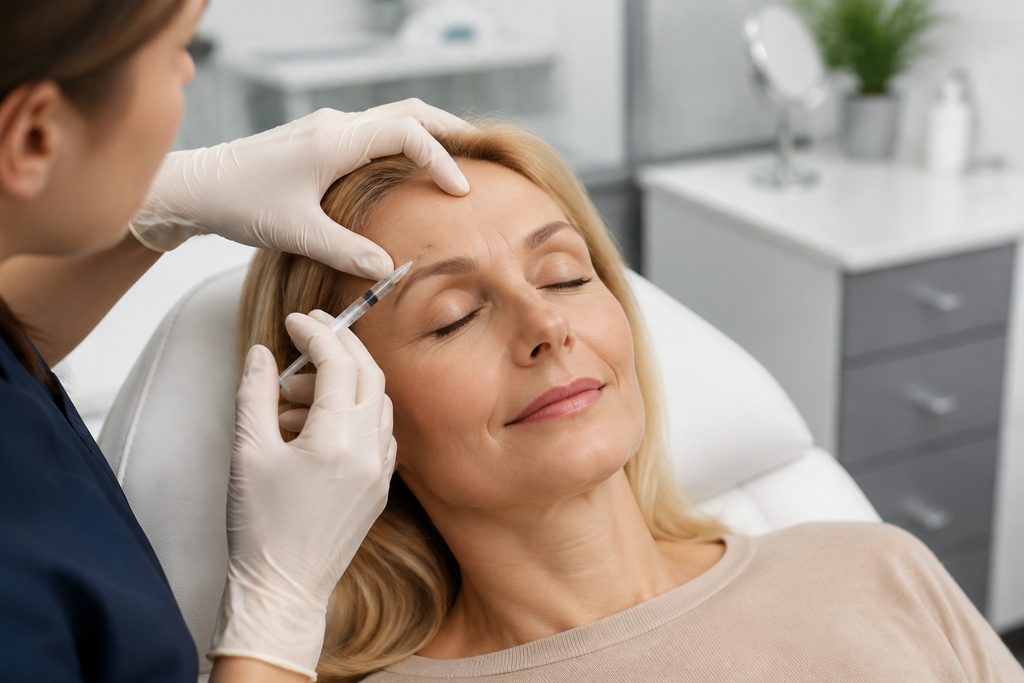
Is Botox Safe for Wrinkles? A Straight Answer for International Patients Considering Treatment in China
Botox sounds intimidating until you understand what it actually does. In plain terms, Botox is a purified protein derived from Clostridium botulinum that temporarily relaxes specific facial muscles. When injected in micro-doses into areas like the forehead or around the eyes, it softens the appearance of dynamic wrinkles — the lines that form from years of squinting, frowning, and raising your eyebrows. The treatment does not freeze your entire face into a mask. Done properly, it simply reduces muscle activity in targeted zones while leaving surrounding expression intact.
Is Botox safe for wrinkles? The short answer is yes, when administered by a qualified medical professional using genuine, properly stored product. Botulinum toxin type A has been approved for cosmetic use in the United States since 2002, and the American Society of Plastic Surgeons reports that over 4.4 million Botox procedures were performed in the US in 2022 alone. But safety is not automatic. It depends on three things: the product, the injector, and the setting. That is exactly where patients considering treatment abroad — including in China — need to pay close attention.
For international patients, the question quickly expands beyond clinical safety. You are also asking about regulatory standards, product authenticity, and whether you can get the same quality of care you would expect at home. The botox injection cost China is a major draw — prices at top-tier Chinese hospitals and licensed clinics typically run $150 to $400 per treatment area, compared to $400 to $800 in the United States. But price only matters if the safety equation holds up.
Key Takeaways
- Botox has a 20+ year safety record with over 4.4 million US procedures annually, but outcomes depend heavily on injector training and product authenticity.
- China’s top-tier hospital dermatology and plastic surgery departments use the same FDA-approved and CFDA/NMPA-registered botulinum toxin products found in Western markets.
- Counterfeit Botox is a real risk in unlicensed aesthetic shops across Asia — choosing a hospital-affiliated or JCI-accredited clinic eliminates most of that danger.
- International patients should verify the product lot number, injector credentials, and clinic licensing before committing to any treatment.
The Problem: High Prices at Home Push Patients Toward Unverified Options Abroad
Cosmetic injectables in Western countries have become genuinely expensive. In the United States, a single Botox session for the forehead and crow’s feet typically costs between $500 and $900, depending on the city and the number of units used. In London, expect to pay £250 to £450 per area. In Sydney, prices have climbed past AUD $600 for a standard two-area treatment. For patients who maintain results every four to six months, that adds up to $2,000 to $5,000 per year.
That financial pressure pushes a lot of people to look overseas. Medical tourism for cosmetic procedures is a well-established industry, with millions of patients traveling annually for treatments in Thailand, South Korea, Turkey, and increasingly China. The appeal is obvious: the same treatment at a fraction of the cost, often combined with a vacation. But the risk profile changes when you cross borders. Regulatory standards vary. Product authenticity becomes harder to verify. And if something goes wrong, you are far from your usual support network.
In some Southeast Asian markets, counterfeit botulinum toxin products have been seized by regulators with alarming frequency. The World Health Organization has issued alerts about falsified Botox circulating in multiple countries since 2023. Some counterfeit vials contained no active ingredient at all. Others contained dangerous unregulated neurotoxins or incorrect dosing. A patient who does not know how to verify product authenticity is gambling.
That is the real question behind “Is Botox safe for wrinkles in China?” It is not about whether the product works. It is about whether the clinic you choose operates at a standard you can trust. And that depends entirely on where you go.
Why China’s Top Hospitals Deliver Botox Results Comparable to Western Clinics
China’s cosmetic injectable market has matured rapidly over the past decade. The country now has a structured regulatory framework through the National Medical Products Administration (NMPA), which evaluates and approves botulinum toxin products for cosmetic use. What matters for international patients is that the top tier of Chinese hospitals and licensed clinics operate under standards that are directly comparable to Western institutions.
Regulatory Oversight and Product Authenticity
China’s NMPA has approved four botulinum toxin type A products for cosmetic use as of 2024: Botox (Allergan/AbbVie, imported from Ireland), Dysport (Ipsen, imported from France), Letybo (Hugel, imported from South Korea), and CBTX-A (Lanzhou Institute of Biological Products, domestic). The imported products are the exact same formulations sold in the US and Europe — same manufacturing facilities, same quality controls, same lot-tracking systems.
This is a crucial point. When you receive Botox at a hospital-affiliated dermatology department in Shanghai or Beijing, you are getting the identical product you would receive at a clinic in New York or London. The vial comes from the same factory. The difference is the price, not the molecule.
Counterfeit risk in China is concentrated in unlicensed beauty salons and unregulated “aesthetic studios” — places that operate outside the medical system. These venues are illegal for injectable procedures under Chinese law, which classifies Botox as a prescription medical product that may only be administered by licensed physicians in approved medical facilities. The enforcement gap exists, but it is easy to avoid: stick to hospital departments or JCI-accredited private clinics, and the counterfeit risk drops to near zero.
Injector Training and Clinical Volume
Chinese dermatologists and plastic surgeons at top hospitals perform an enormous volume of injectable procedures. A senior dermatologist at a major Shanghai teaching hospital may administer 20 to 40 Botox treatments per week — over 1,500 per year. That volume matters. Botox injection is a technical skill that improves with repetition, particularly for precise areas like the brow, the lip lines, and the neck.
Board-certified dermatologists and plastic surgeons in China complete the same core training pathways as their Western counterparts, typically 8 to 10 years of medical education and specialization before independent practice. At hospitals like Peking Union Medical College Hospital, Ruijin Hospital, or Huashan Hospital’s dermatology department, the injectors are full-time specialists who teach, publish, and train residents in addition to treating patients.
Does that mean every injector in China is excellent? No. The quality range is wide. But at the top institutions, the standard is genuinely high — and often higher than the average Western med-spa, where injectors may be nurses or physician assistants with far less training than a Chinese board-certified dermatologist.
Cost Advantage Without Quality Compromise
The structural reasons Botox costs less in China are straightforward. Labor costs for medical staff are lower. Clinic overhead is lower. There is no multi-layer insurance billing system inflating prices. And the sheer patient volume allows hospitals to operate on thinner margins per procedure while maintaining high standards.
None of those factors compromise product quality or clinical safety. The vial of Botox costs the hospital roughly the same in Shanghai as it does in San Francisco — the difference in what you pay comes from everything else around it. For international patients, the botox injection cost China advantage is real: $150 to $400 per area at a top hospital, versus $400 to $800 in the US. That is a 50% to 70% savings on a treatment you will likely repeat two to three times per year.
How Botox Treatment Actually Works: Timeline, Dosage, and What to Expect
If you are considering Botox for the first time — in China or anywhere else — it helps to understand the process precisely. The treatment itself takes 10 to 20 minutes. The injector maps the target muscles, marks injection points, and administers a series of small injections using a fine needle. Most patients describe the sensation as a quick pinch or mild sting. No anesthetic is required for standard cosmetic Botox.
Dosage is measured in units. A typical forehead treatment uses 10 to 20 units. Crow’s feet around each eye use 5 to 15 units per side. Glabellar lines — the “11” between your eyebrows — use 15 to 25 units. Total for a standard upper-face treatment: 30 to 60 units. At Chinese hospital prices of roughly $3 to $6 per unit, that translates to $90 to $360 per session, depending on the areas treated and the injector’s pricing structure.
The timeline after injection follows a predictable pattern. You will see no immediate change. Over the first 3 to 5 days, the treated muscles begin to relax. Full effect develops by day 10 to 14. Results last 3 to 4 months for most patients, with some variability — first-time patients may metabolize the product faster, while long-term users sometimes enjoy 4 to 6 months between sessions.
How long does Botox last for wrinkles? The standard answer is 3 to 4 months for dynamic wrinkles, with some patients reporting up to 6 months after repeated treatments. The effect fades gradually, not suddenly — muscle movement returns over a period of weeks, and wrinkles soften back in rather than reappearing overnight.
Aftercare is minimal. Avoid rubbing the treated area for 24 hours. Stay upright for 4 hours after injection. Skip strenuous exercise, saunas, and alcohol for 24 to 48 hours. These precautions prevent the product from migrating to unintended muscles, which is the most common cause of complications like eyelid drooping.
Evaluating Providers in China: What to Check Before You Book
This is where the safety question gets concrete. If you are considering Botox in China, your pre-treatment due diligence should cover five specific checks. Skip any of these, and you are accepting unnecessary risk.
First, verify the facility license. In China, injectable cosmetic procedures may only be performed in medical institutions with a valid Medical Institution Practicing License. Beauty salons, hotel rooms, and private residences are not legal settings. A legitimate clinic will display its license prominently or provide it on request. Hospital-affiliated departments are automatically compliant.
Second, confirm the injector’s credentials. Ask for the physician’s Medical Practitioner Certificate and their specialty registration. In China, cosmetic injectables should be administered by dermatologists or plastic surgeons. If the person holding the needle cannot produce a medical license, leave.
Third, inspect the product before injection. Request to see the vial. Check the lot number and expiration date. Genuine Botox from Allergan has specific anti-counterfeiting features, including a holographic seal and a unique verification code that can be checked online. Chinese NMPA-approved products have similar tracking mechanisms. If the injector refuses to show you the vial, that is a red flag.
Fourth, understand the pricing structure. Reputable clinics price Botox per unit or per treatment area, with clear documentation. Be wary of “Botox” offered at prices far below market — genuine product costs the clinic a fixed amount, and no legitimate provider sells below cost. A suspiciously cheap treatment usually means counterfeit product, diluted product, or an unqualified injector.
Fifth, ask about the clinic’s complication protocol. What happens if you experience an adverse reaction? A credible provider will have a clear answer: immediate access to a physician, a documented adverse-event protocol, and a relationship with a hospital for escalation if needed. A blank stare is your cue to find another clinic.
For patients looking at the best Botox clinic Shanghai price, the honest guidance is this: do not optimize for the lowest number. Optimize for a hospital-affiliated department or JCI-accredited private clinic with transparent pricing and verifiable credentials. The savings from choosing a reputable Chinese clinic over a Western one are already substantial — there is no need to chase further discounts into risky territory.
Practical Considerations: Visas, Payments, and Follow-Up for International Patients
If you are traveling to China specifically for cosmetic treatment, the logistics are manageable but worth planning. Most international patients enter on an S2 visa, which covers short-term private affairs including medical treatment. The S2 visa requires supporting documentation, typically an invitation letter or confirmation from the medical institution where you will receive treatment. For stays under 180 days, S2 is the appropriate category. Family members accompanying you apply for the same visa type.
Payment is straightforward at major hospitals and international clinics. Most accept international credit cards, and many accept WeChat Pay and Alipay, which can be linked to foreign cards. Cash is accepted but less common. Expect to pay in full at the time of treatment — Chinese medical facilities do not typically bill insurance directly for cosmetic procedures. If you have international health insurance, cosmetic Botox is almost never covered, so plan to pay out of pocket.
Language is the biggest practical barrier. Top-tier hospitals in Beijing and Shanghai have international departments with English-speaking staff. Private international clinics like United Family Healthcare and Jiahui Health operate entirely in English. But outside these settings, English proficiency drops sharply. If you are navigating a Chinese-language hospital, a bilingual medical companion can handle registration, payment, and communication with the medical team — services like this typically start from $300 per day.
Follow-up after returning home is minimal for Botox. The treatment requires no post-procedure visits unless you experience a complication. If you do have concerns after leaving China, most reputable clinics will offer a telehealth follow-up consultation to review your recovery. Results fade naturally over 3 to 6 months, and you can choose to repeat treatment at home or on a return visit to China.
| Treatment Area | Typical Units | China Hospital Price (USD) | US Average Price (USD) |
|---|---|---|---|
| Forehead lines | 10–20 | $50–$120 | $200–$400 |
| Glabellar (frown) lines | 15–25 | $75–$150 | $250–$450 |
| Crow’s feet (both sides) | 10–30 | $50–$180 | $200–$500 |
| Full upper face | 35–75 | $175–$450 | $600–$1,200 |
Prices vary by hospital, city, injector seniority, and the specific product used. The figures above reflect typical ranges at top-tier Chinese hospital departments and JCI-accredited private clinics as of 2025. Always confirm pricing in writing before treatment.
For patients exploring medical tourism Botox China packages, the landscape is mixed. Some agencies bundle treatment with accommodation, airport transfers, and sightseeing. These packages can be convenient, but they add a layer between you and the medical provider. If you go this route, verify that the package uses a legitimate hospital or licensed clinic — not a beauty salon with a hotel partnership. Alternatively, you can arrange treatment directly with the clinic and handle logistics separately, which gives you more control over provider quality.
Patients who want to book Botox treatment Beijing or Shanghai should start by contacting the hospital’s international department directly. Most respond within a few business days and can confirm pricing, availability, and required documentation. You do not need a referral. You do need to be honest about your medical history, any medications you take, and any previous injectable treatments.
Frequently Asked Questions
Yes, first-time Botox is safe when administered by a qualified physician using genuine product. The most common side effects are mild and temporary: redness, swelling, or bruising at injection sites. Serious complications are rare, occurring in less than 1% of treatments when performed correctly. Your injector should review your medical history first — certain neuromuscular conditions and pregnancy are contraindications.
Ask to see the vial before injection. Genuine Botox from Allergan has a holographic seal and a unique verification code you can check online. Chinese NMPA-approved products have similar tracking. Legitimate hospital departments and JCI-accredited clinics source directly from manufacturers or authorized distributors. Counterfeit product is concentrated in unlicensed beauty salons — avoid those, and your risk is minimal.
Most Botox complications — such as mild asymmetry or bruising — resolve on their own within weeks. If you experience a more serious issue like eyelid drooping, it typically fades as the product wears off over 6 to 12 weeks. Reputable Chinese clinics offer post-treatment telehealth follow-up for international patients. In the rare case of a medical emergency, seek care from a local physician immediately and contact the treating clinic for your records.
Will I need a visa specifically for Botox treatment in China?
Most international patients use an S2 visa for short-term medical treatment and private affairs
For more medical information and treatment options in China, visit chinamedservices.com (China Medical Services).
