Will a Back Brace Help Avoid Spine Surgery? What the Data Shows
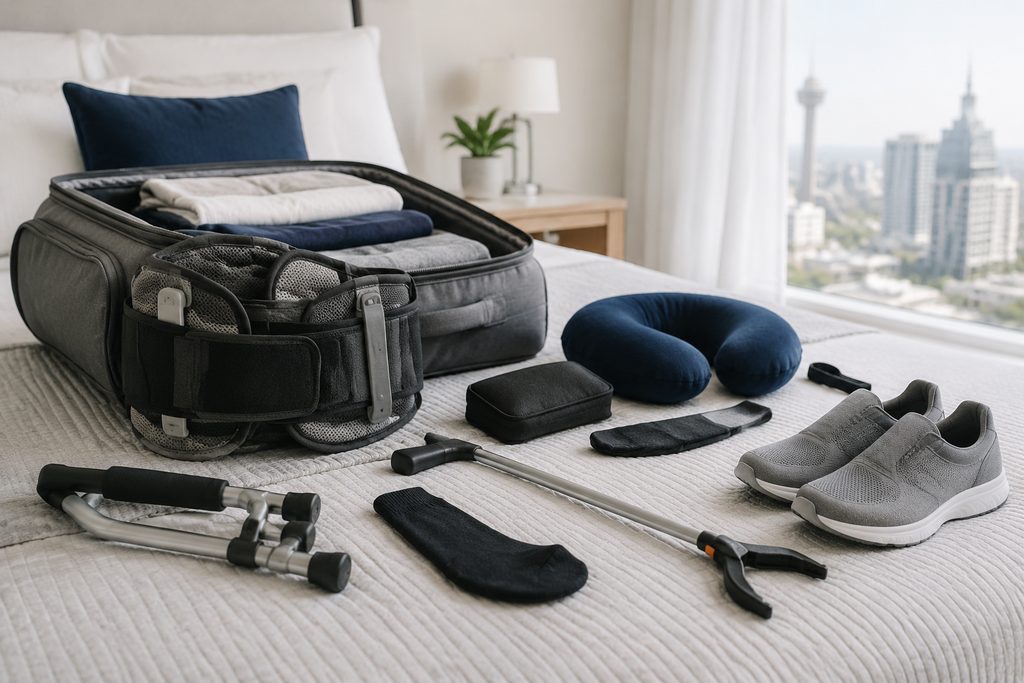
You’ve probably heard that a back brace is a weak substitute for real treatment. The reality is more nuanced. For specific spinal conditions, a properly fitted orthosis can reduce pain enough to buy you months of conservative therapy — and sometimes that’s all you need. But for others, it’s a $200 delay tactic that postpones an inevitable operation.
The question “will a back brace help avoid spine surgery” doesn’t have one answer. It depends on your diagnosis, your age, the structural damage already present, and how you use the brace. This article breaks down what the evidence actually says, what a back brace for spinal stenosis cost China runs compared to Western pricing, and when bracing crosses the line from helpful to harmful.
We coordinate care for international patients at China Medical Services, which means we see both success stories and failures. Here’s what we tell patients before they spend money on a brace.
How This Actually Works, Step by Step
The sequence from “my back hurts” to “I avoided surgery” looks like this in practice.
You start with imaging. An MRI or CT scan tells the specialist whether your pain comes from a herniated disc, spinal stenosis, spondylolisthesis, or something else entirely. Without imaging, a brace is a guess.
Then a spine specialist reviews the scans alongside your symptoms. Leg pain that follows a nerve path suggests nerve root compression. Mechanical low back pain that worsens with movement but stays localized might respond to bracing. The diagnosis determines whether a brace has any chance of working.
If you’re a candidate, the specialist prescribes a specific brace type — not a generic drugstore wrap. Rigid lumbar orthoses restrict motion. Semi-rigid braces provide proprioceptive feedback. Flexible corsets offer warmth and light support. Each serves a different purpose.
You wear the brace for a defined period, typically 2–6 weeks for acute pain, sometimes longer for post-operative recovery or specific instability patterns. You also start physical therapy. The brace is never the whole treatment.
At the 6–12 week mark, you reassess. Pain scores, functional capacity, and repeat imaging if needed determine whether conservative management is working or whether surgical consultation is the next logical step.
That’s the honest pathway. Anything promising faster results is overselling.
What a Back Brace Can and Cannot Do for Spinal Stenosis
Spinal stenosis narrows the spinal canal, compressing nerves. Patients often report that bending forward relieves leg pain — that’s why you see older adults leaning on shopping carts. A brace that holds the spine in slight flexion can mimic that position and reduce symptoms.
But the brace doesn’t widen the canal. It doesn’t remove the bone spurs or thickened ligaments causing the compression. It manages symptoms, not the underlying structure.
Research on bracing for spinal stenosis is mixed. Some studies show short-term pain reduction and improved walking distance. Others find no significant difference compared to exercise alone. The consensus among spine surgeons: a brace can be a useful adjunct during a structured conservative trial, but it rarely eliminates the need for surgery in moderate-to-severe stenosis.
Here’s where cost enters the picture. A custom or semi-custom back brace for spinal stenosis cost China typically ranges from $80 to $600 depending on material, adjustability, and whether it’s off-the-shelf or custom-molded. The same brace in the US or UK often runs $300 to $1,500. That price gap matters if you’re paying out of pocket.
And many patients are. Insurance coverage for orthoses varies wildly. Some plans cover one brace per year. Others classify it as durable medical equipment with strict approval criteria. China’s out-of-pocket pricing removes that administrative friction, though it means you pay directly.
A Realistic Timeline
Here’s what a conservative bracing trial actually looks like for an international patient considering non surgical spine treatment Shanghai price options.
| Stage | Duration | What Happens |
|---|---|---|
| Imaging and diagnosis | Days 1–7 | MRI or CT scan, specialist review, confirmed diagnosis |
| Brace fitting | Days 7–14 | Measurement, fitting, adjustment; off-the-shelf fits faster than custom |
| Initial wear period | Weeks 1–4 | Daily wear with graduated schedule; physical therapy begins simultaneously |
| First reassessment | Weeks 4–6 | Pain scores, functional testing, brace adjustment if needed |
| Conservative trial end | Weeks 8–12 | Decision point: continue conservative care or schedule surgical consult |
| Visa processing (if traveling) | 2–4 weeks | S2 visa application with hospital invitation documents |
| Document translation | 3–7 days | Medical records translated for Chinese hospital review |
Notice the stages people forget. Document translation takes days. Visa processing for an S2 medical visit takes weeks. Appointment lead times at top Chinese spine centers can stretch 2–6 weeks for a specific specialist. If you’re planning to book spine rehab program Beijing, start the coordination at least 6–8 weeks before your target date.
Most patients underestimate the total timeline by half. A brace trial itself is quick. The logistics around it are not.
What Can Go Wrong — and What Happens Then
Let’s be blunt about failure modes.
Muscle atrophy is the most common problem. Wearing a rigid brace for too long weakens your core and paraspinal muscles. The brace becomes a crutch. When you take it off, your back feels worse because the supporting musculature has deteriorated. That often pushes patients toward surgery they might have avoided with a more disciplined wear schedule.
Skin breakdown happens with prolonged use, especially in humid climates or with poor fit. Pressure sores over bony prominences can turn a spine problem into a wound care problem.
False confidence is another risk. A brace reduces pain, so you move more aggressively. But the underlying structural issue hasn’t changed. That can lead to acute flare-ups or further disc herniation.
And sometimes the brace simply doesn’t work. You wear it faithfully for eight weeks. Pain persists. Function declines. What then?
The honest answer: you reassess. A failed conservative trial is itself diagnostic information. It tells your specialist that the structural problem is significant enough to warrant surgical evaluation. That’s not a failure of the brace — it’s a necessary step in the decision algorithm.
If you’re in China at this point, the pathway to surgical consultation is straightforward. Top orthopedic departments at hospitals like Peking Union Medical College Hospital or West China Hospital see high volumes of complex spine cases. The orthopedics department rankings can guide you toward centers with strong spine surgery reputations.
How Effective Is a Back Brace for Herniated Disc?
Different diagnosis, different answer. A herniated disc involves nucleus pulposus material pressing against nerve roots. The question how effective is a back brace for herniated disc has a more optimistic evidence base than stenosis bracing, but with important caveats.
For acute disc herniation, bracing reduces intradiscal pressure by limiting flexion and rotation. That can ease nerve root irritation during the inflammatory phase. Most disc herniations — roughly 80–90% — improve with conservative care within 6–12 weeks regardless of bracing. So the brace may simply be riding a natural recovery curve.
Where bracing shows clearer benefit is in preventing re-injury during the vulnerable healing window. A semi-rigid brace that reminds you not to bend, lift, or twist can protect the healing disc. That’s proprioceptive feedback, not structural support.
For patients considering can a back brace prevent spinal fusion surgery, the answer depends on what’s driving the fusion recommendation. If it’s instability from spondylolisthesis, a brace can temporarily stabilize the segment but won’t fix the pars defect or facet degeneration. Fusion may still be indicated. If it’s discogenic pain without instability, a longer conservative trial with bracing and structured rehab has a reasonable chance of delaying or avoiding surgery.
Some patients explore orthopedic brace instead of spine surgery abroad because they want to exhaust every non-operative option first. That’s reasonable. But the key word is “abroad.” Bracing protocols vary by country. Chinese spine centers tend to combine bracing with aggressive physical therapy, acupuncture, and sometimes TCM adjuncts. The integrated approach may explain why some international patients report better conservative outcomes than they achieved at home.
We can’t promise that. We can say the model is different.
Practical Considerations: Records, Visa, Payment, and Follow-Up
If you’re evaluating a back brace for spinal stenosis cost China and considering traveling for a conservative trial or second opinion, here’s what actually matters.
Bring your MRI on disc, not just the report. Chinese specialists want to review the images themselves. Reports translated into English or Chinese help, but raw DICOM files are non-negotiable for a meaningful remote review.
Visa category is S2 for medical treatment and private affairs. You’ll need supporting documents from the hospital — typically an invitation letter or appointment confirmation. We help patients coordinate this, but the embassy makes the final call. Processing takes 2–4 weeks in most cases.
Payment is upfront at Chinese public hospitals. You pay for consultations, imaging, and the brace itself before receiving services. International insurance typically reimburses after the fact. Private international hospitals in China — United Family, Jiahui, Raffles — offer direct billing with some insurers, but their brace pricing runs higher than public hospital rates.
Language is the biggest practical barrier. Top public hospitals see 10,000+ outpatient visits daily. Signage is often Chinese-only. Registration counters move fast. Without a bilingual companion, you’ll lose hours and possibly miss appointments. This is not a place where English fluency is assumed.
Follow-up at home matters. If a Chinese specialist prescribes a brace and rehab protocol, you need a local provider who can monitor progress. The brace itself is portable. The expertise behind it is not. Plan for communication between your home provider and the Chinese team, or schedule follow-up video consultations.
For those comparing non surgical spine treatment Shanghai price against home-country costs, here’s a rough benchmark. A full conservative trial in Shanghai — specialist consultations, MRI, custom brace, 8–12 weeks of physical therapy — typically runs $1,500 to $4,000 out of pocket. The same package in the US often costs $5,000 to $15,000 without insurance. The savings are real, but they come with travel costs and logistical complexity.
Frequently Asked Questions
Yes, if worn continuously for more than 4–6 weeks without a weaning plan. Rigid braces reduce muscle activation in the trunk. The solution is a graduated wear schedule and simultaneous core strengthening. Most specialists recommend wearing the brace during activity and removing it during rest and exercise.
In some cases, yes — particularly for acute disc herniation and mild-to-moderate stenosis where inflammation drives symptoms. In other cases, no — especially when structural instability or severe nerve compression is present. A brace manages symptoms; it doesn’t correct structural pathology. An honest specialist will tell you which category you fall into.
Most protocols start with 2–4 hours daily during the acute phase, gradually increasing to 6–8 hours if tolerated, then tapering after 4–6 weeks. Wearing it 24/7 is almost never recommended except in specific post-operative scenarios. Your specialist should give you a written schedule.
Off-the-shelf braces are widely available and generally safe for short-term use. But the wrong brace for your condition can worsen symptoms. A rigid brace for a disc herniation might help; the same brace for spinal stenosis might increase pain by forcing extension. If you’re spending more than $100, get a professional fitting.
A standard semi-rigid lumbar orthosis in China costs roughly $80–$200. Custom-molded braces run $300–$600. Comparable braces in the US typically cost 2–3 times more. The back brace for spinal stenosis cost China advantage is real, but factor in travel and coordination costs before deciding it’s cheaper overall.
Your Next Step
A back brace is a tool, not a treatment plan. It works when paired with the right diagnosis, a structured wear schedule, and physical therapy. It fails when used as a substitute for medical evaluation.
We help international patients evaluate conservative spine care options in China — from remote second opinions to coordinated in-person visits. We don’t provide medical advice, and we don’t promise that bracing will help you avoid surgery. What we do is connect you with specialists who can give you an honest assessment, and handle the logistics that make the process overwhelming.
If you’re weighing your options, start with a conversation. Send your imaging and a brief history. We’ll help you understand whether a conservative trial in China makes sense for your specific case. No pressure, no obligation — just clarity on what’s possible.
Your spine deserves an informed decision. Get the facts before you commit to surgery — or to a brace that won’t help.
For more medical information and treatment options in China, visit chinamedservices.com (China Medical Services).
