What Imaging Do I Need for a Brain Problem? A Practical Guide for International Patients
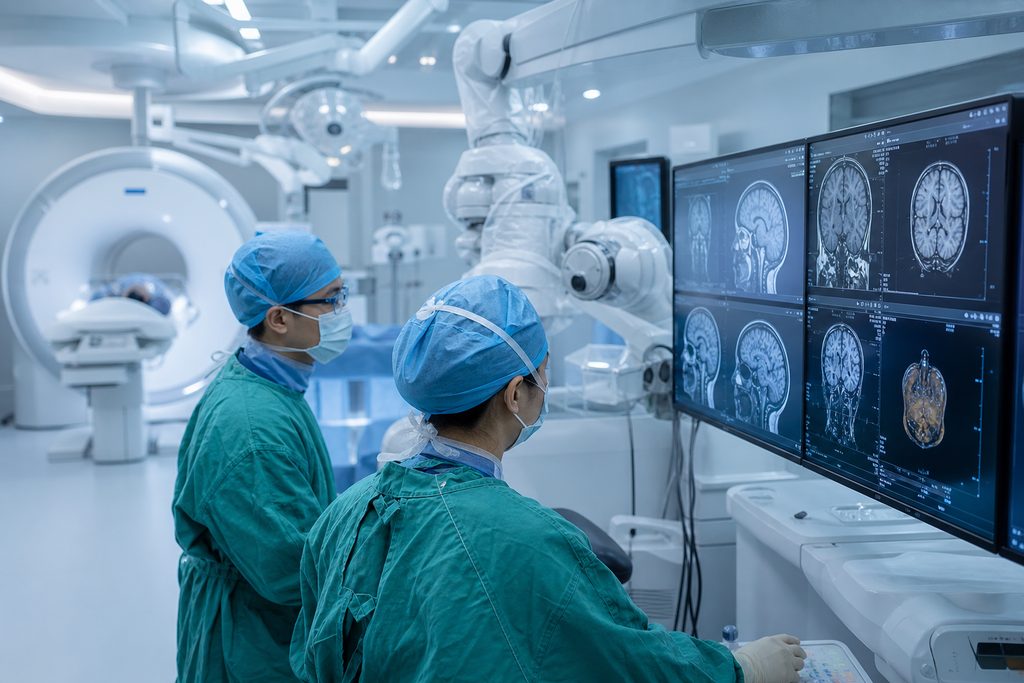
Have you felt a headache that just will not quit, or noticed your vision blurring in ways that scare you? You are not alone. The first question almost every patient asks us is not about surgery or drugs. It is simpler than that. What scan do I actually need? And if the answer points to something serious, what will the brain tumor treatment cost China look like for someone flying in from abroad?
We help international patients navigate China’s top-tier hospitals every week. This guide walks through the imaging you need, what it should cost, and how to get it done without wasting weeks or thousands of dollars on the wrong test.
How This Actually Works, Step by Step
You are sitting at home with symptoms. Maybe a neurologist in your home country already ordered a scan. Maybe you are still trying to figure out whether to see one. Here is the sequence we walk patients through when they contact us.
First, you send us whatever you already have: MRI reports, CT scans on disc, blood work, a doctor’s referral letter if one exists. Our team translates the key findings into Chinese and routes them to the appropriate specialty department at one of our partner hospitals. A radiologist or neurologist reviews the materials. You get back a written assessment: what the images show, what is missing, and what the next imaging step should be. No travel required yet.
If you have no imaging yet, we help you schedule it. That means selecting the right hospital, booking the scan slot, and arranging a bilingual companion to meet you at the radiology desk. You fly in, get scanned, and meet a specialist who reads the results with you. The whole process from first email to completed scan in China typically takes two to three weeks when you plan it properly.
What Imaging Do I Need for a Brain Problem? The Core Answer
The honest answer: it depends on what your symptoms suggest. But there is a standard sequence that neurologists follow almost everywhere, including in Chinese hospitals.
A non-contrast CT scan usually comes first if you arrive at an emergency department with sudden severe headache, weakness on one side, or a suspected stroke. It is fast, cheap, and rules out bleeding. But for most outpatient brain complaints — persistent headaches, dizziness, memory issues, suspected tumor — the workhorse is an MRI with and without contrast. MRI shows soft tissue detail that CT simply cannot capture. That is the scan that answers what imaging is needed for brain tumor diagnosis in most cases.
Sometimes a doctor adds an MRA or MRV to look at blood vessels. If a tumor is found, a functional MRI or MR spectroscopy may follow. But you do not start there. You start with the right basic sequence and let the findings guide the next step.
MRI Brain Scan Price Shanghai and What Affects It
Let us talk numbers, because that is what most patients actually want to know. An MRI brain scan price Shanghai at a public tertiary hospital runs roughly $150 to $350 USD for a standard brain MRI without contrast. Adding contrast pushes it toward $250 to $450. At a private international hospital like United Family or Jiahui, expect $600 to $1,200 for the same scan. The difference buys you English-speaking staff, faster scheduling, and direct insurance billing.
Wait times differ too. Public hospitals in Shanghai and Beijing can book out one to three weeks for a non-urgent MRI. Private international clinics often scan you within 48 hours. But the image quality at top public hospitals is excellent — these are the same machines used in Fudan-ranked radiology departments. The question is not whether the machine is good. The question is whether you can navigate the system without Chinese language skills. That is where a bilingual medical companion changes the experience.
A Realistic Timeline
| Stage | What Happens | Typical Duration |
|---|---|---|
| Days 1–3 | You send existing imaging and reports; we translate and route them | 2–3 days |
| Days 3–7 | Specialist reviews materials and recommends next imaging step | 3–5 days |
| Week 2 | We book the scan slot at the selected hospital; you confirm travel dates | 3–7 days lead time |
| Week 2–3 | Visa application with hospital invitation letter | 5–10 business days at embassy |
| Week 3–4 | You arrive in China, get scanned, meet specialist for results review | 2–3 days on the ground |
People forget the visa step. You cannot just book a flight and show up. A Chinese hospital can issue an invitation letter that supports your S2 visa application for medical treatment. That letter takes a few days to obtain. Budget for it.
What Can Go Wrong — and What Happens Then
Scans get misread. It happens everywhere, including in top Chinese hospitals. If a radiologist in your home country said “possible low-grade glioma” and the Chinese team says “likely demyelinating lesion,” you need a third opinion, not blind trust. We have seen patients fly to Shanghai for a second read that changed the entire treatment plan.
Another failure mode: you arrive without the right prior imaging on disc. Chinese hospitals often cannot read images from foreign PACS systems if you only bring printed films. Bring the DICOM files on a CD or USB drive. Always. If you forget, the hospital will repeat the scan, which costs money and delays everything.
Language breakdowns are the third common problem. A radiologist’s written report in Chinese means nothing to you unless someone translates it accurately. Medical terminology does not translate word-for-word. We provide written translations of imaging reports as part of our coordination service, and the specialist consultation includes live interpretation.
Is Brain Imaging Reliable in China Hospitals?
This is the question behind the question. You are not really asking about machine quality. You are asking whether you can trust the person reading your scan. The answer is layered.
China’s top-tier hospitals use the same MRI and CT equipment you find at Johns Hopkins or Charité: Siemens, GE, Philips. The Fudan-ranked radiology departments at hospitals like Peking Union Medical College Hospital and Huashan Hospital process enormous volumes — far higher than most Western centers. Volume builds pattern recognition. A radiologist who reads 80 brain MRIs a day sees rare presentations that a lower-volume center might miss. That is a genuine advantage.
But volume also creates time pressure. Reports are sometimes shorter than you would like. If you want a detailed, conversational read with a neurologist who explains every finding, you need to book a consultation, not just a scan. That is the piece most international patients skip, and it is the piece that matters most. So the honest answer to is brain imaging reliable in China hospitals is yes — provided you go to a top-ranked department and pair the scan with a proper specialist review.
Practical Considerations: Records, Visa, Payment, Follow-Up
Bring every prior scan on DICOM format. Bring a written summary of your symptoms, when they started, what makes them worse. Bring a list of medications. If you have had prior brain surgery, bring the operative report. These documents shape how the radiologist interprets what they see.
Visa: you will apply for an S2 visa with a medical treatment annotation. The hospital’s international department can issue an invitation letter. Processing time varies by country, but plan for two weeks minimum. Do not book non-refundable flights until the visa is in your passport.
Payment: public hospitals require prepayment at the cashier before the scan. You pay out of pocket, then claim reimbursement from your insurer later. Private international hospitals often bill your insurer directly. Ask before you commit.
Follow-up: if the scan finds something that needs monitoring, you need a plan for repeat imaging. Some patients return to China every six months for follow-up scans. Others get the protocol written out and have the scan done at home, then send us the images for review. Both paths work. Decide before you leave.
Frequently Asked Questions
Yes, through a hospital’s international department or through our coordination service. You cannot book a standard public outpatient slot from abroad directly, but international departments accept advance bookings. Expect to pay a premium for that convenience.
For a standard craniotomy with hospital stay, the brain tumor treatment cost China at a top public hospital typically ranges from $15,000 to $35,000 USD. The same procedure in the US often exceeds $100,000. Private international hospitals in China charge more, typically $40,000 to $70,000. These are ranges, not quotes — final costs depend on tumor location, complexity, and length of stay.
Then you need a different test, not a different country. Sometimes a CT shows something an MRI must clarify. Sometimes a standard MRI needs contrast or spectroscopy. The specialist will tell you what the next step is. You are not committed to anything until you agree.
No. You can self-refer through an international department. But a specialist review before the scan helps ensure you get the right sequence ordered. An MRI brain without contrast ordered blindly can miss things that a neurologist would have flagged.
Usually yes, if the report is translated into English and the images are provided in DICOM format. Most Western radiologists can open standard DICOM files. We provide both translated reports and the original image files to make handoff smooth.
Your Next Step
You now know what imaging you need for a brain problem, what it should cost, and how to get it done in China without chaos. Our team at China Medical Services coordinates scans, specialist reviews, and bilingual support for international patients at 340+ top-ranked hospitals across 37 cities. We do not practice medicine — we connect you with the people who do, and we handle the logistics in between.
If you have existing imaging, send it to us for a written second opinion. If you need a scan booked, we will get it scheduled and have someone meet you at the hospital door. Start with a conversation. It costs nothing to ask.
For more medical information and treatment options in China, visit chinamedservices.com (China Medical Services).
